Posted on Leave a comment

Bakell vs. Luster Dust: Comparing Edible Glitter Brands

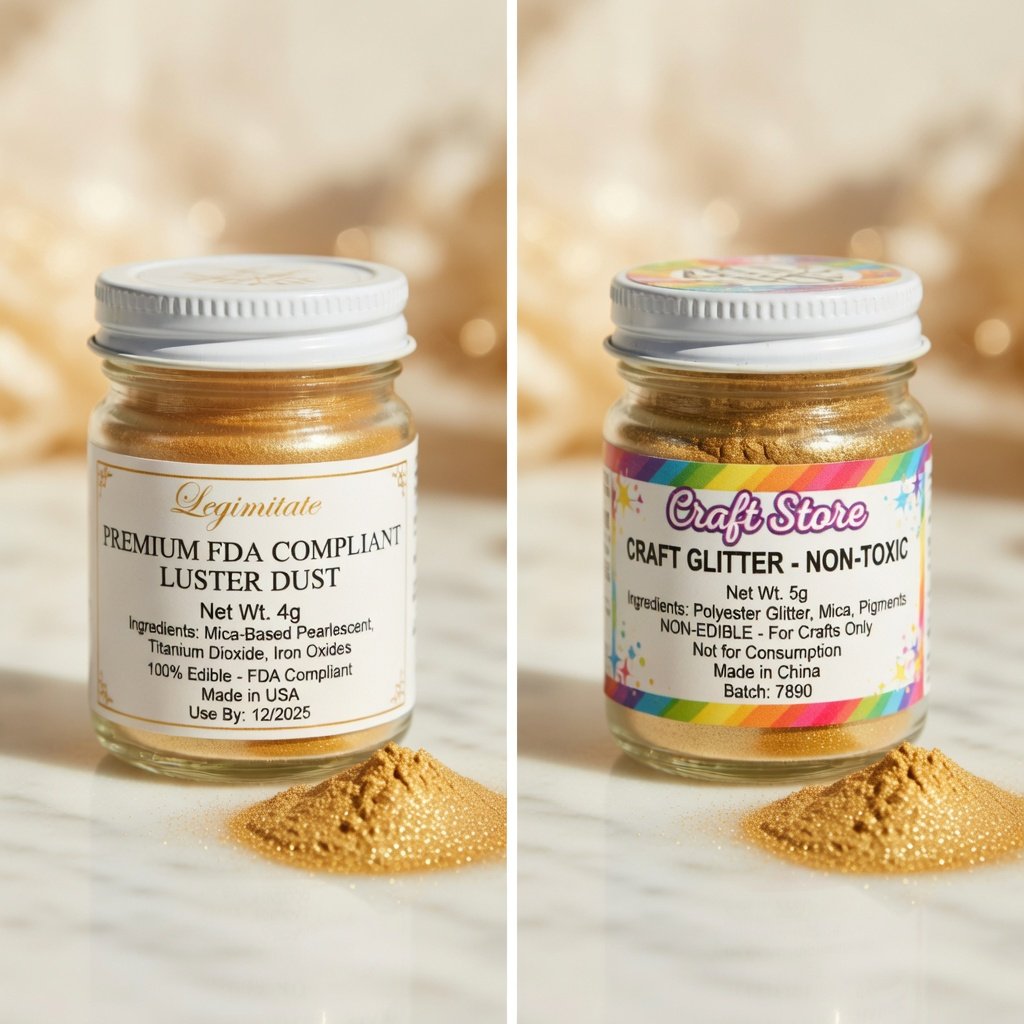
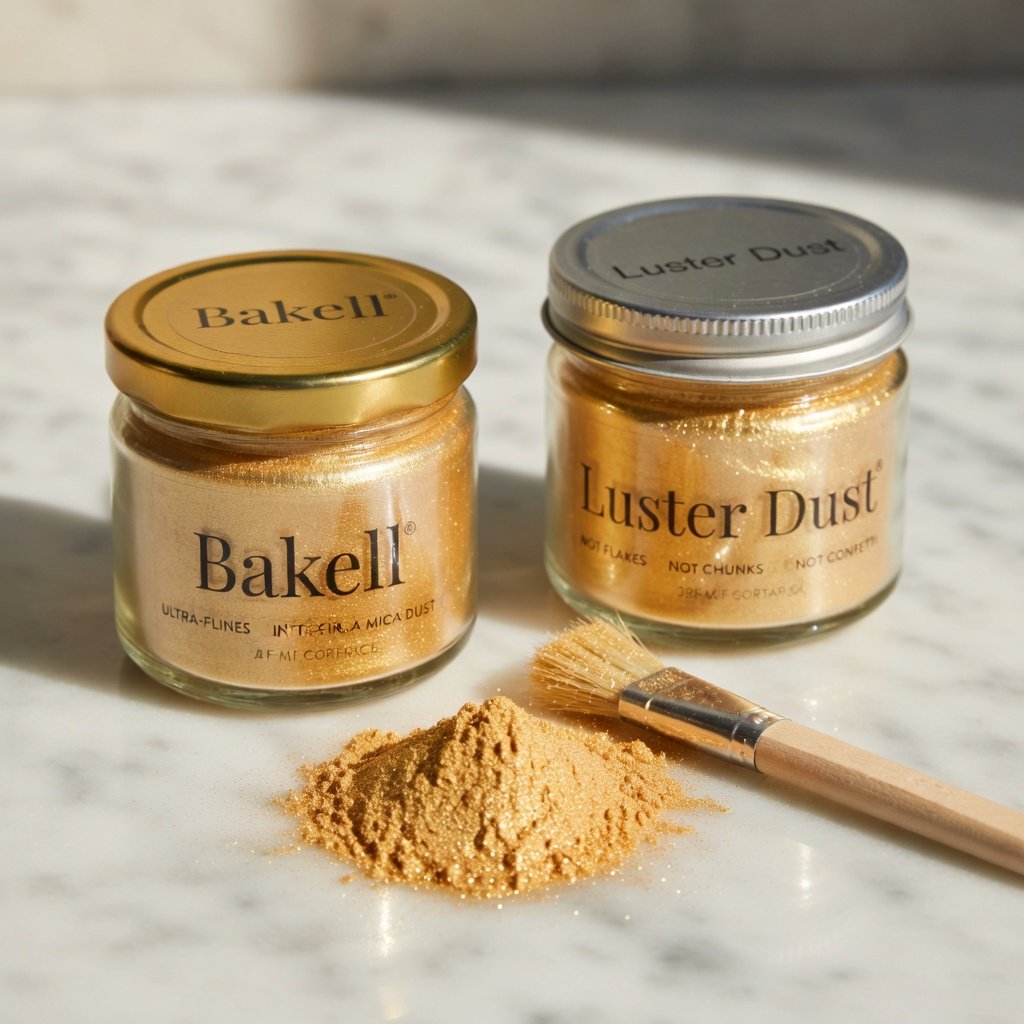
Bakell edible glitter and Luster Dust jars side by side on marble with gold shimmer dust and a pastry brush
Key Takeaways

– Bakell makes solid edible glitter — decent color range, widely available, but smaller jars and less shimmer intensity than you’d expect at that price
– Bakell’s “Super Gold” is their most popular product; our Gold outperforms it on shimmer depth, especially in drinks
– Luster Dust uses German mica pigments; Bakell uses mica too, but the grade difference shows up on camera and in person
– If you’re ordering anyway, our 10g jars start at $9.98 and go up to 1kg — better value the more you use it

Bakell has been around long enough to build a real following. People know the brand, trust it, and use it for everything from wedding cakes to holiday cocktails. That’s legitimate. They’re not a bad company.

But “not bad” is doing a lot of work there. We’ve tested Bakell luster dust side-by-side with ours more times than we can count — on buttercream, in champagne, on chocolate, under event lighting. And there are real differences worth knowing about before you spend money on either.

What Bakell Gets Right

Their color range is extensive. We’re talking hundreds of shades, including some pretty niche specialty options you won’t find everywhere. For professional cake decorators who need an exact dusty mauve or a very specific coral, Bakell’s library is genuinely useful.

Availability is another point in their favor. Bakell is on Amazon, in various cake supply shops, and their own site. If you need something fast and don’t want to wait on shipping, they’re accessible.

Bakell Edible Glitter

Pros
  • ✓ Large color selection
  • ✓ Widely available online
  • ✓ Established brand with tutorials and community
  • ✓ FDA compliant
Cons
  • ✗ 5g jars are small for the price
  • ✗ Shimmer intensity is softer than advertised
  • ✗ Super Gold looks more yellow than gold in certain lighting
  • ✗ Fewer size options for bulk buyers

Bakell Super Gold Luster Dust — Specifically

Bakell Super Gold is their flagship. It’s the one people search for by name, and it’s the one we get asked about most. Here’s an honest take.

It works. You put it on fondant, you get shimmer. Put it in a cocktail, you get sparkle. Nobody’s going to complain. But “Super Gold” sets an expectation of intensity, and the actual product is more of a soft gold — warm, but not deep. Under bright overhead lighting or on camera, it reads as slightly washed out compared to what the product photos suggest.

Our Gold Luster Dust uses German mica pigments that produce a noticeably richer, more saturated shimmer. The warmth is there, but so is the depth. Side by side on the same piece of chocolate, the difference is visible — ours catches light at more angles and holds its color instead of fading into pale yellow.

For drinks specifically, that depth matters a lot. The particles need to catch light as they move through liquid, which requires a certain reflectivity that softer pigments just don’t deliver at the same level. Our gold in a champagne flute is the difference between “oh that’s pretty” and “wait, how did you do that.” The Gold Shimmer Champagne Cocktail we’ve made with it gets comments every single time.
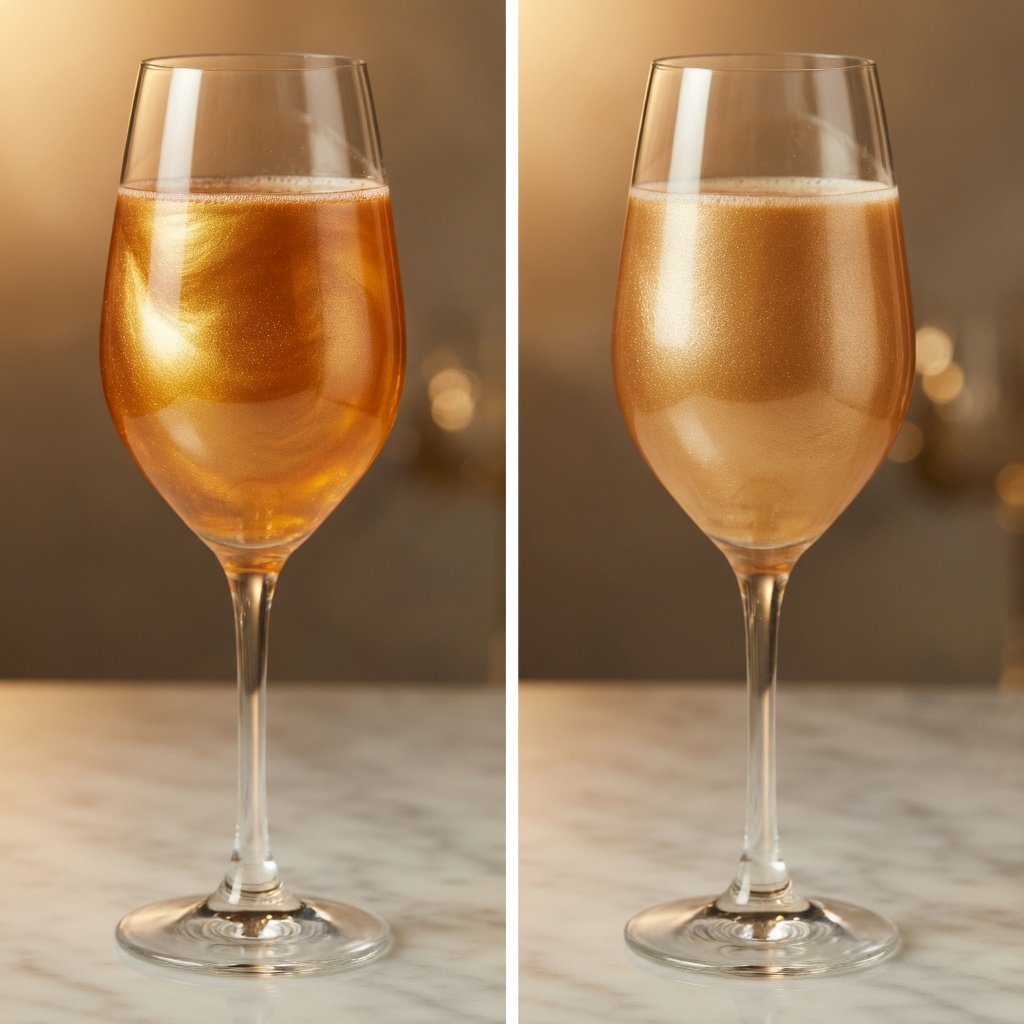
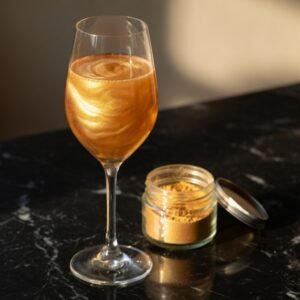
Bakell super gold luster dust comparison in two champagne flutes showing shimmer depth versus Luster Dust Gold under warm event lighting
Side by side, the bakell super gold luster dust comparison reveals just how much shimmer depth and richness can vary between brands.

The Actual Side-by-Side


FeatureLuster DustOther
Jar SizeBakell: 4g–5g standardLuster Dust: 10g standard
Pigment SourceBakell: Mica (grade unspecified)Luster Dust: German mica pigments
FDA CompliantYesYes
Vegan & Gluten-FreeYesYes
Shimmer IntensitySoft to mediumMedium to high
Gold in DrinksVisible but softRich, catches light as it moves
Color Accuracy vs. PhotosInconsistent — some colors photograph better than they performConsistent — what you see is what you get
Bulk OptionsLimitedUp to 1kg per color
Price per gram~$1.80–$2.50/g~$1.00/g (10g jar)
Free ShippingVariesOrders over $50

The Jar Size Thing Is a Real Issue

Bakell’s standard jars run 4–5 grams. Ours are 10 grams. That might sound like a small difference but it adds up fast. A single cocktail takes about 1/8 teaspoon — roughly 0.3–0.4 grams. A 5g jar gets you around 12–15 drinks. A 10g jar gets you 25+. And if you’re doing cakes or events, a 5g jar disappears in a single session.

The price-per-gram gap is significant too. Bakell’s jars land at roughly $1.80–2.50 per gram depending on where you buy. Ours come in around $1.00 per gram at the 10g size, and better than that at larger quantities. For anyone using luster dust regularly, that math matters.

Luster Dust Edible Glitter

Pros
  • ✓ 10g standard jar — more than double the product
  • ✓ German mica pigments for deeper shimmer
  • ✓ Consistent color accuracy
  • ✓ Up to 1kg bulk options for professionals
  • ✓ Free shipping over $50
Cons
  • ✗ Smaller color range than Bakell
  • ✗ Not available in physical retail stores
  • ✗ Fewer niche/specialty shades

Who Should Buy Bakell

Honestly? If you’re a professional cake decorator who needs a very specific shade that’s not in our catalog — something unusual, a custom match — Bakell’s breadth is worth it. Their library is genuinely bigger. And if you need something today and can grab it from a local supplier, that’s a real advantage we can’t compete with on shipping time.

They’re also fine for occasional use. If you’re decorating once a year for a birthday party and want a basic gold shimmer on a cake, either brand will do the job.

Who Should Buy Luster Dust

Anyone who cares about intensity. Cocktails and drinks especially — the German mica pigments just perform differently in liquid, and once you’ve seen what our Gold Luster Dust does in a champagne flute, it’s hard to go back. Same with our Silver Luster Dust on dark chocolate — it looks absurdly expensive and you need almost nothing to get there.

For anyone baking or mixing regularly — home or professional — the value math is just better. More product, richer results, and the bulk tiers mean the per-gram price keeps dropping the more you use.

The Verdict

Bakell isn’t a bad choice. But for shimmer depth, value per gram, and performance in drinks, we’re better. That’s not trash-talk — it’s just what the side-by-side testing shows, consistently.

If you’re replacing Bakell Super Gold specifically, our gold is the direct upgrade. Deeper color, more reflective, and you’ll get twice the product in the jar. Try the champagne cocktail with it. The difference is obvious after one pour.


Posted on Leave a comment

Fancy Sprinkles vs. Luster Dust: Which Edible Glitter Is Better?

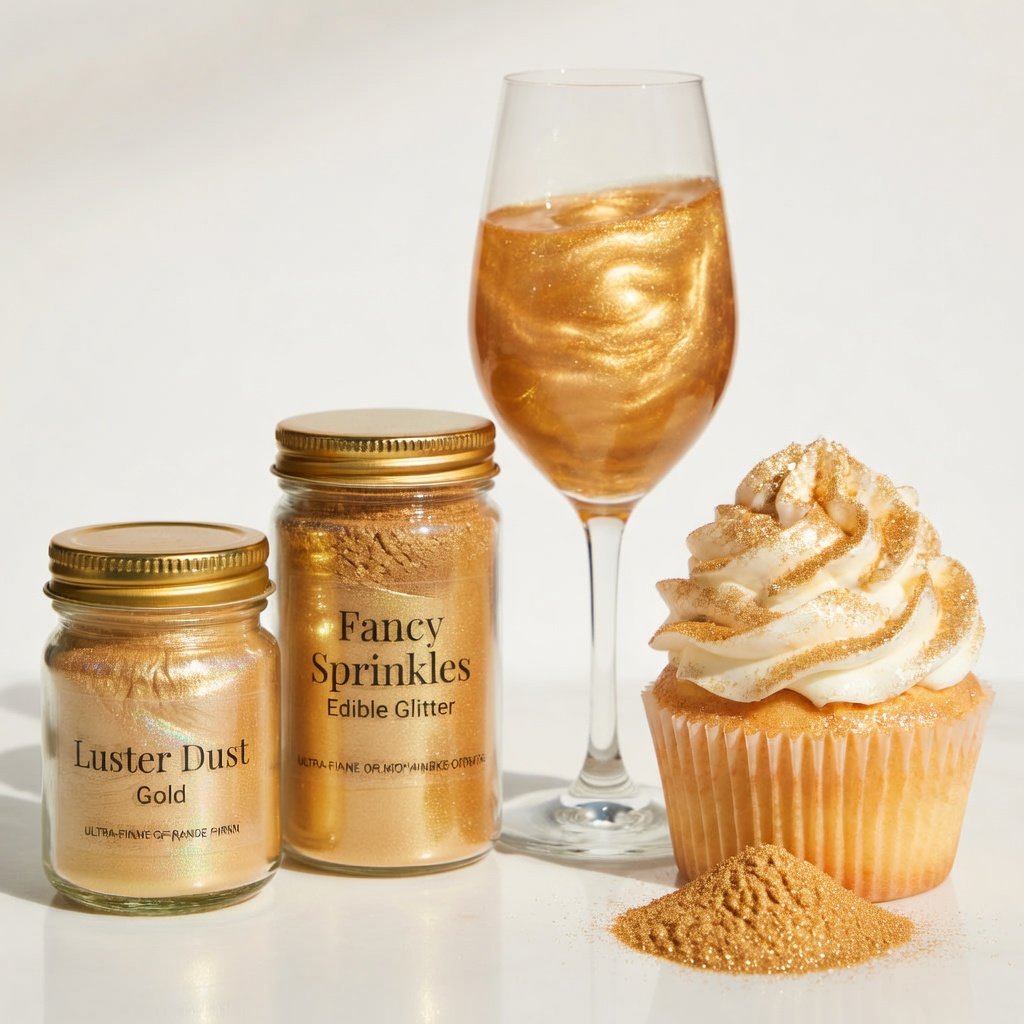
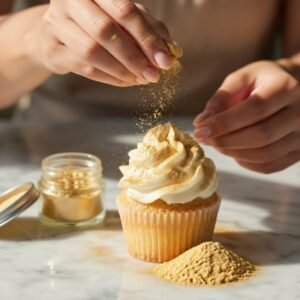
Fancy sprinkles edible glitter jar beside Luster Dust gold, with a shimmer-dusted cupcake and champagne glass on white
Key Takeaways

• Fancy Sprinkles makes edible glitter — but it’s a brand, not a category. Luster dust is a different product entirely.
• The shimmer quality, pigment depth, and how each performs on food and in drinks is genuinely different.
• For most uses — cocktails, cakes, chocolate — luster dust produces a richer, more professional result.
• If you want a direct answer: we’re biased, but we’ll show our work.

Two Different Things, Actually

Fancy Sprinkles is a brand. Luster dust is a product type. That distinction matters, because a lot of people search “fancy sprinkles edible glitter” when what they’re really asking is: what’s the best fancy edible glitter out there, and how do these compare?

Fair question. Let’s actually answer it.

Fancy Sprinkles makes a line of edible glitter products — loose glitters, glitter bombs, shakers — aimed mostly at home bakers and the Instagrammable-dessert crowd. They’ve built a following, the packaging is fun, and the products work. We’re not here to trash them.

But luster dust is a different animal. It’s a fine mica-based powder, not a granular glitter. It behaves differently on food, produces a different kind of shimmer, and performs in ways that chunky glitter just can’t. If you’ve ever wondered why some cakes look like they were kissed by light and others just look… sparkly, that’s usually the difference.

What Fancy Sprinkles Actually Sells

Fancy Sprinkles’ edible glitter line includes loose glitter in various colors, pre-mixed shakers, and some combination products with sprinkles. The glitter itself is made from sugar, starch, or mica — depending on the specific product — and it’s FDA compliant on the edible versions.

The color range is solid. Packaging is cute. Prices are reasonable for a specialty baking brand.

Where they run into limits:

The glitter particle size is larger than luster dust. That’s intentional — it creates a visible sparkle that photographs well. But it also means it sits on top of food rather than blending into it. On a smooth buttercream cake, you can see individual glitter pieces. On a cocktail, it tends to clump or settle rather than disperse.

For some applications, that look is exactly what you want. Sprinkle-topped cupcakes, chunky glamour, maximalist birthday cakes — great. For anything requiring a fine, silky shimmer? Less ideal.

Fancy Sprinkles Edible Glitter

Pros
  • ✓ FDA compliant edible options
  • ✓ Fun, colorful packaging
  • ✓ Good for chunky/textured glitter looks
  • ✓ Wide distribution (easy to find online)
  • ✓ Works well for sprinkle-heavy decorating
Cons
  • ✗ Larger particle size — sits on top rather than blending in
  • ✗ Doesn't disperse well in liquids
  • ✗ Limited performance on smooth surfaces like chocolate
  • ✗ Smaller jars relative to price
  • ✗ Color depth can look flat under certain lighting

What Luster Dust Does Differently

Luster dust — specifically ours, made with German mica pigments — is a microfine powder. The particle size is small enough that it genuinely integrates with surfaces rather than sitting on them. On glossy chocolate, it produces that metallic finish you see in high-end confectionery. On buttercream, it catches light the way a satin fabric does. In a champagne flute, it disperses into thousands of tiny shimmer particles that move through the liquid.

Gold Luster Dust

Gold is the one that converts people. Drop 1/8 teaspoon into a champagne glass before pouring, and the entire drink catches a warm shimmer as it moves. Not chunky. Not obviously “glitter.” Just this rich, luminous quality that makes people stop and look.

Silver Luster Dust

Silver does something specific on dark chocolate that’s hard to describe without sounding like a snob about it — but it looks genuinely expensive. Not party-store sparkle. More like a confectioner who knows what they’re doing.

Pink Luster Dust

Pink luster dust on white or vanilla buttercream is the thing. Warm, soft, iridescent. The pink doesn’t scream — it glows.

Luster Dust (Ours)

Pros
  • ✓ Microfine German mica pigments — richer, deeper shimmer
  • ✓ Disperses beautifully in liquids
  • ✓ Blends into surfaces instead of sitting on top
  • ✓ 10g jar covers 80+ cocktails or dozens of baked goods
  • ✓ FDA compliant, vegan, gluten-free, tasteless
Cons
  • ✗ Online only — no retail distribution
  • ✗ Fine powder requires a dry brush for some applications
  • ✗ Not the right tool if you want chunky/textured glitter

Side by Side


FeatureLuster DustOther
Glitter TypeGranular/chunky — sits on surfaceMicrofine powder — integrates with surface
Shimmer QualityVisible sparkle, catches light in chunksDeep, satin-like shimmer across the whole surface
Works in Cocktails?Tends to clump and settleDisperses evenly, stays suspended in bubbles
Works on Chocolate?Sits on top, can look grittyProduces metallic finish, looks professional
Works on Buttercream?Yes — good for chunky glam lookYes — smooth, luminous coverage
FDA Compliant?Yes (edible line)Yes
Typical Jar Size3-5g10g (our standard)
Price Range$8-12 for small jars$9.98 for 10g
Where to BuyAmazon, Target, their websitelusterdust.com

Which One Should You Buy?

Depends on what you’re making — but here’s the honest take.

Fancy Sprinkles is a good option if you want glitter you can grab quickly, you like their aesthetic, or you’re doing a maximalist cake where individual sparkle pieces are part of the look. It’s a real product that works.

Luster dust is better for almost everything else. If you want shimmer in drinks, metallic coverage on chocolate, a professional finish on fondant, or that soft iridescent look on frosting — the fine powder format does it better. Full stop.

The price difference is minimal. Our 10g jar at $9.98 gives you more product than most of what Fancy Sprinkles sells in the same price range, and the shimmer quality isn’t close. We use German mica pigments specifically because they produce a depth of color that cheaper mica can’t match.

We’re biased, obviously. But we’ve been using this stuff for years, and that’s exactly why we’re biased.

One More Thing

Whichever product you use — check the label. “Non-toxic” and “edible” are not the same thing. Non-toxic means it probably won’t send you to the hospital. Edible means it’s actually food. Our luster dust is FDA compliant, made from food-grade mica pigments, and has been from day one. The Fancy Sprinkles edible line is also compliant — just make sure you’re buying from their edible range and not a craft glitter by accident.

A lot of glitter on Amazon does not meet that bar. If it says “for decorative purposes only” — it’s not for food. Doesn’t matter how pretty it is.


Posted on Leave a comment

The Best Edible Glitter for Drinks: A Buyer’s Guide

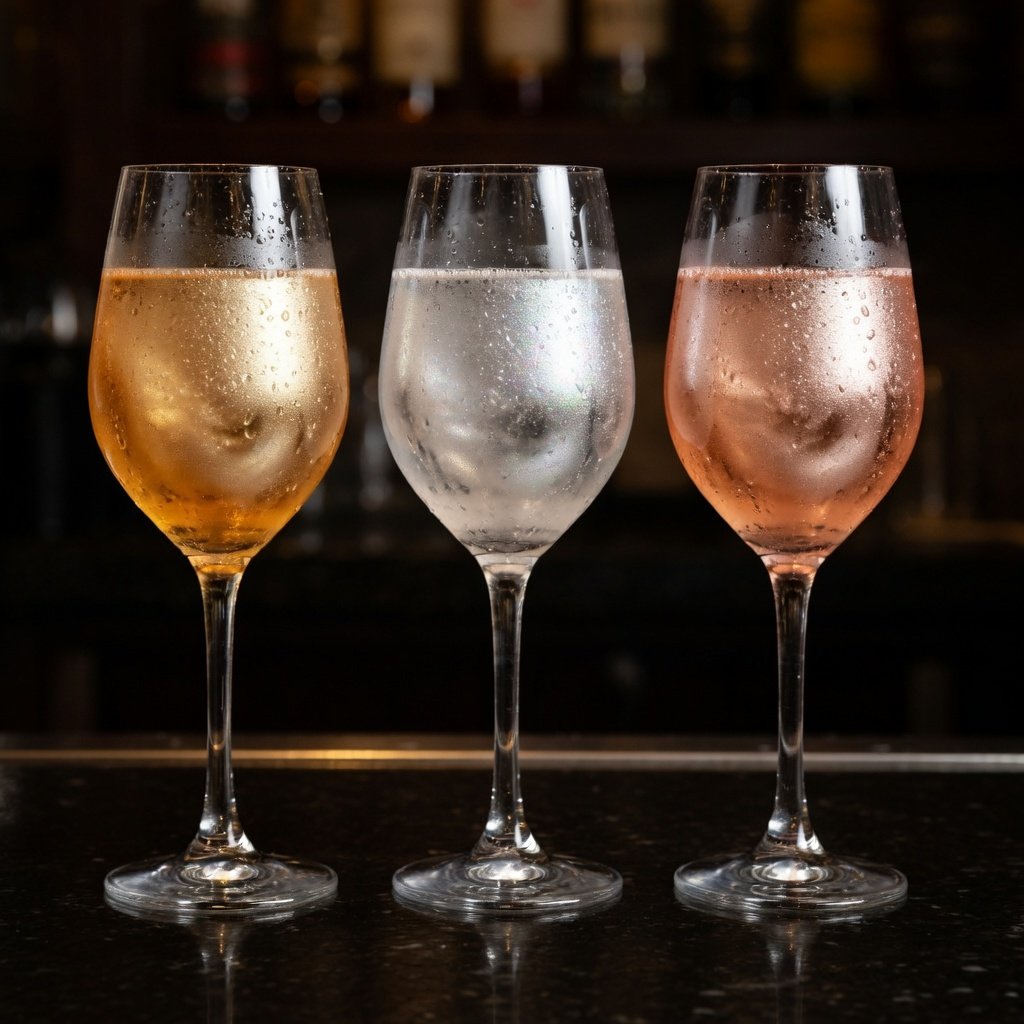
Best edible glitter for drinks shown in three cocktails with gold, silver, and rose gold luster dust shimmer
Key Takeaways

• Not all edible glitter is the same — “non-toxic” and “edible” mean very different things, and it matters
• Gold, silver, and rose gold each work differently depending on your drink and your vibe
• You need way less than you think — 1/8 tsp per glass is plenty
• Mica-based luster dust suspends in liquid and catches light as it moves — that’s what makes it shimmer

The Best Edible Glitter for Drinks: A Buyer’s Guide

Gold outsells every other color in drinks by a wide margin. But that doesn’t mean it’s always the right call. Silver hits different in a dark cocktail. Rose gold does something almost unfair to a pink gin spritz. The right edible glitter for your drink comes down to three things: color, light, and what you’re going for.

This guide covers what actually works, what to avoid, and which colors to reach for depending on the drink. We’ve made a lot of glitter cocktails. Here’s what we know.


First: Make Sure It’s Actually Edible

Quick reality check before anything else. A lot of glitter sold for drinks — especially on Amazon and Etsy — isn’t actually edible. The labels say “non-toxic” or “for decorative purposes only.” That means it won’t land you in the ER, but it’s not food. It’s craft glitter dressed up in a small jar.

Edible means FDA compliant. It means the pigments are food-grade mica — the same class of minerals that’s been approved for food use for decades. Our luster dust is that. Every color, every jar. If you’re buying from somewhere else, look for “FDA compliant” on the label. “Non-toxic” doesn’t cut it.


How Edible Glitter Actually Works in a Drink

Mica-based luster dust doesn’t dissolve. That’s the whole point. The particles stay suspended in the liquid, tumbling through it, catching light as they move. A gentle swirl is all you need to get it going. The shimmer you see is physics — light bouncing off thousands of tiny reflective particles as they float through the glass.

Heavier liquids like cream cocktails and thick syrups slow the particles down, which actually extends the shimmer effect. Sparkling water and champagne keep things moving fast — more active, more dynamic. Both work. They just look different.

And here’s the thing most people get wrong: less is more. Drop in too much and you get a cloudy drink, not a shimmery one. Start with 1/8 teaspoon. That’s it. You can always add a little more, but you can’t take it out.


Gold vs. Silver vs. Rose Gold: Which One?


FeatureLuster DustOther
Best forGold: champagne, whiskey sours, warm-toned cocktailsSilver: vodka drinks, gin cocktails, anything dark or cool-tonedRose Gold: pink gin, rosé, sparkling wine, anything blush
Light behaviorWarm, rich — deepens in amber liquidsBright, cool — pops in clear or dark liquidsSoft, romantic — diffuses in pale pink and white drinks
VisibilityHigh contrast in clear + warm drinksHighest contrast in dark cocktailsSubtle in neutral drinks, striking in pink ones
Jar size10g / 50g / 1kg10g / 50g / 1kg10g / 50g / 1kg
Our pick forNYE champagne, gold rush cocktail, classic eleganceEspresso martini, dark + stormy, modern minimalist lookAperol spritz riff, rosé, bridal showers, bachelorette events

Gold

Gold Luster Dust is the starting point for most people, and honestly the instinct is right. The warm tone reads as luxurious in almost any glass — but it really shines in champagne and light-colored cocktails where there’s nothing competing with it. Drop it into an amber whiskey drink and it almost disappears into the color. That’s beautiful too, just different.

Gold is also the most forgiving. It works in warm light, cool light, candlelight, phone flash photography. For events where you’re not controlling the environment, gold is the safe bet that still looks incredible.

Gold Luster Dust

Pros
  • ✓ Works in almost any drink
  • ✓ Looks great in photos under any light
  • ✓ Most universally recognized 'fancy' effect
  • ✓ Especially stunning in champagne and prosecco
Cons
  • ✗ Less contrast in amber or gold-colored liquids
  • ✗ If you want something unexpected, this isn't it

Silver

Silver Luster Dust gets slept on. Everyone reaches for gold — we totally understand — but silver in a dark cocktail is something else. An espresso martini with silver swirling through it looks like something from a very good bar in a very expensive hotel. It’s sharp, modern, a little dramatic. We love it.

Silver also works in clear drinks in a way gold doesn’t quite match. Vodka soda with silver shimmer catches light in this cold, clean way. Add a sprig of rosemary and a big ice cube and you’ve got a $18 cocktail situation happening in your kitchen.

Silver Luster Dust

Pros
  • ✓ Stunning contrast in dark cocktails
  • ✓ Clean modern look in clear drinks
  • ✓ Less common — more of a statement
  • ✓ Photographs exceptionally well with flash
Cons
  • ✗ Can look cold or stark in warm-toned drinks
  • ✗ Less expected — some guests prefer classic gold

Rose Gold

Rose Gold Luster Dust is the one that always surprises people. It reads softer than gold and warmer than silver — this blush-toned shimmer that practically was designed for a rosé spritz. Put it in anything pink or pale and the color amplifies. The drink looks like it’s glowing from the inside.

For events — bridal showers, baby showers, Valentine’s Day, really any occasion where pink drinks are happening — rose gold is the move. It photographs beautifully and guests absolutely lose their minds over it.

Rose Gold Luster Dust

Pros
  • ✓ Unbeatable in pink and blush-toned drinks
  • ✓ Perfect for events and celebrations
  • ✓ Softer and more romantic than gold or silver
  • ✓ Very popular for bachelorette and bridal occasions
Cons
  • ✗ Less versatile — doesn't cross over to dark cocktails as well
  • ✗ Not the right call if you want something bold

What to Use It In

The short answer: almost anything. Champagne and prosecco are the classics — the bubbles keep the particles moving constantly, which means the shimmer never settles. Gin cocktails, vodka drinks, sparkling lemonade, and even non-alcoholic mocktails all work great.

Creamy cocktails are underrated for glitter. An espresso martini or a white Russian with silver in it looks genuinely wild. The shimmer moves slower in thicker liquids, which makes it more visible as it drifts through the cream.

One thing to know: high-acid citrus drinks and very dark cola-based cocktails can mute the shimmer visually. Not ruin it — just mute it. If you’re going heavy on lime or dark mixer, silver tends to hold up better than gold or rose gold.


How Much Do You Need?

For drinks: 1/8 teaspoon per glass. That’s the number. Add it in, give the glass a gentle swirl or stir, and the particles do the rest. For a batch of 10 drinks, you’re using a little over a teaspoon total. A 10g jar does 80+ individual glasses easily — probably more.

For events, the math works out to: one 10g jar covers a party of 40-50 people if everyone’s getting one drink with shimmer. Going bigger? Our 50g jars are the better value at scale, and we offer free shipping on orders over $50.


The Verdict

First jar? Get gold. It works everywhere, looks incredible in the glass, and you’ll use it constantly. Once you’re hooked — and you will be — add silver for your dark cocktails and rose gold for everything pink. That’s the full toolkit.

The difference between luster dust that actually shimmers and cheap craft glitter in a tiny jar is real and immediately obvious the first time you use it. German mica pigments catch light the way cellophane and plastic shimmer powders just don’t. You’ll see it the second you drop it in the glass.


Posted on Leave a comment

The Best Edible Glitter for Cakes: A Buyer’s Guide

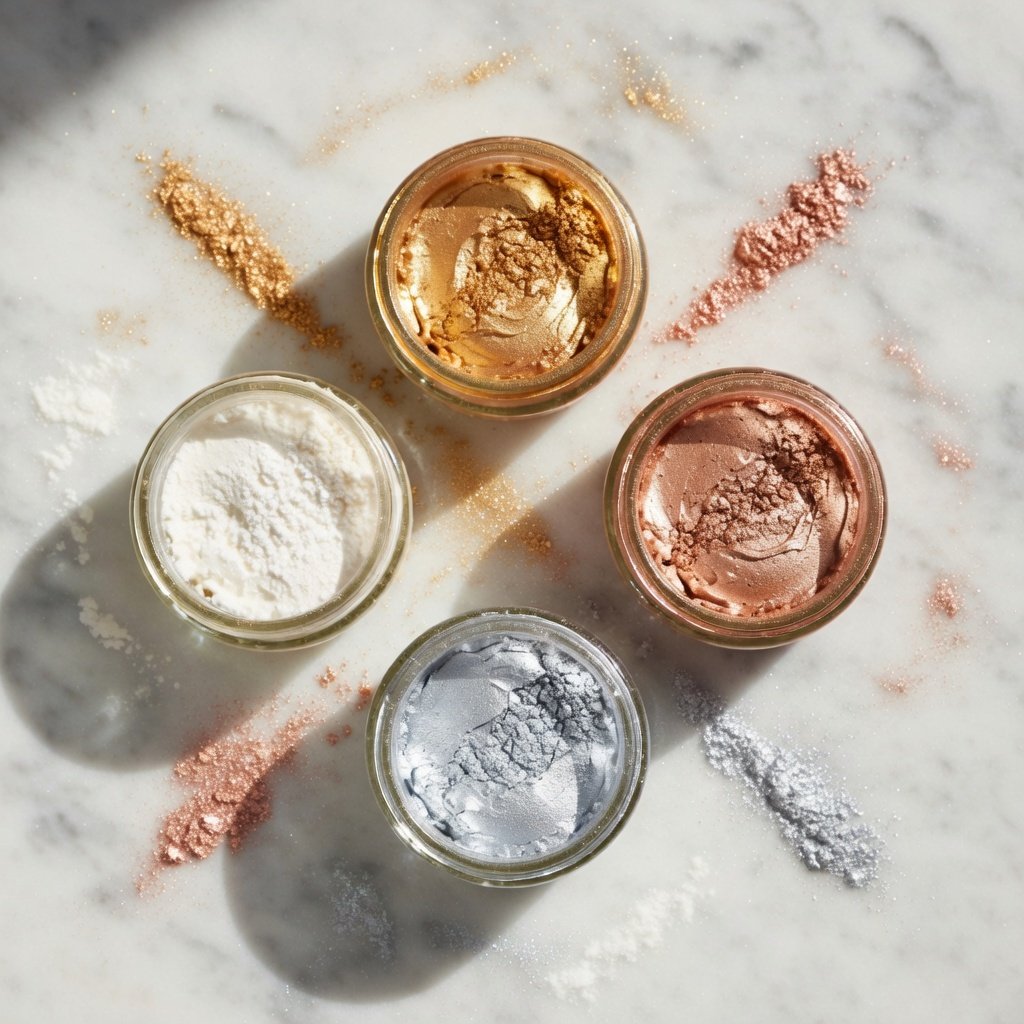
Edible glitter for cakes displayed in four open luster dust jars — gold, rose gold, silver, and white — with decorated cake slices on marble
Key Takeaways

• Not all edible glitter is actually edible — FDA compliant is the only label that matters
• Gold and rose gold suit warm frostings; silver and white work best on dark or cool-toned cakes
• A 10g jar goes further than you’d expect — 30+ cake applications from one jar, easy
• German mica pigments shimmer differently than cheap craft-store glitters. Once you see it, you can’t unsee it

The Best Edible Glitter for Cakes: A Buyer’s Guide

Most people buy edible glitter once, use it wrong, and assume it’s overrated. It’s not. Bad glitter and bad technique are two very different problems, and both are fixable. This guide covers the colors worth having, how to use them, and what to skip.

First: “Non-Toxic” Is Not the Same as “Edible”

This matters. A lot of glitter products — especially ones you’ll find at craft stores or in sketchy Amazon listings — say “non-toxic” on the label and nothing else. Non-toxic means it won’t send you to the hospital. It doesn’t mean it’s food. Real edible glitter is FDA compliant, made from food-grade ingredients, and safe to actually eat.

Our luster dust is FDA compliant across every color. Mica-based pigments, the same ones used in food production for decades. Vegan, gluten-free, completely tasteless. If a product you’re looking at doesn’t say FDA compliant, put it down.

The Four Colors That Actually Get Used

You don’t need a collection of 30 colors to start. You need the right four. After years of testing these on everything from naked cakes to five-tier fondant builds, here’s where each one earns its spot.

Gold

Gold outsells every other color by a wide margin. That’s not a coincidence. It works on buttercream, fondant, ganache — basically anything. The German mica pigments give it a deep, warm tone that cheap glitters can’t replicate. Where cheap gold looks flat or almost yellow, ours catches light with actual depth. You’ll notice it immediately.

Best uses: brushing onto fondant details, dusting over buttercream for a metallic finish, mixing into water to paint gold accents directly onto cake tiers. Gold Luster Dust is the one jar we’d say everyone needs.

Rose Gold

Rose gold has had a moment for the last few years and honestly it hasn’t passed. It’s warmer than silver, more versatile than straight pink, and it does something genuinely beautiful on white buttercream — a soft, blushed shimmer that looks expensive without trying too hard.

It’s particularly good on wedding cakes and birthday cakes where you want a warm metallic without the formality of gold. We’d also reach for Rose Gold Luster Dust for drip cakes — brushed over the set drip, it catches light at every edge.

Silver

Silver gets underestimated. Everyone reaches for gold by default, and silver sits in the background doing nothing — which is a waste. On dark desserts — chocolate ganache, dark red velvet, navy fondant — silver looks extraordinary. Almost expensive in a way that’s hard to explain until you see it in person.

It’s also the move for anything modern or minimalist. Clean white cake, simple design, silver dusted over the top. Done. Silver Luster Dust is one of those colors that pays for itself the first time you use it right.

White

White luster dust isn’t about adding color — it’s about adding light. Dusted over a white fondant cake, it creates this soft, pearlescent glow that photographs beautifully. It’s subtle, which is exactly the point.

It’s also the secret ingredient for making other colors pop. A light base coat of white before applying gold or rose gold amplifies the shimmer significantly. White Luster Dust is the one color that professional cake decorators almost always have on hand — even if they never tell you about it.

How to Actually Apply It

Two methods. Both work. Which one you use depends on what you’re going for.

Dry dusting: Dip a soft food-safe brush into the jar, tap off the excess, and brush directly onto the surface. Works best on fondant and dry surfaces. The shimmer is diffuse, like a glow rather than a paint. Good for large areas.

Wet painting: Mix a small amount of luster dust with food-grade alcohol (clear vanilla extract or vodka both work) or a dedicated edible painting medium. The alcohol evaporates quickly, leaving the pigment behind as a metallic paint. Sharp, defined, and brilliant. Use this for details, lettering, or anywhere you want a true metallic effect.

One thing people consistently get wrong: using too much. With dry dusting, less is more. Start with almost nothing on the brush, build up gradually. You can always add more. Overdone shimmer looks chalky, not metallic.

How Our Colors Compare Side by Side


FeatureLuster DustOther
ToneGold — warm, deep yellow-goldRose Gold — warm, pink-bronze hybrid
Best SurfaceButtercream, fondant, ganacheWhite buttercream, smooth fondant, drip edges
Best OccasionWeddings, birthdays, celebrationsWeddings, bridal showers, modern celebrations
Pairs WithSilver (contrast), White (base coat)Pink, Gold (blend), White (base coat)
Dry Dust ResultRich metallic glowSoft blushed shimmer
Wet Paint ResultBold metallic goldWarm metallic bronze-pink

Gold Luster Dust

Pros
  • ✓ Works on every frosting type
  • ✓ Most versatile color we make
  • ✓ Deepest, richest shimmer
  • ✓ Photographs brilliantly
Cons
  • ✗ Can look too formal for some casual designs
  • ✗ Very easy to overdo on lighter cakes

Rose Gold Luster Dust

Pros
  • ✓ Warm and modern at the same time
  • ✓ Beautiful on white and ivory surfaces
  • ✓ Works as both accent and full coverage
  • ✓ Trending but not going anywhere
Cons
  • ✗ Less versatile on dark-toned cakes
  • ✗ Slight learning curve to get the tone right

Silver Luster Dust

Pros
  • ✓ Stunning on dark and jewel-toned cakes
  • ✓ Modern, editorial look
  • ✓ Great for minimalist designs
  • ✓ Underutilized — makes your work stand out
Cons
  • ✗ Can look cold on warm-toned frostings
  • ✗ Needs the right cake to really sing

White Luster Dust

Pros
  • ✓ Adds glow without adding color
  • ✓ Amplifies other colors underneath
  • ✓ Subtle and photogenic
  • ✓ Works on literally every cake
Cons
  • ✗ Easy to miss in photographs if you're too subtle
  • ✗ Doesn't work as a standalone statement color

What You’ll Get From a 10g Jar

More than you think. A 10g jar of luster dust will get you through 30+ full cakes with dry dusting, and significantly more if you’re using it for detail work only. The particles are fine enough that a little goes a long way. We’ve seen people buy the 1kg bulk size — that’s for bakeries running luster dust through dozens of cakes a week. For home bakers, 10g is the right place to start.

All jars ship free over $50. So grab two or three colors and you’re set.

The Honest Verdict

Start with gold. If you only buy one color, that’s the one — it’s the most forgiving, the most versatile, and the most impactful. Add rose gold next if you work with lighter cakes or warmer color palettes. Silver if you do anything modern or dark-toned. White once you’re ready to really dial in your technique.

The quality difference between German mica pigments and what you’ll find at most craft stores is real and visible. That shimmer — the way it moves when light hits it from different angles — that’s what you’re paying for. And at $9.98 for a 10g jar, it’s not exactly a commitment.


Posted on Leave a comment

Luster Dust vs. Disco Dust vs. Petal Dust: Complete Comparison

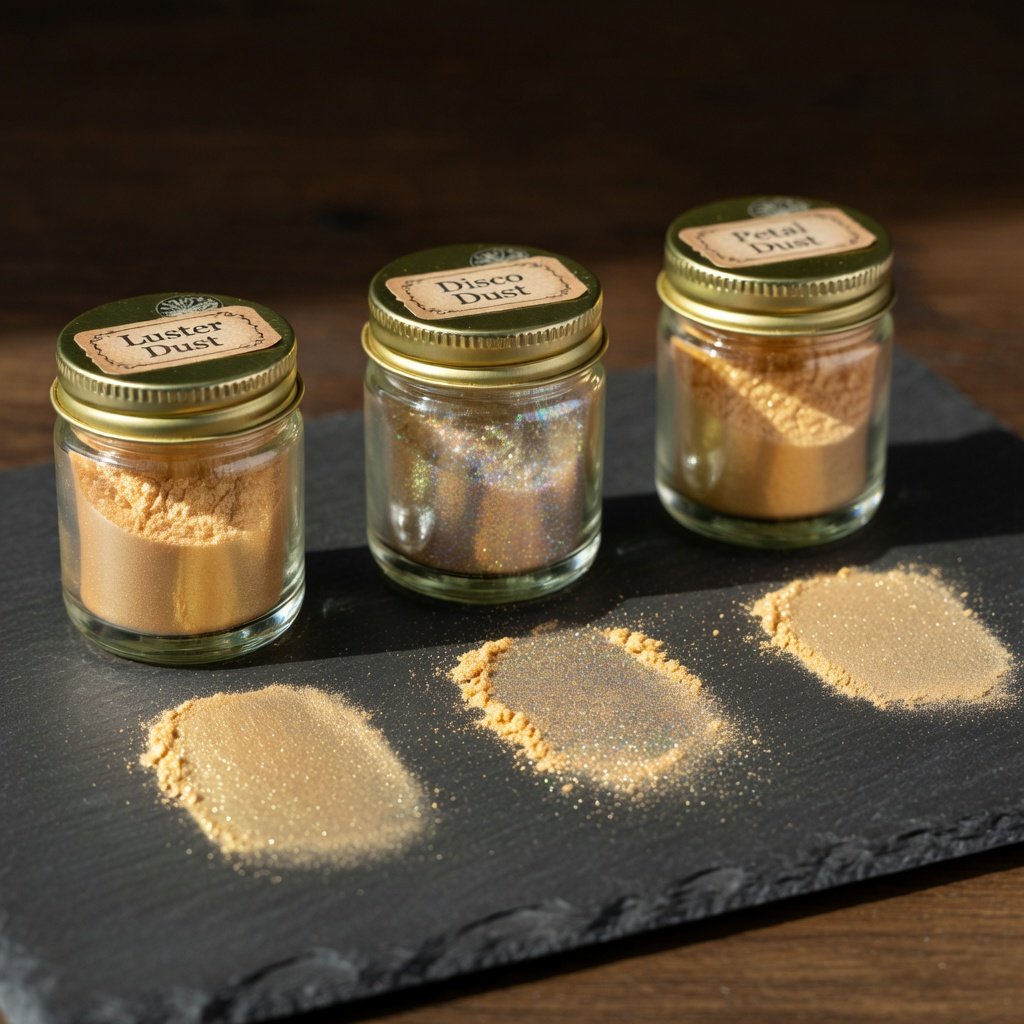
Edible glitter dust comparison: three jars of luster dust, disco dust, and pearl luster dust with shimmer swatches on dark surface
Key Takeaways

• Luster dust = pearlescent shimmer, FDA compliant, safe in food and drinks
• Disco dust = chunky glitter sparkle, NOT edible — decoration only
• Petal dust = matte finish, no shimmer, used for detail work on sugar flowers
• If it’s going in someone’s mouth, luster dust is the only one of these three you should reach for

Luster Dust vs. Disco Dust vs. Petal Dust: Complete Comparison

These three show up together constantly — in baking supply stores, on Amazon, in online cake decorating forums — and the names get used interchangeably by people who don’t know better. They’re not interchangeable. Two of them are edible. One of them isn’t. And the differences in what they actually do are bigger than most people realize before they’ve bought the wrong one.

Here’s the full breakdown.


What Each One Actually Is

Luster Dust

Luster dust is a fine powder made from mica-based pearlescent pigments. The good stuff — ours included — uses German mica pigments, which produce a deeper, richer shimmer than the cheap alternatives. It’s FDA compliant, tasteless, completely odorless, and safe to eat. Drop it in a drink, dust it on a cake, mix it into frosting. It does the job.

The finish is what makes it distinct: a soft, pearlescent glow. Not chunky glitter. Not glitter-glitter. A shimmer. Like the inside of an oyster shell, but in gold or rose gold or silver. The particles are fine enough that they suspend in liquid, which is why luster dust is the go-to for [shimmer cocktails and drinks](https://lusterdust.com/how-to-use-edible-glitter-in-drinks-the-complete-guide/).

Our Gold Luster Dust is the most-used color we sell. Warm, rich, catches light in a way that looks genuinely expensive. Silver Luster Dust is the second — cooler tone, incredible on dark chocolate, looks almost metallic on fondant.

Disco Dust

Disco dust is the sparkly one. Big, chunky glitter particles. It catches light aggressively — in a candle-lit room, a cake covered in disco dust looks like it’s lit from inside. The effect is genuinely dramatic.

But here’s the problem: disco dust is typically made from polyester plastic. Not food-grade. It shows up on cakes constantly, sold under “non-toxic” labeling, and a lot of people assume non-toxic means edible. It doesn’t. Non-toxic means it won’t send you to the hospital. It doesn’t mean you should eat it. We covered this distinction in detail in our [ingredient breakdown post](https://lusterdust.com/what-is-edible-glitter-made-of-a-complete-ingredient-breakdown/) — worth reading if you’re buying glitter products for the first time.

Some newer disco dust products have started using sugar-based particles instead of polyester, which makes them actually edible. But you need to read the label carefully — if it says “non-toxic” only, not “FDA compliant” or “edible,” treat it as decoration only.

Petal Dust

Petal dust does something completely different. It’s a matte, ultra-fine powder designed for sugar flowers and detailed cake work. No shimmer, no sparkle — just pigment. It’s used to add realistic color gradients to gum paste or fondant petals, or to shade details that would look wrong with any shine at all.

Petal dust is also edible, but that’s almost beside the point. Nobody’s putting petal dust in cocktails. It’s a precision tool for decorators who need color without glow.


FeatureLuster DustOther
Primary UseLuster Dust: Shimmer on cakes, drinks, chocolates, fondantDisco Dust: Heavy glitter effect on cakes and dessertsPetal Dust: Matte color on sugar flowers and detail work
FinishPearlescent shimmerChunky sparkle / glitterFlat matte color
Edible?Yes — FDA compliantOften no — check label carefullyYes — but rarely consumed directly
Safe in Drinks?YesNoTechnically yes, but pointless — no shimmer effect
Made FromMica-based pigmentsPolyester plastic (or sugar, in edible versions)Cornstarch + FDA-approved colorants
Particle SizeVery fineCoarseUltra-fine

The Pros and Cons

Luster Dust

Pros
  • ✓ FDA compliant and actually edible
  • ✓ Works in drinks — particles suspend in liquid
  • ✓ Fine shimmer looks polished, not garish
  • ✓ Tasteless and odorless — doesn't affect flavor
  • ✓ Versatile: cocktails, cakes, chocolates, macarons
Cons
  • ✗ Less dramatic than disco dust in low-light settings
  • ✗ Can look subtle if you're expecting chunky glitter

Disco Dust

Pros
  • ✓ Dramatic, high-impact sparkle
  • ✓ Great visual effect on cakes in photos
  • ✓ Wide availability in craft stores
Cons
  • ✗ Most versions are NOT edible — polyester plastic
  • ✗ 'Non-toxic' labeling is misleading
  • ✗ Not safe in drinks
  • ✗ Edible versions exist but require careful label reading

Petal Dust

Pros
  • ✓ Perfect for realistic sugar flower shading
  • ✓ Ultra-fine for detailed work
  • ✓ Edible and FDA compliant
  • ✓ Great for matte color accents
Cons
  • ✗ Zero shimmer — not the right tool if you want glow
  • ✗ Too flat for drinks or general cake decoration
  • ✗ Very niche use case

Which One Do You Actually Need?

For most people reading this — home bakers, bartenders, event hosts — the answer is luster dust. Full stop. It’s the only one that works in drinks, it’s genuinely edible without any asterisks, and the shimmer it produces is more versatile than people expect before they try it.

Disco dust is for situations where you specifically want that chunky glitter-bomb look and the food won’t actually be eaten directly — think display cakes, non-consumable decorations, or decorating the outer surface of a cake with a barrier between the dust and the actual cake. Even then, be careful. Read the label. If it doesn’t say FDA compliant, don’t put it anywhere near food.

Petal dust is a tool for one specific job: sugar flower work. If you’re a cake decorator doing detailed botanical decorations, you probably already know you need it. If you’re not, you don’t.

A Note on the “Pearl” Confusion

You’ll see terms like “pearl luster dust” and “luster pearl dust” floating around, and they mean the same basic thing — luster dust with a pearlescent finish. Most luster dusts have that pearl quality by nature of how mica pigments work. If you’re searching for shimmer powder for food and drinks, these terms all lead to the same product category. Our [full guide to what luster dust is](https://lusterdust.com/what-is-luster-dust-the-complete-guide/) covers the terminology in more depth if you want the full picture.


The Safety Question

This comes up every time someone discovers edible glitter dust exists. Is it safe? Here’s the honest answer: luster dust made with FDA compliant mica pigments — yes, completely safe. Tasteless, digests fine, used in food products for decades. Disco dust made from polyester — no, don’t eat it. It won’t kill you (that’s what non-toxic means), but plastic glitter has no business being in your stomach.

The rule is simple. Look for “FDA compliant” or “edible” on the label. Not just “non-toxic.” If a product only claims non-toxic, it’s decorative use only. Our luster dust is FDA compliant across every color — mica-based pigments, vegan, gluten-free, no GMOs. If you want the full safety breakdown, we wrote a whole post on [whether edible glitter is actually safe](https://lusterdust.com/is-edible-glitter-actually-safe-everything-you-need-to-know/) — it covers what to look for on labels and what to avoid.


The Verdict

Luster dust wins for general use. It’s the only option that’s safe in drinks, genuinely edible, and produces a finish that works across cakes, cocktails, chocolates, and basically anything else you’d want to make shimmer. The pearl finish is versatile in a way that chunky glitter isn’t — it adds glow without looking like you covered something in craft store supplies.

Disco dust has its place, but only on non-edible decorations or with very careful label checking. Petal dust is great if sugar flowers are your thing. For everyone else, luster dust is the one.


Posted on Leave a comment

Luster Dust vs. Edible Glitter: What’s the Difference?

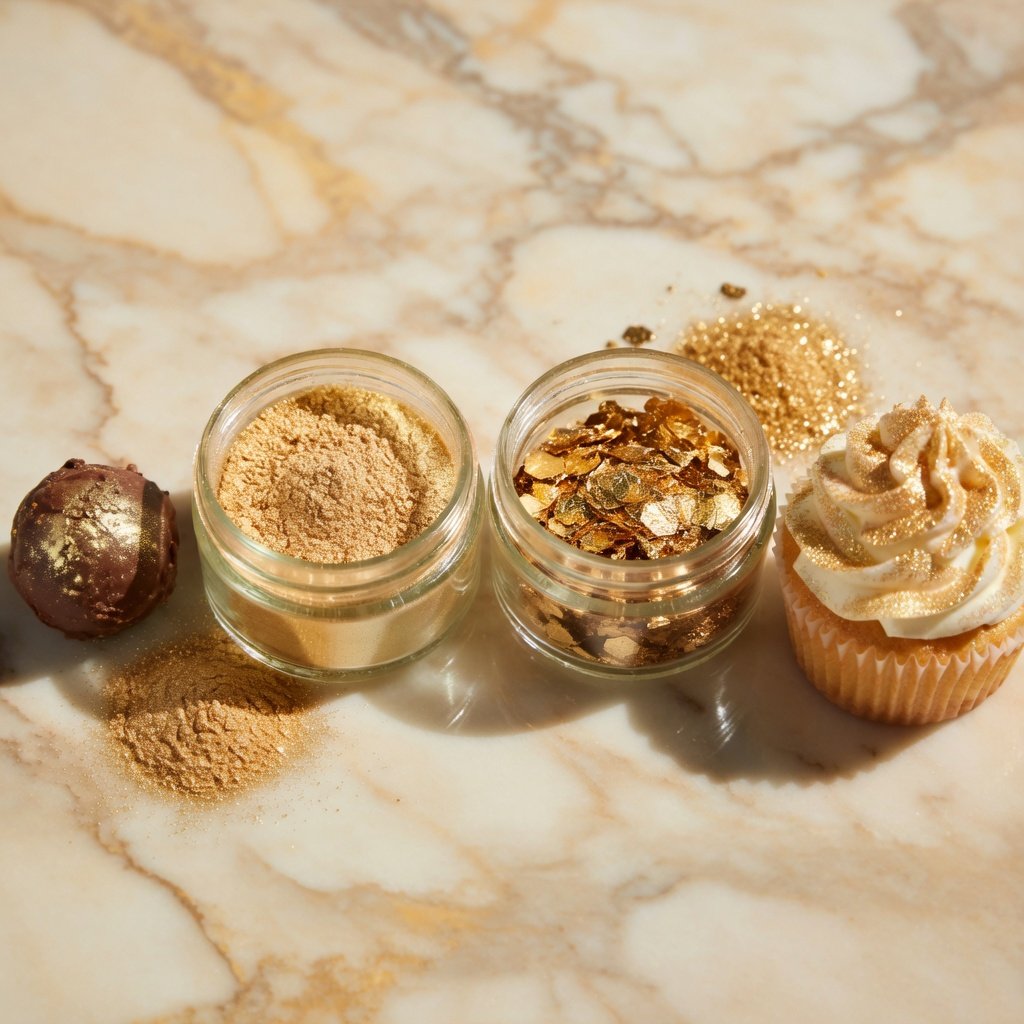
Luster dust vs edible glitter side-by-side: gold powder jar and chunky glitter jar with a dusted truffle and glitter cupcake
Key Takeaways

  • Luster dust and edible glitter are both edible — but they look and behave completely differently
  • Luster dust is a fine powder that creates a pearlescent shimmer; edible glitter comes in larger, sparkly flakes or crystals
  • Luster dust is better for drinks, painted finishes, and subtle sheen; edible glitter is better for bold, visible sparkle on cakes and cookies
  • Both should be FDA compliant — if the label only says “non-toxic,” it’s not food

They’re Not the Same Thing

People use “luster dust” and “edible glitter” like they mean the same thing. They don’t. Both are edible, both add sparkle — but the finish, texture, and best use cases are genuinely different. Mixing them up is how you end up with chunky crystals on a cake where you wanted a smooth metallic sheen, or a fine-powder haze in a drink where you wanted actual visible glitter.

Here’s a clear breakdown of what each one is and when to reach for which.

What Is Luster Dust?

Luster dust is an ultra-fine powder made from mica-based pigments. The particles are tiny — we’re talking microns — and that’s exactly what gives them their signature pearlescent, light-catching shimmer. It’s the same category of ingredient that’s been used in food manufacturing for decades.

You apply it dry (dusted with a brush), mixed into a liquid (painted onto fondant or chocolate), or dropped into a drink. The finish is smooth and luminous. Not chunky. Not sparkly in a disco-ball way. More like a glow.

If you’ve ever seen a cake that looked like it was made of actual gold, or a champagne glass with shimmer that moved inside the liquid — that was luster dust. Our Gold Luster Dust is the one we’d point you to for that effect. Drop 1/8 teaspoon into a glass before pouring and the whole thing comes alive.

For a deeper look at what luster dust actually is and how it works, the complete guide covers it.

What Is Edible Glitter?

Edible glitter has bigger, more distinct particles. It’s what you see on birthday cakes that have actual visible sparkly bits on top — like someone scattered tiny sequins across the frosting. The pieces catch light differently than luster dust because they’re large enough to reflect it individually.

Most edible glitter is made from sugar, starch, or mica, with food coloring. The texture ranges from fine-ish flakes to chunky crystals depending on the product. You sprinkle it on, press it into frosting, or use it as a rim decoration on cocktail glasses.

The effect is bolder and more playful. Great for celebration cakes, cupcakes, and anywhere you want the sparkle to be visible from across the room. Not ideal for drinks — the particles either sink or float and don’t create that swirling shimmer that luster dust does.

For a full breakdown of what goes into these products, this ingredient breakdown is worth a read.

Side-by-Side Comparison


FeatureLuster DustOther
TextureUltra-fine powderFlakes or crystals
FinishPearlescent shimmer, metallic glowBold, visible sparkle
Best for drinksYes — swirls beautifully in liquidNo — doesn't suspend well
Best for cakes & cookiesYes — for metallic or painted finishesYes — for decorative sparkle on top
ApplicationBrush, mix into liquid, or dustSprinkle or press on
VisibilitySubtle to mediumHigh — you can see individual particles
FDA CompliantShould be (always check)Should be (always check)
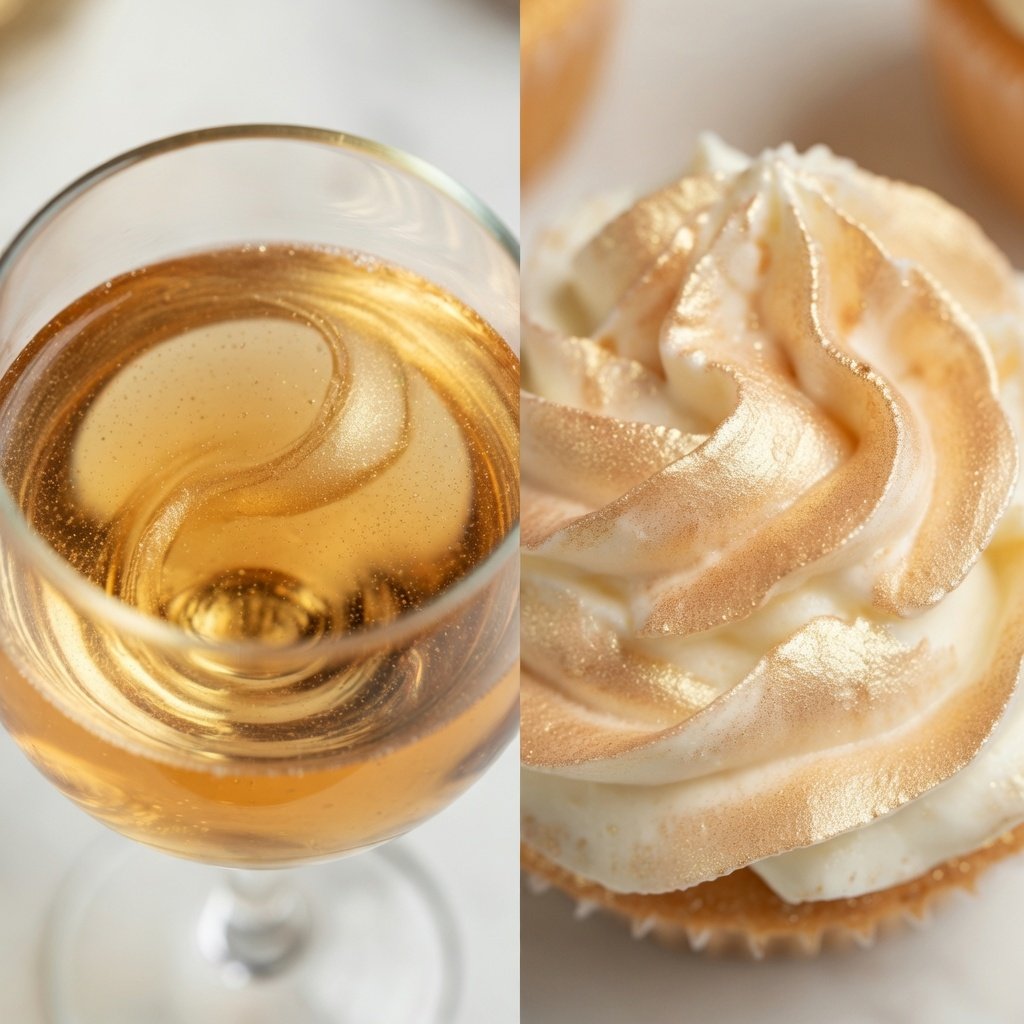
Luster dust vs edible glitter comparison: gold dust swirling in champagne on left, chunky edible glitter on white buttercream cupcake on right
This side-by-side luster dust and edible glitter comparison shows exactly how each topper looks in real use.

The Honest Verdict on Each

Luster Dust

Pros
  • ✓ Works in drinks and on food
  • ✓ Smooth, luminous finish
  • ✓ More versatile overall
  • ✓ Easier to control application
  • ✓ Paintable when mixed with alcohol or extract
Cons
  • ✗ Less dramatic on its own
  • ✗ Can go everywhere if you're not careful
  • ✗ Takes a second to learn the right quantity

Edible Glitter

Pros
  • ✓ Bold, visible sparkle
  • ✓ Great for decorating cakes and cookies
  • ✓ Easy to sprinkle — minimal technique required
  • ✓ More dramatic from a distance
Cons
  • ✗ Doesn't work in drinks
  • ✗ Can look overdone if you use too much
  • ✗ Less control over finished look

A Quick Note on Safety

Both types should be FDA compliant to actually be edible. This distinction matters more than most people realize — plenty of products sold as “edible glitter” on Amazon and in craft stores only say “non-toxic” on the label. Non-toxic and edible are not the same thing.

Ours is fully FDA compliant, vegan, gluten-free, made with German mica pigments, and completely tasteless. You’re not adding any flavor — just shimmer. If you want the full story on safety, we covered it here.

Which One Should You Buy?

Drinks? Luster dust, every time. A pinch of our Gold Luster Dust in champagne is one of the easiest and most impressive things you can do. The Gold Shimmer Champagne Cocktail takes about 30 seconds and looks like something from a high-end bar.

Cakes and cupcakes with metallic finishes? Also luster dust. Brush it dry over fondant or mix it with a tiny bit of vodka for a painted gold effect.

Bold, visible glitter on frosted cakes and cookies? That’s where chunky edible glitter earns its spot.

Honestly — if you only buy one thing, start with luster dust. It’s more versatile. Rose Gold Luster Dust works on basically everything right now, and Silver Luster Dust on dark chocolate is one of those combinations that always gets a reaction.

A Word on “Edible Glitter Dust”

You’ll see this term floating around — “edible glitter dust” — and it usually means luster dust. It’s just a different name for the same fine-powder, mica-based product. Some brands call it glitter dust, some call it luster dust, some call it shimmer dust. The texture and application are the same. If it’s a fine powder and it’s FDA compliant, it’s what we’re talking about here.


Posted on Leave a comment

5 Ways to Apply Luster Dust

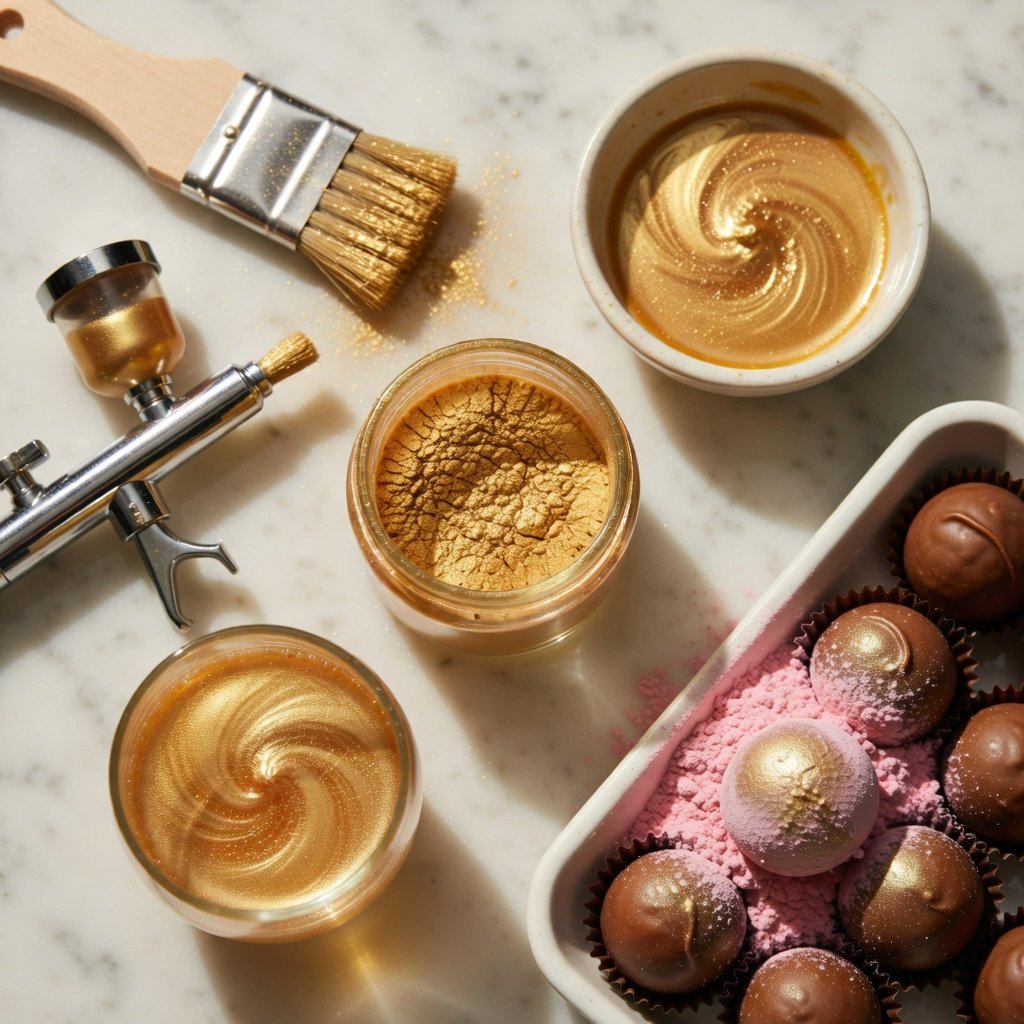
How to use luster dust: five tools including dry brush, alcohol mix, airbrush, truffles, and shimmer cocktail on marble
Key Takeaways

  • Five application methods — dry dusting, wet painting, mixing into liquid, rolling, and airbrushing — each works better in specific situations
  • Dry dusting is the fastest and hardest to mess up; wet painting gives you the most control
  • How much you use matters. Too little and you lose the shimmer. Too much and it gets muddy.
  • All five methods work with any of our colors — same dust, totally different results depending on how you apply it

Most people find luster dust and immediately ask: okay, but how do I actually use this? The short answer — you’ve got options. Five of them, really. And the method you choose changes everything: how intense the shimmer looks, how long it takes, and what kind of project it works on.

Here’s each one, straight. No fluff.

1. Dry Dusting

This is the starting point for basically everyone. Pick up a dry food-safe brush — a fluffy one works best — dip it lightly into the jar, and dust it directly onto your surface. That’s it.

Dry dusting works beautifully on fondant, gum paste, chocolate, and matte frostings. The shimmer stays on the surface, which means light hits it directly and the effect is maximum. Gold Luster Dust on fondant flowers is a classic for a reason — the dry application gives you that soft metallic glow that looks hand-painted even though it took about 30 seconds.

Two things to watch: tap the brush against the jar rim before applying so you’re not dropping a clump, and build up in thin layers rather than going heavy on the first pass. You can always add more. You can’t take it off.

2. Wet Painting (Mixed with Alcohol)

Mix luster dust with a small amount of high-proof clear alcohol — vanilla extract, lemon extract, or vodka all work — and you’ve got a metallic paint. The alcohol evaporates fast and leaves the pigment behind in a clean, opaque finish.

This is how professional decorators get those fully gilded surfaces. A thin, even coat of Silver Luster Dust mixed with vodka on dark chocolate looks genuinely expensive — like something from a high-end patisserie. The ratio is roughly a pinch of dust to 4-5 drops of alcohol, mixed until you get a thin cream consistency. Too thick and it streaks; too thin and it takes forever to build up.

Flat-edged brushes give you clean coverage. Fine-tip brushes let you do detail work — lettering, veining on sugar flowers, highlighting specific edges. If you’re going for full cake coverage, start with the complete cake decorating guide before diving in — there are a few tricks that save a lot of time.

3. Mixing Directly into Liquid

Drop a pinch into a drink, give it a swirl, and watch the shimmer move through the liquid as it settles. This is our most popular application by a wide margin, which makes sense — the visual effect in a glass is genuinely stunning and you need about 1/8 teaspoon per drink.

Works in champagne, cocktails, lemonade, hot drinks, you name it. The key is not overdoing it. More dust doesn’t mean more shimmer — it means the liquid looks murky instead of sparkly. Start small. You can always add a touch more.

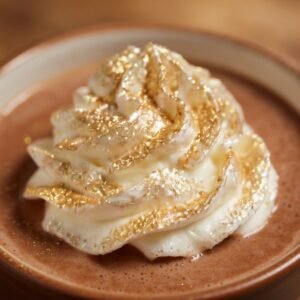
You can do the same thing with whipped cream. A pinch of Pink Luster Dust folded into freshly whipped cream right before serving gives you this soft, iridescent topping that people genuinely can’t stop staring at. We have a full recipe for it — shimmer whipped cream topper — if you want specifics.

4. Rolling or Pressing

Pour a small pile of luster dust onto a plate or piece of parchment, then roll truffles, cake pops, or fruit directly through it. The dust sticks to anything slightly tacky — ganache, frosting, fresh fruit — with zero effort involved.

This method gives you full, even coverage that you genuinely can’t achieve with a brush. A dark chocolate truffle rolled in silver comes out looking almost chrome. Strawberries rolled in pink? Ridiculous. Drop them on a dessert board at a party and watch what happens.

The one thing to know: surfaces need some grip. A completely dry surface won’t pick up the dust evenly. If you’re working with something that’s dried out, a very light mist of water or a thin coat of corn syrup gives the dust something to hold onto.

5. Airbrushing

If you own a food-safe airbrush, luster dust is worth experimenting with. Mix it into your airbrush medium — or straight into clear alcohol — and you get smooth, gradient coverage over large surfaces with no brush marks anywhere.

This one’s not for beginners. The setup takes time, the cleaning takes time, and getting the mixture right (not too thick or it clogs) is a bit trial and error. But for wedding cakes or large tiered cakes where you need a perfectly even metallic sheen across the whole surface, nothing comes close. Start with a simpler method and work up to the airbrush once you know how the pigments behave.

Also worth knowing: not all luster dusts mix cleanly into airbrush medium. Ours do — the German mica pigments disperse evenly instead of clumping — but test a small amount before loading your sprayer for a big project.

Which Method Should You Use?

Quick shortcut if you’re deciding:

  • Fast and easy: Dry dusting. Hardest to mess up, works on almost everything.
  • Opaque metallic finish: Wet painting with alcohol. Full coverage, clean edges.
  • Drinks or whipped cream: Mix directly in. 1/8 teaspoon, gentle swirl.
  • Truffles, cake pops, fruit: Roll and press. Even coverage, zero effort.
  • Large cake surfaces, no brush marks: Airbrush. Worth it for the right project.

None of these are complicated. A few minutes of practice and you’ll have a feel for whichever one you’re using. The dust is forgiving — and on most surfaces, if you go a little heavy, you can just add more and it layers without looking off.


Posted on Leave a comment

Is Luster Dust Edible? Separating Fact from Fiction

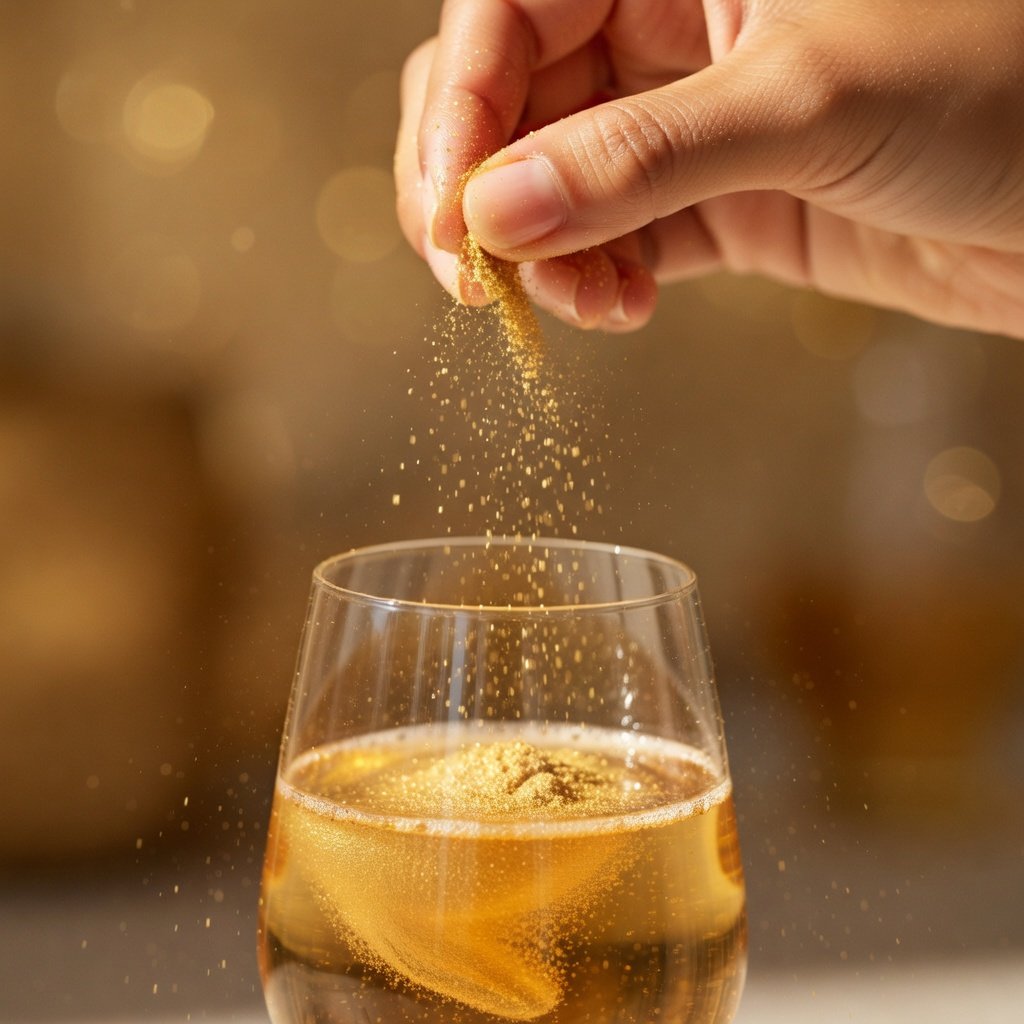
Is luster dust edible? Gold edible luster dust falling from a hand into a champagne glass, catching warm light mid-air
Key Takeaways

  • Luster dust is edible — but only if it’s made with FDA compliant, food-grade ingredients. “Non-toxic” is not the same thing.
  • Our luster dust is made from mica-based pearlescent pigments. Tasteless, odorless, vegan, gluten-free.
  • Yes, you can use it in drinks. A pinch in a cocktail or mocktail is completely safe.
  • If the label doesn’t say “FDA compliant” or “food grade,” don’t eat it.

Short answer: yes. But there’s a longer answer worth knowing, because a lot of the “edible glitter” out there isn’t actually edible. And the difference matters.

Our luster dust is made with FDA compliant ingredients — food-grade mica pigments that have been used in food and beverage products for decades. Tasteless, odorless, no weird aftertaste, nothing artificial. You can use it in drinks, on cakes, on chocolate, straight off your finger if you’re curious. It’s fine.

The confusion comes from cheaper products that slap “non-toxic” on the label and call it a day. Non-toxic means it won’t send you to the hospital. Edible means it’s actual food-grade material, reviewed and compliant with FDA standards. These are not the same thing. If you’ve ever seen “for decorative purposes only” hidden on the bottom of a glitter jar, that’s a craft glitter wearing a costume. Don’t eat it.

What’s Actually in It

Luster dust is mica — a naturally occurring mineral — ground down into fine particles and coated with FDA approved pigments. That’s the short version. The longer version is covered in our complete guide to luster dust, but the key point is this: the ingredient list is short, recognizable, and food-approved.

No plastics. No craft glitter. No mystery shimmer. Mica has been used in food products — chocolates, candies, cake decorations — for a long time. It passes through your body without being absorbed. The FDA classifies it as safe for consumption at the quantities you’d actually use in food.

Our stuff specifically uses German mica pigments. Higher purity, richer shimmer, better results. That’s why the color on a Gold Luster Dust looks warm and deep rather than flat and plasticky.

Can You Use Luster Dust in Drinks?

Yes. Absolutely. This is actually one of our favorite uses for it.

Drop a pinch of Silver Luster Dust into a margarita. Add gold to champagne before guests arrive. Stir Pink Luster Dust into a lemonade. The particles suspend in liquid and catch light as the drink moves — it’s one of those things that’s hard to describe until you see it in person.

The one thing people get wrong: using too much. You want about 1/8 teaspoon per glass, sometimes less. A pinch. The particles catch light because they’re moving through the liquid — dumping in half a jar just makes the drink look murky. Less is genuinely more here. We go deeper on technique in our guide to using edible glitter in drinks.

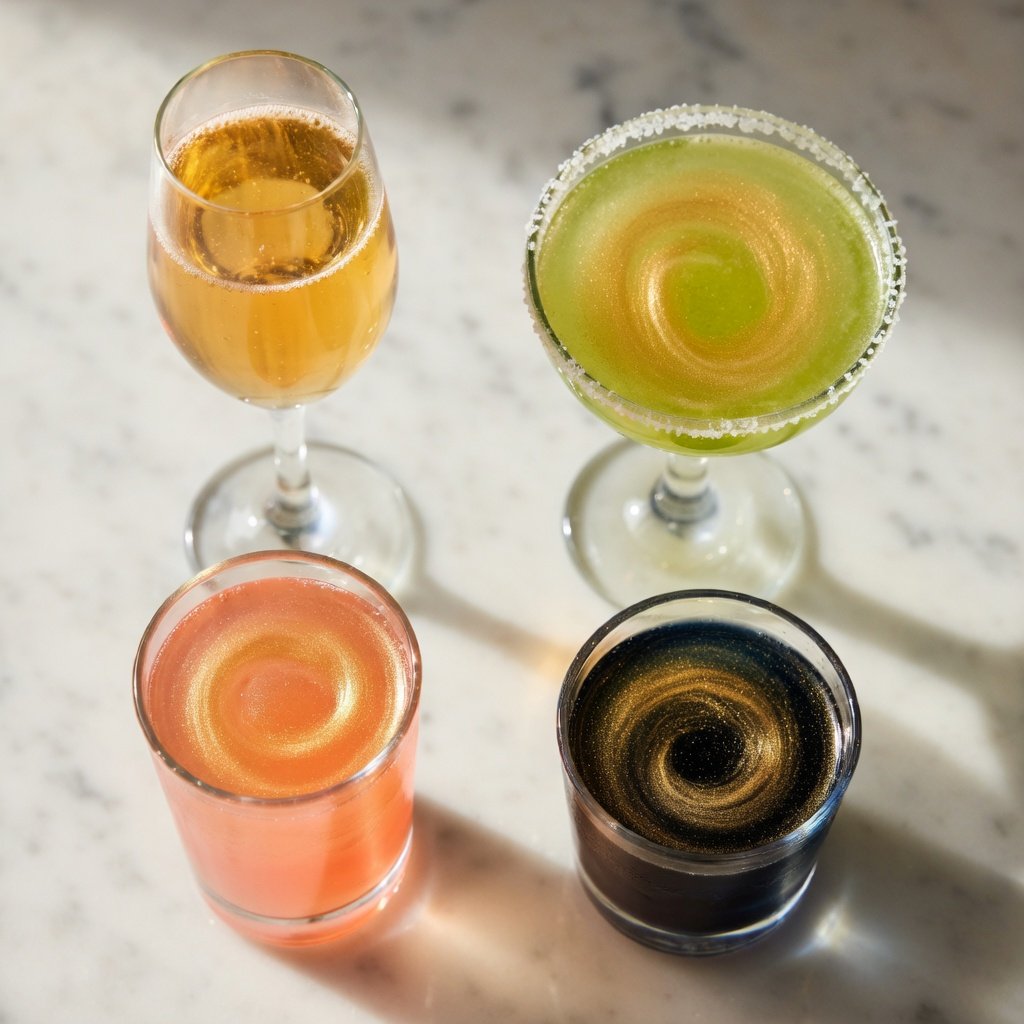
Can luster dust be used in drinks? Four shimmering cocktails — champagne, margarita, pink lemonade, and dark mocktail — with edible luster dust suspended in each glass, shot from above on marble
Yes, luster dust can be used in drinks — and the shimmer effect in every glass proves it.

How to Know If Your Luster Dust Is Actually Edible

Three things to check before you use any glitter product in food:

  • Does it say “FDA compliant” or “food grade”? That’s the standard you want.
  • Does it list actual ingredients? Mica, titanium dioxide, iron oxides — these are food-approved colorants. “Glitter” is not an ingredient.
  • Does it say “for decorative purposes only” anywhere on the packaging? That’s a hard no for anything going into food or drinks.

The full breakdown on safety — including what the FDA actually says and how to read ingredient labels — is in our post on whether edible glitter is actually safe. Worth a read if you want the details.

Our luster dust hits all three. Every color, every size, same ingredients. Gold, silver, pink, red, blue — the formula doesn’t change by color. All vegan, all gluten-free, all tasteless.

The Bottom Line

Luster dust is edible when it’s made right. Ours is. A lot of what you’ll find at craft stores or on Amazon isn’t — not because someone’s trying to poison you, but because it was never designed for food in the first place. Read the label. Look for FDA compliant. When in doubt, skip it.

And if you’re ready to actually use the stuff, start small. A pinch in a drink, a dusting over a cake, a few strokes on chocolate. You’ll figure out what you like fast — it’s one of those ingredients where the first time you get it right, you start thinking about everything else you can put it on.


Posted on Leave a comment

How to Use Luster Dust on Chocolate

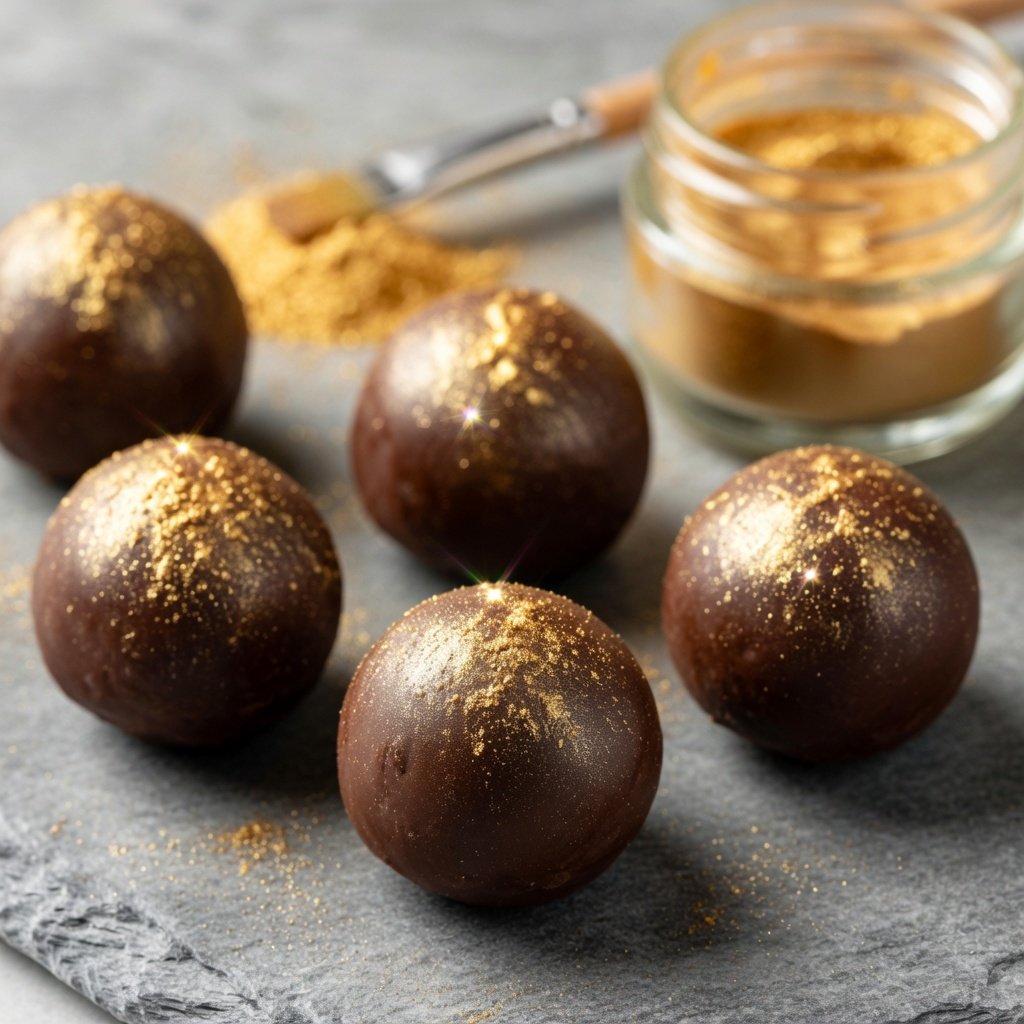
Luster dust on chocolate truffles coated in edible gold shimmer, with a brush and open jar visible on slate
Key Takeaways

• Dry dusting with a soft brush is the easiest method — works on truffles, molded chocolates, and bark
• Mix luster dust with a tiny amount of vodka or extract for a painted, high-shine finish on molded pieces
• Gold and silver are the strongest performers on dark chocolate; white transforms milk and white chocolate
• Less is more — start with a small amount and build up

How to Use Luster Dust on Chocolate

Chocolate is one of the best surfaces you can put luster dust on. The texture holds pigment well, the contrast between dark chocolate and metallic shimmer is genuinely stunning, and the whole process takes about two minutes once you know what you’re doing.

There are two main approaches: dry dusting and painting. Both work. Which one you reach for depends on the finish you want and the type of chocolate you’re working with. We’ll cover both — plus which colors do what on different chocolate types.


Dry Dusting: The Fast Method

Grab a soft food-safe brush — a small fluffy eye shadow brush style works better than a flat brush here. Dip it into your luster dust, tap off the excess, and brush it directly onto the chocolate surface. That’s genuinely all there is to it.

The key is a light touch. One dip in the jar is usually enough for 3-4 truffles. Build up coverage in thin layers rather than loading the brush heavy and going once — you’ll get more even shimmer and waste less product.

Dry dusting works best on:

  • Truffles and bonbons
  • Chocolate bark
  • Molded figures where you want a soft, brushed metallic look
  • Chocolate-covered strawberries or pretzels

The chocolate needs to be fully set and dry before you dust. Any surface moisture and the pigment clumps instead of spreading. Pull your chocolates out of the fridge, let them come to room temp for 5-10 minutes, then dust. That small step makes a real difference.


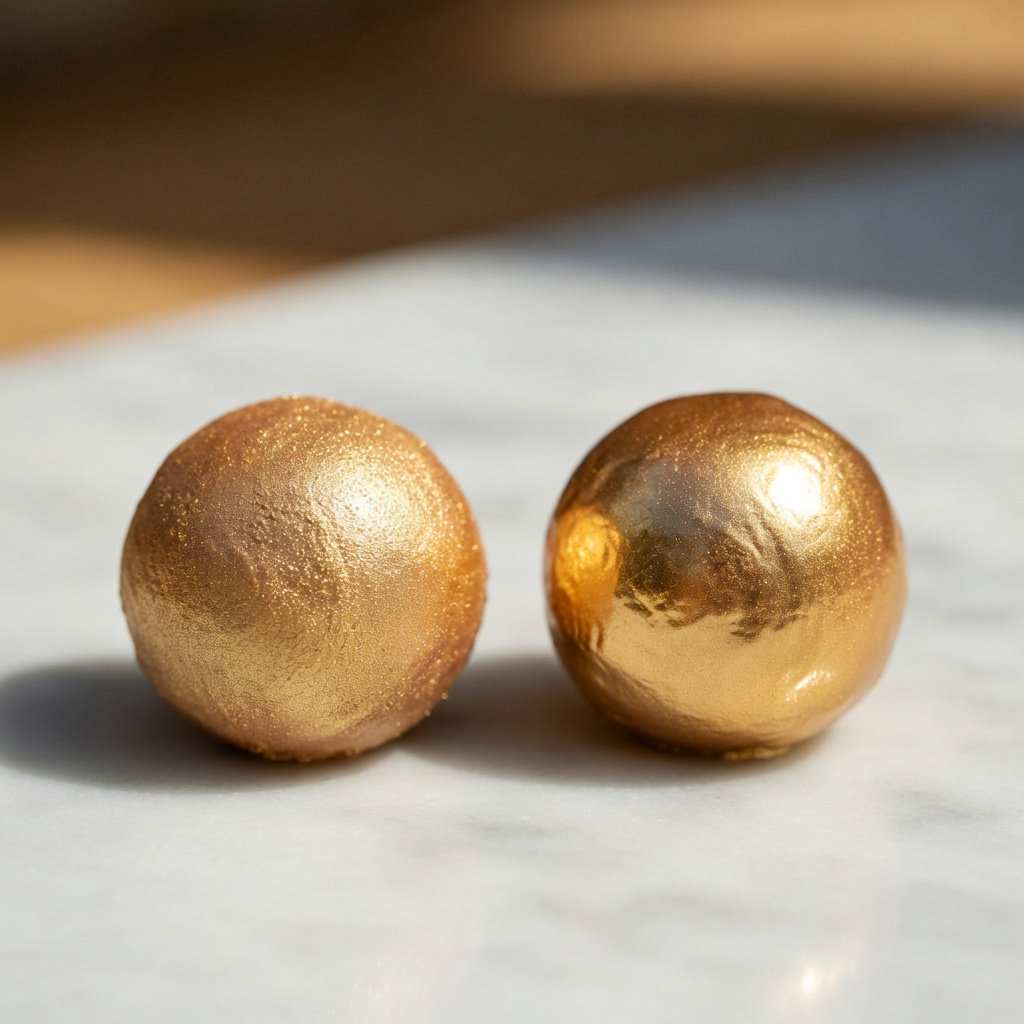
Edible luster dust for chocolate shown two ways: dry-dusted truffle vs painted metallic gold finish side by side
See the difference for yourself — edible luster dust for chocolate creates two stunning finishes depending on your technique.

Which Color for Which Chocolate

Not every color reads the same on every chocolate. Here’s what actually works:

Dark chocolate: This is where Gold Luster Dust earns its reputation. The contrast between deep brown and warm gold is absurd. Silver Luster Dust is close behind — silver on dark chocolate looks expensive in a way that’s hard to explain until you see it in person.

Milk chocolate: Gold still works here, but silver can feel a little cold against the warm tone. Rose gold is actually our favorite on milk chocolate — it picks up the warmth without fighting it. White Luster Dust gives a subtle pearl sheen that’s gorgeous on milk chocolate truffles if you want something more understated.

White chocolate: Go bold. White luster dust creates a pearlescent finish that looks like actual porcelain. Pastel colors — pink, light blue, lavender — pop beautifully against white chocolate in a way they don’t on dark. Gold still works, but the contrast is softer.

For anything with molded detail — like a chocolate Easter egg or a bonbon with a textured mold — painting brings out the relief in the mold. Dry dusting can miss the recessed areas. Keep that in mind when you’re choosing a technique.

How Much to Use

A 10g jar goes further on chocolate than almost anything else we make. You’re not dissolving it in liquid — you’re applying it to a surface, so very little gets wasted. A single jar can cover well over 100 truffles with dry dusting. Even with the painting method, where you’re mixing into a paste, you’re still using maybe 1/4 teaspoon per dozen pieces.

Point being: don’t hoard it. Use more than you think you need on your first attempt. You can always dust off excess before it sets.

If you want to see how luster dust behaves on other surfaces beyond chocolate, the technique breakdown in our guide to using edible glitter on cakes and cookies covers frosting and fondant in the same level of detail.


Posted on Leave a comment

FDA Compliant Edible Glitter: What It Actually Means

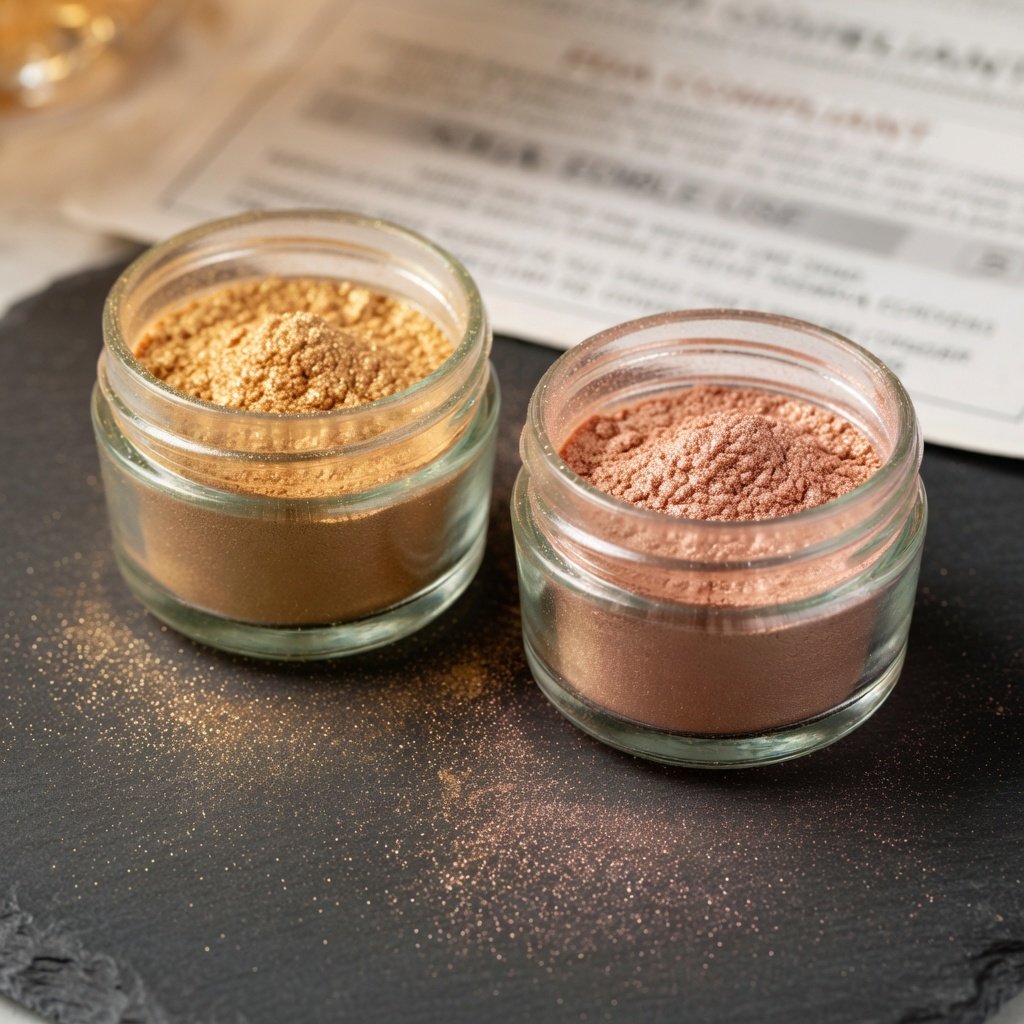
FDA approved edible glitter jars of gold and rose gold luster dust with shimmer powder dusted across a dark surface
Key Takeaways

• “FDA approved” and “FDA compliant” aren’t the same thing — and neither is “non-toxic”
• Real edible glitter is made from food-grade mica pigments that have been used in food for decades
• A lot of craft-store and Amazon glitter is NOT safe to eat, regardless of what the packaging implies
• If the label doesn’t explicitly say “FDA compliant” or “food grade,” don’t put it in food

FDA Compliant Edible Glitter: What It Actually Means

The label “edible glitter” is everywhere. On Amazon, at craft stores, in baking supply aisles. And a big chunk of it isn’t actually edible. That’s not a technicality — it matters. Here’s how to tell the difference, and why it’s worth caring about.

The FDA Doesn’t “Approve” Individual Products

First, a quick reality check on the phrase “FDA approved edible glitter.” The FDA doesn’t go product by product, reviewing each jar of luster dust and stamping it approved. That’s not how their system works for food ingredients. What they do is maintain a list of substances that are Generally Recognized As Safe (GRAS) — ingredients with enough scientific evidence and history of safe use that they’re cleared for food contact and consumption.

So the right phrase is “FDA compliant” — meaning the product is made using only ingredients that appear on the FDA’s approved list. Our luster dust is made with mica-based pearlescent pigments that are on that list. Completely food-safe. That’s what you’re actually buying when someone says “FDA approved edible glitter.”

“Non-Toxic” Is Not the Same as Edible

This is where a lot of people get tripped up, and honestly, the packaging on some of these products makes it worse. You’ll see “non-toxic” in big letters on craft glitters that are absolutely not meant to go in your mouth.

Non-toxic means it won’t immediately harm you if you accidentally ingest a small amount. It does not mean the FDA has cleared it as a food ingredient. A lot of those glitters are made from plastic, aluminum, or dyes that have zero business being in your food. They’re non-toxic the same way a pencil eraser is non-toxic. You’re not supposed to eat either one.

Edible means it’s made from actual food-grade ingredients, compliant with FDA standards, safe to consume intentionally. Big difference. If you’re putting shimmer in a cocktail or dusting it on a cake someone’s going to eat, you need the edible version. Period.

Edible glitter food safe label comparison showing Luster Dust FDA compliant jar beside craft store non-toxic glitter packaging
Not all labels are equal — this edible glitter food safe label comparison reveals the exact wording that matters.

What Food-Safe Edible Glitter Is Actually Made From

Our luster dust uses German mica pigments — mica is a naturally occurring mineral that’s been used as a food colorant for decades. It’s what gives pearlescent candies, certain chocolates, and cake decorations that metallic shimmer. The FDA has it on the approved list specifically for use in food. It’s also what makes high-quality luster dust look so much better than the craft store stuff. The particle size, the purity, the way light moves through it — that’s all the mica.


Our Colors, For the Record

Every single color we make is FDA compliant. Vegan, gluten-free, no artificial flavors, completely tasteless and odorless. The shimmer is all you get. A few favorites:

Gold Luster Dust is our most-used color — champagne, chocolate, fondant, you name it. The warm tone catches light differently than silver and it works on basically everything.

Blue Luster Dust is the one that surprises people. Most blue food colorings skew garish. This one has real depth — it looks expensive on dark chocolates and striking in clear cocktails.

Rose Gold Luster Dust has become our go-to recommendation for anyone who wants something a little different. That pink-warm-gold balance is genuinely hard to pull off with cheaper pigments. The German mica is doing real work there.

A Quick Note on Quantities

Food-safe doesn’t mean use as much as you want — not because of safety, but because more isn’t better. For cocktails, you want 1/8 teaspoon per glass, maximum. For dusting cakes or truffles, a dry brush with a small amount goes a long way. The shimmer is in the thin layer. Piling it on just muddles things.

The Short Version

“FDA approved edible glitter” is really shorthand for glitter made from FDA-cleared, food-grade ingredients. Not all shimmer products qualify. Not all labels tell you what you need to know. Look for “FDA compliant” or “food grade,” check the ingredient list for recognizable food colorants, and if the packaging only says “non-toxic” — that’s your sign to leave it in the craft aisle where it belongs.