Posted on Leave a comment

Edible Luster Dust for Beginners: Your First Project Guide

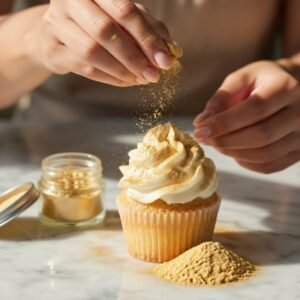
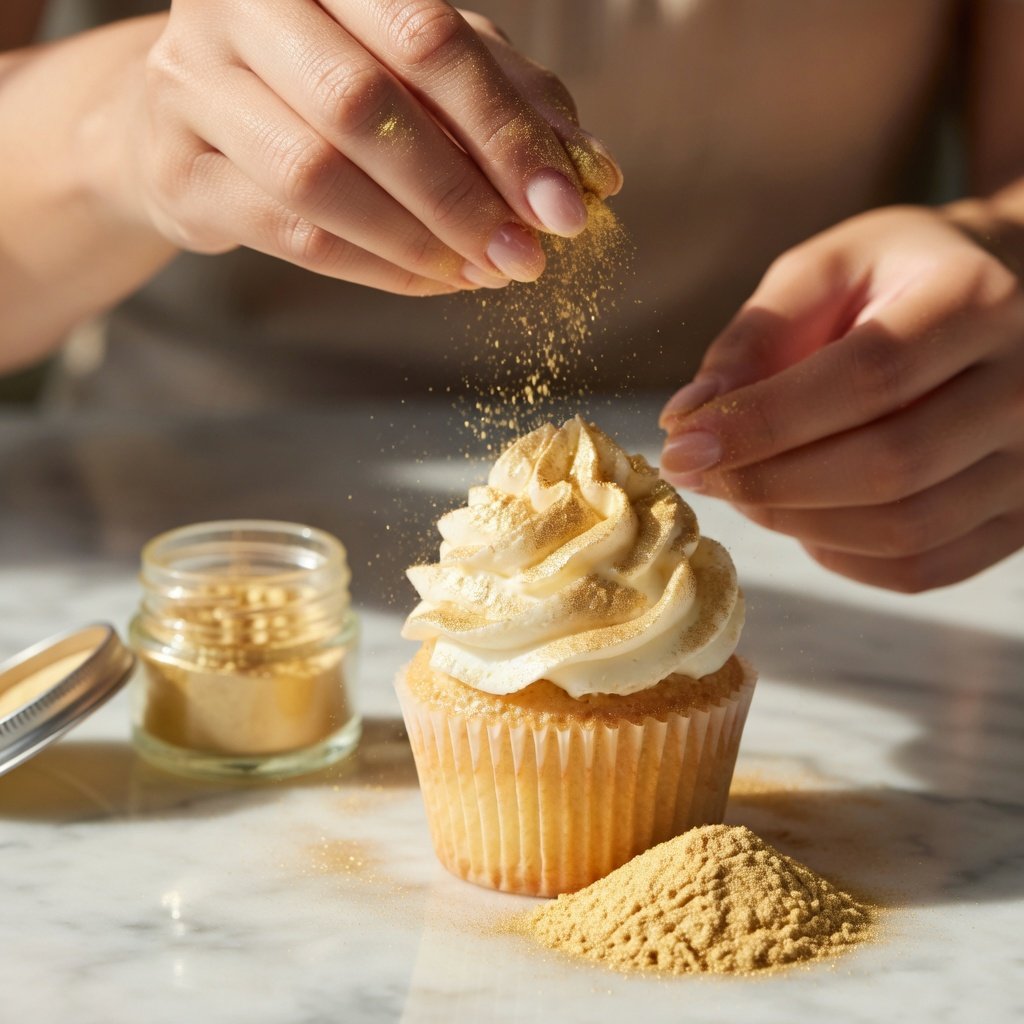
Hands applying edible luster dust to a white frosted cupcake beside an open gold luster dust jar on marble
Key Takeaways

• Edible luster dust and non-toxic craft glitter are not the same thing — only use FDA compliant products in food
• A dry brush gives you more control than mixing with liquid for your first project
• Start with 1/8 teaspoon or less — you can always add more, you can’t take it back
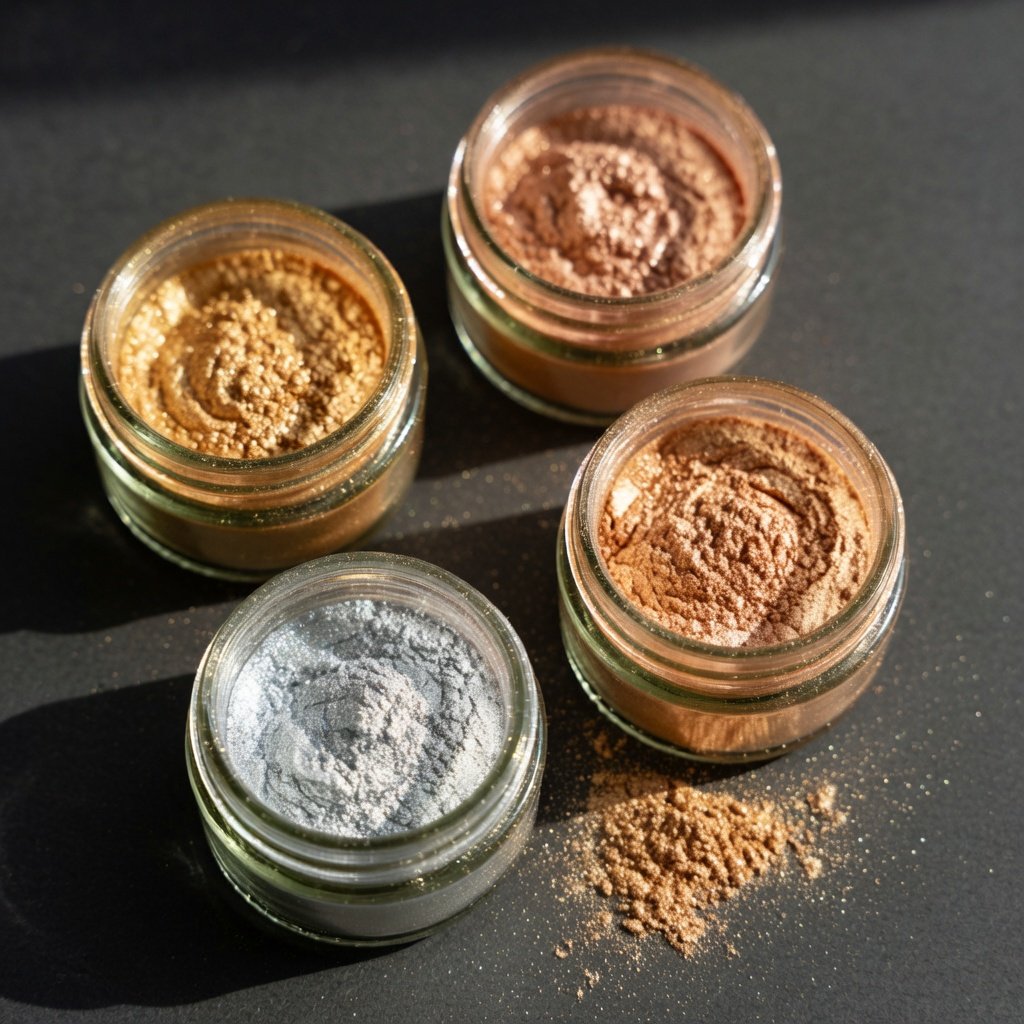
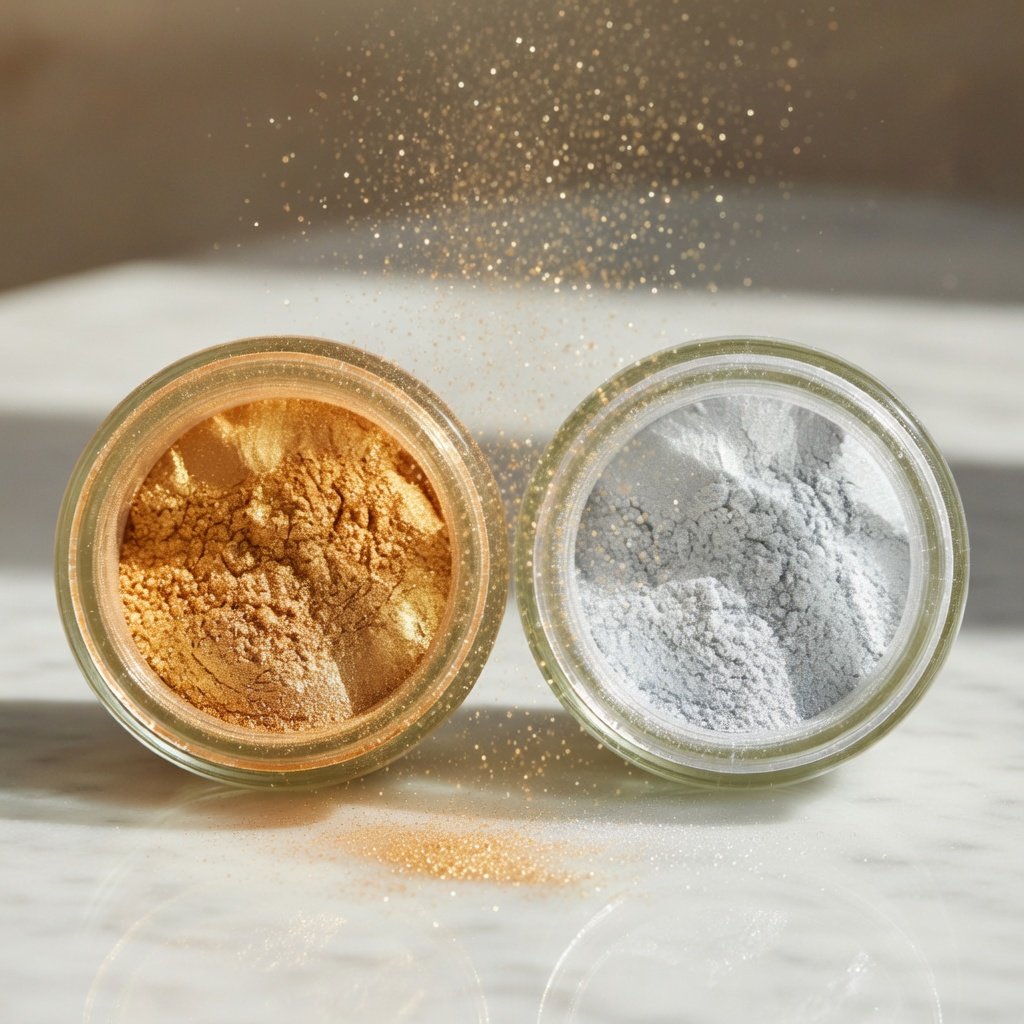
• Gold, Pink, and White are the three best starting colors because they work on almost everything

Edible Luster Dust for Beginners: Your First Project Guide

Every first-timer makes the same two mistakes: they buy the wrong product, and they use too much of it. Fix those two things and everything else is easy. Here’s what you actually need to know before you open a jar.

Wait — Is Your Glitter Actually Edible?

This matters more than anything else in this guide. A lot of glitter products sold at craft stores and on Amazon are labeled “non-toxic” — not “edible,” not “FDA compliant.” Non-toxic means it won’t send you to the hospital. It doesn’t mean it belongs in food.

Real edible luster dust is made from food-grade mica pigments — the same kind that’s been used in food and cosmetics for decades. It’s tasteless, odorless, and completely safe to eat. Our luster dust is FDA compliant, vegan, and gluten-free. If the jar you’re holding doesn’t say FDA compliant, don’t use it on anything you’re serving to people.

Quick gut-check: flip the jar over and read the label. “Non-toxic” only? Put it back.

What You’ll Need for Your First Project

Grab a jar of luster dust, a small food-safe paintbrush or a clean dry pastry brush, and whatever you’re decorating. That’s it. You don’t need special equipment, you don’t need an art degree, and you definitely don’t need to mix anything before you start.

A few brush notes: softer brushes give you a lighter, more diffused shimmer. Stiffer bristles let you push pigment into crevices or build more intense color. For a first project, any small soft brush works fine. Even a clean finger in a pinch — it’s edible, after all.

Choose Your First Color


Gold outsells every other color by a significant margin, and the reason is simple: it works everywhere. Cupcakes, cakes, chocolates, cocktails — gold reads as “fancy” in any context. The warm tone catches light in a way that makes even simple desserts look intentional.

For a first project, we’d go with Gold Luster Dust on buttercream. Frost something in white or ivory, let it set up slightly, and dry-brush gold across the surface. Five minutes of work. The result looks like it belongs in a bakery case.


The Dry Brush Method (Start Here)

Before you try anything else, do this. It’s the most beginner-friendly technique and it works on almost every surface.

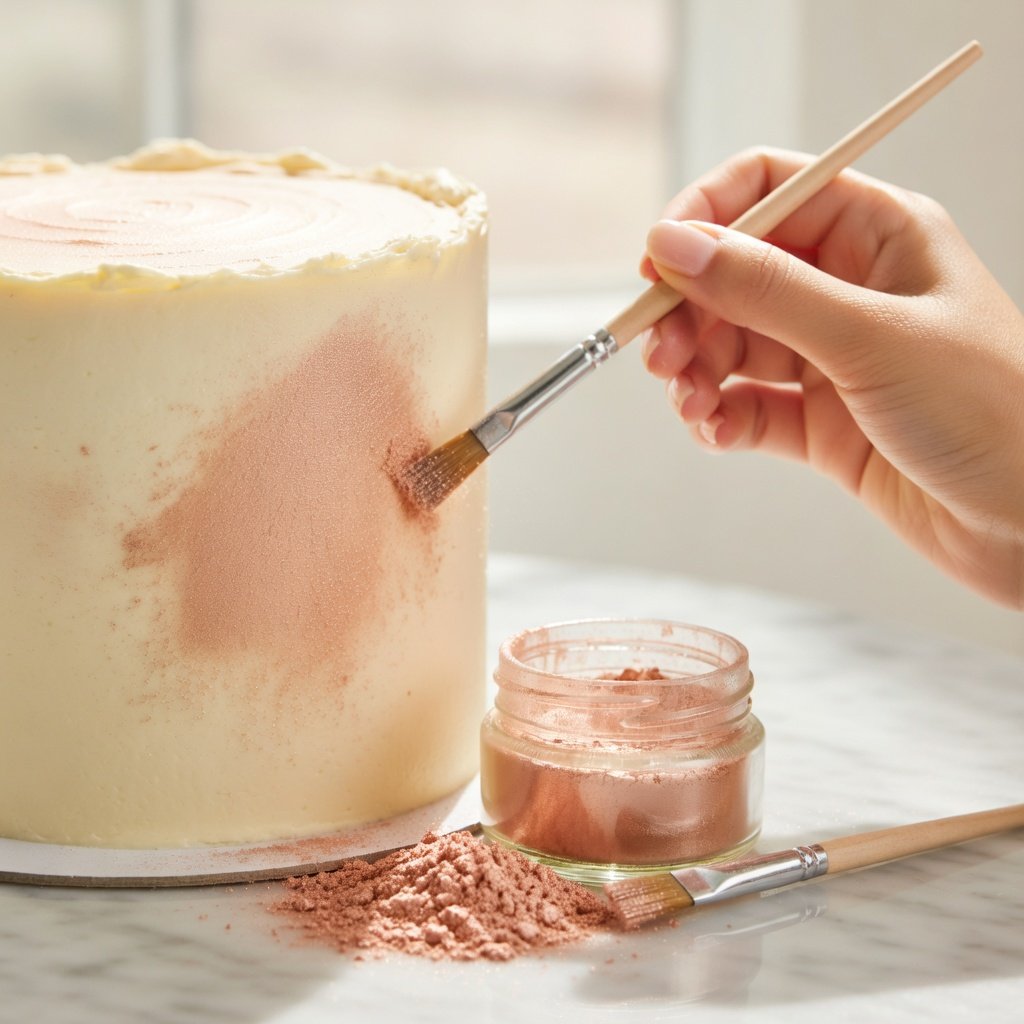
Open the jar and tap a small amount — genuinely small, we’re talking a light dusting — onto a plate or piece of parchment. Dip your brush, tap off the excess, then apply to your surface using light strokes or a gentle circular motion. Build it up gradually. You want to layer, not dump.

The dry brush method gives you control. You can cover an entire cupcake or just catch the edges of a rosette. Work in sections, check your progress, add more where you need it. Takes about two minutes once you get the feel for it.

Your First Three Projects (Ranked by Difficulty)

Cupcakes with buttercream frosting — easiest possible start. The slightly rough texture of buttercream holds pigment well and hides uneven application. Frost, wait 10 minutes for the surface to firm up, dry-brush gold or pink across the top. Done.

Dipped strawberries — dip in white chocolate, let set completely, then dust luster dust over the surface before serving. The smooth chocolate surface shows off the shimmer better than almost anything. Gold on white chocolate is almost unfairly good.

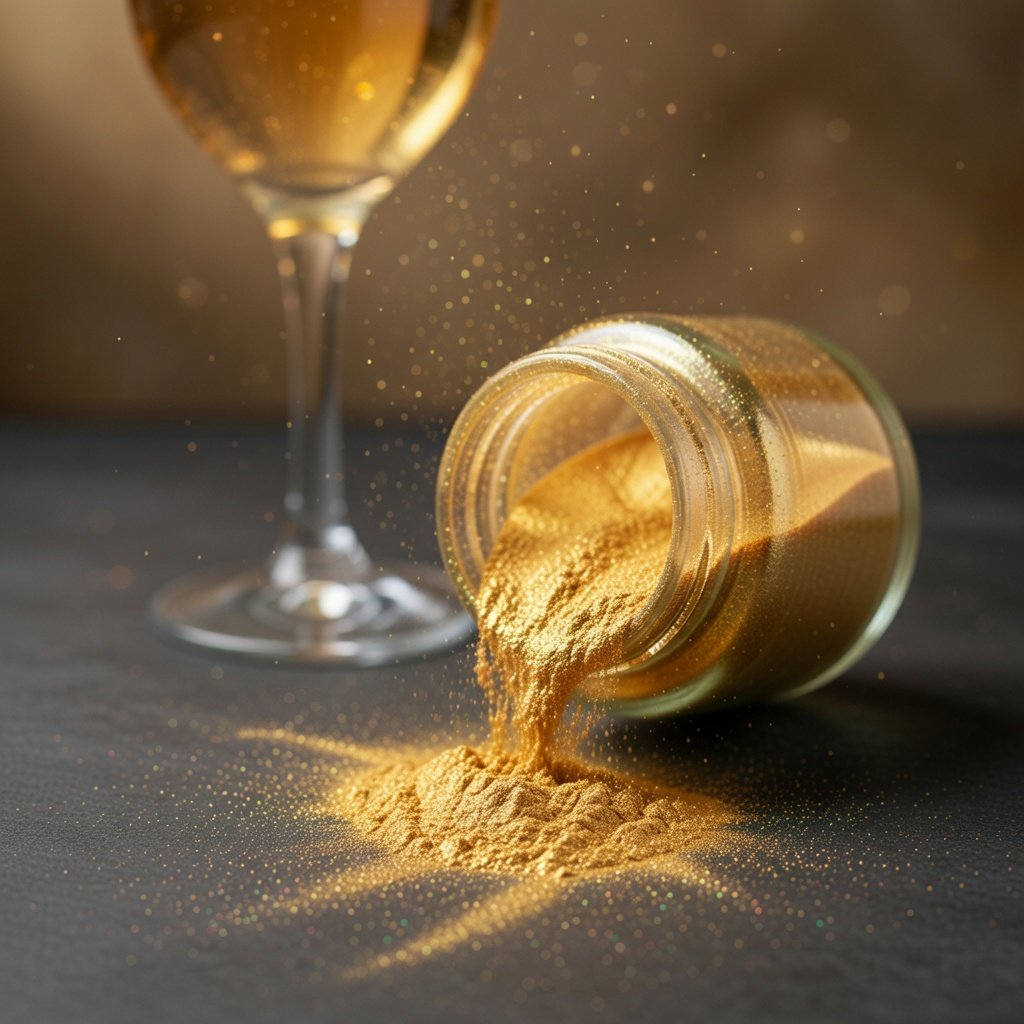
Cocktails or mocktails — add 1/8 teaspoon of luster dust directly to a glass before pouring. The shimmer moves through the liquid as your guests swirl their drinks. Gold in champagne is the classic version, but it works in any clear or light-colored drink. Use less than you think you need.

Common Beginner Mistakes

Using too much is the big one. The instinct is to pile it on, but more pigment doesn’t mean more shimmer — it means clumped, uneven, chunky-looking results. A little goes a long way. Our 10g jar covers somewhere around 80+ cocktails or dozens of cupcakes.

Applying to wet surfaces is the other one that trips people up. Luster dust doesn’t adhere properly to fresh buttercream or melted chocolate. Let things set first. Slightly firm buttercream, fully set chocolate, dried fondant — that’s when you get a clean, even shimmer.

And don’t skip the “tap off excess” step. Loading a heavy brush and going straight to your cake is how you get a big gold smear on something you worked an hour to decorate.

Storing It Between Projects

Keep jars tightly closed, away from moisture and direct light. A kitchen cabinet works fine. Don’t store it near the stove where steam can get in. Luster dust doesn’t really expire — the color stays stable basically indefinitely — but moisture will cause clumping, which is annoying to work with.

If a jar does clump up, break it apart with a toothpick or the dry end of a brush before using. The pigment itself is fine, it just needs to be loose to apply evenly.

FAQ


Posted on Leave a comment

How to Use Edible Glitter on Cakes, Cupcakes & Cookies

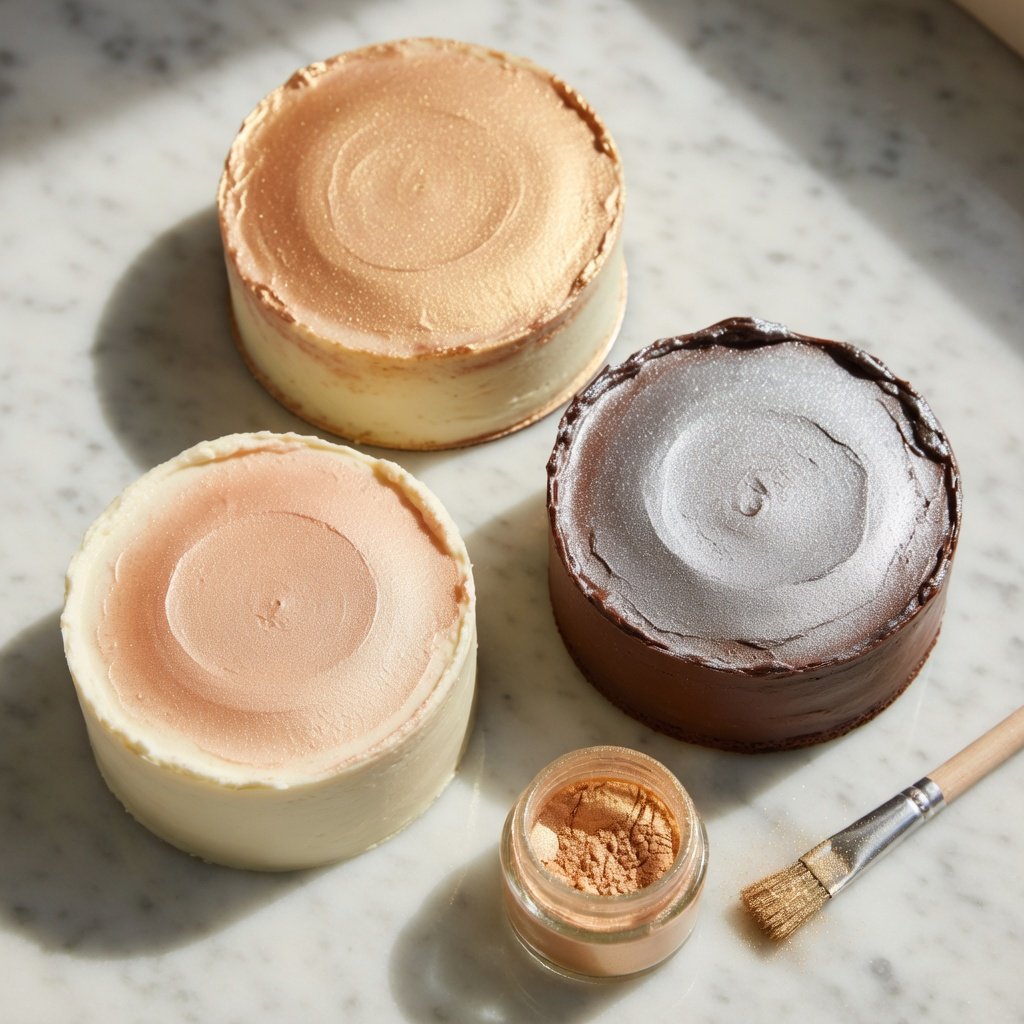
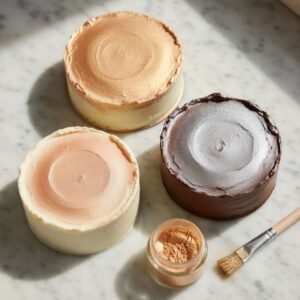
Edible glitter for cakes shown on three decorated cakes with gold, rose gold, and silver luster dust on marble
Key Takeaways

• Dry dusting with a soft brush gives you the most control — best for fondant and firm surfaces
• Mix luster dust with a tiny amount of vodka or lemon extract for painting on smooth fondant or tiers
• More dust doesn’t mean more shimmer — a little goes a long way, especially on buttercream
• Gold and rose gold are your safest bets on light frostings; silver earns its place on dark chocolate

How to Use Edible Glitter on Cakes, Cupcakes & Cookies

Luster dust looks intimidating until you use it once. Then it becomes the thing you put on everything. The basics are simple — dry dusting, wet painting, or a quick shimmer wash — and once you know which method works on which surface, you’re basically unstoppable. Here’s what actually works.

The Two Main Methods (And When to Use Each)

Every luster dust technique comes down to one question: is your surface dry and firm, or soft and slightly tacky? That answer determines everything.

Dry dusting is exactly what it sounds like — load a soft brush with luster dust and apply it directly to the surface. No liquid, no mixing. This is your go-to for fondant, macarons, sugar cookies with royal icing, and molded chocolate. The key is a dry, clean brush and a light hand. Tap off any excess before you touch the cake.

Wet painting means mixing your luster dust with a high-proof alcohol — vodka works, but lemon or orange extract is better if there are kids involved — to create a metallic paint. You get clean lines, even coverage, and that full metallic finish you see on painted fondant tiers. The alcohol evaporates quickly and takes any raw taste with it. Water won’t work here; it makes the mixture muddy and slow-drying.


The Mistakes That Actually Happen

Too much at once is the big one. The instinct is to load the brush and go heavy, but luster dust builds up fast and unevenly. Start with less than you think you need. You can always add another pass.

Using water instead of alcohol for the wet method. Water makes the mixture thick, slow to dry, and slightly grainy. Alcohol evaporates almost immediately and leaves clean, saturated color. High-proof vodka is fine. Clear extract works. Don’t use water.

Applying dust to wet or soft frosting with too much pressure. On buttercream especially, dragging the brush pulls the surface and looks rough. Load the brush, then barely touch the frosting — more of a deposit than a stroke. Or hold the brush above the surface and tap the handle to let the dust fall.

Storing the jar with a contaminated brush. If your brush has frosting on it and goes back in the jar, the whole jar clumps. Use a clean brush every time, or tip a small amount of dust onto a palette or plate before loading your brush.

Picking the Right Color

Gold is the crowd-pleaser. It works on almost every frosting color and gives that warm, celebration-appropriate shimmer that reads as fancy without being over the top. Our go-to for most cakes.

Rose gold is gold’s more romantic sibling. It leans pink-warm, which makes it perfect for wedding cakes, birthday cakes for anyone who loves the aesthetic, and anything with blush, cream, or white frosting. Layered with actual gold on a two-tier cake? That combination is really something.

Silver earns its place when the base is dark — dark chocolate, navy, black fondant, deep burgundy. It doesn’t compete with warm tones the way it can on lighter bases. Drop silver on white buttercream and it can look a little cold. Put it on a chocolate ganache drip cake and it looks like it belongs in a shop window.

The other colors — purple, blue, pink, green — work best as accents or for themed designs. They don’t have the same versatility as the metallics, but on the right cake they’re exactly right. A deep blue luster dust on a galaxy-themed cake is genuinely stunning.

What You Actually Need

You don’t need much to start. A few soft brushes in different sizes — a wide flat brush for broad coverage, a fan brush for dusting, a small detail brush for painting. A ceramic palette or small glass dish for mixing wet applications. That’s it.

The luster dust itself goes a long way. A 10g jar covers a lot of cakes — we’re talking dozens of applications from one jar if you’re using it right. The German mica pigments in ours are denser and more reflective than cheaper alternatives, which means you need less to get the effect you’re after. A pinch really is a pinch.

Keep your jars sealed between uses. Humidity is the enemy. The dust doesn’t spoil, but it can clump if moisture gets in, and nobody wants to spend five minutes breaking up clumps mid-project.


Posted on Leave a comment

How to Use Edible Glitter in Drinks: The Complete Guide

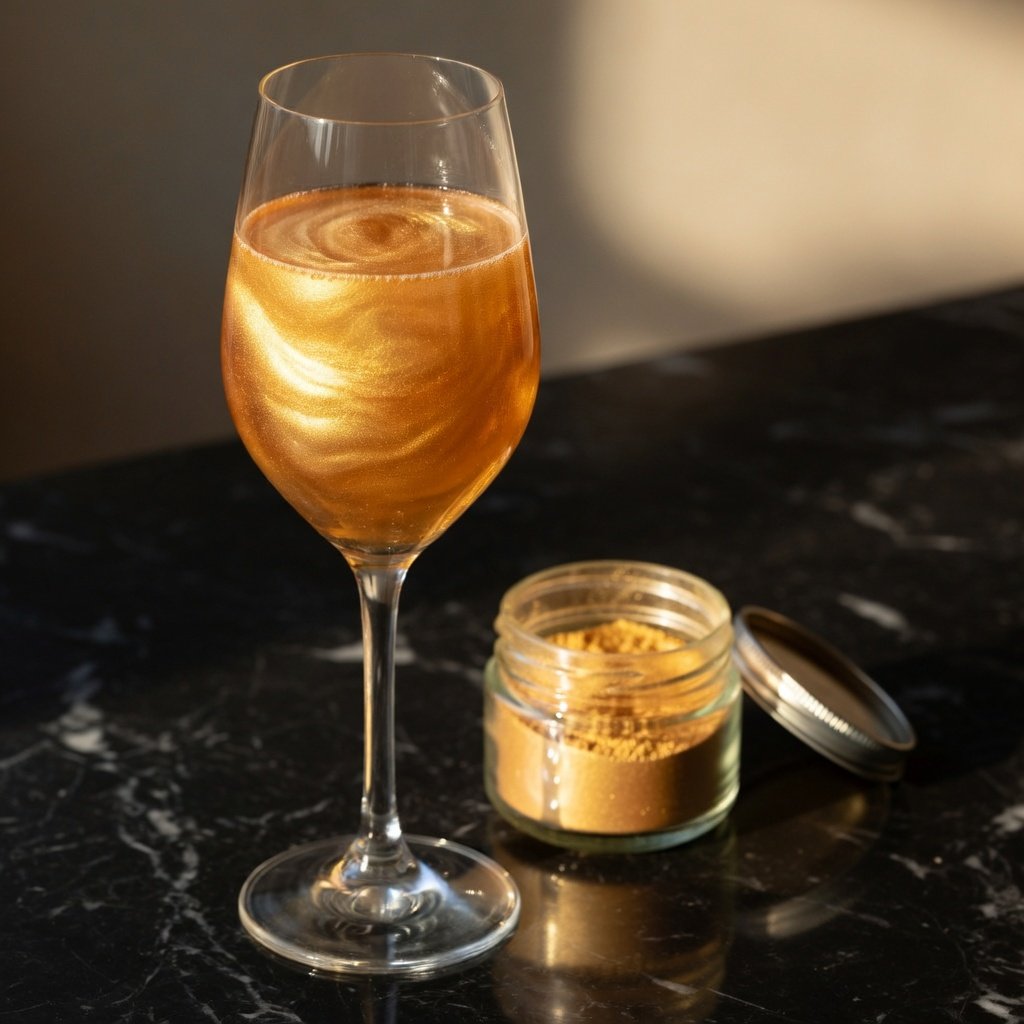
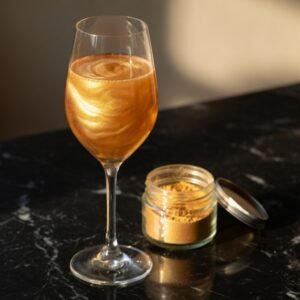
Edible glitter for drinks swirling in a champagne flute, with a jar of Luster Dust gold luster dust on dark marble
Key Takeaways

• A pinch — literally 1/8 teaspoon — is enough for a full glass. More doesn’t mean more shimmer.
• Luster dust and edible glitter are not the same thing. For drinks, you want luster dust — the fine powder suspends in liquid and catches light as it moves.
• Not all “edible” glitter is actually edible. Look for FDA compliant on the label, not just “non-toxic.”
• Gold, silver, and rose gold are the three workhorses. Every other color has its moment, but these three cover 90% of drink applications.

First: What You’re Actually Putting in Your Drinks

Edible luster dust is a fine mica-based powder — the same type of food-grade pigment that’s been used in candy coatings and cake decoration for decades. Our version is made with German mica pigments, which produce a richer, deeper shimmer than the stuff you’ll find in most grocery stores. Tasteless, odorless, vegan, gluten-free, and fully FDA compliant.

Regular craft glitter — even the kind labeled “non-toxic” — is not food. It’s plastic. Don’t put it in drinks. If the label doesn’t say FDA compliant or food-grade, assume it’s decorative only. This is not a technicality. It matters.

Luster dust works in drinks because the particles are fine enough to stay suspended in liquid. They catch and scatter light as they move through the glass — that’s what creates the shimmer effect. Chunky glitter sinks. Luster dust floats and moves. Big difference in the glass.

How Much to Use (Seriously, Less Is More)

The most common mistake: too much. People see the shimmer in the jar and figure more powder equals more sparkle. It doesn’t. Dump too much in and you get a cloudy, murky drink that looks like someone dissolved chalk in it.

The sweet spot is 1/8 teaspoon per glass. That’s the smallest measuring spoon you own, probably. Or just pinch it between two fingers. Drop it in, give the glass a gentle swirl, and let it do its thing. The particles catch light as they drift — that movement is the whole show. Give it room to work.

For a batch — say you’re doing 20 glasses at a party — pre-measure into a small bowl and pinch from there. You’ll stay consistent and won’t accidentally over-pour.


The Three Colors Worth Starting With

Gold outsells every other color by a wide margin, and it’s not hard to see why. It reads as celebratory, warm, and expensive. Works in champagne, in dark cocktails, on rimmed glasses, everywhere. If you buy one jar, buy Gold Luster Dust.

Silver gets underestimated. It’s the right call for clear drinks, white wine cocktails, anything with a blue or purple base. On a gin and tonic with a cucumber garnish, silver looks absurdly elegant. We’ve seen bars charge more for the same cocktail just by adding silver shimmer. Silver Luster Dust is the second jar most people buy.

Rose Gold Luster Dust has had a moment for about five years now and honestly hasn’t slowed down. The warm pink-gold tone is almost universally flattering in drinks. Valentine’s Day, bridal showers, rosé anything — rose gold is the automatic answer.

Getting the Most Out of Every Jar

A 10g jar holds more than it looks like. At 1/8 teaspoon per glass, you’re looking at roughly 80 cocktails from a single jar. For a party, one jar is plenty. For a bar or event venue doing volume, the 50g or 100g sizes make more sense — same powder, just less restocking.

Store the jar sealed and away from moisture. The worst thing you can do to luster dust is get water in the jar — the particles clump and lose that free-flowing quality. Keep it dry, keep it closed, and it lasts indefinitely.

For rimming glasses: dip the wet rim in luster dust instead of salt or sugar, or mix luster dust with sugar for a shimmery sugar rim. Gold sugar rim on a margarita glass is exactly as good as you’re picturing.

Frequently Asked Questions


Posted on Leave a comment

What Is Edible Glitter? Your Questions Answered

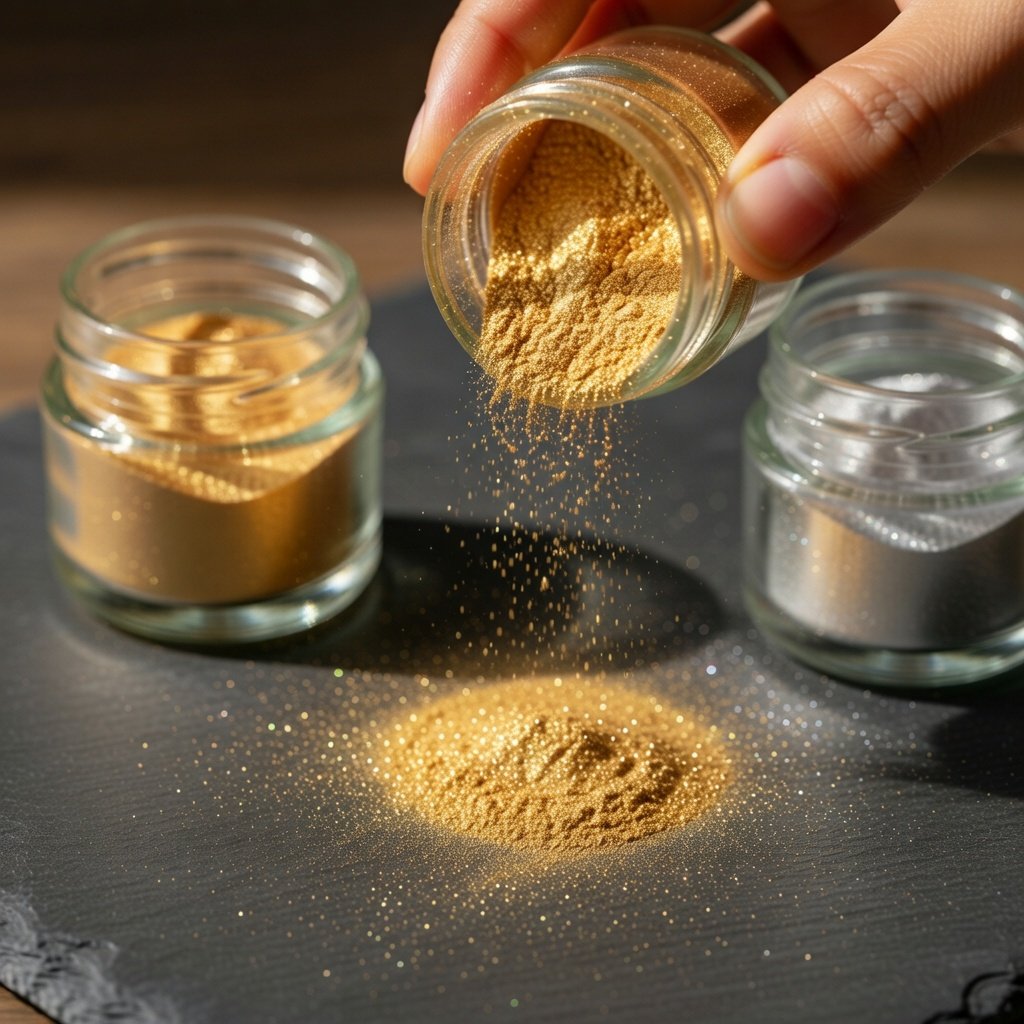
What is edible glitter: gold and silver luster dust tapped from small jars onto a dark surface, shimmer particles catching warm light
Key Takeaways

• Edible glitter and “non-toxic” craft glitter are not the same thing — only FDA compliant products belong in food
• Luster dust is made from food-grade mica pigments: completely tasteless, odorless, and safe to eat
• It works on basically anything — cakes, cocktails, chocolate, fruit, frosting
• A little goes a long way. Start with less than you think you need.

What Is Edible Glitter? Your Questions Answered

Edible glitter is exactly what it sounds like — a shimmer powder you can actually eat. Not craft glitter with a wink and a “non-toxic” label. Actual food-grade powder made from ingredients that belong in your body. The kind that turns a champagne glass into something your guests will photograph before they drink it.

Here’s everything you need to know.

What’s It Actually Made Of?

The short answer: mica. Specifically, food-grade mica-based pearlescent pigments — the same category of ingredient that’s been used in food coloring and coatings for decades. Our luster dust uses German mica pigments, which produce a richer, more consistent shimmer than cheaper alternatives. The difference is noticeable once you’ve seen both side by side.

Beyond mica, that’s basically it. Our formulas are vegan, gluten-free, non-GMO, completely tasteless, and odorless. You’re not adding flavor to your food — just light.

“Non-Toxic” vs. Edible — This Matters More Than You Think

This is the thing that trips people up. A lot of glitter products — including plenty sold in baking aisles — say “non-toxic” on the label. That means it won’t send you to the hospital. It does not mean you should eat it.

Edible means FDA compliant. It means the ingredients were reviewed and approved for human consumption, not just deemed unlikely to cause immediate harm. Those are very different standards.

Quick reality check: a lot of “edible” glitter on Amazon isn’t actually edible. If the label says “non-toxic” instead of “FDA compliant,” put it back. Our luster dust is FDA compliant — that’s the baseline, and it matters.

What Can You Use It On?


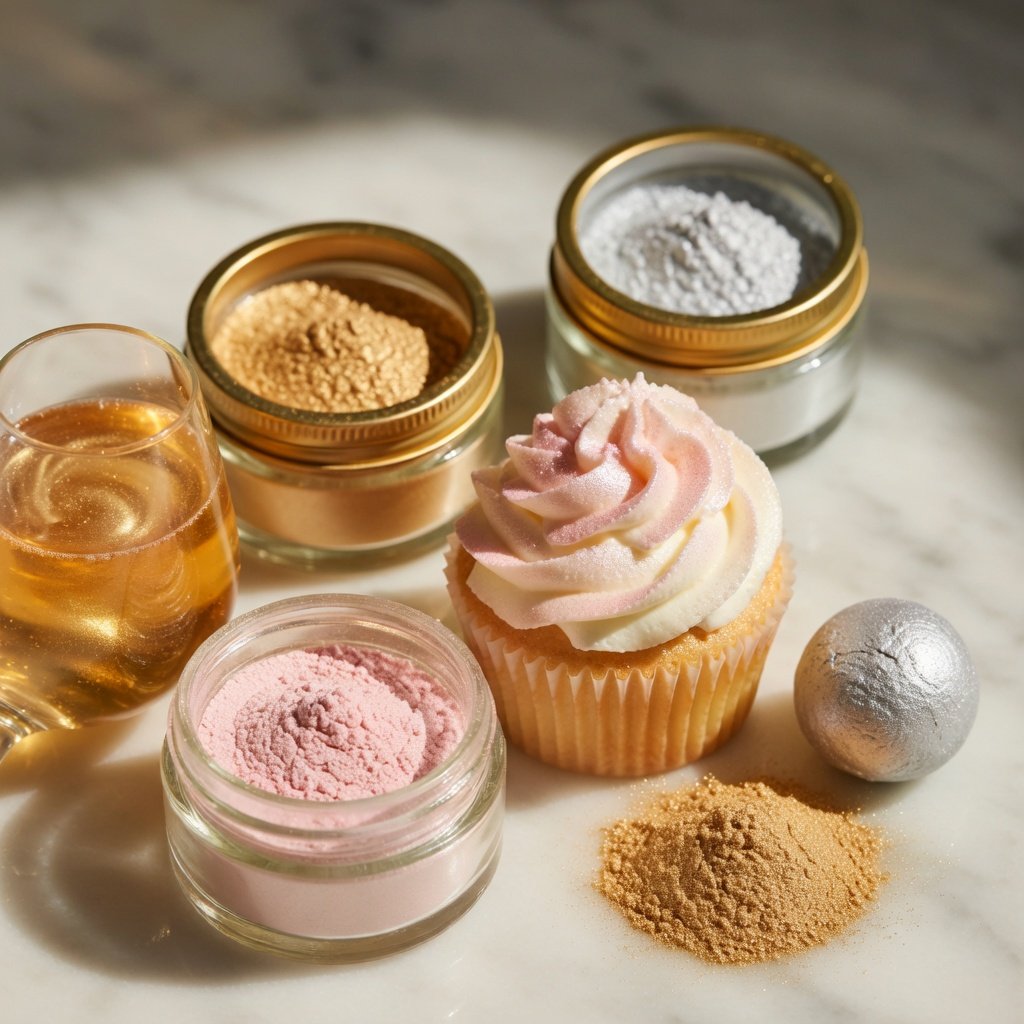
Edible glitter luster dust colors in gold, silver, and pink jars styled with a shimmer champagne flute, frosted cupcake, and chocolate truffle
From champagne flutes to cupcakes, edible glitter luster dust colors transform ordinary treats into something extraordinary.

How Much Do You Need?

Less than you think. A 10g jar sounds small until you realize 1/8 teaspoon per cocktail means you’re getting 80+ drinks from one jar. For cakes, a single dusting of a two-tier cake barely registers on the quantity. This isn’t a product you burn through fast — unless you’re doing volume, in which case our larger sizes make more sense.

Start with a pinch. Add more if needed. You can always add — you can’t take it out.

Does It Change the Taste?

No. Completely tasteless. This is one of the things people are most surprised by — they expect something metallic or chalky, and there’s nothing. You’re adding shimmer, not flavor. Whatever you’re putting it on tastes exactly the same.

Common Questions


Posted on Leave a comment

What Is Luster Dust? The Complete Guide

What is luster dust: gold edible luster dust tipped from a small jar onto a dark surface, with shimmer particles catching warm light
Key Takeaways

• Luster dust is an edible, FDA compliant powder made from food-grade mica pigments — not craft glitter, not “non-toxic” dust that you’re hoping is fine
• It’s tasteless and odorless, so it adds shimmer without changing how anything tastes
• The difference between cheap edible glitter and luster dust made from German mica is visible — richer, deeper shimmer that catches light instead of just looking sparkly
• A little goes a long way. One 10g jar covers 80+ cocktails or dozens of desserts

Luster Dust: What It Actually Is

Luster dust is a fine, pearlescent powder made from food-grade mica pigments. You dust it onto cakes, swirl it into cocktails, brush it over chocolate, and the result is that deep, metallic shimmer that looks like it took way more effort than it did.

It’s not the chunky hexagonal glitter you’d find in a craft store. It’s not edible paint. It’s a dry powder — ultrafine, almost silky — that catches light differently depending on the surface it lands on. That’s the whole appeal.

What Is Luster Dust Made Of?

The main ingredient is mica — a naturally occurring mineral that’s been used in cosmetics and food products for decades. In luster dust, the mica is processed into thin, reflective platelets that stack on surfaces and create that metallic depth.

The color comes from iron oxides and other FDA-approved colorants that are bonded to the mica particles. No synthetic dyes, no weird additives. Our luster dust uses German mica pigments specifically, which produce a noticeably richer shimmer than the cheaper alternatives you’ll find in mass-market products.

Full ingredient rundown: mica, iron oxides, titanium dioxide (for brightness), and in some colors, approved food-safe dyes. That’s it. Tasteless, odorless, vegan, gluten-free.


Edible luster dust on cake being applied with a food-safe brush, rose gold jar in foreground, soft natural light
Brushing edible luster dust on cake layers is the easiest way to add a professional, metallic finish at home.

“Non-Toxic” vs. “Edible” — This Matters

Here’s the thing that trips a lot of people up: non-toxic and edible are not the same thing.

Non-toxic means it won’t kill you if you accidentally ingest it. It doesn’t mean it’s food. Craft glitter is technically non-toxic. That doesn’t mean you should put it in your cocktails.

Edible means the product is made from ingredients that are FDA compliant for consumption — meaning the FDA has reviewed and approved those ingredients for use in food. Our luster dust is edible. Every color, every batch. Made with mica-based pigments that meet FDA standards, the same class of ingredients used in food coloring and decoration for decades.

If you’re buying glitter somewhere and the packaging only says “non-toxic” — not “edible,” not “FDA compliant” — don’t put it in food. Period. That label is doing a lot of work to sound safe without actually committing to anything.

How Much Does Luster Dust Cost?

Our jars start at $9.98 for 10g. That sounds small, but 10g of luster dust goes a genuinely long way — we’re talking 80+ cocktails, or enough to cover a three-tier cake with plenty left over. The jump to 50g and larger jars makes sense if you’re running a bakery or doing events regularly.

Free shipping on orders over $50, which is easy to hit if you’re picking up two or three colors.

Which Color Should You Start With?

Gold. It’s not even a question. Gold outsells everything else by a wide margin and it earns it — it’s the most versatile color, works in almost any application, and the shimmer reads well in photos and in person. Start there.

After gold, silver and rose gold. Silver Luster Dust is the move for anyone working with dark chocolate or cool-toned cocktails. Rose Gold Luster Dust is the one that surprises people — it’s warmer and more versatile than it looks in photos, and it photographs beautifully.

Common Questions


Posted on Leave a comment

What Is Edible Glitter Made Of? A Complete Ingredient Breakdown

What edible glitter is made of shown in open jars of gold, rose gold, and silver luster dust with shimmer powder spilling on a dark surface
Key Takeaways

• Edible glitter is made from food-grade mica, a naturally occurring mineral that’s been approved for use in food by the FDA
• “Non-toxic” and “edible” are not the same thing — a lot of craft glitter is one but not the other
• Real edible luster dust is completely tasteless and odorless; it adds shimmer, nothing else
• Our luster dust uses German mica pigments — higher purity, richer color, better shimmer than the cheap stuff

So What’s Actually In It?

Edible glitter has exactly one job: make food look incredible. But the ingredient question trips people up more than it should, mostly because the market is flooded with products that use “edible” loosely. Here’s the straight answer, then the context that actually matters.

Real edible luster dust is made from mica — specifically, cosmetic or food-grade mica coated with iron oxides, titanium dioxide, or other FDA-approved colorants to produce different shades. That’s it. No synthetic dyes in quality products, no weird fillers, no flavor. The ingredient list on our jars is genuinely short.

Mica itself is a naturally occurring silicate mineral. It’s been mined and processed for centuries. The food industry uses an extremely pure, finely milled form that the FDA classifies as safe for consumption. German mica is the standard we hold ourselves to — the purity level and particle uniformity are noticeably better than cheaper sources, and you can see it in the shimmer.

How Is Edible Glitter Made?

The mica starts as thin, flat mineral sheets. Those sheets get milled down to specific particle sizes — the size determines whether the final product looks like fine shimmer, chunky glitter, or something in between. Luster dust sits on the finer end of that spectrum, which is why it disperses so smoothly in liquid and clings to frosting without looking chunky.

After milling, the mica particles get coated. The coating process is where the color comes from. Iron oxides give you warm tones — the golds, bronzes, coppers. Titanium dioxide creates that bright, pearlescent white base that makes lighter colors like pink and rose gold pop. The coating bonds to the surface of each particle, which is why quality luster dust has such rich, consistent color instead of looking flat or chalky.

The Ingredients, Broken Down


The Non-Toxic vs. Edible Problem

This is the thing that actually matters for safety, so we’re going to be direct about it.

“Non-toxic” means a product won’t cause acute harm if accidentally ingested. It does not mean it’s approved for intentional consumption. A lot of craft glitters — the stuff sold at Michaels and on Amazon for scrapbooking — is labeled non-toxic because you’re not going to end up in the ER if a kid licks their finger. But those products contain materials like polyester film or aluminum that are absolutely not meant to be eaten deliberately.

“Edible” means the ingredients have been reviewed and approved by the FDA specifically for use in food. That’s a higher bar. Our Silver Luster Dust isn’t just non-toxic — every ingredient in it is FDA compliant and food-grade.

Read the label. If it says non-toxic but doesn’t say FDA compliant or food-grade, it’s not edible glitter. It’s craft glitter that happens to not be immediately poisonous.

Does the Quality of Mica Actually Make a Difference?

Yes. And it’s visible.

Lower-quality mica — common in budget products — has inconsistent particle sizes. That means some particles are too large (they clump or feel gritty) and some are too fine (they contribute to color but not shimmer). The result is a product that looks flat in photos and patchy in person.

German mica is processed to tighter tolerances. The particle size distribution is more uniform, which means every particle is doing the same job: reflecting light at the same angle, from the same distance, with the same intensity. That’s what produces the deep, even shimmer you see in quality luster dust versus the dull, dusty look of cheap alternatives.

It’s the difference between a cocktail that looks genuinely luminous and one that just looks like something got spilled in it.


Posted on Leave a comment

Is Edible Glitter Actually Safe? Everything You Need to Know

Is edible glitter safe? Gold, silver, and pink luster dust in open jars on white marble with shimmer particles in natural light
Key Takeaways

• “Non-toxic” and “edible” are not the same thing — a lot of glitter products on the market shouldn’t be in food
• Real edible glitter is made from FDA compliant, food-grade mica pigments — same ingredients used in food for decades
• Our luster dust is vegan, gluten-free, and completely tasteless — it’s actual food, not a decoration that happens to not kill you
• If a product doesn’t say “FDA compliant” on the label, don’t eat it

Is Edible Glitter Actually Safe? Everything You Need to Know

Short answer: yes — if it’s actually edible glitter. That last part is where most people run into trouble.

The word “edible” gets thrown around loosely in the craft and baking world. You’ll see glitters labeled “non-toxic,” “food-safe,” “for decorative purposes only,” and “edible” all sitting next to each other on the shelf, and nothing about the packaging makes it obvious which ones actually belong in food. We’ve been making luster dust long enough to find this genuinely frustrating. So here’s the full breakdown.

The Difference Between “Non-Toxic” and “Edible”

This is the thing that matters most, and it’s simpler than the industry makes it look.

Non-toxic means it won’t kill you if you accidentally ingest it. That’s a low bar. Lots of things are non-toxic — craft glitter, certain paints, sidewalk chalk. Non-toxic is a safety rating, not a food classification.

Edible means it’s made from ingredients approved for human consumption. It’s been formulated as food. Big difference.

A lot of “decorative” glitters — the kind sold in craft stores for cakes and cookies — are technically non-toxic but are not edible. They’re often made from plastic, polyester film, or metallic powders that aren’t food-grade. Fine for a display cake nobody eats. Not fine for an actual dessert or cocktail.

If a product label says “non-toxic” but doesn’t say “FDA compliant” or “food-grade,” treat it as a craft supply. Don’t eat it.

What Makes Luster Dust Actually Safe

Ours is made from mica-based pearlescent pigments — specifically German mica, which produces that deep, consistent shimmer you can’t get from cheaper materials. Mica is a naturally occurring mineral that’s been used as a food colorant and cosmetic ingredient for decades. The FDA has approved mica titanium dioxide and iron oxide colorants for use in food. It’s not exotic or experimental — it’s the same base ingredient in a lot of food colorants you’ve already eaten.

Every color we make is:

  • FDA compliant
  • Vegan and gluten-free
  • Completely tasteless and odorless
  • Free from GMOs

You could eat an entire jar and the only consequence would be some very committed shimmer on the way out. We’re not recommending that, but the point stands — this is real food, not a decoration that’s merely survived contact with humans.

How to Tell If a Glitter Product Is Actually Edible


What We’d Actually Recommend

For drinks — cocktails, champagne, sparkling water — Gold Luster Dust is the one we reach for constantly. Drop a pinch in a flute and the shimmer catches every bubble on the way up. Looks unreal. About 1/8 teaspoon per glass is all you need — more than that and you’re just muddying the drink.

Silver Luster Dust is our go-to for dark desserts. Silver on a chocolate truffle looks absurdly expensive. It’s a five-second thing that completely changes how a dessert reads.

For anything pink — cakes, cupcakes, strawberries, rosé cocktails — Pink Luster Dust has this warm, slightly rosy shimmer that photographs beautifully and works on basically every texture we’ve tried it on.

All three are FDA compliant, made with the same German mica pigments, tasteless, and genuinely safe to eat. That’s the whole point.

The Bottom Line

Edible glitter is safe. Craft glitter is not food. The gap between those two things is real, and the packaging in most stores doesn’t make it obvious enough.

Check the label. Look for FDA compliant. Look for an actual ingredients list. Buy from someone who makes food products on purpose. Do those three things and you’ll never have a problem.


Posted on Leave a comment

Thanksgiving Dessert Table: Adding Shimmer to Fall Classics

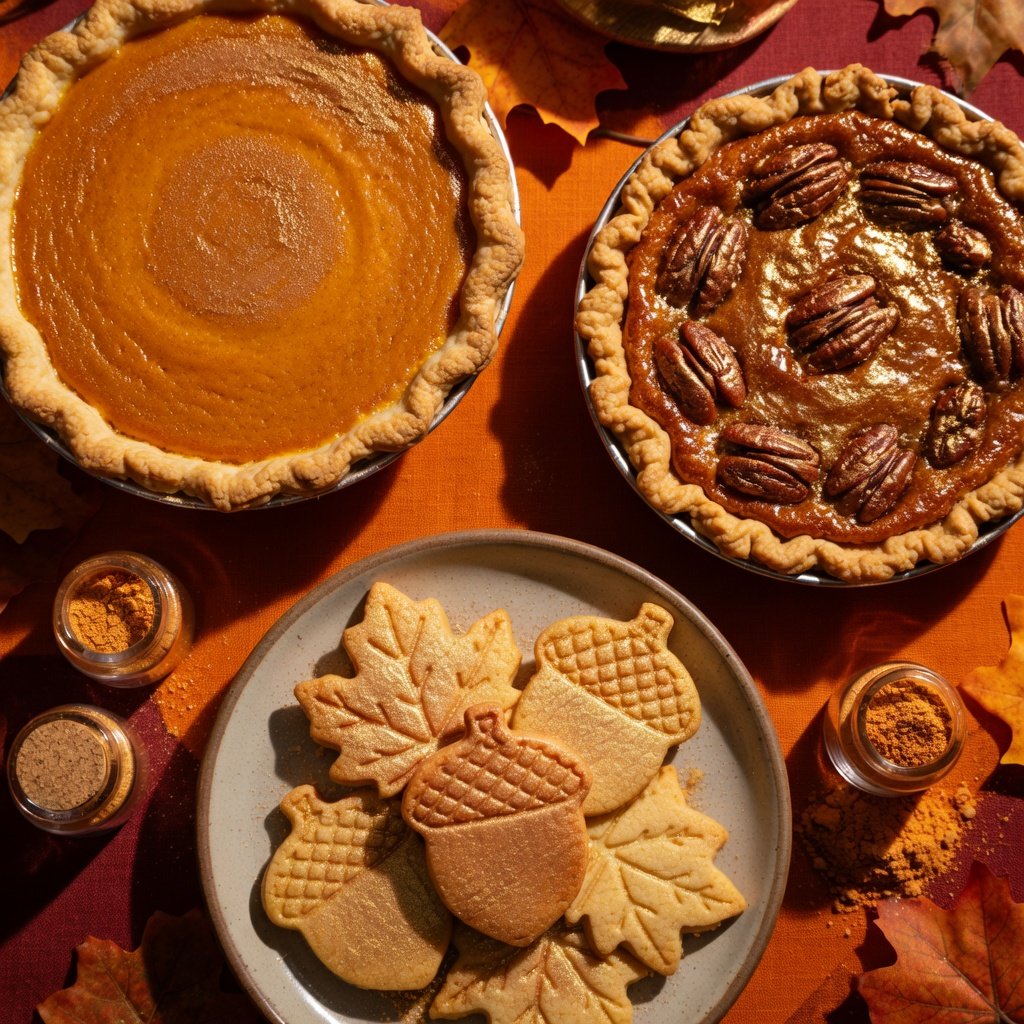
Gold edible glitter on pumpkin pie, pecan pie, and autumn cookies on a Thanksgiving dessert table with luster dust jars
Key Takeaways

– Gold edible glitter on pumpkin pie is a five-minute move that looks like it took all day
– Orange and red luster dust were basically made for fall desserts — the warm tones match everything on the table
– Dry dusting works for most baked surfaces; mix with a tiny bit of vodka for smooth fondant or chocolate
– One jar covers your entire dessert table with plenty left over

Fall desserts don’t need more sugar. They need more shimmer.

Thanksgiving tables are already doing a lot — the centerpieces, the candles, the good china that comes out twice a year. The dessert table usually just… sits there. Same pies your family’s been making since forever, which is a feature, not a bug. But add gold edible glitter to a pumpkin pie and suddenly it’s the thing everyone’s photographing before they cut into it.

That’s the whole pitch. Nothing changes about the recipe. Everything changes about how it looks.

The Fall Color Palette (And What to Put It On)

Thanksgiving has the best color story of any holiday for luster dust. Deep amber, burnt orange, burgundy, warm yellow — these are not colors you have to force. They’re already on the table.

Here’s how we’d approach it:

Gold Luster Dust goes on everything. Pumpkin pie, pecan pie, apple pie, snickerdoodles, pie crust edges. Gold reads as warm and rich, which is exactly what fall food already is. A dusting over the top of a pecan pie makes the sugary surface look lacquered. It’s absurdly good.

Orange Luster Dust is the one most people haven’t tried yet. On buttercream cupcakes, on the whipped cream dollop sitting on top of a sweet potato pie — orange luster dust deepens the color you already have. It doesn’t look like you applied it. It looks like the dessert just has that natural, almost sunset glow.

Red Edible Glitter is for cranberry anything. Cranberry cake, cranberry cheesecake topping, the little jellied situation your aunt brings every year. Red luster dust on a dark red surface hits differently — it looks like the whole thing is lit from inside. Pair it with gold on the same table and you’ve got the fall color story down cold.

Yellow Luster Dust is the underrated one. Apple pie filling, corn pudding, lemon bars that somehow make it onto the Thanksgiving table. Yellow shimmer reads golden in warm light — in a candlelit dining room it genuinely looks like edible sunshine.

How to Actually Apply It

Dry dusting is the move for 90% of Thanksgiving desserts. Dip a soft food-safe brush (a wide pastry brush, a fluffy eye shadow brush reserved for food use — both work), tap off the excess, and sweep lightly across the surface. That’s it.

A few things worth knowing before you start:

– Dust pies after they’ve cooled completely. Warm surfaces trap too much powder and you’ll end up with patches instead of an even shimmer.
– For rough surfaces like pecan pie or crumble toppings, a slightly more loaded brush works better. The texture catches the dust in a way that actually looks intentional.
– Whipped cream is the easiest surface you’ll ever dust. Lightly, from a few inches above, and let it settle. Our [Shimmer Whipped Cream Topper recipe](https://lusterdust.com/recipe/shimmer-whipped-cream-topper/) is exactly this — it takes less time than actually making the whipped cream.

If you’re working with smooth chocolate ganache or fondant decorations, mix a tiny amount of luster dust with a few drops of high-proof vodka or clear extract to make a paint. Brush it on, let it dry — that shimmer is intense. The alcohol evaporates, leaves nothing behind except the color. Our guide on [using edible glitter on cakes and cookies](https://lusterdust.com/how-to-use-edible-glitter-on-cakes-cupcakes-cookies/) covers this in more detail if you want the full breakdown.

Specific Desserts, Specific Colors

We tested a lot of combinations last fall. These are the ones that actually worked.

**Pumpkin Pie** — Gold, full stop. The orange-brown surface and the warm gold shimmer are made for each other. Dust the whole top after it’s cooled. When the pie hits the table under candlelight, it looks glazed with something expensive. Nobody will believe it’s just luster dust until you show them the jar.

**Pecan Pie** — Gold again, but go slightly heavier on the brush. The bumpy texture of the pecans catches and holds more dust. You want full coverage here. It ends up looking almost metallic, like someone cast the pie in bronze.

**Apple Pie (lattice crust)** — Yellow or gold, brushed over the crust lattice before serving. The golden pastry picks up even more golden shimmer and the whole thing glows. Genuinely one of the better-looking desserts you can put on a table with minimal effort.

**Cranberry Cake or Compote** — Red luster dust, dusted lightly over the top. The deep red on deep red creates this dimensional, jewel-like effect. If there’s a cranberry jelly situation in a dish, dust the surface just before serving and don’t stir it.

**Sweet Potato Pie** — Orange luster dust mixed with a small amount of gold. Brush it over the smooth custard top. The two colors blend naturally and the result looks like the pie is lit from within.

**Autumn Sugar Cookies** — Go wild. Leaf shapes, acorn cutouts, anything with royal icing or a smooth buttercream base is a perfect canvas. Red, orange, yellow, gold — you can use all four on the same cookie plate and it looks intentional rather than chaotic.

The Amounts Are Smaller Than You Think

First instinct is always to use more. Resist it.

A 10g jar of luster dust has somewhere around 30 to 40 decent applications on individual desserts — more if you’re dusting pie slices rather than whole pies. For a full dessert table, one jar per color is more than enough to get through Thanksgiving and probably into Christmas.

For whole pies, use about 1/4 teaspoon of dust on the brush, tap off half of it, and work in light passes. Two to three passes beats loading up one heavy pass every time. You can always add more. Getting rid of a clump of over-dusted powder in the middle of your pumpkin pie is not a fun problem.

One More Thing

Put a small open jar of gold luster dust somewhere visible on the dessert table. Not as a decoration — as a conversation starter. People who’ve never heard of edible glitter will ask about it. People who have will want to know where you got it.

It’s the best five-second conversation you’ll have all Thanksgiving.


Posted on Leave a comment

Kids Birthday Party Ideas with Edible Glitter

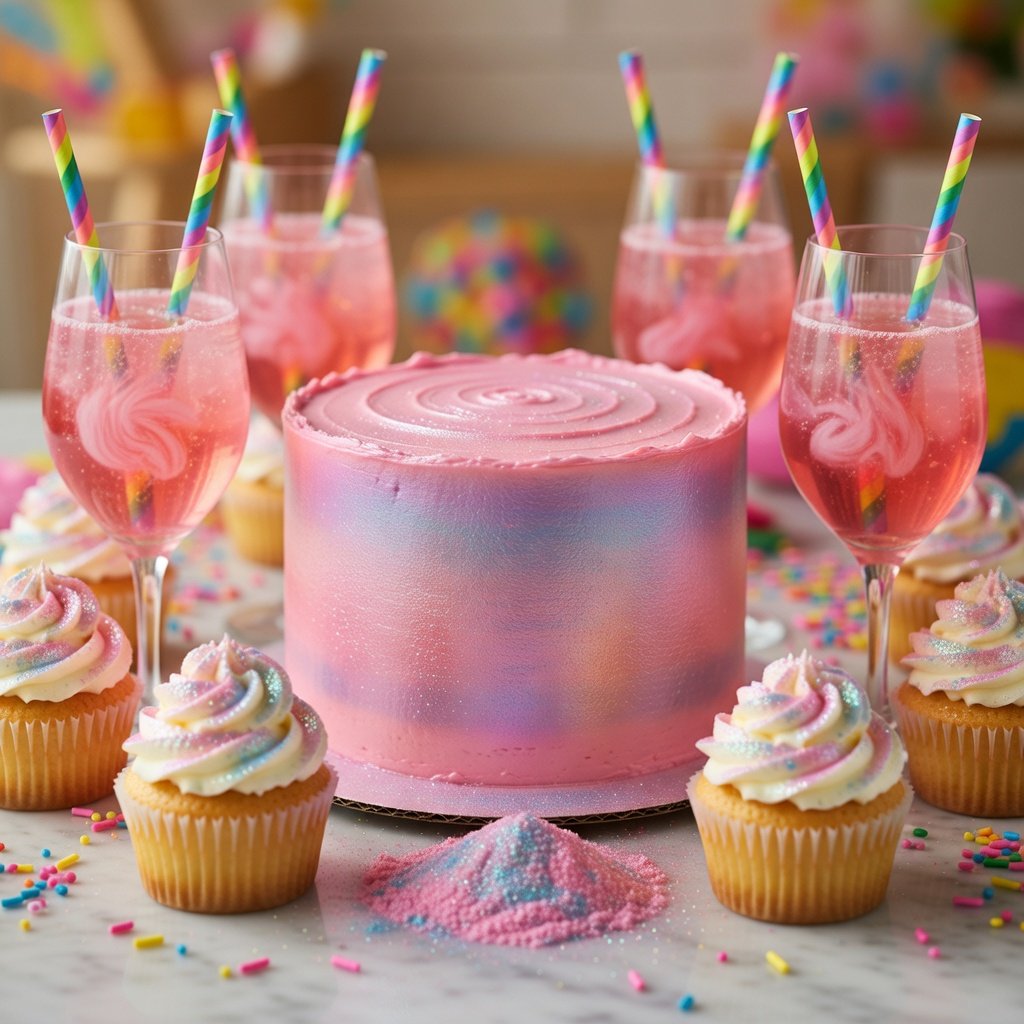
Is edible glitter safe for kids? A birthday party spread with pink edible glitter cupcakes, shimmer cake, and glitter lemonade.
Key Takeaways

• Our luster dust is FDA compliant and made from food-grade mica pigments — safe for kids to eat
• Pink, purple, light blue, and gold are the best colors for birthday party food and drinks
• Edible glitter works on cakes, cupcakes, cookies, juice, lemonade, and pretty much anything else on the table
• A little goes a long way — one 10g jar handles an entire party spread

Kids Birthday Party Ideas with Edible Glitter

Every kid wants a magical birthday. Edible glitter is the fastest way to make food feel like it came from another dimension — and it takes about 30 seconds to apply. Here’s how to use it across an entire party spread, from the cake down to the drinks.

First: Is Edible Glitter Safe for Kids?

Yes. Our luster dust is FDA compliant, vegan, gluten-free, and made from food-grade mica pigments — the same type of ingredient that’s been used in food coloring and decoration for decades. It’s completely tasteless. Your kid won’t notice it’s there except for the shimmer.

The thing worth knowing: not all “edible” glitter actually is. A lot of what you’ll find on Amazon says “non-toxic” on the label, which just means it won’t kill you — not that it’s food. If it doesn’t say FDA compliant, don’t put it on food kids are eating. We wrote a full breakdown of what separates safe edible glitter from the rest if you want the longer version.

Our stuff is the real thing. That’s the only reason we sell it for kids’ parties.

The Birthday Cake

Buttercream is the best canvas for luster dust. The slightly glossy surface catches the shimmer differently than matte frostings — it looks almost metallic in the right light. Dust it on with a dry brush in broad sweeping strokes, working from the top down.

Pink Luster Dust is the obvious move for a classic birthday cake. But pink dusted over white buttercream looks different than pink dusted over pink frosting — the first gives you this soft rose-gold shimmer, the second goes full iridescent. Both are great. Depends what you’re going for.

Purple Luster Dust on a dark chocolate or deep purple cake is something else entirely. It reads as almost galaxy-like, especially under party lighting. We’ve seen parents get more compliments on the cake decorating than the cake itself.

Two colors at once also works — brush pink on the top half and purple on the bottom, blend in the middle. Takes five minutes and looks like you spent the whole weekend on it.

Cupcakes and Cookies

For cupcakes, the method depends on the frosting. Smooth buttercream: dry brush directly on top. Swirled frosting: sprinkle a pinch from about six inches above and let it fall naturally into the ridges. That second technique produces this uneven, sparkly effect that looks intentional even though it basically is random.

Rolled sugar cookies are ideal. Pipe white royal icing, let it set completely, then brush luster dust over the dry surface. Light Blue Luster Dust on white icing looks like a winter morning. Pink Luster Dust on the same white base gives you something closer to a sunrise. Either way, the dry icing surface produces the cleanest shimmer of anything on this list.

If you’re new to this, the beginner’s guide has the full rundown on application methods for different surfaces.

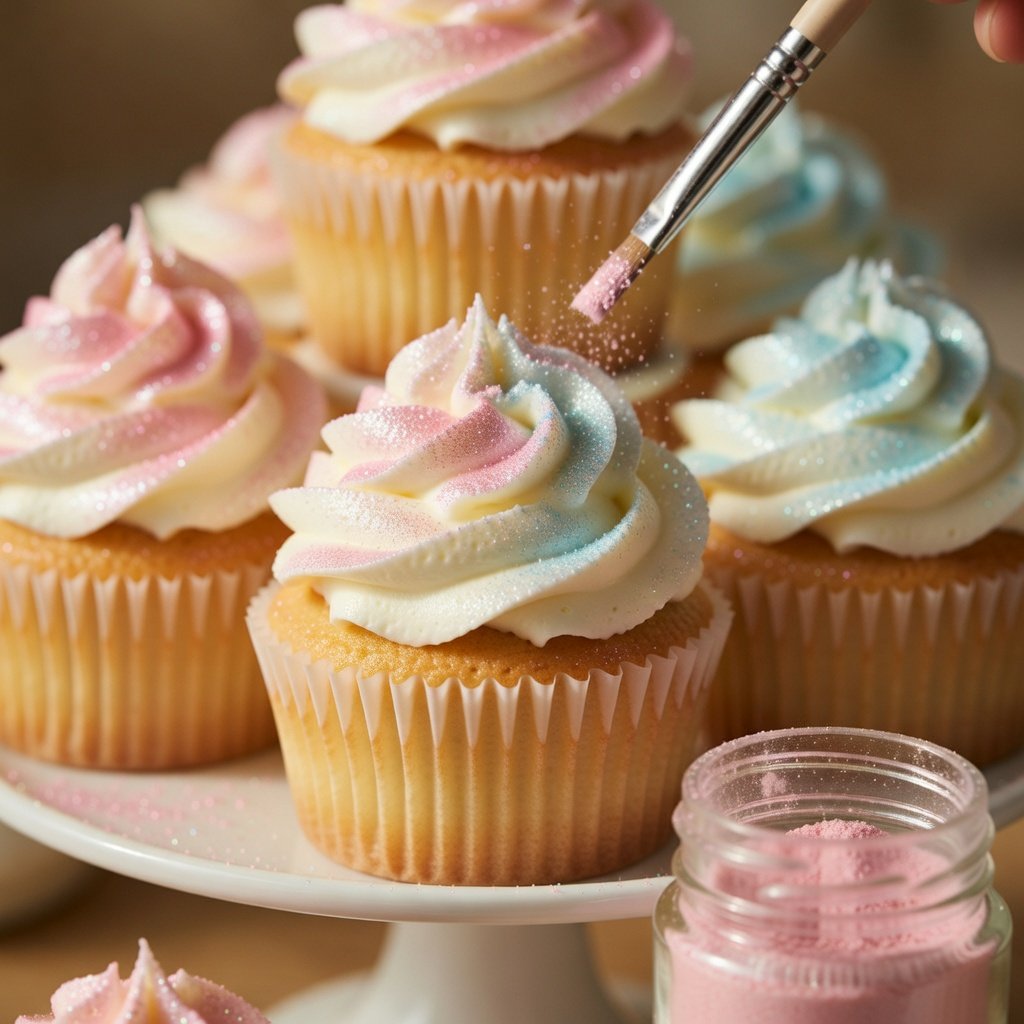
Pink edible glitter on birthday cupcakes being brushed with luster dust on a tiered stand with a jar of pink luster dust nearby
Brush on pink edible glitter to transform plain white-frosted birthday cupcakes into a showstopping tiered display.

The Drinks Table

This is where it gets really fun for kids. A glitter drink isn’t just a drink — it’s something they want to pick up, hold up to the light, and show everyone at the table. The shimmer moves as they swirl the glass. It’s a whole experience.

Our Unicorn Shimmer Lemonade was basically built for kids’ parties. Pink lemonade base, a pinch of Pink Luster Dust, and a few drops of blue food coloring that swirl without fully mixing. It looks like something out of a storybook. Kids go absolutely feral for it.

For a simpler setup, just drop 1/8 teaspoon of luster dust into a pitcher of lemonade or clear fruit punch and stir. The gold works surprisingly well in yellow lemonade — it picks up the warm tones. Blue Luster Dust in clear lemonade turns it into something that looks like it has its own light source.

One 10g jar is more than enough for drinks for 20 kids. You’re using 1/8 teaspoon per pitcher, maybe less.

Quick Party Wins

Beyond cake and drinks, here’s where else this works at a kids’ party:

  • Rice crispy treats: Press them flat, let them cool, brush gold across the top. They look like they’re made of actual treasure.
  • Store-bought donuts: Dip the glaze in a shallow dish, dust luster dust immediately before it sets. Transforms a 12-pack from the grocery store into something that looks custom.
  • Whipped cream on hot chocolate: A tiny pinch of Gold Luster Dust or pink right on the whipped cream topper. Takes two seconds.
  • Fruit skewers: Brush lightly dusted simple syrup onto strawberries or pineapple. The syrup acts as a binder and the shimmer sticks to the fruit surface.
  • Jell-O cups: Dust directly onto the set surface. The shimmer sits right on top and catches light with every wiggle — kids love this one specifically because of the movement.

Colors That Work Best for Kids’ Parties

Pink Luster Dust is the bestseller for a reason. It reads warm and friendly without being aggressive — it works on everything from white frosting to yellow lemonade to chocolate. If you’re buying one color for a birthday party, this is it.

Light Blue Luster Dust and Purple Luster Dust are your unicorn and mermaid party colors. Together they cover basically every fantasy theme kids currently care about. They also happen to look incredible on white or cream-colored frosting — the contrast is sharp and the shimmer reads clearly from across the table.

Gold Luster Dust works for anything with a treasure or adventure theme. It also reads “fancy” in a way kids don’t have the vocabulary to describe but definitely respond to. Every kid who gets a gold-shimmer cupcake thinks they got the special one.

One More Thing

Buy more than you think you need. We ship free on orders over $50, and running out of pink halfway through frosting 24 cupcakes is a specific type of disaster nobody needs on party morning. The 10g jars last well — sealed and stored away from heat, they’ll hold through the next birthday too.

Also: get the kids involved. Let them brush dust onto their own cupcakes. It’s a five-minute activity that costs nothing extra and produces a level of enthusiasm completely out of proportion to the effort. Every time.

Posted on Leave a comment

Summer Pool Party Drinks with Edible Glitter

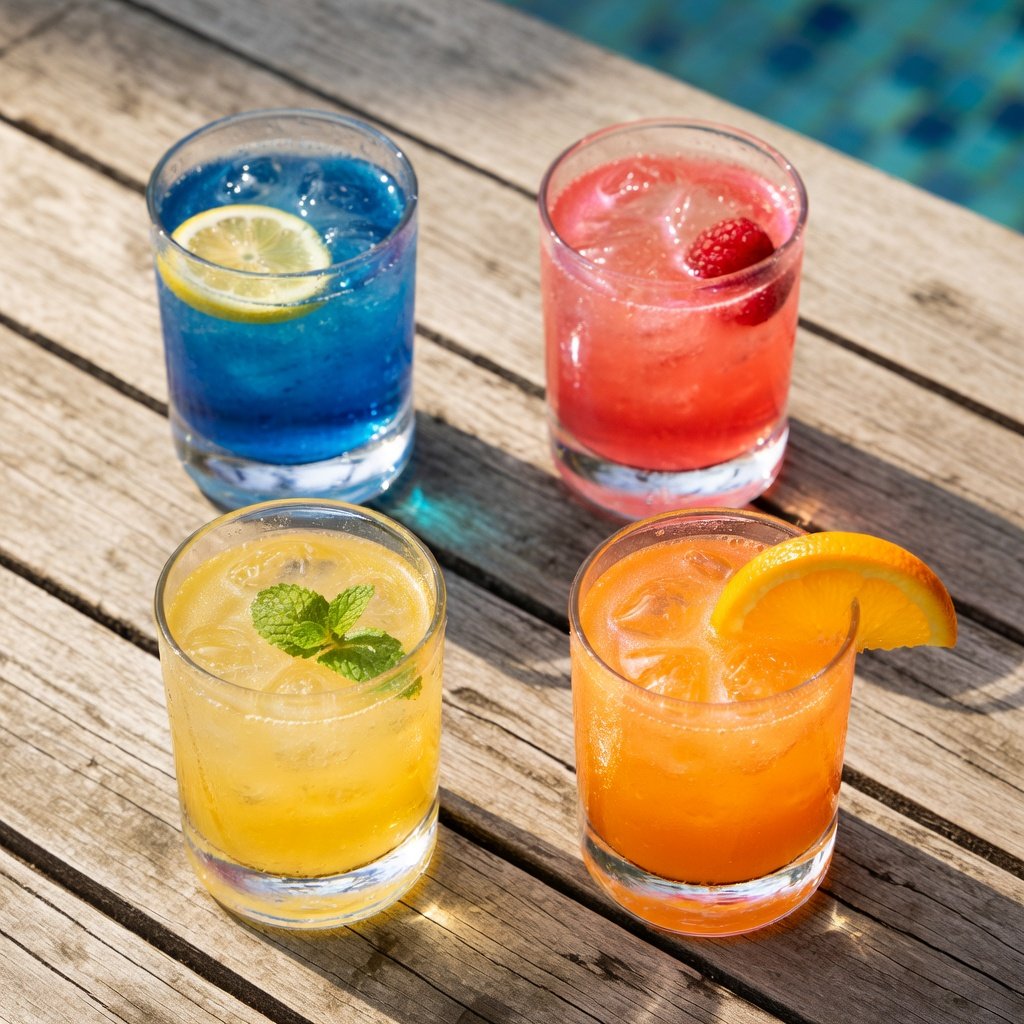
Edible glitter for drinks shimmering in four colorful pool party cocktails — blue, pink, yellow, and orange — on a sun-bleached wood table
Key Takeaways

• Blue and light blue luster dust are the obvious pool party picks — they make clear or tonic-based drinks look unreal in direct sunlight
• A pinch means a pinch. 1/8 teaspoon per glass. Glitter in drinks is about shimmer, not color
• Every color here is tasteless and FDA compliant — your guests won’t know it’s there except for the way their drinks catch the light
• Batch it ahead: pre-measure your luster dust into small cups so you’re not fumbling with jars while people are waiting on drinks

Summer Pool Party Drinks with Edible Glitter

Pool parties have a problem. The drinks all look the same — a bunch of red cups and plain lemonade sitting on a folding table. Nobody’s taking photos of that.

Edible glitter for drinks fixes this fast. Drop a pinch into any glass, give it a swirl, and the whole thing catches sunlight in a way that makes people stop mid-sentence. Outside, in direct sun, near water? The shimmer is something else entirely. We’ve done enough of these to say confidently: pool parties are the best possible venue for glitter drinks.

Here’s what works, what to use, and how to pull it off without turning into your own bartender for three hours.

Why Summer Drinks Hit Different with Edible Glitter

Indoors, luster dust catches ambient light. Nice. Outdoors, in summer sun, near a reflective pool? The particles go absolutely wild. Light’s hitting the glass from every angle — above, bouncing off the water, off other glasses. The shimmer moves every time the drink does.

Clear and lightly colored drinks work best here. Think: sparkling water cocktails, lemonade, blue curaçao anything, agua fresca, tonic-based drinks. The glitter has room to be visible. Dark cocktails waste the effect — the particles get buried.

And if you’ve never added edible glitter to drinks before, the [how-to guide](https://lusterdust.com/how-to-use-edible-glitter-in-drinks-the-complete-guide/) covers everything — quantities, timing, which drinks work and which don’t.

The Colors That Own Pool Season

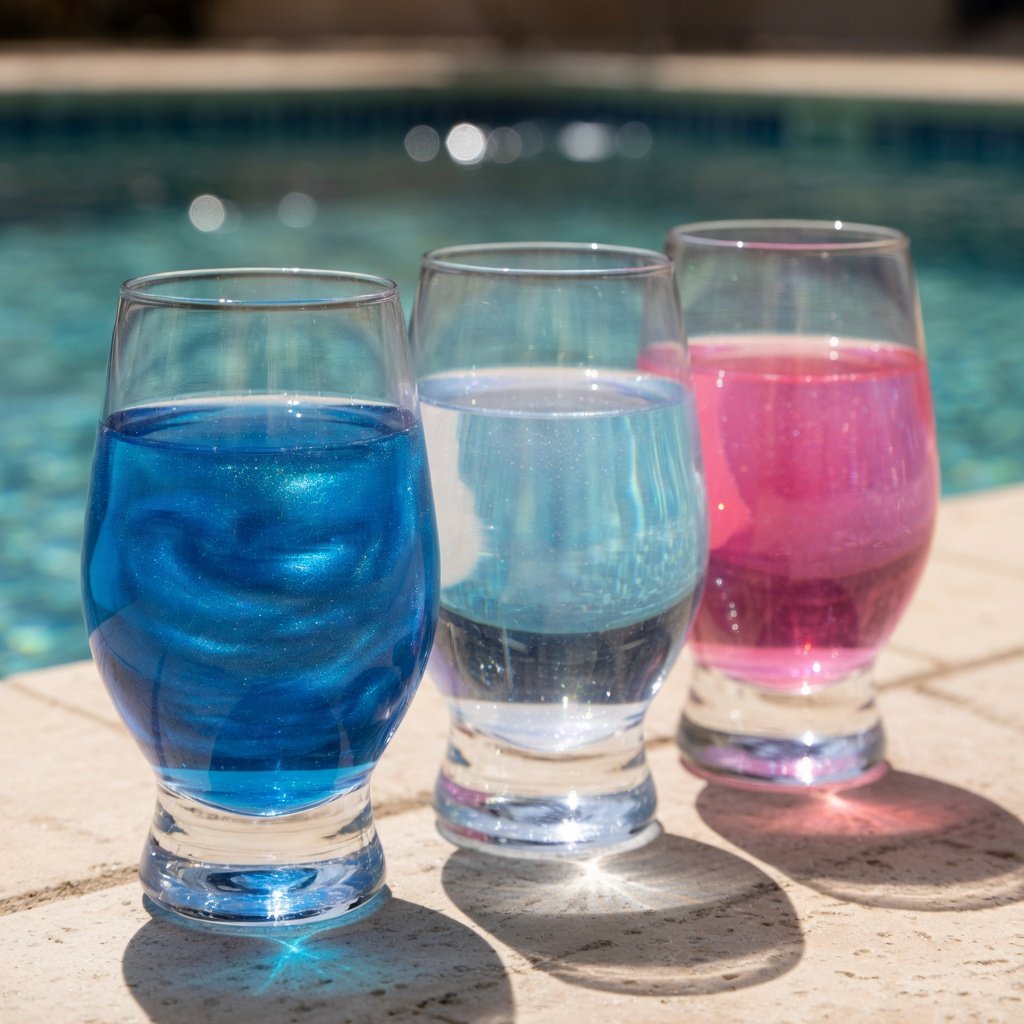
Edible glitter for drinks pool party — blue and pink cocktails in clear glasses with luster dust particles catching sunlight
Luster Dust suspended in sunlight makes these pool party drinks look almost too good to sip.

Blue and Light Blue — The Obvious Answer

Blue Luster Dust Light Blue Luster Dust

These two are made for this moment. Blue luster dust in a clear sparkling water or a gin and tonic looks like something out of a fantasy movie — deep, saturated shimmer that catches every angle of light. Light blue is more subtle, almost like bioluminescence, especially in a pale lemonade or coconut water cocktail.

Our [Enchanted Blue Lagoon Cocktail](https://lusterdust.com/recipe/enchanted-blue-lagoon-cocktail/) uses blue curaçao as the base, which means the drink is already that vivid aqua color. Drop in blue luster dust and the effect doubles. It’s genuinely hard to look away from.

One thing worth knowing: light blue is our pick for non-alcoholic drinks at pool parties where kids are around. Crystal-clear sparkling lemonade with light blue shimmer looks like liquid sky. Zero flavor impact, all the drama.

Pink — The Crowd Pleaser

Pink Luster Dust

Pink works in everything from rosé to strawberry lemonade to plain sparkling water with a strawberry wedge. The shimmer reads warm and summery — it doesn’t compete with the drink, it just adds this soft glow that photographs incredibly.

The [Unicorn Shimmer Lemonade](https://lusterdust.com/recipe/unicorn-shimmer-lemonade/) is the move for a party with a mix of ages. Pink luster dust in lemonade, maybe a little butterfly pea flower for a purple base that shifts to pink when you add citrus. People lose their minds. Takes about 10 minutes to set up for a full pitcher.

Pink also pairs brutally well with light blue if you’re doing a color-coordinated drink setup. Two pitchers, two colors, people can mix their own. Works every time.

Yellow — For the Citrus Drinks

Yellow Luster Dust

Yellow luster dust in lemonade. That’s the whole pitch. The color nearly disappears into the drink but the shimmer stays — it looks like the lemonade itself is glowing. In direct sunlight it borders on actually blinding, which sounds like hyperbole but it isn’t.

Also good: yellow in a sparkling honey lemonade, in a ginger beer cocktail, or in any citrus-forward spritz. The tone is warm without being as heavy as gold, which is great for daytime drinks that should feel light.

Orange — Underrated, Genuinely Stunning

Orange Luster Dust

Most people skip orange and go straight to gold. That’s a mistake at a summer party. Orange luster dust in a sparkling orange juice, a Aperol spritz, or even a plain sparkling water with an orange slice hits this incredibly warm, almost amber shimmer in sunlight. It looks like the drink is lit from inside.

Pair it with the actual orange slice garnish and the whole thing looks intentional and elevated — the kind of drink that ends up in someone’s Instagram story whether you planned it or not.

How to Set This Up Without Being the Bartender All Day

The mistake people make is trying to add glitter to each drink individually while people are waiting. Don’t do that.

Before guests arrive, pre-measure 1/8 teaspoon of luster dust into small paper condiment cups — the little plastic ones you’d use for ketchup at a picnic. One cup per two glasses is plenty. Set them next to your drink station with a small note or just tell people verbally: “pinch goes in before you pour.”

Better option: batch it. For a pitcher of lemonade, add 1/2 teaspoon of luster dust directly to the pitcher, stir well before setting it out, then re-stir every 15-20 minutes. The glitter settles but comes right back up with a quick stir. For carbonated drinks, go pitcher-free and do it glass-by-glass — the carbonation disperses the glitter automatically when you pour.

One more thing. Keep your luster dust jars in a sealed bag in a cool spot — not in direct sun. The product is fine, but summer heat can make the lids expand and you don’t want to be chasing orange shimmer across your pool deck.

Quick Summer Drink Pairings

These aren’t full recipes — just fast combinations that work:

– **Sparkling water + light blue** — easiest drink at any party, looks like the ocean
– **Lemonade + pink** — set out a self-serve pitcher, nobody walks past it
– **Aperol spritz + orange** — already beautiful, this makes it stupid good
– **Tonic + blue** — tonic goes slightly fluorescent under blue luster dust, especially with a UV light nearby at an evening pool party
– **Coconut water + yellow** — unexpected, gorgeous, pairs well with a pineapple garnish

None of these require a recipe card. A pinch, a pour, a swirl. That’s it.

Pool parties peak when the details are right — the right playlist, the right food, and drinks that look as good as the setting. Edible glitter for drinks is a five-second addition that lasts the whole party. People will talk about those drinks. Guarantee it.