✦ FDA Compliant✦ Vegan & Gluten-Free✦ German Mica Pigments✦ Free Shipping Over $50✦ 13 Colors
April 17, 2026·7 min read
How to Use Edible Glitter in Drinks: The Complete Guide
✦ Key Takeaways
• A pinch — literally 1/8 teaspoon — is enough for a full glass. More doesn’t mean more shimmer.
• Luster dust and edible glitter are not the same thing. For drinks, you want luster dust — the fine powder suspends in liquid and catches light as it moves.
• Not all “edible” glitter is actually edible. Look for FDA compliant on the label, not just “non-toxic.”
• Gold, silver, and rose gold are the three workhorses. Every other color has its moment, but these three cover 90% of drink applications.
First: What You’re Actually Putting in Your Drinks
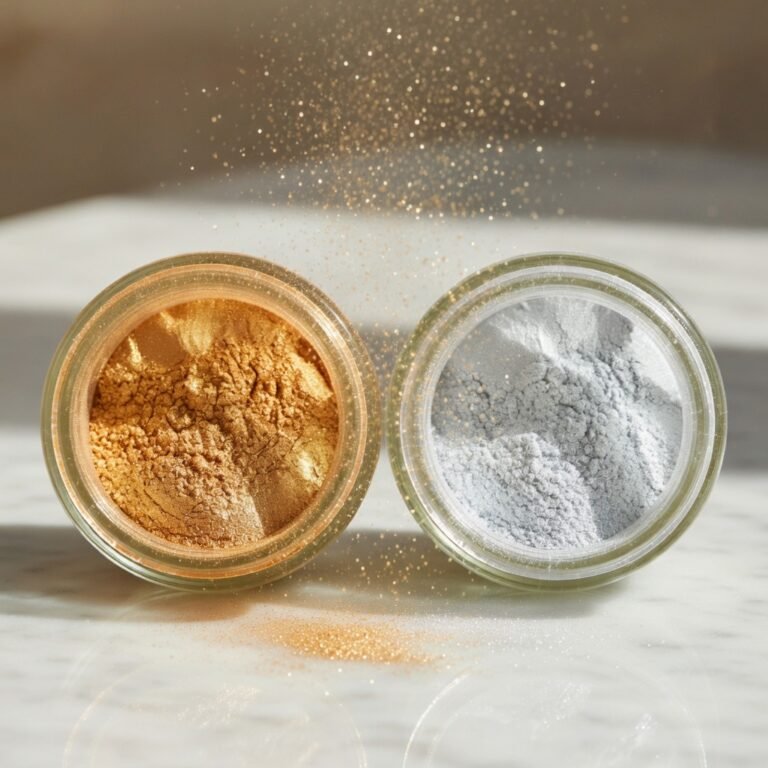
Edible luster dust is a fine mica-based powder — the same type of food-grade pigment that’s been used in candy coatings and cake decoration for decades. Our version is made with German mica pigments, which produce a richer, deeper shimmer than the stuff you’ll find in most grocery stores. Tasteless, odorless, vegan, gluten-free, and fully FDA compliant.
Regular craft glitter — even the kind labeled “non-toxic” — is not food. It’s plastic. Don’t put it in drinks. If the label doesn’t say FDA compliant or food-grade, assume it’s decorative only. This is not a technicality. It matters.
Luster dust works in drinks because the particles are fine enough to stay suspended in liquid. They catch and scatter light as they move through the glass — that’s what creates the shimmer effect. Chunky glitter sinks. Luster dust floats and moves. Big difference in the glass.
How Much to Use (Seriously, Less Is More)
The most common mistake: too much. People see the shimmer in the jar and figure more powder equals more sparkle. It doesn’t. Dump too much in and you get a cloudy, murky drink that looks like someone dissolved chalk in it.
The sweet spot is 1/8 teaspoon per glass. That’s the smallest measuring spoon you own, probably. Or just pinch it between two fingers. Drop it in, give the glass a gentle swirl, and let it do its thing. The particles catch light as they drift — that movement is the whole show. Give it room to work.
For a batch — say you’re doing 20 glasses at a party — pre-measure into a small bowl and pinch from there. You’ll stay consistent and won’t accidentally over-pour.
Champagne & Sparkling Wine
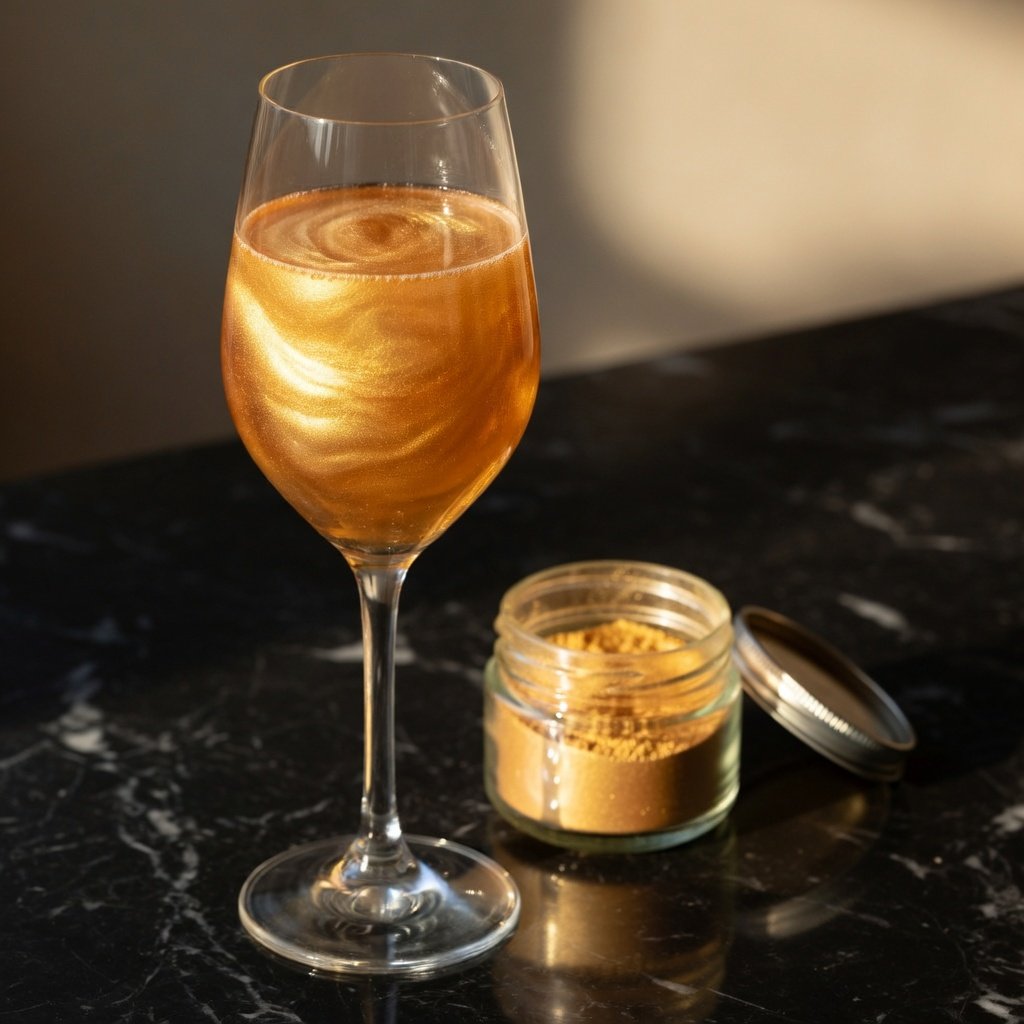
This is where edible drink glitter really earned its reputation. Drop the luster dust in before pouring, or add it to an already-poured glass — both work, though adding it to the empty glass first means the pour itself creates the swirl.
Gold Luster Dust is the classic move for champagne. The warm tone works with the yellow-gold of the wine and catches the light from every angle. Pour it at a New Year’s party and someone will ask you about it within thirty seconds.
Silver Luster Dust works especially well in prosecco or blanc de blancs — the cooler tone matches the lighter color of the wine. More modern, a little sleeker.
The carbonation actually helps. The bubbles carry the particles upward through the glass in a constant, slow churn. Set a glass of shimmer champagne on a table under any kind of overhead lighting and it looks almost alive.
Cocktails
Luster dust for drinks earns its keep in cocktails — especially ones that’ll be photographed or served at events. The rule is the same: 1/8 teaspoon, gentle swirl.
Color matching matters here more than with champagne. Rose Gold Luster Dust is almost unfairly perfect in pink drinks — aperol spritzes, rosé cocktails, pink lemonade mocktails. The color matches and the shimmer disappears into the drink in the best way, like it was always supposed to be there.
Gold works in darker spirits — bourbon cocktails, aged rum drinks, anything amber. Silver is your go-to for clear cocktails: gin and tonics, vodka sodas, anything where you want shimmer without color interference. Drop silver into a blue curaçao cocktail and it looks like something from another galaxy.
One note on timing: add the luster dust right before serving. It stays suspended for a good 10-15 minutes, but the shimmer is most intense in the first few minutes after the swirl. Don’t add it to a pitcher that’ll sit on a table for an hour.
Hot Drinks & Coffee
Hot drinks work, with caveats. The heat doesn’t affect the luster dust — it’s stable at high temperatures — but the shimmer behaves differently in thicker, hotter liquids.
In hot chocolate or a latte, add a small pinch on top and let it sit for 5-10 seconds, then stir gently. The particles don’t stay suspended the same way they do in a thin liquid, but the shimmer as they move through the first few stirs is genuinely beautiful. Gold on hot chocolate is a holiday menu move that works every time.
Coffee drinks are trickier. The color of dark coffee competes with the shimmer — gold tends to disappear, but silver actually shows up well because of the contrast. Dusted on milk foam on top of a latte, either color creates a metallic sheen that photographs incredibly.
Gold outsells every other color by a wide margin, and it’s not hard to see why. It reads as celebratory, warm, and expensive. Works in champagne, in dark cocktails, on rimmed glasses, everywhere. If you buy one jar, buy Gold Luster Dust.
Silver gets underestimated. It’s the right call for clear drinks, white wine cocktails, anything with a blue or purple base. On a gin and tonic with a cucumber garnish, silver looks absurdly elegant. We’ve seen bars charge more for the same cocktail just by adding silver shimmer. Silver Luster Dust is the second jar most people buy.
Rose Gold Luster Dust has had a moment for about five years now and honestly hasn’t slowed down. The warm pink-gold tone is almost universally flattering in drinks. Valentine’s Day, bridal showers, rosé anything — rose gold is the automatic answer.
Getting the Most Out of Every Jar
A 10g jar holds more than it looks like. At 1/8 teaspoon per glass, you’re looking at roughly 80 cocktails from a single jar. For a party, one jar is plenty. For a bar or event venue doing volume, the 50g or 100g sizes make more sense — same powder, just less restocking.
Store the jar sealed and away from moisture. The worst thing you can do to luster dust is get water in the jar — the particles clump and lose that free-flowing quality. Keep it dry, keep it closed, and it lasts indefinitely.
For rimming glasses: dip the wet rim in luster dust instead of salt or sugar, or mix luster dust with sugar for a shimmery sugar rim. Gold sugar rim on a margarita glass is exactly as good as you’re picturing.
Frequently Asked Questions
Yes — our luster dust is fully FDA compliant, made with food-grade mica pigments. It’s the same class of ingredient used in candy coatings and commercial baked goods for decades. Vegan, gluten-free, tasteless, and odorless. You’re not going to taste it in your drink at all.
Just make sure you’re buying FDA compliant luster dust, not craft glitter. “Non-toxic” means it won’t kill you. “FDA compliant” means it’s actual food. Those are different things.
Two likely causes. First, too much — a large amount of powder will settle faster than a small amount. Try using less. Second, the particles aren’t moving. Luster dust looks best in motion. Give the glass a gentle swirl every few minutes, or serve it right after adding the powder while the liquid is still moving from the pour.
Carbonated drinks help a lot here — the bubbles keep the particles in motion naturally.
For a pitcher or punch bowl, add the luster dust right before serving — not while the batch is sitting. Use about 1/2 teaspoon for a full pitcher (8 servings), then stir once and pour. The shimmer will be most active for the first 10-15 minutes after stirring.
For pre-set glasses at an event, add the powder to empty glasses and let guests pour their own drinks. The pour creates the swirl automatically.
Luster dust is a very fine powder — the particles are tiny enough to stay suspended in liquid and create a smooth, metallic shimmer. Edible glitter (sometimes called disco dust) is coarser, with larger, more visible particles.
For drinks, you almost always want luster dust. The fine particles disperse through the whole glass. Edible glitter sits on top or sinks, and can give drinks a gritty texture. Save the chunkier glitter for cake surfaces and decorating.
Gold. The warm tone complements the color of most champagne and prosecco, and the shimmer is visible from across the room under any lighting. Silver is a close second, especially in lighter-colored sparkling wines where you want a cooler, more modern look.
Rose gold also works beautifully in rosé champagne — the color match is almost perfect.
How to Use Edible Glitter in Drinks: The Complete Guide
✦ Key Takeaways
A pinch — literally 1/8 teaspoon — is all you need per drink. More doesn’t mean more shimmer.
Only use FDA compliant luster dust in drinks. “Non-toxic” and “edible” are not the same thing.
Carbonated drinks (champagne, prosecco, sparkling water) give you the best shimmer effect — the bubbles keep the particles moving.
Gold, silver, and rose gold are the three workhorses. Pick based on your drink’s color and the vibe you’re going for.
Why Drinks Are Where Luster Dust Shines
Cakes look great with edible glitter. Chocolates, cupcakes, cookies — all solid. But drinks? Drinks are different. The liquid keeps the particles in motion. Light passes through from every angle. A pinch of gold in a champagne flute catches the light differently every single second. That’s not something you can fake with any other decoration.
We’ve been putting luster dust in drinks for years — at weddings, NYE parties, backyard barbecues — and the reaction is always the same. People pick up the glass, tilt it, and go quiet for a second before asking how you did it. It takes about five seconds to do. That ratio of effort to impact is hard to beat.
The Only Rule That Actually Matters: Use Edible, Not Just “Non-Toxic”
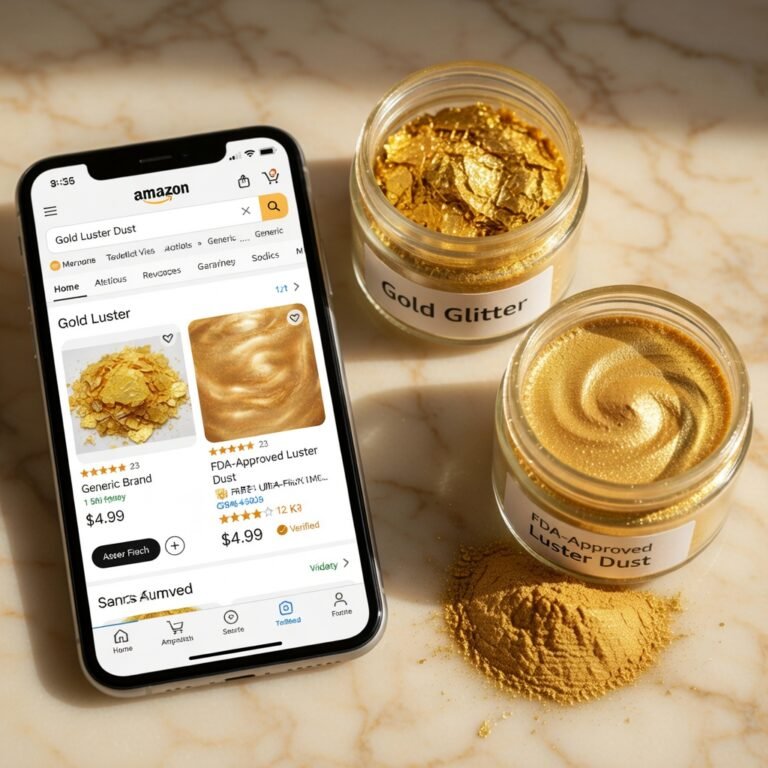
Quick reality check before anything else: a lot of glitter products on the market — especially on Amazon and in craft stores — are labeled “non-toxic” but not actually edible. Non-toxic means it won’t kill you if you accidentally swallow some. Edible means it’s made from food-grade ingredients and is safe to consume intentionally. Big difference.
Our luster dust is made from FDA compliant mica-based pearlescent pigments — the same class of ingredients that’s been used in food for decades. Vegan, gluten-free, completely tasteless. If a product doesn’t say “FDA compliant” or “food grade” on the label, don’t put it in a drink. Period.
How Much to Use
This is where most people go wrong the first time. The instinct is to dump in a bunch, figure more is more. It’s not. Too much luster dust makes your drink look cloudy and muddy — like someone stirred chalk into it. The goal is shimmer, not opacity.
For a single drink: 1/8 teaspoon. That’s it. A pinch you pick up between two fingers. Drop it in, give the glass a gentle swirl (or let the carbonation do the work if you’re using sparkling wine), and watch what happens. The particles catch light as they move through the liquid. That movement is the whole point.
Bigger batch for a punch bowl or pitcher? Scale up proportionally, but taste as you go. You can always add more — you can’t take it out.
Champagne, prosecco, sparkling water, club soda, hard seltzers — these are the best vehicles for luster dust, full stop. The carbonation keeps the particles in constant motion, which means constant shimmer. The effect lasts the entire drink.
Add the luster dust directly to the glass before pouring, or drop it in after. Both work. If you add it before pouring, the bubbles bloom up through the glitter in a way that looks genuinely stunning. If you’re batch-prepping for a party, add a pinch to each empty flute and pour to order.
Gold Luster Dust is the go-to for champagne and prosecco. The warm tone catches the golden color of the wine and amplifies it. For something more bridal or icy, Silver Luster Dust hits differently — more ethereal, a little colder. Our Gold Shimmer Champagne Cocktail is the one we always come back to. Takes 30 seconds and looks like you planned it for hours.
Still cocktails take a little more intention than sparkling drinks, because there’s no carbonation doing the work for you. The particles will settle eventually — that’s just physics. But the shimmer is still striking, especially right after mixing.
Best approach: add the luster dust last, right before serving. Give the drink a quick swirl in the glass (don’t stir with a spoon — it muddies the effect). For shaken cocktails, add a pinch to the shaker with your other ingredients, shake hard, and strain. The agitation distributes it evenly.
Darker spirits — whiskey, rum, dark gin — pair well with Gold Luster Dust or Rose Gold Luster Dust. Lighter spirits like vodka and white rum look incredible with silver. The contrast between the clear liquid and the silver shimmer is genuinely striking.
One note: avoid adding luster dust to drinks with citrus juice in them before shaking — the acid can slightly affect the shimmer quality. Add it after straining instead.
Sparkling lemonade, mocktails, hot cocoa, even iced coffee — luster dust works in all of them. The technique is the same as any other drink. Pinch, drop, swirl.
Hot drinks are underrated for this. A mug of hot chocolate with a tiny amount of Gold Luster Dust stirred in — especially in a clear glass mug — looks incredible. The heat keeps the particles moving longer than a cold still drink would.
For kids’ drinks, our Rose Gold Prosecco Spritz recipe adapts perfectly with sparkling apple juice in place of the prosecco. Same shimmer effect, zero alcohol. Parents love this one for birthday parties.
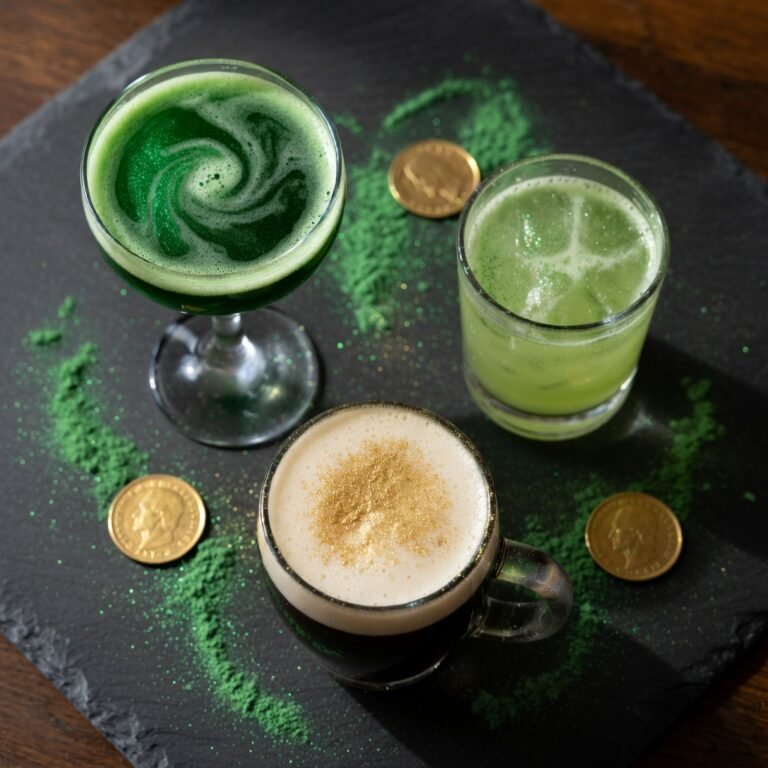
Three cocktails, three finishes — edible luster dust for drinks makes every glass a showstopper.
Gold vs. Silver vs. Rose Gold — Just Pick One
Gold outsells everything else by a wide margin, and it makes sense. It photographs beautifully, it works in almost any drink, and it reads “celebration” immediately. If you’re only buying one color, buy gold.
Silver is the one that surprises people. It looks expensive in a way gold doesn’t, especially in lighter-colored drinks. Drop silver into a gin and tonic or a lychee martini and it looks like something from a high-end cocktail bar. We’d argue silver is underrated and should be used more — but then again, we also just really like silver.
Rose Gold Luster Dust sits between them — warm like gold but softer, slightly pink-tinted. It’s perfect for anything bridal, anything berry-forward, anything spring or Valentine’s-adjacent. In prosecco with raspberry, rose gold is objectively the right call.
Prepping for a Party: The Batch Method
If you’re making shimmer drinks for a group, doing them individually gets old fast. Here’s the setup that actually works.
For sparkling drinks: add 1/8 tsp of luster dust to each empty glass before the party. Pre-set the glasses on trays. When guests arrive, pour the champagne (or prosecco, or sparkling water) tableside. The pour agitates the dust, and the shimmer starts immediately. Zero extra work during service.
For cocktails: make your base in a large pitcher, then drop in luster dust — about 1/2 tsp for every 8 servings — right before guests arrive. Stir well. Give it a quick stir before each pour, since the particles will settle. Takes five seconds per pour and looks completely intentional.
One 10g jar holds enough for 80+ individual drinks. Realistically, that covers a lot of parties.
The Rim Method (Underused, Very Good)
Instead of — or in addition to — putting luster dust inside the drink, you can apply it to a wet rim. Wet the outside of the rim with a bit of simple syrup, then dip it in a small plate of luster dust. Tap off the excess.
The shimmer concentrates right where people’s lips touch the glass. It looks intentional and decorative, and it adds a subtle shimmer to the first few sips. Good for cocktails where you don’t want to disturb the visual clarity of the liquid itself — something like a negroni or a perfect martini.
What Doesn’t Work
A few things to avoid. Luster dust in opaque drinks — thick smoothies, milkshakes, anything creamy enough that light can’t pass through — doesn’t really show. The shimmer effect depends on light interaction with the liquid. No transparency, no payoff.
Also skip it in very sweet, syrupy drinks. Heavy sugar syrups can cause the particles to clump rather than disperse. You’ll end up with blobs instead of shimmer. Stick to water-based and alcohol-based drinks and you’re fine.
And again — the quantity thing. 1/8 teaspoon. Not a full teaspoon. Not “a generous pour.” Less is genuinely more here.
Yes. Our luster dust is made with FDA compliant mica-based pearlescent pigments — the same ingredients used in food products for decades. Vegan, gluten-free, no GMOs, and completely tasteless. The only caveat: make sure any glitter you use says “FDA compliant” or “food grade.” If a product only says “non-toxic,” that’s not the same thing as edible.
No. Luster dust is tasteless and odorless. You won’t detect it at all. That said, if you add way too much — like, dramatically too much — you might notice a very slight chalky texture. That’s another reason to stick with 1/8 tsp per drink.
In carbonated drinks, the shimmer stays active as long as there’s carbonation — which means the whole glass. In still drinks, the particles will gradually settle to the bottom over 5-15 minutes depending on the liquid. A quick swirl brings them back up. For parties, serving in carbonated drinks makes the most sense.
Yes. Heat doesn’t affect the shimmer or the safety. Hot chocolate, mulled wine, warm cider — all work great. Hot liquids actually keep the particles in motion longer than cold still drinks, which is a nice bonus.
Luster dust is a fine powder made from mica pigments — it produces a smooth, even shimmer that disperses through liquids beautifully. Edible glitter flakes are larger particles that stay visible as individual pieces. For drinks, luster dust is almost always the better choice. The fine powder integrates with the liquid rather than floating on top.
A 10g jar covers around 80 individual drinks at 1/8 tsp each. For a party of 20-30 people, one jar is plenty — with a lot left over. Our sizing guide has the full breakdown if you want to plan exactly.