• Dry dusting with a soft brush gives you the most control — best for fondant and firm surfaces
• Mix luster dust with a tiny amount of vodka or lemon extract for painting on smooth fondant or tiers
• More dust doesn’t mean more shimmer — a little goes a long way, especially on buttercream
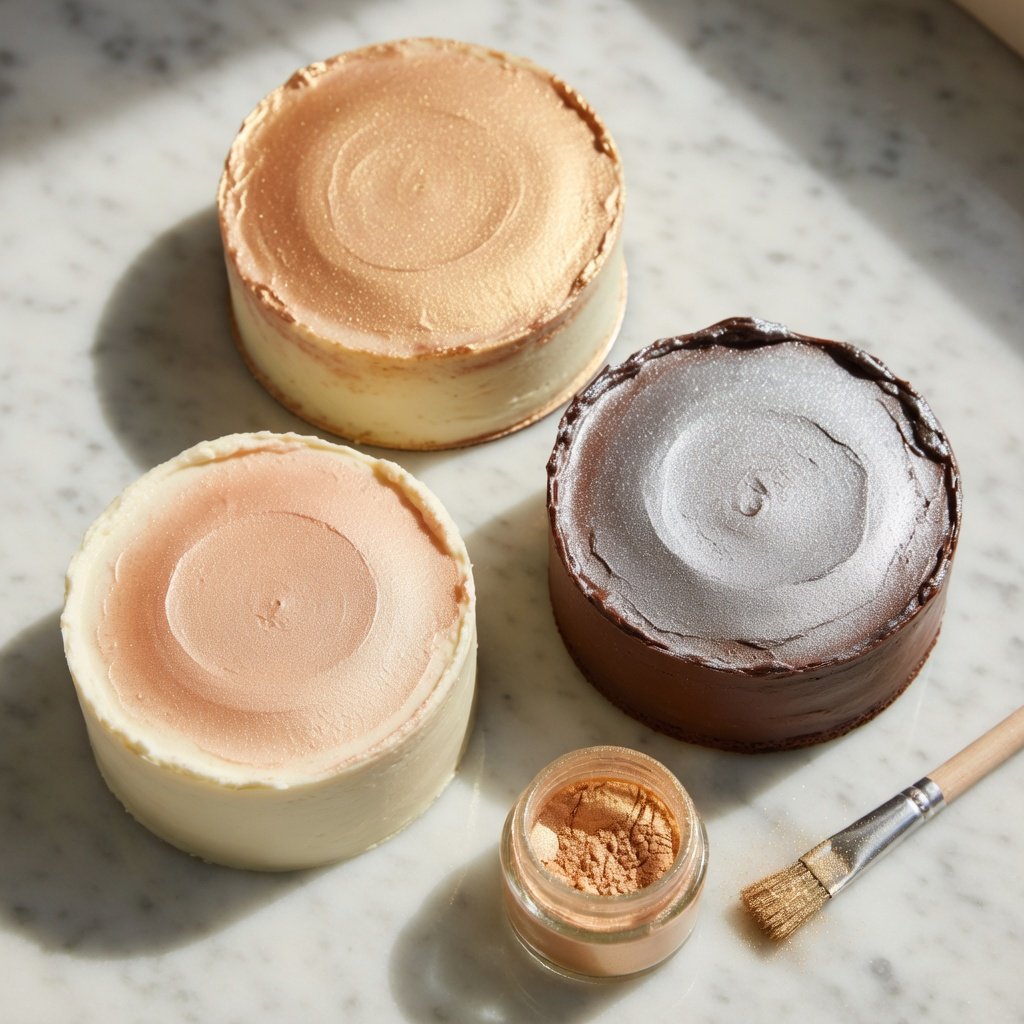
• Gold and rose gold are your safest bets on light frostings; silver earns its place on dark chocolate
How to Use Edible Glitter on Cakes, Cupcakes & Cookies
Luster dust looks intimidating until you use it once. Then it becomes the thing you put on everything. The basics are simple — dry dusting, wet painting, or a quick shimmer wash — and once you know which method works on which surface, you’re basically unstoppable. Here’s what actually works.
The Two Main Methods (And When to Use Each)
Every luster dust technique comes down to one question: is your surface dry and firm, or soft and slightly tacky? That answer determines everything.
Dry dusting is exactly what it sounds like — load a soft brush with luster dust and apply it directly to the surface. No liquid, no mixing. This is your go-to for fondant, macarons, sugar cookies with royal icing, and molded chocolate. The key is a dry, clean brush and a light hand. Tap off any excess before you touch the cake.
Wet painting means mixing your luster dust with a high-proof alcohol — vodka works, but lemon or orange extract is better if there are kids involved — to create a metallic paint. You get clean lines, even coverage, and that full metallic finish you see on painted fondant tiers. The alcohol evaporates quickly and takes any raw taste with it. Water won’t work here; it makes the mixture muddy and slow-drying.
Whole cakes are where luster dust really shows what it can do. The approach changes depending on what’s underneath it.
On fondant: Dry dusting works for an all-over shimmer. Use a wide, flat brush and work in circular motions. For deeper color or a metallic paint finish on smooth tiers, go wet — mix about 1/4 teaspoon of luster dust with just enough vodka to make a thin paste, then apply with a flat shader brush. Build it up in thin layers rather than trying to do it all at once.
On buttercream: This one’s trickier. Buttercream is soft and a little greasy, which means heavy application will pull the surface. Use a light dusting brush — barely loaded — and work in one direction. Circular motions on buttercream can drag and look uneven. Gold Luster Dust catches beautifully on white or vanilla buttercream because the warm tone plays off the cream color. Rose gold reads even softer and more romantic. Rose Gold Luster Dust
On chocolate ganache: Don’t skip Silver Luster Dust on dark ganache. Seriously. The contrast is absurd — silver on near-black ganache looks like something from a high-end patisserie. Let the ganache fully set before dusting, and apply dry with a fan brush for even coverage.
Cupcakes are actually the easiest place to practice. Small surface, low stakes, fast results.
For swirled buttercream, hold the loaded brush about two inches above the cupcake and tap it lightly. The dust falls like snow and lands evenly across the peaks and valleys of the swirl — you get this scattered shimmer that looks intentional and expensive. It’s a good trick.
For a fully coated look, dust directly onto the frosting with a soft brush. Keep the frosting slightly chilled first so it’s firmer and won’t drag. About 1/8 teaspoon per dozen cupcakes is plenty. More than that and you start losing definition in the frosting texture.
Royal icing–topped cupcakes? Apply after the icing is fully set and dry. The hard surface holds the dust better than any other frosting, and the shimmer has a glass-like quality on that flat finish.
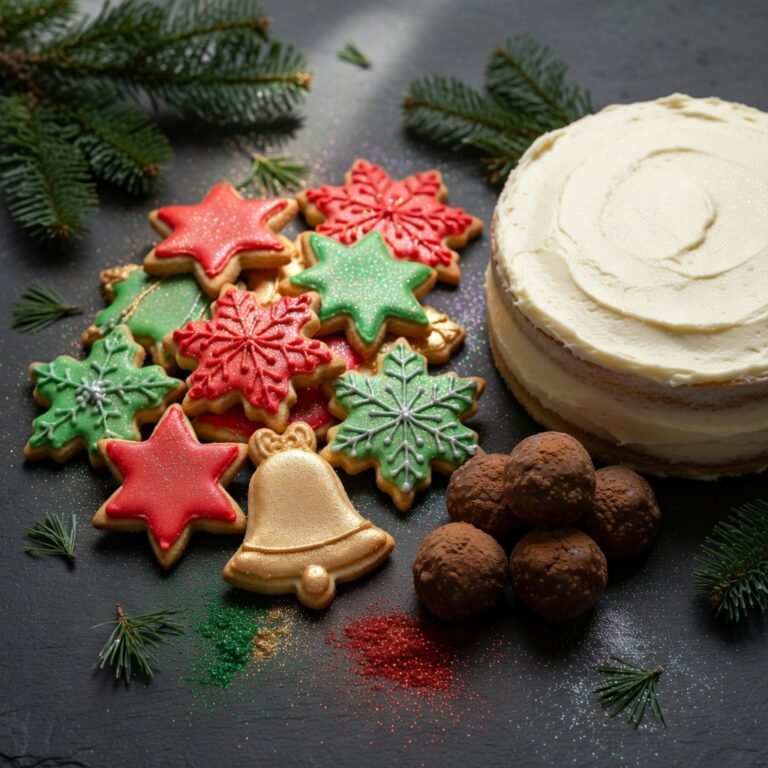
Sugar cookies with royal icing are probably the single best surface for luster dust. The icing is hard, flat, and smooth — the dust adheres perfectly and the shimmer really pops.
Wait until the royal icing is completely dry. Not “mostly dry,” not “dry on top.” Completely dry, all the way through — usually 6-8 hours minimum, overnight if you can wait. Then dust with a soft brush in light, even strokes. One pass is usually enough.
For painted cookies, the wet method gives you incredible detail. Mix luster dust into a paste with a drop of vodka and use a fine-tip paintbrush. You can do lettering, outlines, full metallic fills. Gold is classic, but rose gold on pale pink cookies is genuinely ridiculous in the best way.
Shortbread without icing can take a very light dusting directly on the surface, but the shimmer effect is subtler — the texture absorbs some of it. Still looks great on a cookie platter. Just don’t expect the same intensity you’d get on royal icing.
The Mistakes That Actually Happen
Too much at once is the big one. The instinct is to load the brush and go heavy, but luster dust builds up fast and unevenly. Start with less than you think you need. You can always add another pass.
Using water instead of alcohol for the wet method. Water makes the mixture thick, slow to dry, and slightly grainy. Alcohol evaporates almost immediately and leaves clean, saturated color. High-proof vodka is fine. Clear extract works. Don’t use water.
Applying dust to wet or soft frosting with too much pressure. On buttercream especially, dragging the brush pulls the surface and looks rough. Load the brush, then barely touch the frosting — more of a deposit than a stroke. Or hold the brush above the surface and tap the handle to let the dust fall.
Storing the jar with a contaminated brush. If your brush has frosting on it and goes back in the jar, the whole jar clumps. Use a clean brush every time, or tip a small amount of dust onto a palette or plate before loading your brush.
Picking the Right Color
Gold is the crowd-pleaser. It works on almost every frosting color and gives that warm, celebration-appropriate shimmer that reads as fancy without being over the top. Our go-to for most cakes.
Rose gold is gold’s more romantic sibling. It leans pink-warm, which makes it perfect for wedding cakes, birthday cakes for anyone who loves the aesthetic, and anything with blush, cream, or white frosting. Layered with actual gold on a two-tier cake? That combination is really something.
Silver earns its place when the base is dark — dark chocolate, navy, black fondant, deep burgundy. It doesn’t compete with warm tones the way it can on lighter bases. Drop silver on white buttercream and it can look a little cold. Put it on a chocolate ganache drip cake and it looks like it belongs in a shop window.
The other colors — purple, blue, pink, green — work best as accents or for themed designs. They don’t have the same versatility as the metallics, but on the right cake they’re exactly right. A deep blue luster dust on a galaxy-themed cake is genuinely stunning.
What You Actually Need
You don’t need much to start. A few soft brushes in different sizes — a wide flat brush for broad coverage, a fan brush for dusting, a small detail brush for painting. A ceramic palette or small glass dish for mixing wet applications. That’s it.
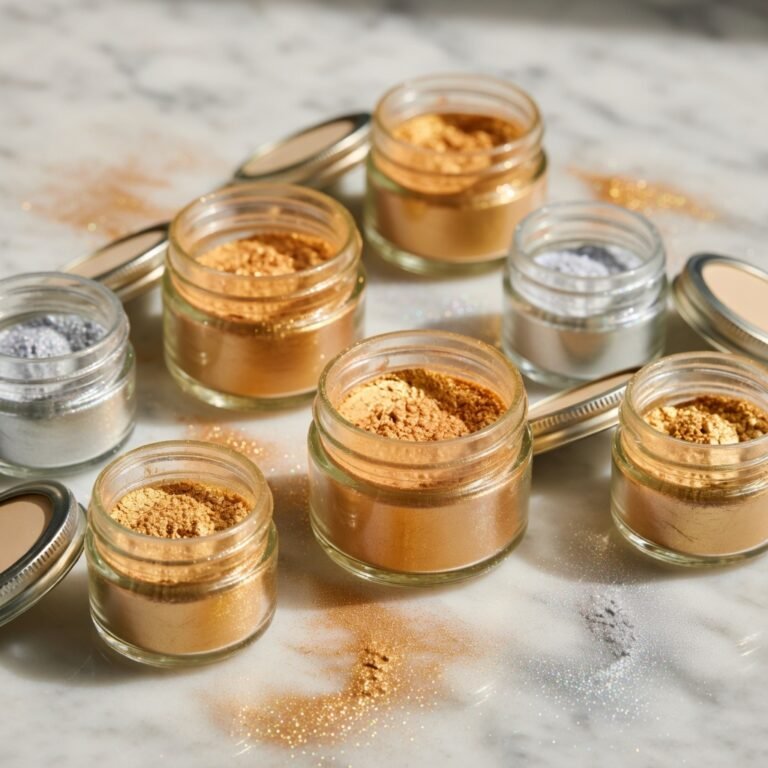
The luster dust itself goes a long way. A 10g jar covers a lot of cakes — we’re talking dozens of applications from one jar if you’re using it right. The mica-based pigments in ours are denser and more reflective than cheaper alternatives, which means you need less to get the effect you’re after. A pinch really is a pinch.
Keep your jars sealed between uses. Humidity is the enemy. The dust doesn’t spoil, but it can clump if moisture gets in, and nobody wants to spend five minutes breaking up clumps mid-project.
Yes, but apply it dry and light. Use a barely-loaded brush and work in one direction. Buttercream is soft, so too much pressure will drag the surface. Keep the frosting cold for best results — pop the cake in the fridge for 15 minutes before dusting.
You don’t have to use vodka — any high-proof, clear, food-safe alcohol works. Clear vanilla or lemon extract also works well and is a better call around kids. Water doesn’t work for wet painting. It makes the mixture slow to dry and leaves it looking patchy. Stick to alcohol-based liquids.
For a dry-dusted finish on a standard 8-inch fondant cake, about 1/2 teaspoon is usually enough for light coverage. For a full painted metallic finish, plan for closer to 1 teaspoon. Our 10g jars hold roughly 2.5 teaspoons of product, so one jar handles multiple cakes.
No. Luster dust is completely tasteless and odorless. It’s made from food-grade mica pigments — same material that’s been used in edible products for decades. Your guests won’t taste anything different. They’ll just notice the cake looks significantly better.
Our luster dust is fully FDA compliant, made with food-grade mica pigments, and is vegan and gluten-free. Edible and non-toxic are not the same thing — non-toxic just means it won’t cause harm, while edible means it’s approved as actual food. Ours is edible. Look for FDA compliant on any luster dust label before putting it on food.
Absolutely. Gold and rose gold together give a beautiful warm gradient effect on fondant. Silver and white mixed produce a softer pearl tone. Start with small amounts on a palette first to test the blend before committing to the whole jar.