• “Non-toxic” and “edible” are not the same thing — one means it won’t kill you, the other means it’s actual food
• Real edible glitter is made from FDA compliant mica-based pigments that have been used safely in food for decades
• A lot of glitter sold online as “edible” isn’t — check the label before it goes anywhere near food
• Ours is FDA compliant, vegan, gluten-free, and tasteless — full stop
Edible Glitter Safety: FDA Rules Every Baker Should Know
The short answer to “is edible glitter safe to eat” is yes — if it’s actually edible. That distinction matters more than people realize, and it’s where a lot of home bakers get tripped up. Not all glitter on the market is what it claims to be. Here’s how to tell the difference.
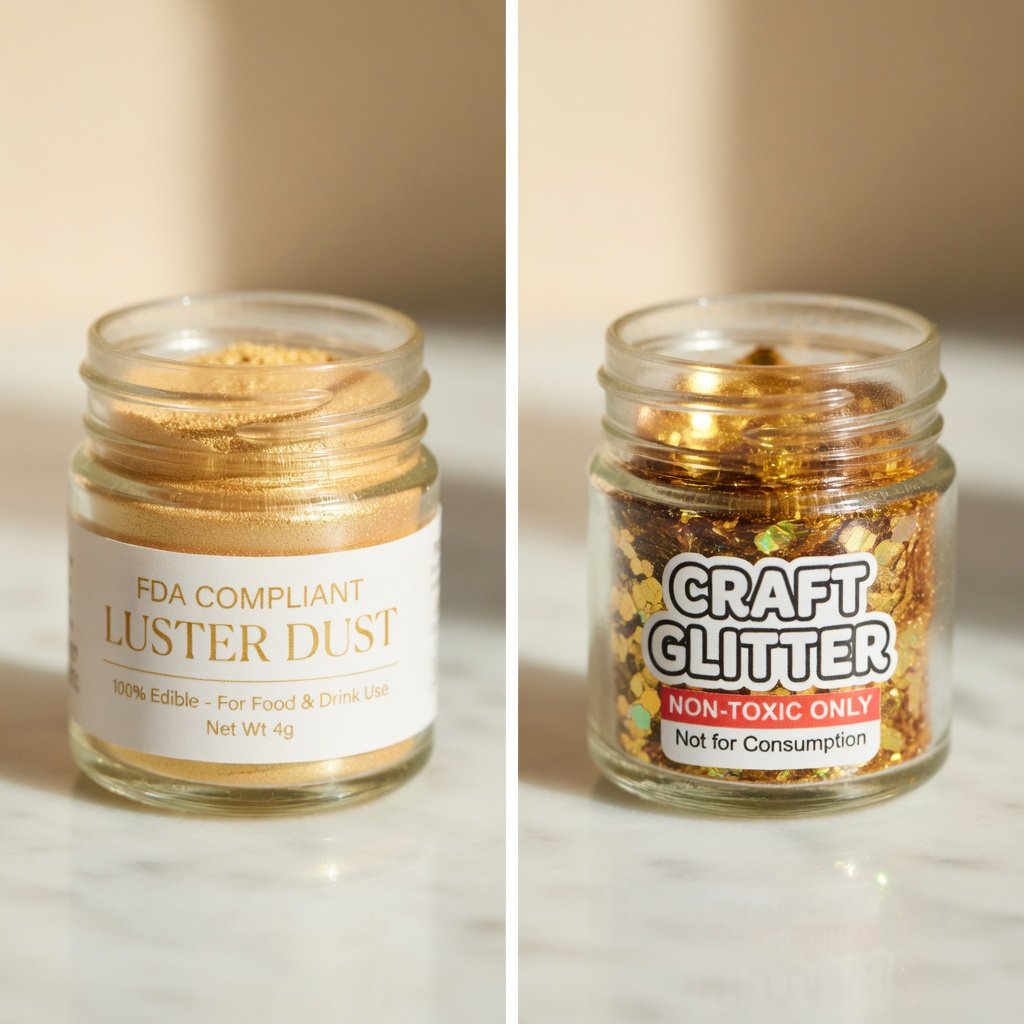
Non-Toxic ≠ Edible
This is the big one. “Non-toxic” means a product won’t cause acute harm if accidentally ingested. It does not mean it’s designed, tested, or approved for food use. A lot of craft glitters — the stuff sold at Michaels or floating around on Amazon — gets labeled “non-toxic” and that’s it. No FDA compliance. No food-grade ingredients. Just a craft product that technically won’t land you in the ER.
Edible is a different standard entirely. For a product to be genuinely edible, every ingredient has to be FDA compliant — either GRAS (Generally Recognized as Safe) or approved as a food additive. The ingredients have to hold up at that bar. “Non-toxic craft glitter” does not.
Put craft glitter on a cake? You’re feeding people something that was never intended to be eaten. It might be fine. It might not. Either way, you don’t actually know — and that’s the problem.
What Makes Edible Glitter Actually Safe
Real edible glitter is made from mica-based pearlescent pigments. Mica is a naturally occurring mineral that’s been used in food coloring for decades. It’s what gives products that shimmery, light-catching quality. The FDA has approved specific mica titanium dioxide pigments for use in food, and that’s exactly what goes into compliant luster dust.
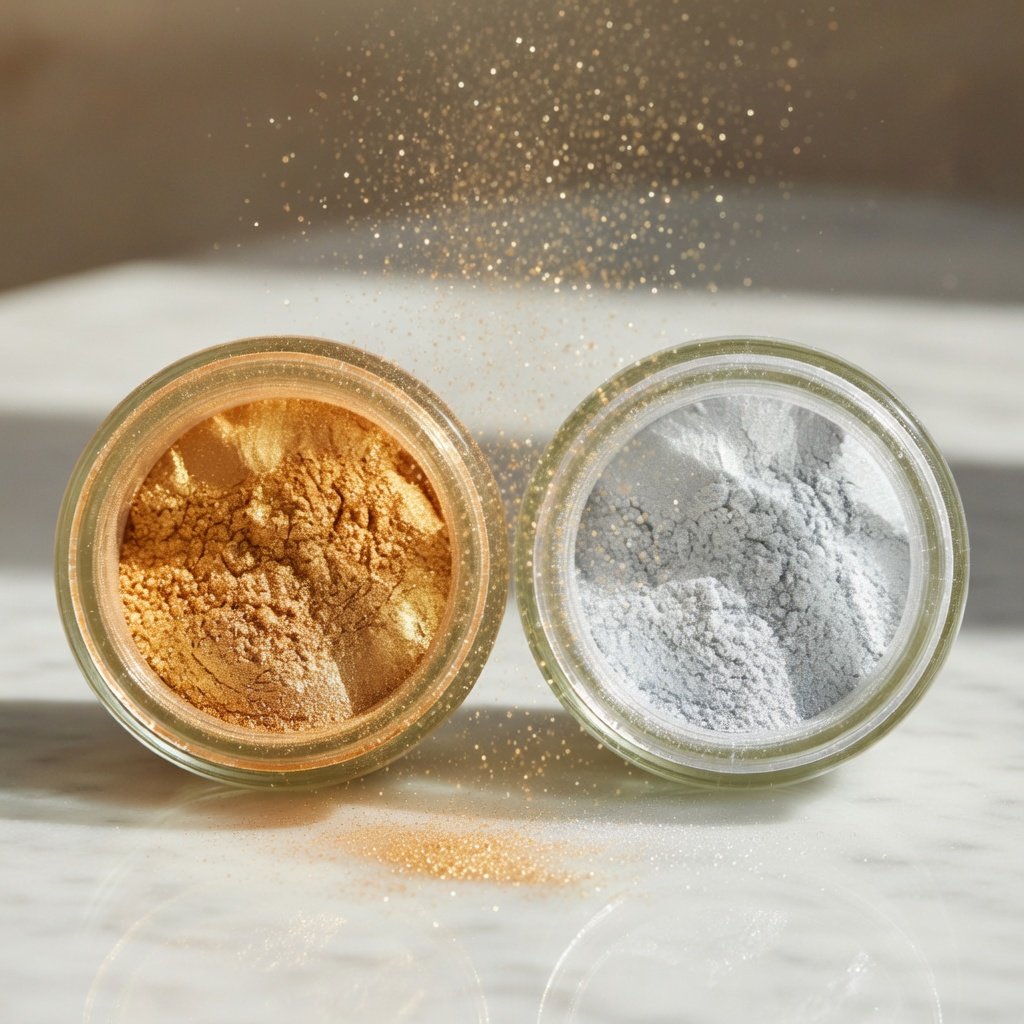
Our Gold Luster Dust, Silver Luster Dust, and Pink Luster Dust — along with every other color we make — uses German mica pigments that are FDA compliant across the board. Vegan, gluten-free, no GMOs. Completely tasteless. The shimmer you see in the glass or on the cake? That’s it. Nothing else going on.
We wrote a more detailed breakdown of the actual ingredients in this post on edible glitter safety if you want to get into the specifics. But the short version: mica pigments, food-grade binders, nothing sketchy.
How to Read a Label (And What to Avoid)
Buying luster dust or edible glitter — whether from us or anyone else — here’s what to look for:
- FDA compliant on the label. This is the language that matters. Not “food-safe,” not “non-toxic,” not “suitable for decorative use only.”
- An actual ingredient list. If there isn’t one, that’s a flag.
- No mention of “for decorative purposes only” — that phrase is a tell that the manufacturer knows it’s not actually food.
- Vegan and gluten-free markers are a good sign, not because they’re required, but because they indicate the company is actually paying attention to what’s in the product.
The “for decorative purposes only” language is worth pausing on. Some brands put this on products they also market as edible. It’s legal cover — they can sell it near food products, use food-adjacent language, but that disclaimer means they’re not actually standing behind the safety of ingesting it. Don’t ignore that.
What the FDA Actually Says
The FDA regulates color additives in food pretty strictly. For a colorant to be used in food — including decorations that end up on food — it has to be either approved as a color additive or fall under the GRAS exemption. Mica-based pearlescent pigments used in food? Approved. Synthetic craft glitter made from polyester or metallic film? Not approved for food use, full stop.
There’s no gray area here. The FDA’s position is clear: if a product isn’t formulated with approved food-grade ingredients, it shouldn’t be going on or in anything people eat. The fact that a lot of non-compliant glitter exists in the market doesn’t change that.
The good news is that genuinely FDA compliant edible glitter — made properly, with the right pigments — has a long and clean safety record. The ingredients are well understood. You’re not doing anything risky. You’re just adding shimmer to your food, which is objectively a good decision.
Common Questions About Edible Glitter Safety
Yes, if it’s FDA compliant. The ingredients are the same ones used in plenty of other food products — this isn’t a case where the safety profile changes based on age. A kid eating a sparkly birthday cupcake made with real luster dust is completely fine. Just make sure you’re actually using edible glitter and not decorative craft glitter, which is where people run into trouble.
No. FDA compliant luster dust made from mica-based pigments is inert — it passes through your system without being absorbed. It’s tasteless, it adds nothing nutritionally (for better or worse), and it has no known side effects. The only version of edible glitter that could be “bad for you” is the kind that isn’t actually edible — craft glitter or products that aren’t FDA compliant.
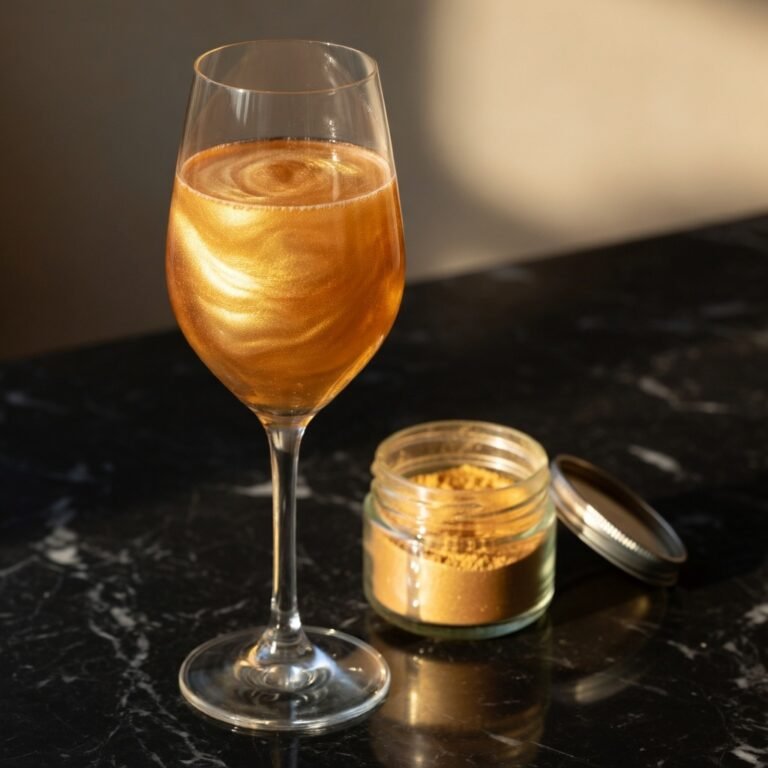
Yes — the same rules apply in drinks as on food. FDA compliant luster dust is safe in cocktails, mocktails, or any other beverage. We’d start with about 1/8 teaspoon per glass and adjust from there. Our Gold Shimmer Champagne Cocktail is a good place to see how it works. The shimmer suspends in the liquid and catches light as it moves — genuinely one of the better visual effects you can pull off with almost zero effort.
Check for “FDA compliant” language, a real ingredient list, and avoid anything labeled “for decorative purposes only.” If you’re buying online, be skeptical of vague claims. Any legitimate edible glitter company can tell you exactly what’s in their product and point to the regulatory compliance. If they can’t, that tells you something.
Luster dust is a fine powder that creates a smooth, pearlescent shimmer. Edible glitter typically has a coarser texture with more visible sparkle. Both can be FDA compliant — the difference is mostly aesthetic. Luster dust is better for painted finishes and drinks; coarser glitter shows up better on flat surfaces like royal icing. We cover this in more depth in our edible glitter FAQ post.
Bottom line: edible glitter is safe. Real edible glitter, made with FDA compliant ingredients, has been used in food for years without issue. The risk isn’t in the product category — it’s in buying something that isn’t actually what it claims to be. Know what’s in your glitter, check the label, and use it with confidence.
You Might Also Like

Gold Shimmer Champagne Cocktail
The easiest way to show off edible glitter. One pinch, one flute, and the whole room notices.
Is Edible Glitter Actually Safe? Everything You Need to Know
A deeper look at the ingredients, the regulations, and why it matters which product you buy.
What Is Edible Glitter Made Of? A Complete Ingredient Breakdown
Exactly what's in luster dust — no vague claims, just the actual ingredients and why they're used.