✦ FDA Compliant✦ Vegan & Gluten-Free✦ German Mica Pigments✦ Free Shipping Over $50✦ 13 Colors
April 16, 2026·6 min read
What Is Edible Glitter? Your Questions Answered
✦ Key Takeaways
• Edible glitter and “non-toxic” craft glitter are not the same thing — only FDA compliant products belong in food
• Luster dust is made from food-grade mica pigments: completely tasteless, odorless, and safe to eat
• It works on basically anything — cakes, cocktails, chocolate, fruit, frosting
• A little goes a long way. Start with less than you think you need.
What Is Edible Glitter? Your Questions Answered
Edible glitter is exactly what it sounds like — a shimmer powder you can actually eat. Not craft glitter with a wink and a “non-toxic” label. Actual food-grade powder made from ingredients that belong in your body. The kind that turns a champagne glass into something your guests will photograph before they drink it.
Here’s everything you need to know.
What’s It Actually Made Of?
The short answer: mica. Specifically, food-grade mica-based pearlescent pigments — the same category of ingredient that’s been used in food coloring and coatings for decades. Our luster dust uses German mica pigments, which produce a richer, more consistent shimmer than cheaper alternatives. The difference is noticeable once you’ve seen both side by side.
Beyond mica, that’s basically it. Our formulas are vegan, gluten-free, non-GMO, completely tasteless, and odorless. You’re not adding flavor to your food — just light.
“Non-Toxic” vs. Edible — This Matters More Than You Think
This is the thing that trips people up. A lot of glitter products — including plenty sold in baking aisles — say “non-toxic” on the label. That means it won’t send you to the hospital. It does not mean you should eat it.
Edible means FDA compliant. It means the ingredients were reviewed and approved for human consumption, not just deemed unlikely to cause immediate harm. Those are very different standards.
Quick reality check: a lot of “edible” glitter on Amazon isn’t actually edible. If the label says “non-toxic” instead of “FDA compliant,” put it back. Our luster dust is FDA compliant — that’s the baseline, and it matters.
What Can You Use It On?
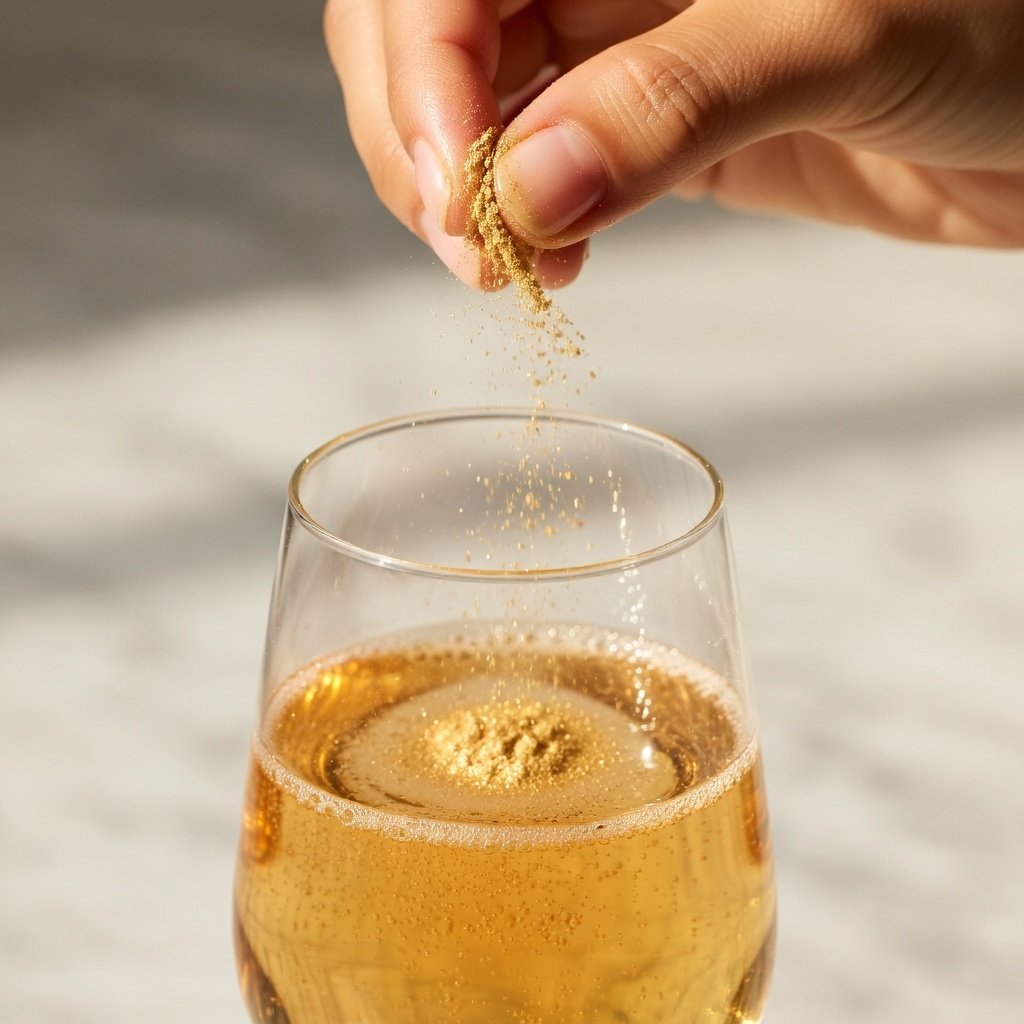
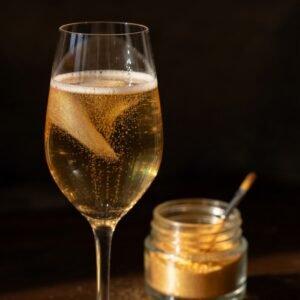
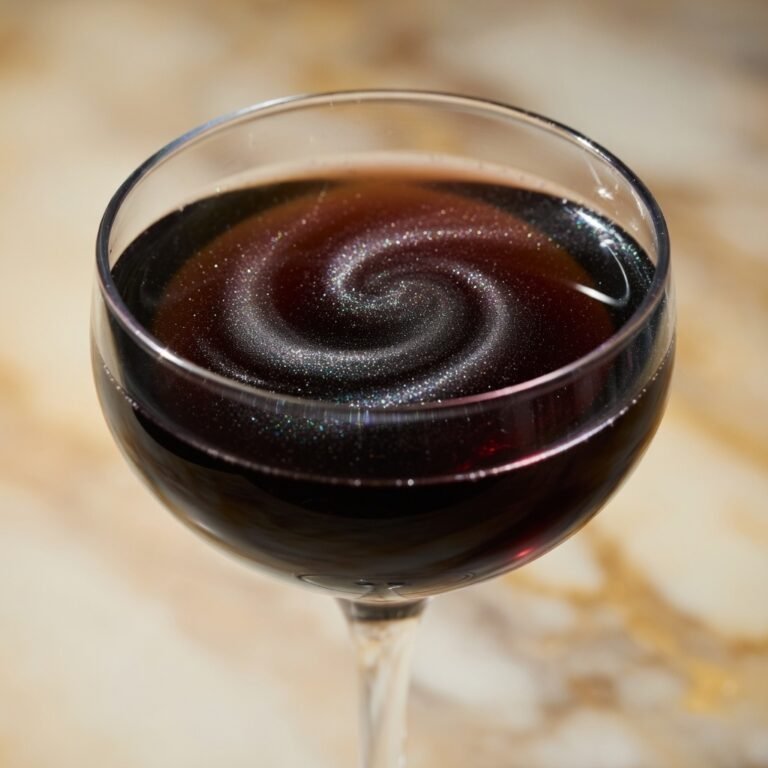
This is where luster dust really shows off. Drop a pinch into a champagne flute before you pour — the carbonation picks up the particles and suspends them through the whole glass. The shimmer moves. It’s genuinely hard to look away.
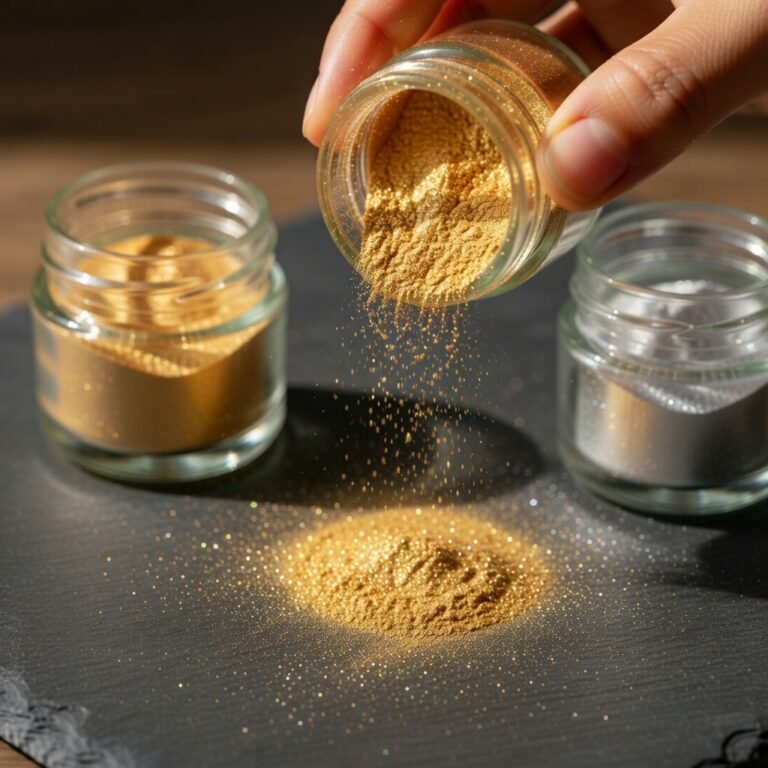
Gold Luster Dust is the classic choice for champagne and prosecco. The warm tone catches the light in a way silver doesn’t quite match. For something more dramatic — dark cocktails, espresso martinis, anything with a deep base — Silver Luster Dust reads as almost luminous against the dark liquid.
Use about 1/8 teaspoon per glass. More than that and you get cloudy instead of shimmer. Less is genuinely more here.
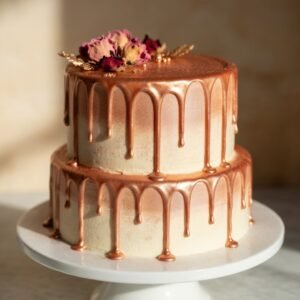
Buttercream is the best surface for luster dust. The slightly glossy texture catches the shimmer and amplifies it — dust a thin layer over a frosted cake and the whole thing looks expensive in a way that’s hard to explain until you see it. A dry brush or clean makeup brush works perfectly for even application.
Fondant works too, though the matte finish means the shimmer sits a little flatter. Still beautiful, just different. Royal icing is our least favorite surface — the texture tends to absorb instead of reflect. Worth knowing before you spend an hour on decorated cookies.
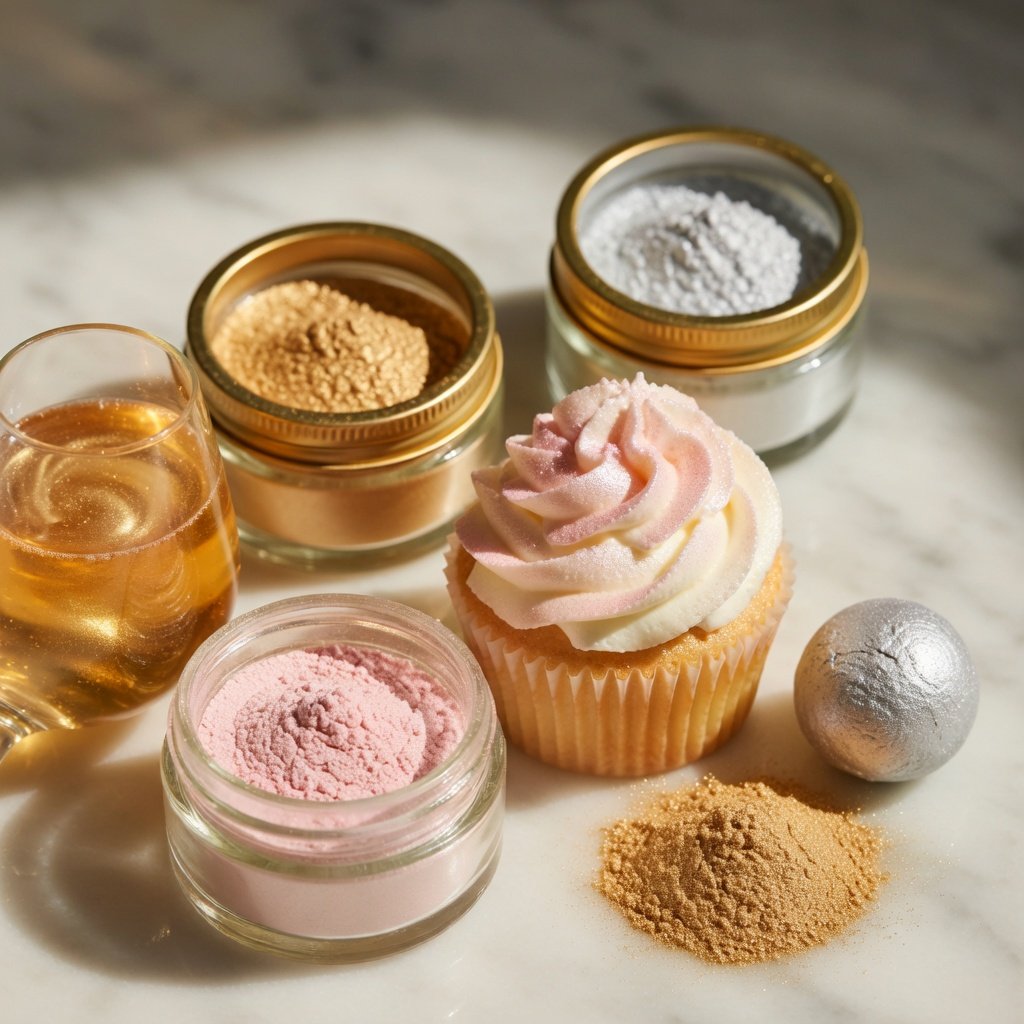
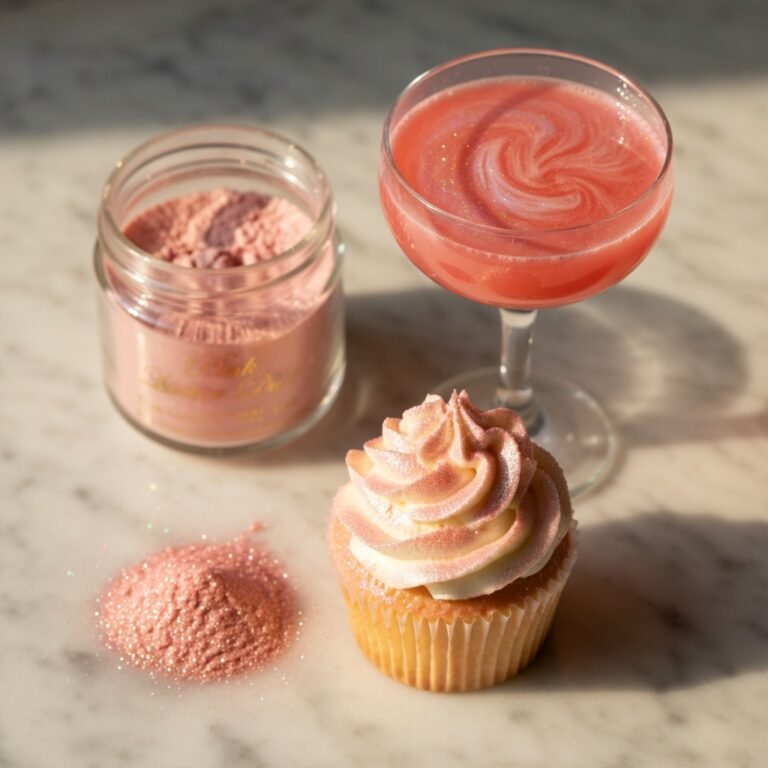
Pink Luster Dust on white buttercream is one of those combinations that photographs absurdly well. The shimmer reads warm and soft — nothing harsh about it.
Dust silver over dark chocolate truffles and they look like they’re from a $40 box at a specialty shop. It’s one of the easiest upgrades in the kitchen and it takes about fifteen seconds per truffle.
Strawberries, grapes, anything with a smooth waxy surface — roll them lightly in luster dust right before serving. The coating catches and holds. Just don’t do it too far ahead of time, since condensation can affect the finish.
For chocolate molds, brush luster dust directly into the mold before pouring your chocolate. When it releases, the shimmer is on the outside. The effect looks like it required serious skill. It didn’t.
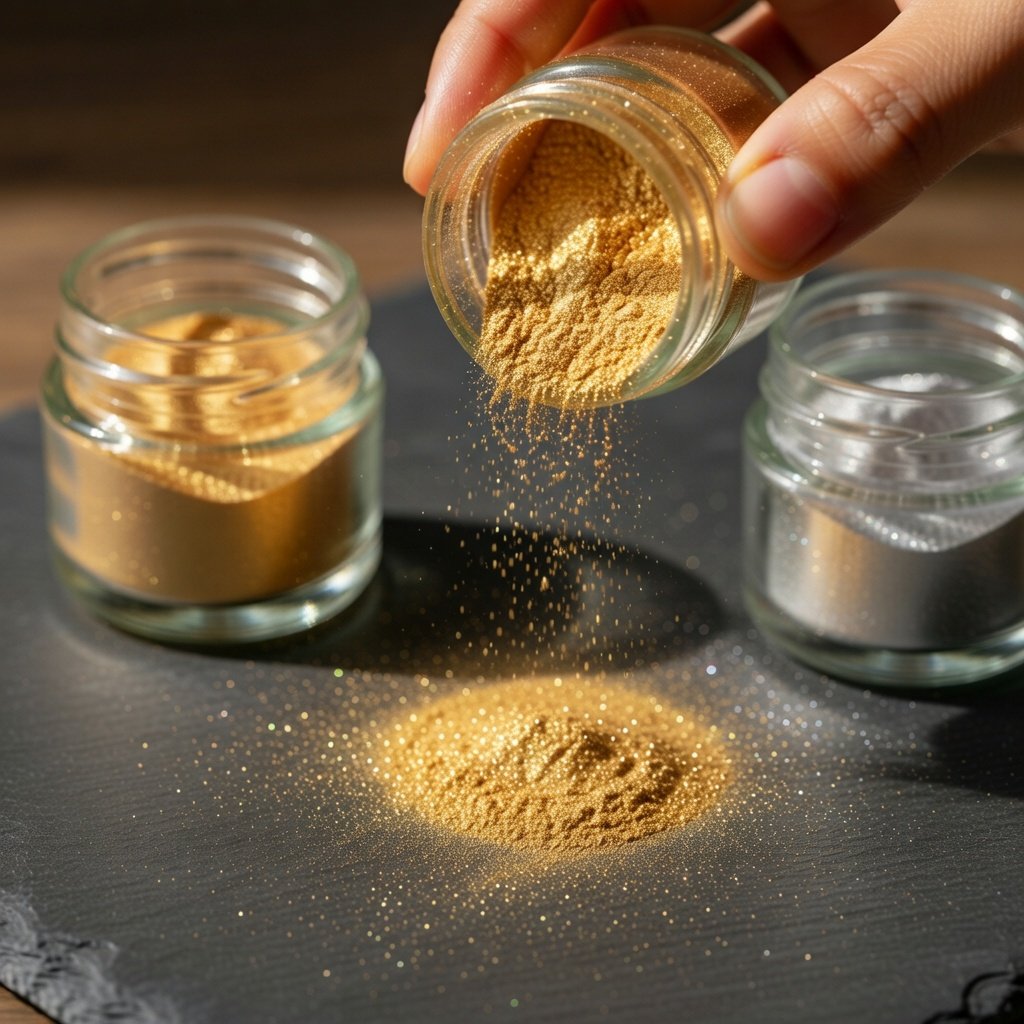
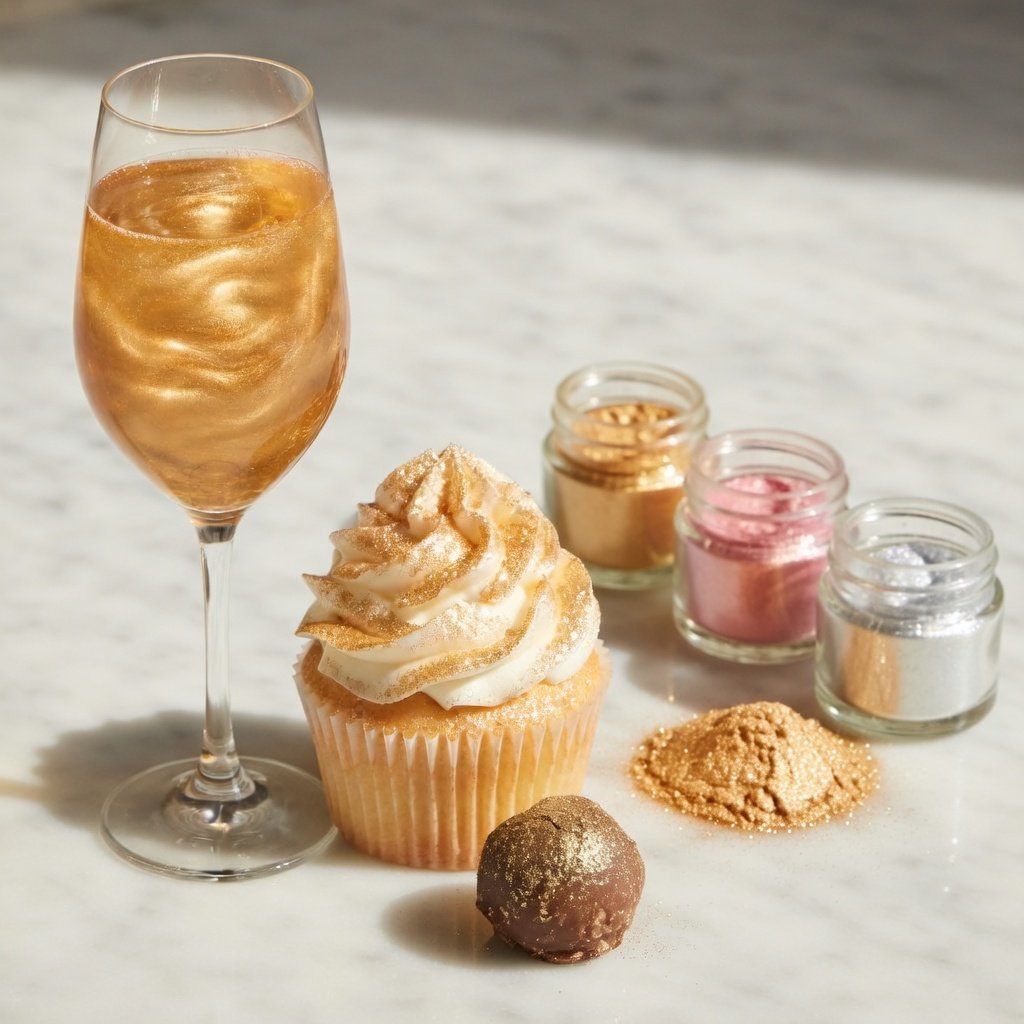
From champagne flutes to cupcakes, edible glitter luster dust colors transform ordinary treats into something extraordinary.
How Much Do You Need?
Less than you think. A 10g jar sounds small until you realize 1/8 teaspoon per cocktail means you’re getting 80+ drinks from one jar. For cakes, a single dusting of a two-tier cake barely registers on the quantity. This isn’t a product you burn through fast — unless you’re doing volume, in which case our larger sizes make more sense.
Start with a pinch. Add more if needed. You can always add — you can’t take it out.
Does It Change the Taste?
No. Completely tasteless. This is one of the things people are most surprised by — they expect something metallic or chalky, and there’s nothing. You’re adding shimmer, not flavor. Whatever you’re putting it on tastes exactly the same.
Common Questions
Sort of. “Edible glitter” is a broad category — it can mean chunky glitter flakes, fine shimmer powder (luster dust), or even sugar crystals with shimmer coating. Luster dust specifically refers to the fine powder form made from mica pigments. It’s what you want for drinks and smooth frosting applications. Chunkier glitter has its place (on top of cupcakes, mixed into sprinkles), but luster dust gives you that seamless, professional shimmer.
Yes, and it works better than you’d expect. Rose gold is technically gold and pink combined — same principle. Gold and silver together creates a champagne-tone shimmer that’s more interesting than either alone. Just mix small amounts first to see how the tones interact before committing to a whole batch.
Two methods. Dry brush for cakes and solid surfaces — use a soft brush, tap off the excess before touching the surface, and apply in light layers. For drinks, use a small measuring spoon and drop it directly in. Don’t blow or tap it over an open glass or you’ll lose half of it to the air. Ask us how we know.
It doesn’t dissolve — it suspends. Mica particles don’t break down in water or alcohol, which is actually what makes the shimmer work. They stay intact and catch light as they move through the liquid. Give the glass a gentle swirl before serving to get the particles moving.
Shelf life is two years from manufacture. And since you’re using 1/8 teaspoon at a time, a 10g jar lasts most home users a very long time. If you’re baking or mixing drinks regularly, the 50g size makes more sense financially — and free shipping kicks in at $50 anyway.
Edible glitter is made from FDA compliant, food-grade mica pigments — it’s actual food, not just “non-toxic” craft glitter
It works on cakes, cookies, cupcakes, and drinks — basically anything you want to look expensive
“Non-toxic” and “edible” are not the same thing. A lot of glitter sold online is one but not the other
A little goes a long way — 1/8 teaspoon is enough to shimmer an entire cocktail glass
Edible glitter is exactly what it sounds like: glitter you can eat. Not glitter that won’t hurt you if you accidentally swallow it — actual food, made from ingredients that belong in your kitchen. The technical name is luster dust, and it’s been used by professional bakers and bartenders for years to get that deep, metallic shimmer you’ve seen on fancy cakes and cocktails.
If you’ve ever wondered how a champagne glass gets that swirling gold shimmer, or how a wedding cake pulls off that impossibly glossy metallic finish — this is how. A tiny pinch of the right stuff, in the right place, and suddenly everything looks like it cost three times more than it did.
What’s Actually In It?
Real edible glitter is made from mica-based pearlescent pigments. Mica is a naturally occurring mineral that’s been used in food coloring for decades — it’s what gives certain candies, chocolates, and even some beverages that subtle iridescent quality. Our luster dust uses German mica pigments specifically, which produce a richer, more light-catching shimmer than cheaper alternatives.
That’s it. No weird chemicals, no synthetic dyes. Completely tasteless, completely odorless. Vegan, gluten-free, no GMOs. You could sprinkle it on anything without changing how it tastes — the only thing that changes is how it looks.
Edible vs. Non-Toxic: The Difference Actually Matters
This is the thing most people don’t know, and it’s worth being direct about: “non-toxic” and “edible” are not interchangeable. Non-toxic means it won’t poison you. Edible means it’s approved as food. Those are two very different bars.
A lot of glitter sold on Amazon, in craft stores, and even in some baking supply shops is labeled “non-toxic” — which sounds fine until you realize that label means almost nothing for food use. Craft glitter is often made from plastic or metals that have no business going into your body. If the label doesn’t say FDA compliant, don’t put it in food. Period.
All of our luster dust is FDA compliant. That’s not marketing language — it means the ingredients are on the FDA’s approved list for food use. It’s the actual standard that matters.
What Can You Use It On?
This is where edible glitter gets genuinely fun. Drop 1/8 teaspoon of Gold Luster Dust into a champagne flute before pouring and watch what happens. The carbonation swirls the particles through the liquid, the light catches them at every angle, and the whole glass looks alive. It doesn’t settle immediately — you get the shimmer through the whole drink.
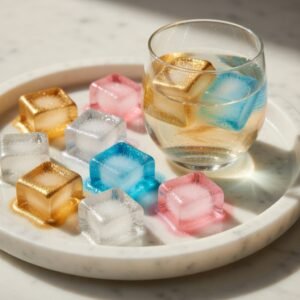
Works in any clear or light-colored cocktail. Prosecco, champagne, gin drinks, even water. The Glitter Ice Cubes recipe is a clever trick — freeze the luster dust into ice cubes so the shimmer releases slowly as they melt. Great for parties where you want the effect without doing anything per glass.
Two ways to use it on cakes: dry or mixed with alcohol. Dry dusting works well on fondant — you brush it on with a soft food-safe brush and it builds up fast. Mixing a small amount with clear alcohol (vodka, Everclear) and painting it on gives you more control and a deeper, more saturated finish. That’s how bakers get that full metallic look on sculpted cakes.
Pink Luster Dust on buttercream is one of our favorites. The shimmer catches differently on that smooth, slightly glossy surface — way better than on royal icing. And if you’ve never seen a rose gold drip cake done right, the Rose Gold Drip Cake recipe is worth the scroll.
Dusting luster dust over finished cookies takes about 10 seconds and makes them look bakery-quality. Brush it directly onto decorated sugar cookies, or use a dry brush to build shimmer on chocolate truffles.
Silver on dark chocolate is something else entirely. Silver Luster Dust against a deep brown truffle looks genuinely expensive — like something that belongs in a hotel gift shop with a $14 price tag per piece. It’s a five-second finishing step that changes the whole perception of the thing.
From champagne flutes to chocolate truffles, edible glitter uses on cakes and drinks are truly limitless.
How Much Do You Actually Need?
Less than you think. Way less. The most common mistake is using too much, which turns a delicate shimmer into a muddy, cloudy mess. For drinks, you’re talking about a pinch — the smallest amount you can pick up between two fingers. For cakes, a light dusting from a brush is enough to start. You can always add more. You can’t take it away.
A single 10g jar has enough for 80+ cocktail servings. Most people go through one jar over the course of several months of regular use. It’s a small investment for the amount of output you get.
Why Does It Shimmer?
The short version: mica particles are flat and reflective. When light hits them, they bounce it back at slightly different angles depending on how they’re oriented — that’s what creates the shimmer effect rather than just a flat color. In liquid, the particles are constantly moving, so you get a dynamic, shifting glow instead of a static sparkle.
It’s physics, basically. The German mica pigments we use have a more consistent particle size and a higher reflectivity than cheaper mica sources, which is why the shimmer looks richer and more layered. The science behind mica pigments is actually pretty interesting if you want to go deeper on this.
Is It Safe?
Yes. Full stop. FDA compliant ingredients, same mica pigments that have been used in food products for decades. No taste, no smell, no effect on texture. The only thing that changes is how your food looks.
If you have specific dietary concerns: every color in our lineup is vegan and gluten-free. No animal-derived ingredients, no gluten-containing fillers.
No. Craft glitter is typically made from plastic or metallic materials that aren’t approved for consumption. It might be non-toxic (meaning it won’t send you to the hospital), but it’s not food. Use FDA compliant luster dust made specifically for food use.
Not at all. Luster dust made from mica pigments is completely tasteless and odorless. Your champagne tastes like champagne. Your cake tastes like cake. The glitter is purely visual.
Add about 1/8 teaspoon directly to the glass before pouring your drink. In carbonated beverages, the bubbles do the work — the particles swirl naturally. In still drinks, give a gentle stir. Don’t over-stir — you want the particles moving, not dissolved.
Gold. It works on everything — champagne, chocolate, cakes, cookies — and the warm shimmer is the most universally flattering. Silver is our second recommendation, especially if you’re working with dark desserts. Pink and rose gold are great for anything romantic or wedding-adjacent.
Longer than you’d expect. A 10g jar covers 80+ cocktail servings at 1/8 teaspoon each. For baking, it depends on your technique — dry dusting uses less than wet painting. Most home bakers get several months of regular use from one jar.