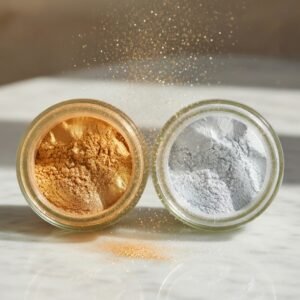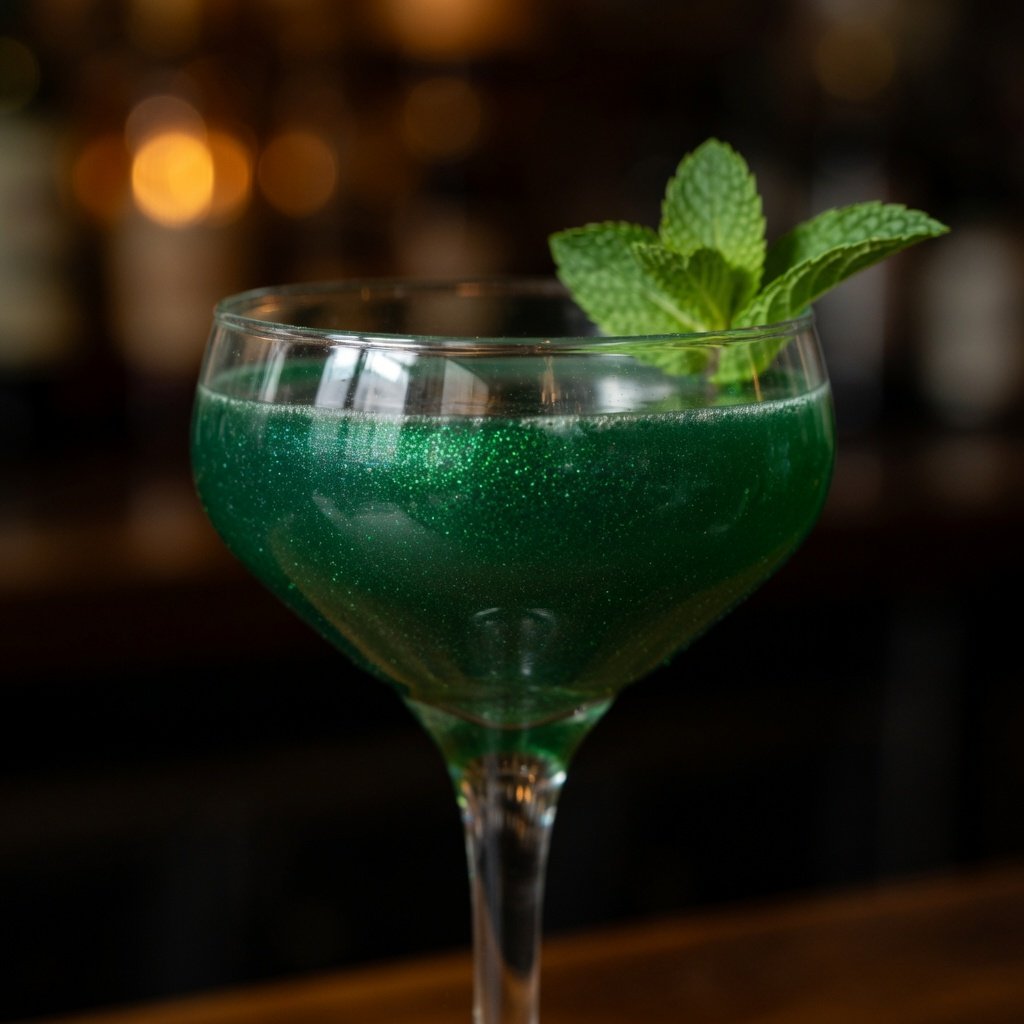
- Green edible glitter works year-round — St. Patrick’s Day is obvious, but tropical cocktails, garden party desserts, and matcha drinks are just as good
- Deep green for bold, jewel-toned looks; light green for soft mint finishes and anything with a tropical or fresh vibe
- A pinch goes a long way — 1/8 teaspoon per drink, less on baked goods
- Both shades are FDA compliant, vegan, gluten-free, and completely tasteless
Green gets one month a year. That’s the running joke — March rolls around, everyone scrambles for green food coloring, and by April 1st the whole thing is forgotten. But green luster dust doesn’t work that way. Used right, it’s one of the most versatile colors in the lineup — and the shimmer makes it look completely different from ordinary green.
Here’s what we mean: deep green on a chocolate truffle looks like something from a high-end confectionary. Light green in a gin and tonic looks like the drink has a pulse. Neither of those things have anything to do with shamrocks.
Two Greens, Different Jobs
We carry two: Green Luster Dust and Light Green Luster Dust. They’re not interchangeable, and knowing which to reach for saves you from that “hm, that’s not quite what I pictured” moment.
Green is deep and saturated. Think emerald. It reads jewel-toned rather than pastel, and it catches light with a richness that works beautifully on dark backgrounds — chocolate, dark liquors, deep red cocktails. It’s the one for St. Patrick’s Day if you want something that actually looks intentional rather than thrown together.
Light Green is softer. Minty. It has that fresh, almost translucent quality that pairs naturally with clear spirits, lemonade, and anything tropical. Drop it in a mojito and the shimmer looks like sunlight through leaves. It’s subtle in the best way.
Green luster dust in cocktails and mocktails is genuinely one of our favorite uses. The particles catch light as they move through the liquid — that suspension effect is what you’re going for, and green shows it off well because it’s unexpected.
For most drinks, 1/8 teaspoon is the right amount. Drop it in, give one slow swirl, and let it settle into motion. Don’t stir aggressively — you want the particles drifting, not churned into a murky mess. Our full breakdown on ratios and technique is in the edible glitter in drinks guide if you want the details.
Deep green works well in:
- Irish whiskey cocktails (obviously)
- Dark rum drinks
- Anything with a green food theme — Halloween punch, garden party signature cocktails
- Sparkling lemonade when you want drama over delicacy
Light green is better for:
- Gin and tonics
- Mojitos and mint juleps
- Coconut or pineapple-based drinks
- Matcha lattes (yes, it works, and it’s gorgeous)
- Any clear or pale cocktail where you want shimmer without overwhelming the color
If you want a starting point, our Green Potion Mocktail uses green luster dust to great effect — it’s non-alcoholic but the shimmer still steals the show.
Green luster dust on baked goods hits differently depending on what surface you’re working with. Buttercream is the winner — smooth, slightly glossy, picks up the shimmer and holds it. Fondant works too, especially if you’re going for an editorial look. Royal icing is our least favorite base for any color, green included; the matte finish mutes the shimmer more than you’d want.
A few things that actually work well:
- Brushed on macarons — light green on pistachio shells looks like they were made by someone with way more pastry experience than required
- Dusted over chocolate bark — deep green on dark chocolate for a St. Patrick’s Day dessert board that doesn’t look cheap
- Mixed into buttercream — stir a small pinch directly into white frosting for a shimmer-tinted green that catches light across the whole cake surface
- Brushed on sugar cookies — mix with a tiny bit of lemon extract or clear alcohol, paint it on after baking
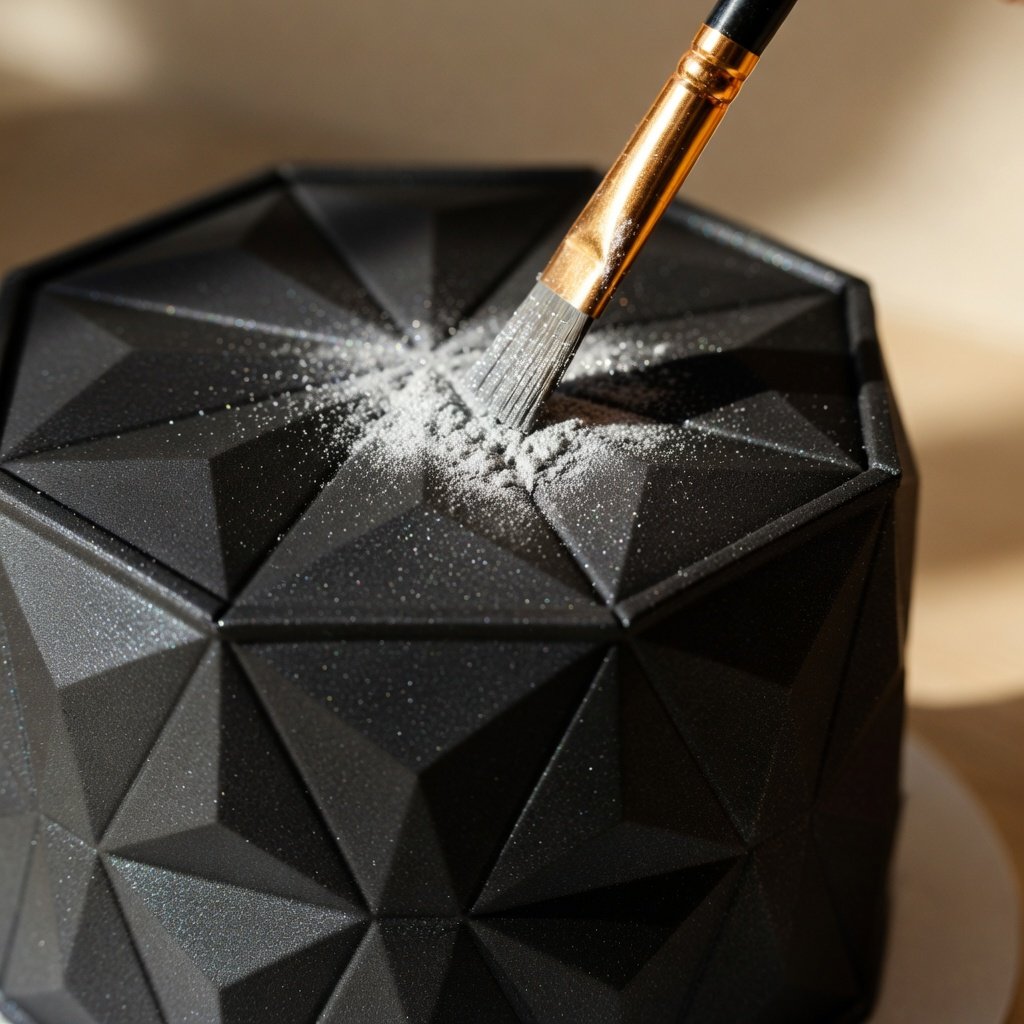
The technique for baked goods is a little different from drinks — our post on using edible glitter on cakes and cookies covers the dry dusting vs. wet brush method in detail. Short version: dry dusting for a natural shimmer, wet brush for more intense coverage.
St. Patrick’s Day gets a bad reputation for food aesthetics — green beer, green frosting, all of it kind of garish. Green luster dust is how you do it without the garish part.
The difference is shimmer vs. dye. Food coloring turns things green in a flat, artificial way. Luster dust adds a metallic, light-catching quality that reads as intentional. Jewel-toned rather than neon.
Our go-to St. Patrick’s Day moves:
- A pinch of deep green in a Guinness float (sounds weird, looks incredible — the dark stout makes the shimmer pop)
- Green luster dust dusted over mint chocolate cupcakes
- Light green in a sparkling elderflower cocktail — festive but sophisticated
- Brushed over shamrock-shaped sugar cookies with a gold outline for contrast
Gold and green together, by the way, is an underused combination. The contrast is sharp and it still reads as on-theme. Worth trying.
Tropical and Seasonal Uses Beyond March
This is where green luster dust earns its keep for the other eleven months. Tropical drinks are a natural fit — the color reads fresh and alive in a way that other glitter colors don’t quite replicate. A shimmering light green in a mango margarita or a coconut cooler looks like something from a resort menu.
Summer garden parties are another good one. Light green on lemon tarts or lavender shortbread looks unexpected and elegant — not holiday-themed, just genuinely beautiful. Same goes for spring celebrations, Easter desserts, or any event where you want a natural, botanical feel.
Matcha is probably our favorite non-obvious application. A latte with light green luster dust dusted over the foam — the shimmer catches in the bubbles and the color complements the matcha without competing with it. Takes about three seconds and looks like a $9 drink from a specialty café.
A Note on Quantity
Green is one of those colors where people tend to over-apply. Maybe because it’s not gold or silver and feels like it needs more to show up. It doesn’t. Keep it to 1/8 teaspoon in drinks, a light pass with a dusting brush on cakes. The shimmer effect you want comes from restraint, not volume. Too much and it stops looking like shimmer and starts looking like you dropped something in there.
Yes. Both our green and light green luster dust are FDA compliant and made with food-grade German mica pigments. They’re completely tasteless, odorless, vegan, and gluten-free. If you’re buying green glitter from somewhere else, check the label — “non-toxic” and “edible” aren’t the same thing. Non-toxic means it won’t kill you. Edible means it’s actual food. Our products are the latter. For more on this, our edible glitter safety breakdown covers it fully.
Depends on the drink. Deep green for dark or bold cocktails — whiskey, rum, dark beer. Light green for clear or pale drinks — gin, vodka, sparkling water, anything citrus-forward. If you’re unsure, light green is the safer starting point because it’s more versatile and won’t overpower a delicate drink.
You can, and it looks good. The warm contrast between gold and green reads rich rather than muddy. Try it dusted together on chocolate truffles or swirled into a cocktail — the two colors catch light at slightly different angles, which creates more visual depth than either alone.
Longer than you’d think. At 1/8 teaspoon per drink, a 10g jar gets you roughly 80+ cocktails. On baked goods you use even less. Most people are surprised how far it goes once they stop overdoing it.
For drinks, no — drop it straight in and swirl. For painted applications on cookies or fondant, mix with a small amount of clear extract (lemon, vanilla) or high-proof clear alcohol. The alcohol evaporates fast and leaves a smooth, even coat. For dusting on frosting or cakes, use it dry with a soft brush.
You Might Also Like
Green Potion Mocktail
The easiest way to see green luster dust in action. Non-alcoholic, deeply shimmery, takes five minutes.
How to Use Edible Glitter in Drinks: The Complete Guide
Ratios, techniques, and everything you need to get the shimmer effect right the first time.
How to Use Edible Glitter on Cakes, Cupcakes & Cookies
Dry dusting, wet brush, and which method to use for each surface.