• A pinch — literally 1/8 teaspoon — is enough for a full glass. More doesn’t mean more shimmer.
• Luster dust and edible glitter are not the same thing. For drinks, you want luster dust — the fine powder suspends in liquid and catches light as it moves.
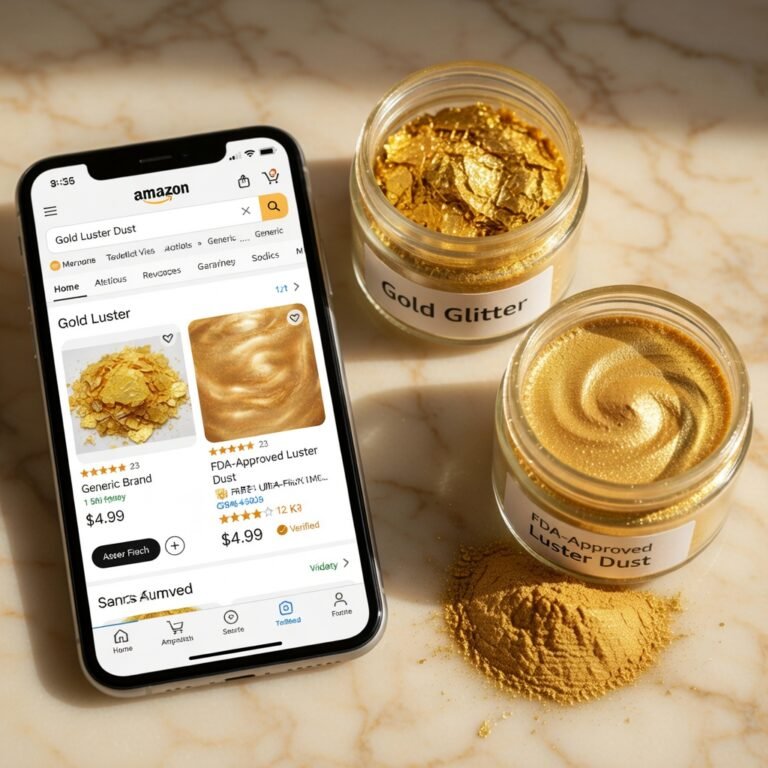
• Not all “edible” glitter is actually edible. Look for FDA compliant on the label, not just “non-toxic.”
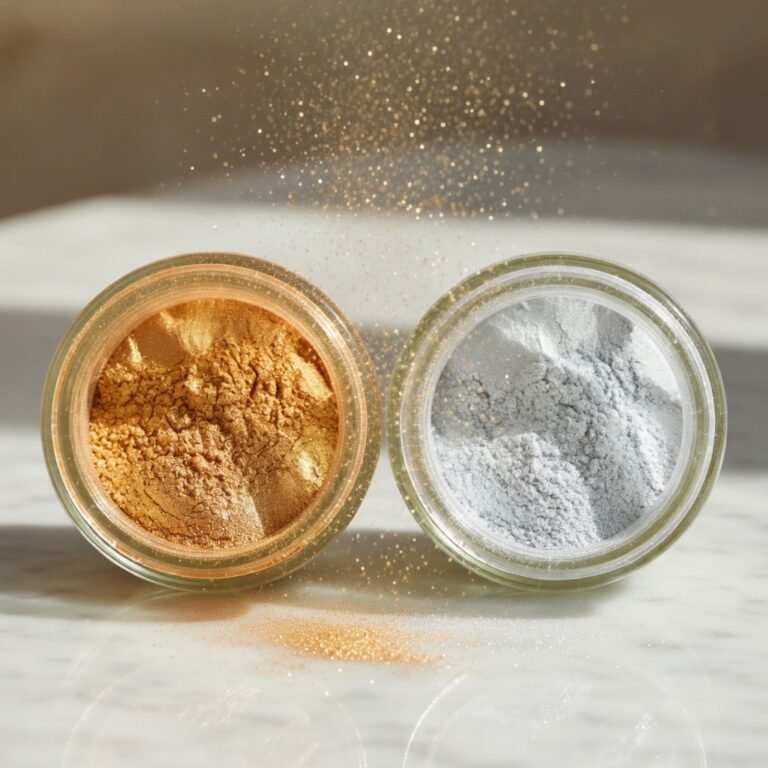
• Gold, silver, and rose gold are the three workhorses. Every other color has its moment, but these three cover 90% of drink applications.
First: What You’re Actually Putting in Your Drinks
Edible luster dust is a fine mica-based powder — the same type of food-grade pigment that’s been used in candy coatings and cake decoration for decades. Our version is made with mica-based pigments, which produce a richer, deeper shimmer than the stuff you’ll find in most grocery stores. Tasteless, odorless, vegan, gluten-free, and fully FDA compliant.
Regular craft glitter — even the kind labeled “non-toxic” — is not food. It’s plastic. Don’t put it in drinks. If the label doesn’t say FDA compliant or food-grade, assume it’s decorative only. This is not a technicality. It matters.
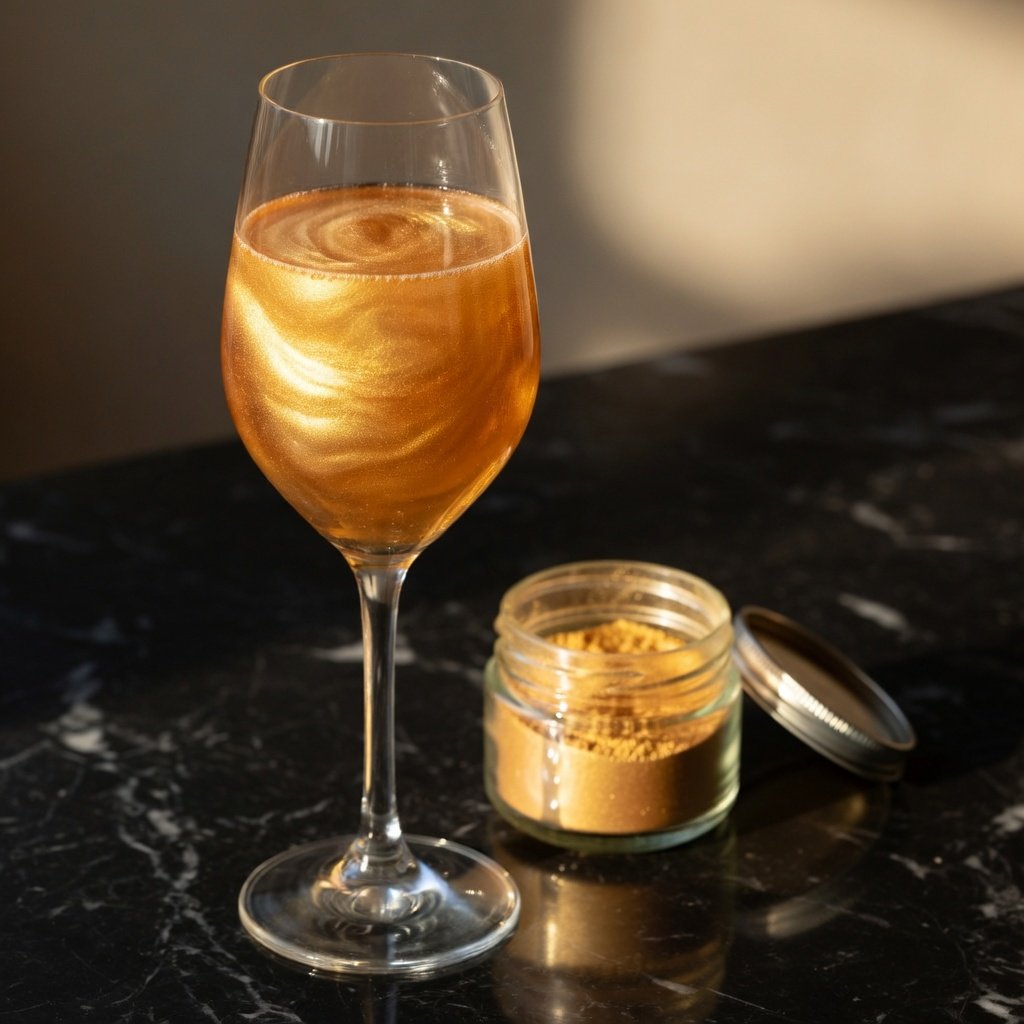
Luster dust works in drinks because the particles are fine enough to stay suspended in liquid. They catch and scatter light as they move through the glass — that’s what creates the shimmer effect. Chunky glitter sinks. Luster dust floats and moves. Big difference in the glass.
How Much to Use (Seriously, Less Is More)
The most common mistake: too much. People see the shimmer in the jar and figure more powder equals more sparkle. It doesn’t. Dump too much in and you get a cloudy, murky drink that looks like someone dissolved chalk in it.
The sweet spot is 1/8 teaspoon per glass. That’s the smallest measuring spoon you own, probably. Or just pinch it between two fingers. Drop it in, give the glass a gentle swirl, and let it do its thing. The particles catch light as they drift — that movement is the whole show. Give it room to work.
For a batch — say you’re doing 20 glasses at a party — pre-measure into a small bowl and pinch from there. You’ll stay consistent and won’t accidentally over-pour.
Champagne & Sparkling Wine
This is where edible drink glitter really earned its reputation. Drop the luster dust in before pouring, or add it to an already-poured glass — both work, though adding it to the empty glass first means the pour itself creates the swirl.
Gold Luster Dust is the classic move for champagne. The warm tone works with the yellow-gold of the wine and catches the light from every angle. Pour it at a New Year’s party and someone will ask you about it within thirty seconds.
Silver Luster Dust works especially well in prosecco or blanc de blancs — the cooler tone matches the lighter color of the wine. More modern, a little sleeker.
The carbonation actually helps. The bubbles carry the particles upward through the glass in a constant, slow churn. Set a glass of shimmer champagne on a table under any kind of overhead lighting and it looks almost alive.
Cocktails
Luster dust for drinks earns its keep in cocktails — especially ones that’ll be photographed or served at events. The rule is the same: 1/8 teaspoon, gentle swirl.
Color matching matters here more than with champagne. Rose Gold Luster Dust is almost unfairly perfect in pink drinks — aperol spritzes, rosé cocktails, pink lemonade mocktails. The color matches and the shimmer disappears into the drink in the best way, like it was always supposed to be there.
Gold works in darker spirits — bourbon cocktails, aged rum drinks, anything amber. Silver is your go-to for clear cocktails: gin and tonics, vodka sodas, anything where you want shimmer without color interference. Drop silver into a blue curaçao cocktail and it looks like something from another galaxy.
One note on timing: add the luster dust right before serving. It stays suspended for a good 10-15 minutes, but the shimmer is most intense in the first few minutes after the swirl. Don’t add it to a pitcher that’ll sit on a table for an hour.
Hot Drinks & Coffee
Hot drinks work, with caveats. The heat doesn’t affect the luster dust — it’s stable at high temperatures — but the shimmer behaves differently in thicker, hotter liquids.
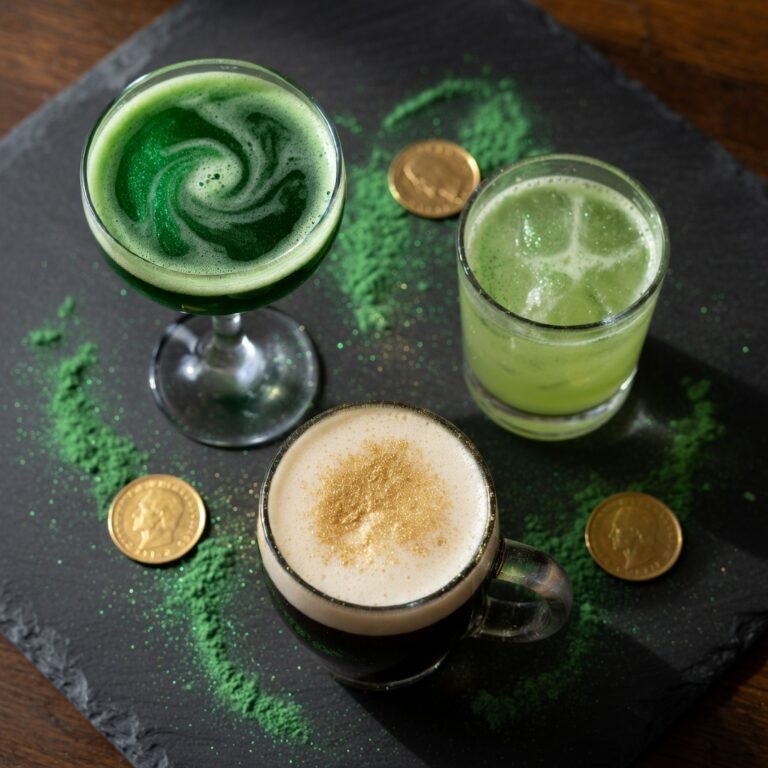
In hot chocolate or a latte, add a small pinch on top and let it sit for 5-10 seconds, then stir gently. The particles don’t stay suspended the same way they do in a thin liquid, but the shimmer as they move through the first few stirs is genuinely beautiful. Gold on hot chocolate is a holiday menu move that works every time.
Coffee drinks are trickier. The color of dark coffee competes with the shimmer — gold tends to disappear, but silver actually shows up well because of the contrast. Dusted on milk foam on top of a latte, either color creates a metallic sheen that photographs incredibly.
Gold Luster Dust on hot chocolate. Silver Luster Dust on lattes. Those are the two we’d go back to again and again.
The Three Colors Worth Starting With
Gold outsells every other color by a wide margin, and it’s not hard to see why. It reads as celebratory, warm, and expensive. Works in champagne, in dark cocktails, on rimmed glasses, everywhere. If you buy one jar, buy Gold Luster Dust.
Silver gets underestimated. It’s the right call for clear drinks, white wine cocktails, anything with a blue or purple base. On a gin and tonic with a cucumber garnish, silver looks absurdly elegant. We’ve seen bars charge more for the same cocktail just by adding silver shimmer. Silver Luster Dust is the second jar most people buy.
Rose Gold Luster Dust has had a moment for about five years now and honestly hasn’t slowed down. The warm pink-gold tone is almost universally flattering in drinks. Valentine’s Day, bridal showers, rosé anything — rose gold is the automatic answer.
Getting the Most Out of Every Jar
A 10g jar holds more than it looks like. At 1/8 teaspoon per glass, you’re looking at roughly 80 cocktails from a single jar. For a party, one jar is plenty. For a bar or event venue doing volume, the 50g or 100g sizes make more sense — same powder, just less restocking.
Store the jar sealed and away from moisture. The worst thing you can do to luster dust is get water in the jar — the particles clump and lose that free-flowing quality. Keep it dry, keep it closed, and it lasts indefinitely.
For rimming glasses: dip the wet rim in luster dust instead of salt or sugar, or mix luster dust with sugar for a shimmery sugar rim. Gold sugar rim on a margarita glass is exactly as good as you’re picturing.
Frequently Asked Questions
Yes — our luster dust is fully FDA compliant, made with food-grade mica pigments. It’s the same class of ingredient used in candy coatings and commercial baked goods for decades. Vegan, gluten-free, tasteless, and odorless. You’re not going to taste it in your drink at all.
Just make sure you’re buying FDA compliant luster dust, not craft glitter. “Non-toxic” means it won’t kill you. “FDA compliant” means it’s actual food. Those are different things.
Two likely causes. First, too much — a large amount of powder will settle faster than a small amount. Try using less. Second, the particles aren’t moving. Luster dust looks best in motion. Give the glass a gentle swirl every few minutes, or serve it right after adding the powder while the liquid is still moving from the pour.
Carbonated drinks help a lot here — the bubbles keep the particles in motion naturally.
For a pitcher or punch bowl, add the luster dust right before serving — not while the batch is sitting. Use about 1/2 teaspoon for a full pitcher (8 servings), then stir once and pour. The shimmer will be most active for the first 10-15 minutes after stirring.
For pre-set glasses at an event, add the powder to empty glasses and let guests pour their own drinks. The pour creates the swirl automatically.
Luster dust is a very fine powder — the particles are tiny enough to stay suspended in liquid and create a smooth, metallic shimmer. Edible glitter (sometimes called disco dust) is coarser, with larger, more visible particles.
For drinks, you almost always want luster dust. The fine particles disperse through the whole glass. Edible glitter sits on top or sinks, and can give drinks a gritty texture. Save the chunkier glitter for cake surfaces and decorating.
Gold. The warm tone complements the color of most champagne and prosecco, and the shimmer is visible from across the room under any lighting. Silver is a close second, especially in lighter-colored sparkling wines where you want a cooler, more modern look.
Rose gold also works beautifully in rosé champagne — the color match is almost perfect.