Posted on Leave a comment

The Science of Shimmer: How Mica Pigments Create That Glow

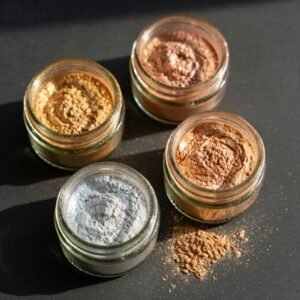
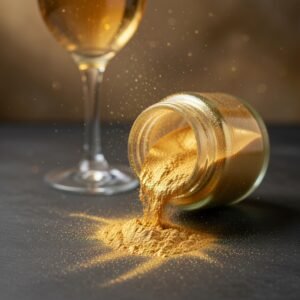
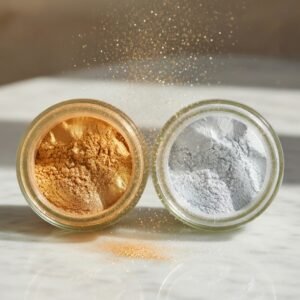
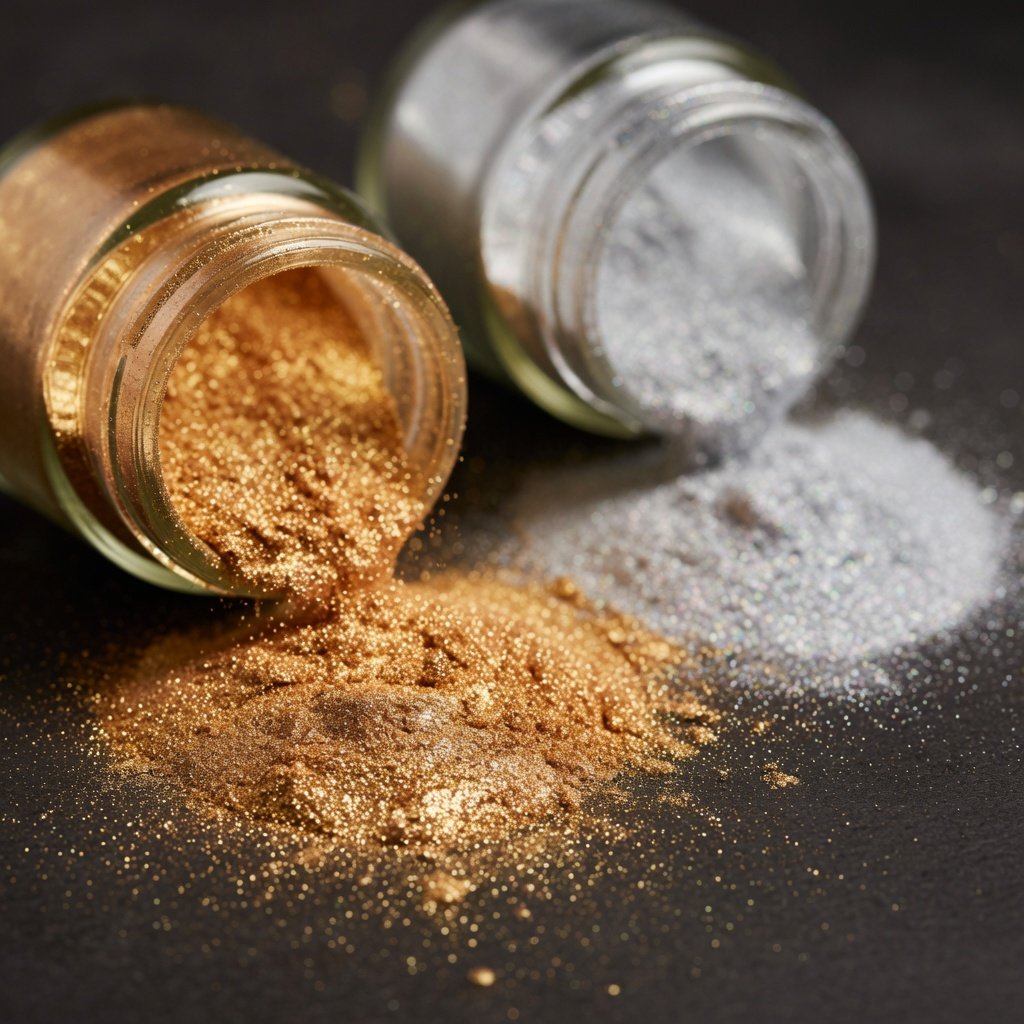
What is edible glitter made from? Gold and silver luster dust spills from open jars, revealing shimmering mica particles under directional light.
Key Takeaways

  • Edible glitter gets its shimmer from mica — a naturally occurring mineral that’s been used in food for decades
  • The sparkle effect comes from light bouncing between ultra-thin mica layers, not from any coating or dye
  • Mica-based luster dust is FDA compliant, tasteless, and genuinely edible — not just “non-toxic”
  • German mica pigments produce a richer, more consistent shimmer than cheaper alternatives

People ask us all the time: what is edible glitter made from? The short answer is mica. The longer answer is actually pretty interesting — because the shimmer you see in a champagne glass or on top of a frosted cake isn’t a coating or a trick. It’s physics.

Here’s how it actually works.

Mica: The Mineral Behind the Shimmer

Mica is a group of silicate minerals found in rock formations around the world. It’s been used in cosmetics, industrial coatings, and food for a long time — we’re not talking about some new synthetic ingredient. The key property that makes mica so useful is that it cleaves into incredibly thin, flat sheets. Almost transparent ones.

Those thin sheets are what create the shimmer effect. When light hits a flat mica particle, some of it reflects off the top surface. Some passes through and reflects off the bottom. Those two reflected beams interfere with each other in a way that amplifies certain wavelengths of light — and suppresses others. The result is that deep, pearlescent glow that changes slightly depending on the angle you’re viewing it from.

That iridescence isn’t added to mica. It comes from mica’s structure. That’s the part most people don’t realize.

What Edible Glitter Ingredients Actually Look Like

Luster dust is pretty minimal as far as ingredients go. The base is mica — specifically food-grade mica, processed to meet FDA standards for consumption. Most colors you see on the shelf are iron oxide pigments or other approved colorants blended into the mica. Our full ingredient breakdown post goes deeper on this, but the short version: it’s mica, a color pigment, and nothing else.

No fillers. No binders. No flavor. That last part surprises people — it’s completely tasteless. Mica doesn’t interact with your taste buds at all. You’re not eating something that tastes metallic or waxy. You’re eating something that tastes like nothing and looks incredible.

Our luster dust is also vegan, gluten-free, and free from GMOs. Not because we engineered it to hit a marketing checklist. Just because mica-based pigments don’t contain any of that stuff to begin with.


Not all mica is created equal. The particle size, purity, and processing method all affect how the final product looks on food. German mica — which is what we use — goes through stricter refinement processes than most alternatives. The particles are more uniform in size and shape, which means the light reflection is more consistent. More consistent reflection means deeper, richer shimmer.

Cheaper mica (a lot of it comes through less regulated supply chains) tends to have irregular particle sizes. Some particles are too large, some too small. The shimmer ends up looking dull or patchy — like glitter that’s almost working but not quite. We noticed the difference the first time we tested German mica side by side with a standard supplier. It wasn’t subtle.


Why This Matters for How You Use It

Understanding what’s in edible glitter actually changes how you use it. Because mica particles are flat and reflective, the orientation of the particle matters. On a smooth, wet surface — like frosting or the inside of a cocktail glass — the particles lay flat and the shimmer is maximal. On a rough, dry surface like uncoated cake, they scatter and lay at random angles. Still pretty, but different.

Mixing luster dust into a liquid activates it differently than dusting it dry. In a drink, the particles move constantly, catching light from every angle as they swirl. That’s why cocktails shimmer the way they do — it’s not static, it’s kinetic. The physics are doing the work. Our complete luster dust guide covers exactly how to use this to your advantage depending on what you’re making.

The practical upshot: a tiny amount of luster dust goes a long way precisely because the particles are so reflective. We’re talking 1/8 teaspoon in a cocktail glass, a light dusting over chocolate. If you’re dumping in spoonfuls, you’re wasting product and — honestly — making the effect worse. More isn’t more here.

For drinks, Gold Luster Dust is the standard. The warm tone catches light in champagne and prosecco better than anything else we’ve tried. For darker foods — chocolate truffles, dark cakes, espresso drinks — Silver Luster Dust is underrated. The contrast against a dark background does something gold can’t quite match.

The FDA Compliance Piece

Food-grade mica is listed under 21 CFR 73.350 — that’s the FDA’s approved color additive regulation for mica-based pearlescent pigments in food. It’s not a gray area, it’s not a loophole. It’s been an approved food ingredient for a long time.

The reason this matters: a lot of products online use the word “edible” loosely. Some of what’s being sold as edible glitter is actually just cosmetic-grade mica or plastic-based craft glitter. Those products might say “non-toxic,” which is technically different from “edible” — non-toxic means it won’t immediately poison you, not that it’s food. If you’re buying luster dust from somewhere and the ingredient list is vague or the label only says “non-toxic,” that’s a red flag.

Our stuff lists the ingredients. FDA compliant, every color. That’s the standard it should be held to.


Posted on Leave a comment

Edible Glitter for Business: How Bakeries & Bars Use Luster Dust

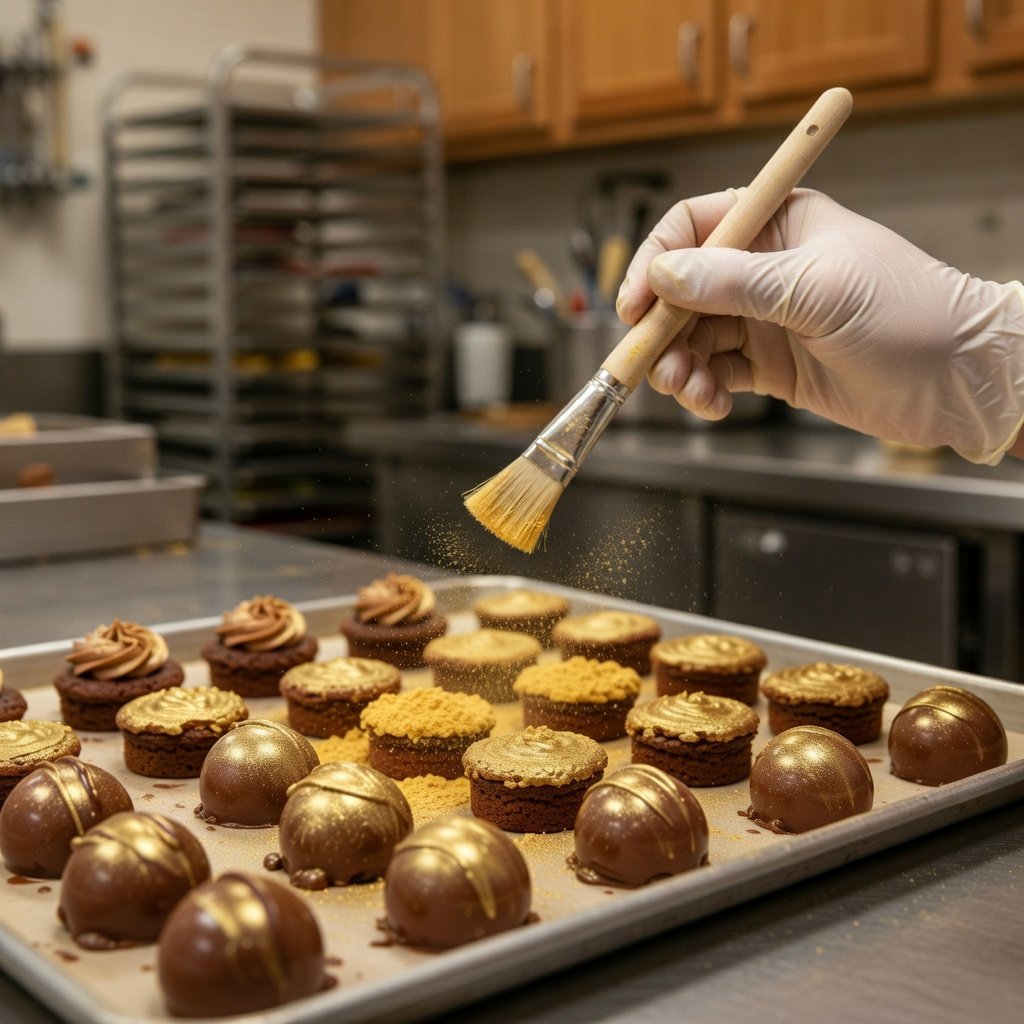
Baker applying edible glitter bulk gold luster dust over finished cakes on a tray in a professional kitchen
Key Takeaways

– Buying edible glitter bulk drops your per-gram cost dramatically — our 1kg jars bring the price down to a fraction of what you’d pay per jar
– Gold, Silver, and Rose Gold are the three colors that cover 90% of commercial bakery and bar applications
– A single 1/8 tsp dose per cocktail glass means a 1kg supply lasts through thousands of drinks
– All our luster dust is FDA compliant, vegan, and made with German mica pigments — the documentation your commercial kitchen needs

Edible Glitter for Business: How Bakeries & Bars Use Luster Dust

Running through a 10g jar every two weeks gets old fast. Bakeries and bars that use luster dust consistently figure this out pretty quickly — the math only works if you’re buying in volume. Here’s how commercial kitchens actually use the stuff, and what you need to know before you order.

Why Bulk Matters for Commercial Use

A 10g jar of our Gold Luster Dust runs $9.98. At about 1/8 tsp per cocktail, a single jar gets you roughly 80 drinks. For a bar running a shimmer cocktail on their menu, that’s a busy Saturday night — maybe less. The 1kg option changes the math entirely. You’re not restocking constantly, you’re not running out mid-service, and your cost per application drops to almost nothing.

Same logic applies to bakeries. If you’re dusting 50 cakes a week, a 10g jar isn’t a supply. It’s a sample.

How Bakeries Use Luster Dust


How Bars Use Luster Dust

The shimmer cocktail trend isn’t slowing down. Bars that add a glitter element to a signature drink see it photographed and shared constantly — it’s basically free marketing every time a customer posts it. The operational side is simple: pre-dose your luster dust into small containers so bartenders aren’t measuring during a rush.

Two main approaches work in a bar setting:

  • In the drink: Drop 1/8 tsp directly into the glass, add the cocktail, and the shimmer disperses through the liquid as it moves. Works best in lighter-colored drinks where the sparkle shows up. Our Gold Shimmer Champagne Cocktail is the simplest version of this — one ingredient added, completely transformed.
  • On the rim: Mix luster dust with sugar or salt, rim the glass before pouring. Every sip picks up shimmer. The Glitter Rimmed Cocktail Glasses recipe walks through exactly how to do this consistently.

For bars, Gold Luster Dust is the workhorse. It shows up in almost any cocktail — clear spirits, dark spirits, sparkling wine, even non-alcoholic drinks. Silver is a strong second, especially in anything with blue or green tones.

What to Order for Commercial Use

For most bakeries and bars just starting to use luster dust at scale, a 50g jar is a good entry point — enough to test applications and get your process dialed in without committing to a kilogram. Once you know your monthly usage, the 1kg option makes sense. Free shipping kicks in over $50, so the larger sizes always qualify.

Color-wise: start with Gold. Add Silver if you’re doing chocolate work or want contrast options. Rose Gold if you’re doing events, weddings, or anything where the pink-gold tone fits the aesthetic. Those three cover the overwhelming majority of what commercial kitchens need.

Every size ships with the same product — same FDA compliant German mica pigments, same formula. There’s no “commercial grade” vs. consumer product here. It’s all the same luster dust, just more of it.


Posted on Leave a comment

10 Edible Glitter Cocktail Recipes That Will Wow Your Guests

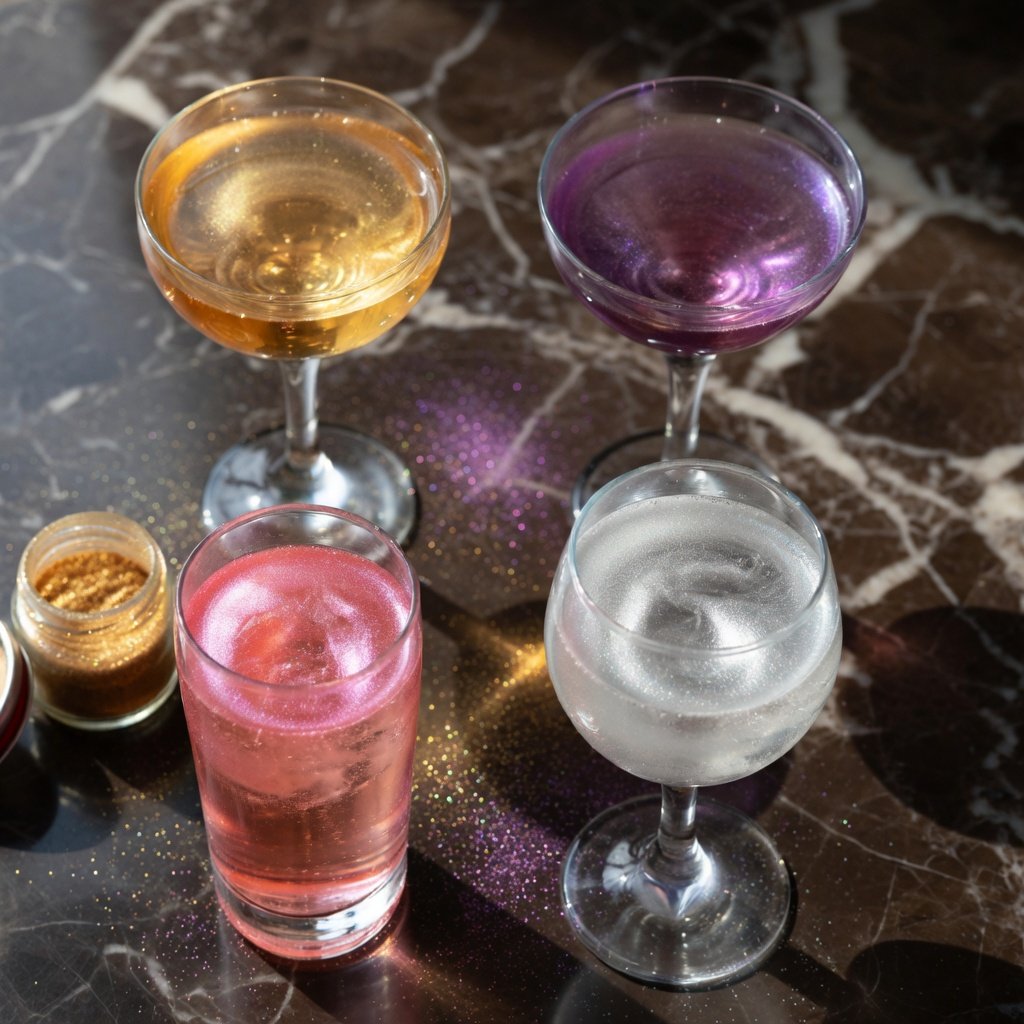
Edible glitter cocktails in four glasses — gold champagne, purple martini, pink gin fizz, and silver gin and tonic — shot from above on dark marble with scattered luster dust and an open jar of gold edible glitter
Key Takeaways

• 1/8 teaspoon per glass is the sweet spot — too much and the drink goes cloudy instead of sparkly
• Drop the dust in dry, then pour or stir. Adding it to an already-full glass makes it clump.
• Gold and champagne are the classic combo, but silver on dark spirits does something completely different
• Every recipe here uses FDA compliant, food-grade luster dust — the tasteless kind that doesn’t change your drink at all

The Only Rule You Actually Need

Before the recipes: don’t overdo it. This is the mistake almost everyone makes the first time. A pinch — like, the amount you’d pick up between two fingers without thinking about it — is exactly right. More than that and you get a cloudy, over-sparkled mess instead of that suspended shimmer you’re going for.

Drop it in. Swirl gently. Watch the particles catch light as they move through the liquid. That’s the whole move.

Now, ten recipes worth making.

1. Gold Champagne

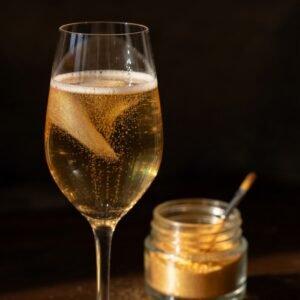
The one that started it all, and still the best. Drop 1/8 teaspoon of Gold Luster Dust into a dry champagne flute before you pour. The bubbles do the rest — they carry the particles upward and keep them moving the entire time the glass is in someone’s hand. At a party, this gets noticed immediately. Every single time.

Make it: Gold luster dust + dry champagne or prosecco. That’s it. No measuring, no mixing, no prep. The five-second party trick.

2. Silver Gin and Tonic

Silver gets overlooked because everyone defaults to gold, but this is the drink that converts people. The clarity of a gin and tonic lets the silver particles catch light in every direction. It looks like someone bottled moonlight. Slightly dramatic, completely accurate.

Use 1/8 teaspoon of Silver Luster Dust added to the glass before the ice. Build the drink on top. Garnish with a lime wheel and cucumber if you’re feeling it.

Works with: Any gin, but a London Dry lets the silver read cleaner than something botanically heavy.

3. Rose Gold Aperol Spritz

Aperol spritzes are already orange and beautiful. Add rose gold luster dust and they become something people photograph before they drink. The warm copper tone of Rose Gold Luster Dust sits perfectly in the orange of the Aperol — they’re basically the same color family, which means the shimmer blends in visually but the sparkle is unmissable.

Make it: 3oz prosecco, 2oz Aperol, 1oz soda water, 1/8 tsp rose gold luster dust. Build over ice, add an orange slice.

4. Pink Strawberry Daiquiri

Frozen or shaken, doesn’t matter — Pink Luster Dust in a strawberry daiquiri looks absurdly good. The pink-on-pink shimmer is subtle in a way that gold isn’t. Less “look at this cocktail” and more “wait, why is this drink glowing?”

For frozen: blend everything first, pour, then dust the top and swirl once. For shaken: add the dust to the shaker with ice and shake normally — the ice distributes it perfectly.

Make it: 2oz white rum, 1oz lime juice, 3/4oz simple syrup, 4 fresh strawberries, 1/8 tsp pink luster dust.

5. Purple Lavender Martini

This one takes about five minutes more to prep than the others because you’re making a lavender simple syrup, but it’s worth the effort. Purple Luster Dust in a pale purple drink is genuinely striking — especially in a coupe glass where the wide, shallow bowl lets the shimmer spread.

Make it: 2oz vodka, 1oz lavender syrup (steep dried lavender in hot simple syrup for 20 minutes), 1/2oz lemon juice, 1/8 tsp purple luster dust. Shake with ice, strain into a chilled coupe.

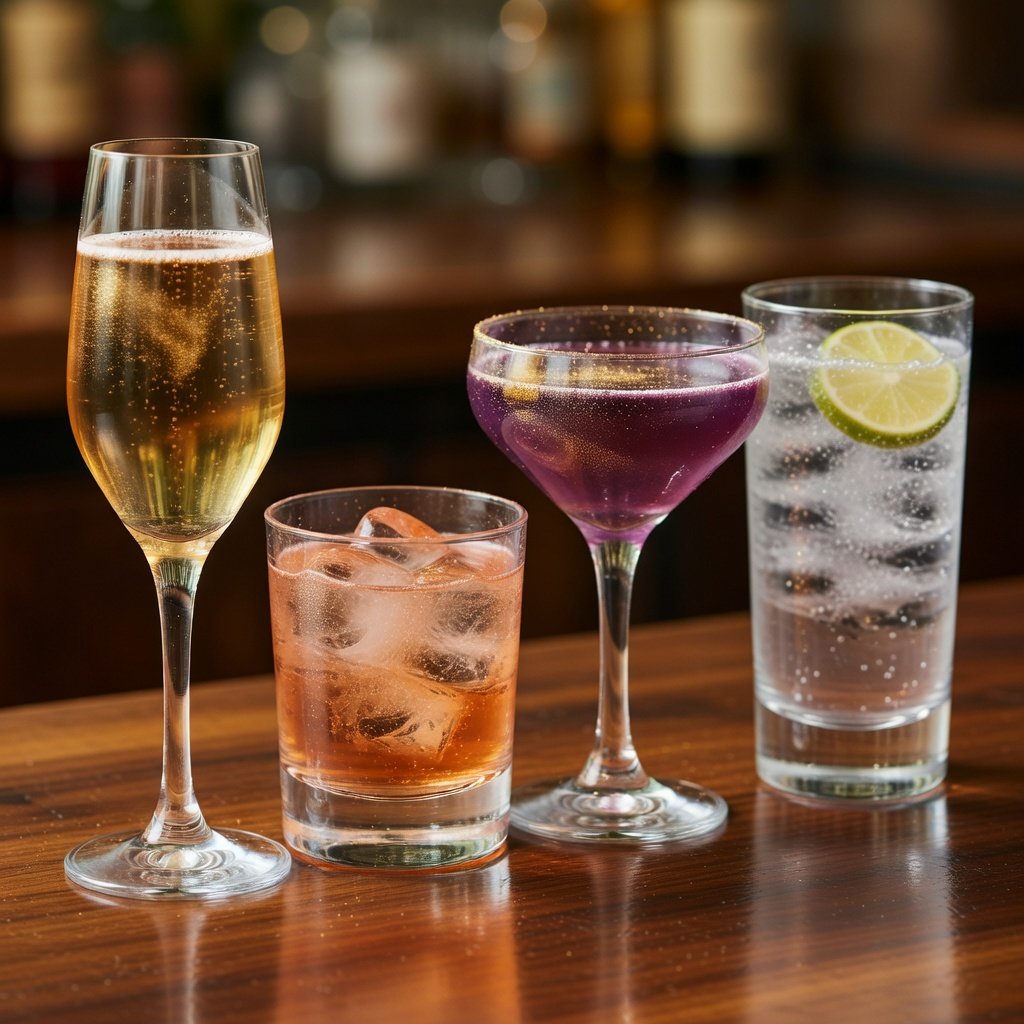
Four edible glitter cocktails on a dark wood bar: gold champagne flute, rose gold spritz, purple martini, and silver gin and tonic with shimmer
Every cocktail with edible glitter brings its own glow — choose your shimmer and start pouring.

6. Gold Old Fashioned

Dark spirits and gold luster dust work differently than gold in champagne. The shimmer sits heavier in whiskey — it doesn’t float and dance the same way — but what you get instead is this deep, almost amber-metallic glow when the glass catches light. It looks expensive. Whiskey drinkers who claim they’d never put glitter in a cocktail have changed their minds over this one.

Make it: 2oz bourbon, 1/4oz simple syrup, 2 dashes Angostura bitters, large ice cube, 1/8 tsp Gold Luster Dust. Stir 30 seconds, express an orange peel over the top.

7. Silver Espresso Martini

The espresso martini revival is real, and it’s a great canvas for silver. The dark coffee color makes the silver particles visible in a different way than they’d show in clear spirits — each one catches light individually, so the effect is more sparkle than shimmer. It catches overhead bar lighting especially well.

Make it: 2oz vodka, 1oz fresh espresso (cooled), 1/2oz coffee liqueur, 1/4oz simple syrup, 1/8 tsp Silver Luster Dust. Shake hard with ice, double strain, serve up with three espresso beans.

8. Rose Gold Rosé Sangria

Batch cocktails are where luster dust really earns its keep. Make the sangria ahead of time, add the rose gold right before serving, and stir gently. A whole pitcher of shimmering rosé sangria on a summer table is a moment. Scale to 1/2 teaspoon per pitcher — more volume means you can go a little more generous.

Make it (serves 6–8): 1 bottle dry rosé, 4oz peach schnapps, 2oz elderflower liqueur, sliced peaches and strawberries, 1/2 tsp Rose Gold Luster Dust. Chill for at least an hour before serving.

9. Pink Paloma

Grapefruit and pink luster dust belong together. The Paloma is already one of the better-looking cocktails — pale pink, highball glass, salty rim — and a pinch of pink luster dust tips it over into something special without changing the flavor at all. Zero taste impact. That’s the thing people are always surprised by. The dust is completely flavorless.

Make it: 2oz tequila blanco, 3oz fresh grapefruit juice, 1/2oz lime juice, 1/2oz agave syrup, soda water, salt rim, 1/8 tsp Pink Luster Dust. Build over ice, top with soda.

10. Purple Butterfly Pea Flower Gin Fizz

The showstopper. Butterfly pea flower tea turns bright purple when brewed, then shifts to pink when you add acid — so when you pour lemon juice into the glass, the drink changes color right in front of your guests. Add purple luster dust and the color shift happens inside a shimmering cloud. It’s genuinely theatrical and takes about 10 minutes to put together.

Make it: Brew butterfly pea flower tea, let cool. Mix 2oz gin, 3/4oz simple syrup, 1/8 tsp Purple Luster Dust in a glass with ice. Top with 3oz of the tea, then slowly add 3/4oz lemon juice and let guests watch the color change.

A Few Notes on Technique

Add the dust to a dry glass before you build the drink — this prevents clumping. With shaken cocktails, putting the dust in the shaker with everything else works fine, but you’ll lose a tiny amount to the shaker walls. With layered drinks or anything you’re pouring carefully, add the dust right before the final pour so it doesn’t settle before serving.

Cold glasses hold the shimmer better than room temperature ones. Keep your cocktail glasses in the freezer for 10 minutes before a party and the dust disperses more evenly.

And 1/8 teaspoon. Say it with us. That’s the number.


Posted on Leave a comment

15 Edible Glitter Cake Ideas for Every Occasion

Cake with edible glitter dusted in gold luster dust on a three-tier frosted celebration cake, marble surface
Key Takeaways

  • Edible glitter works on virtually every cake style — from buttercream to fondant to naked cakes — you just need the right application technique for each
  • Color choice matters: gold and rose gold read “celebration,” silver reads “expensive,” and blues and purples own the whimsical/fantasy territory
  • A little goes a long way — most cake projects need less than 1/4 teaspoon, and you can always add more
  • All luster dust is not the same — FDA compliant, mica-based powder gives you a true shimmer that cheaper craft glitters can’t replicate

Gold outsells every other color by a wide margin, and most of it ends up on cakes. That tells you something. A cake with edible glitter just hits different — there’s this moment when the light catches the shimmer and the whole table notices. And it’s genuinely not hard to do.

Here are 15 ideas organized by occasion. Some are simple enough for a Tuesday night. A few require more patience. All of them are worth it.

Birthday Cakes

1. Classic Gold Buttercream Birthday Cake

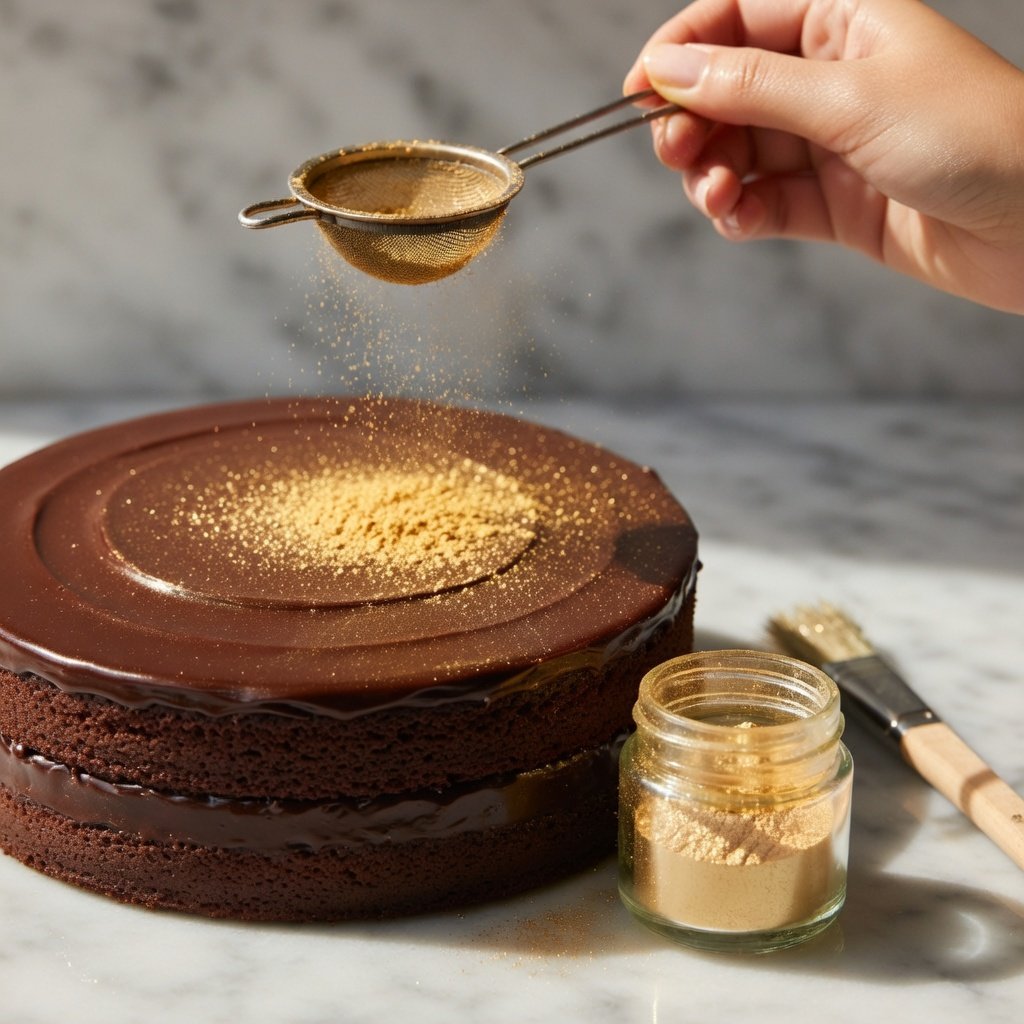
The one everyone asks about first. Smooth vanilla buttercream, a generous dusting of Gold Luster Dust across the top and upper sides. Don’t overthink it. The gold catches every candle flame in the room and the photos are ridiculous. Apply the dust dry using a fluffy brush, and tap the brush rather than sweeping — you get better coverage without streaks.

2. Rose Gold Ombré Layer Cake

Frost the outside with a pink-to-cream ombré, then dust Rose Gold Luster Dust from the top down, letting it fade naturally. The rose gold sits somewhere between pink and metallic and it photographs beautifully. Best on a smooth, chilled buttercream surface — the dust sticks better when the frosting isn’t tacky.

3. Confetti Cake with Rainbow Shimmer

Funfetti on the inside, shimmer on the outside. Mix a tiny pinch of pink, blue, and gold dust together in a small dish. Dust loosely over white buttercream using a wide dry brush. The multicolor shimmer picks up the confetti vibe from the inside without looking chaotic. Pink Luster Dust and Blue Luster Dust together are underrated for this.

4. Drip Cake with Gold Accents

Dark chocolate drips down a white or cream frosted cake, then gold dust brushed onto the dried drips. The contrast is the whole point — dark drip, bright shimmer. Use a small detail brush and work while the ganache is fully set. Rushing this means smearing. Patience pays off.

Wedding & Anniversary Cakes

5. All-Over Silver Fondant Cake

White fondant as the base, Silver Luster Dust mixed with a few drops of vodka or lemon extract to make a paint. Brush it on in smooth strokes. The result looks like brushed metal — genuinely elegant, not costume-y. Vodka is the standard medium because it evaporates cleanly. Don’t use water; it’ll dissolve the fondant surface.

6. Gold-Leafed Wedding Tier

This is the “how did they do that” cake. Smooth white fondant on each tier, then gold luster paint applied in irregular patches — not full coverage. The contrast between the white fondant and the gold creates this organic, almost marbled look. Takes some confidence on the brush, but the randomness is actually forgiving. There’s no wrong way for it to look.

7. Rose Gold Naked Cake

Naked cakes show the layers, and rose gold shimmer gives them a warmth that reads beautifully in venue lighting. Dust rose gold lightly over the exposed frosting between layers and across the top. It’s subtle — more glow than glitter — which is exactly right for a wedding table.

8. Silver Geometric Fondant Cake

Cut fondant into geometric shapes — diamonds, triangles, hexagons — and brush each piece with silver luster paint before applying to the cake. The shimmer outlines every edge when light hits it. Structured and modern. This one takes time, but the result looks like you hired a pastry artist.

Baby Showers & Gender Reveals

9. Pink Shimmer Ruffle Cake

Ruffled buttercream piped around the outside of each tier, then a soft dusting of Pink Luster Dust over the finished cake. The ruffles create natural shadows, and the shimmer catches in the raised edges. Incredibly soft-looking. This is the cake people cut slowly because they don’t want to wreck it.

10. Blue Galaxy Cake

Dark navy buttercream base — nearly black — with Blue Luster Dust dusted across the surface. Add a few flicks of silver for stars. The blue glitter against dark frosting reads as deep and dimensional in a way that lighter cakes don’t. Striking for a baby shower, perfect for a space-themed birthday, good for basically any dark-themed celebration.

11. Purple Unicorn Cake

Purple Luster Dust and some piped rosettes are doing a lot of work here. Pipe swirls of purple, pink, and white buttercream around the top, dust the whole thing with purple luster dust, add a fondant horn if you’re going full unicorn. Kids lose their minds. Adults also lose their minds a little. The shimmer catches completely differently on textured piped frosting versus smooth — more sparkle, more movement.

Holiday & Seasonal Cakes

12. Christmas Red Velvet with Gold Shimmer

Red velvet layers, cream cheese frosting, gold luster dust dusted across the top. The red peeking through the layers against the gold-dusted white frosting does all the work. December’s cake. Full stop. You can add sugared rosemary and cranberries on top if you want to take it further — the red and gold play well together.

13. New Year’s Eve Gold Mirror Glaze Cake

This one’s an event. Mirror glaze base — shiny and reflective on its own — then gold luster dust added while the glaze is still tacky. The dust bonds to the glossy surface and the combined shimmer is almost blinding in the right light. Gold is the obvious call here, but rose gold on a mirror glaze is equally spectacular. New Year’s Eve is the one night where “too much shimmer” isn’t really a thing.

14. Silver Winter Wonderland Cake

White fondant or pale blue frosting, silver dust applied heavily, white sugar pearl accents. It looks genuinely cold. Like, in a good way — you can almost feel the frost in the presentation. Best at Christmas and New Year’s but honestly works for any winter event. Silver gets slept on, and it shouldn’t.

Everyday & “Just Because” Cakes

15. Boxed Cake Mix, Zero Apologies

One box of cake mix, whatever frosting you have, gold luster dust on top. That’s the whole thing. A quarter teaspoon of gold dust turns grocery store frosting into something that looks intentional and considered. We’ve done this for a Tuesday. The shimmer doesn’t know the difference between a professional cake and a box mix. Neither do your guests.


Getting the Application Right

Most of these ideas use the same two or three techniques. Dry dusting for buttercream, luster paint for fondant, and a damp-brush method for detail work. If you haven’t done any of these before, our full guide on how to use edible glitter on cakes, cupcakes, and cookies covers all three in detail. Worth reading before your first project.

Quick version: dry brush for broad coverage, paint (dust + vodka) for fondant and precise metallic finishes. Keep the dust away from moisture until you’re ready to apply it — humidity clumps it.


Posted on Leave a comment

How to Use Luster Dust in an Airbrush

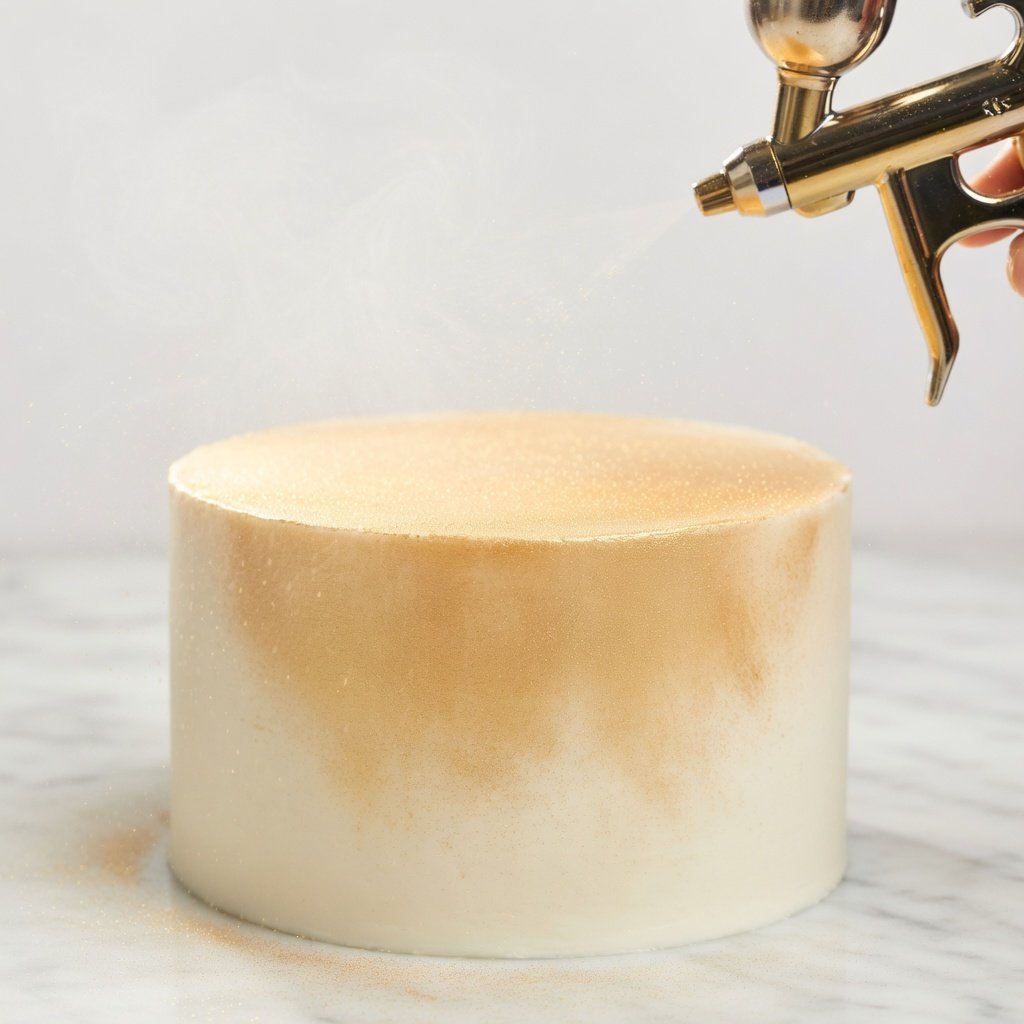
Airbrush luster dust technique mid-spray over fondant cake tier, gold shimmer mist caught in studio light
Key Takeaways

  • Yes, you can use luster dust in an airbrush — but you need the right liquid to mix it with
  • High-proof clear alcohol (vodka or Everclear) is the go-to; it evaporates fast and leaves clean shimmer
  • The ratio matters: too thick and it clogs, too thin and the shimmer disappears
  • Clean your airbrush immediately after — mica particles will settle and dry in the nozzle

Airbrushing with luster dust is one of those techniques that looks impossibly professional and is actually pretty straightforward once you nail the mix. The shimmer you get — smooth, even, almost metallic — is hard to replicate any other way. Here’s exactly how to do it.

What You’re Actually Doing Here

Luster dust doesn’t dissolve in liquid. It suspends. That’s an important distinction, because it means your mixture will settle if you stop moving — and it means the liquid you choose needs to stay mobile in the airbrush long enough to spray, then evaporate quickly so it doesn’t wet your surface.

That’s why alcohol works and water mostly doesn’t. Water sits on fondant or chocolate and causes problems. High-proof alcohol hits the surface and vanishes in seconds, leaving just the mica pigment behind. The shimmer stays. The mess doesn’t.

What to Mix With Your Luster Dust


The Mix Ratio

Start with 1/4 teaspoon of luster dust to 1 teaspoon of alcohol. That’s your baseline — a good medium consistency that flows through most airbrush nozzles without clogging. From there, adjust based on what you’re seeing.

Too thick: the spray sputters, the nozzle clogs, nothing good happens. Add alcohol in tiny drops until it flows clean. Too thin: the shimmer looks ghostly and you have to layer too many coats. Add a tiny bit more dust and mix thoroughly before spraying a test patch.

Mix it in a small ramekin or shot glass. Stir right before you load it into the cup — the dust starts settling almost immediately.

Colors Worth Airbrushing

Not every color translates equally well through an airbrush. The metallic shimmers — Gold Luster Dust, Silver Luster Dust, and Rose Gold Luster Dust — are the standout performers. The mica particles are fine enough to spray smoothly, and the metallic effect is genuinely stunning when airbrushed evenly over a dark fondant or chocolate surface.

Gold over white fondant is classic for a reason. Silver on dark chocolate ganache looks like something from a high-end patisserie. Rose gold on blush buttercream — ridiculous. Good ridiculous.

Technique: How to Actually Spray It

Shake or stir the mixture right before loading. Keep your airbrush moving constantly — don’t hover in one spot or you’ll get pooling. Hold the gun 6–8 inches from the surface and use light, overlapping passes. Build up the shimmer gradually rather than trying to nail it in one heavy coat.

Shake the cup every 30 seconds or so as you work. The dust settles fast. You’ll notice the shimmer fading in your spray if you’ve forgotten to agitate — that’s your cue.

Test on parchment before you touch your cake. Always. The first few seconds of spray often sputter, and you don’t want that on your fondant.

Cleanup — Don’t Skip This Part

Mica particles will dry inside your airbrush nozzle if you leave them. Run straight alcohol through the gun immediately after you’re done. Then run it again. Most airbrush clogs from luster dust come from people who cleaned the cup but didn’t flush the needle and nozzle. Disassemble fully if you’re doing a deep clean — worth it to keep the spray pattern sharp.

For more ways to use luster dust on baked goods, the edible glitter on cakes guide covers dry dusting, painting, and mixing into frostings — all the techniques that don’t require an airbrush.


Posted on Leave a comment

How to Store Luster Dust: Shelf Life & Best Practices

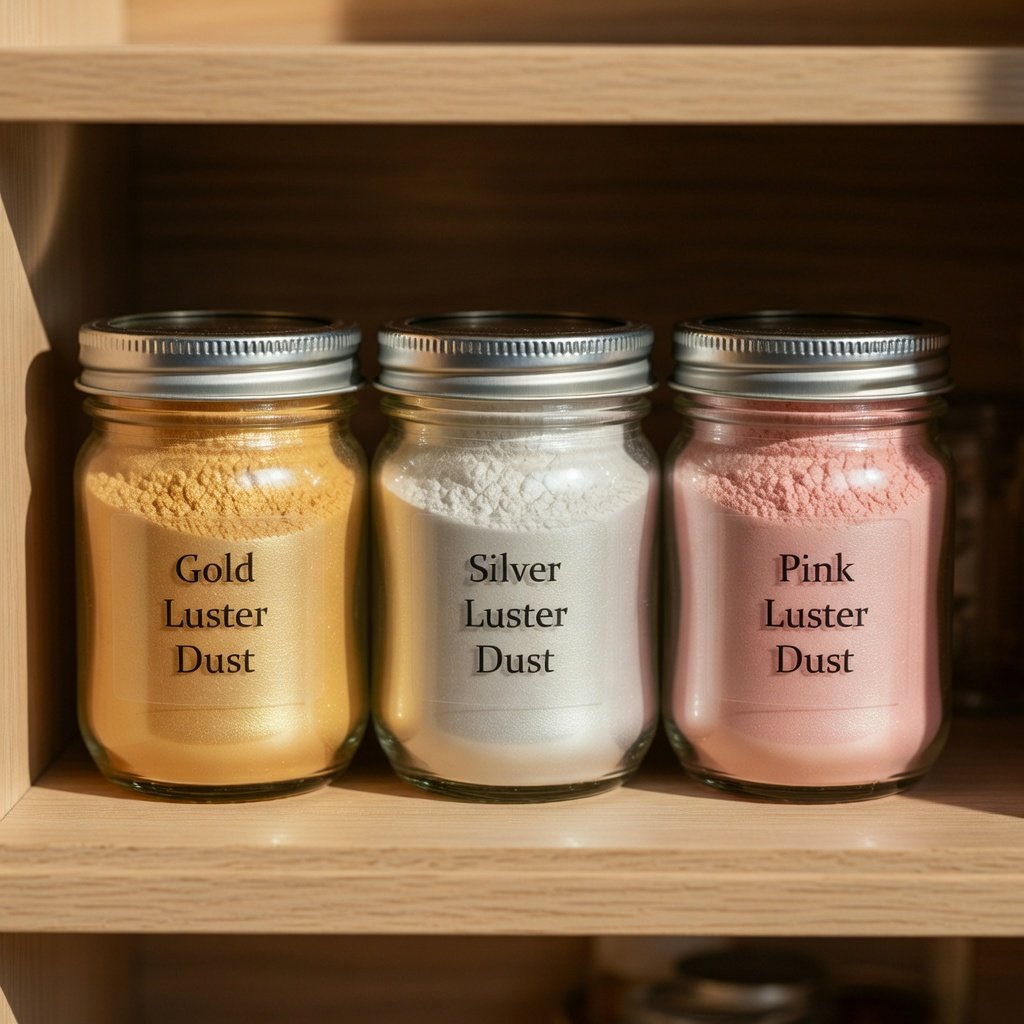
Luster dust ingredients sealed in gold, silver, and pink jars organized neatly on a cool dry shelf
Key Takeaways

• Luster dust doesn’t really expire — but heat, moisture, and light will wreck it faster than time will
• The ingredients (mica-based pigments) are naturally stable; improper storage is almost always what kills a jar
• Keep it in a cool, dry spot with the lid sealed tight — that’s 90% of proper storage right there
• A jar stored correctly can last years without any loss in shimmer or quality

How to Store Luster Dust: Shelf Life & Best Practices

Most people never think about this until they reach for a jar they bought two years ago and find a clump. That’s not expiration — that’s a storage problem. And it’s almost always preventable.

Luster dust is more durable than you’d expect. The luster dust ingredients at the core of it — mica-based pearlescent pigments — are minerals. Minerals don’t go stale. What does go wrong is moisture getting in, heat breaking down the texture, or light degrading the color over time. None of that happens if you store it right.

Why Storage Matters More Than Shelf Life

There’s no official expiration date stamped on a jar of luster dust the way there is on a carton of milk. Ours carries a best-by date as a guideline, but the honest answer is: a sealed jar stored properly will perform just as well in year three as it did on day one.

The shimmer on something like Gold Luster Dust comes from the way light interacts with ultra-fine mica particles. Those particles don’t degrade on their own. They just need to stay dry, stay cool, and stay sealed.

Moisture is the main enemy. Even a small amount — steam from a pot, humidity from an open dishwasher, condensation from a cold kitchen — can cause the powder to clump. Once it clumps, it’s harder to work with, but it’s not ruined. Break it up gently and it’ll still perform.


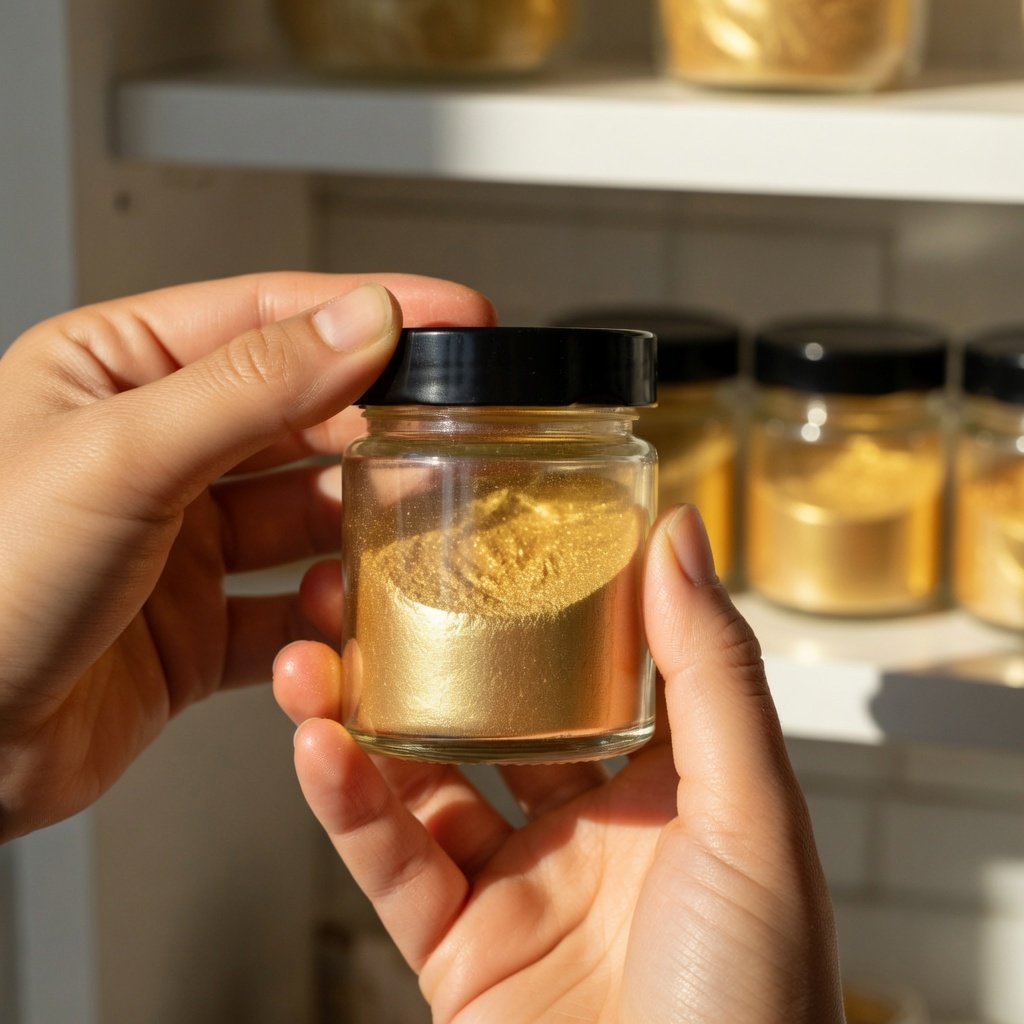
Hand sealing a jar of edible luster dust made of mica, with gold and other luster dust jars stored on a clean kitchen shelf
Knowing what edible luster dust is made of helps you store it correctly and extend its shelf life.

What Makes Luster Dust So Stable in the First Place

This is where the ingredients in edible luster dust actually matter for storage. Mica is a naturally occurring mineral — it’s chemically inert, doesn’t oxidize, doesn’t absorb odors, and has no meaningful reaction to temperature within any normal kitchen range. It’s not a food in the traditional sense, which is exactly why it doesn’t behave like one.

There’s no fat to go rancid, no sugar to crystallize weirdly, no protein to break down. The color pigments are food-grade and similarly stable. If you’re new to all of this, our beginner’s guide to edible luster dust covers the basics of what you’re actually working with before getting into more advanced technique.

The tasteless, odorless quality isn’t a coincidence — it’s a byproduct of how chemically stable mica is. It doesn’t interact with food. It just reflects light. That stability is also why it stores so well compared to, say, food coloring gels or natural pigment powders.

Reviving a Clumped Jar

Found an old jar in the back of a cabinet? Clumped but not discolored, doesn’t smell like anything weird (it shouldn’t smell like anything at all)? It’s almost certainly fine.

Take a dry toothpick or small skewer and break up the clumps inside the jar. Then seal it and shake gently. If it returns to a loose powder, you’re back in business. Test it on a small surface first — the shimmer should behave exactly as expected.

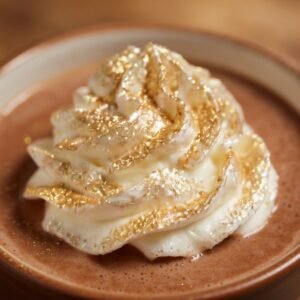
A great low-stakes way to test a jar is something like the Shimmer Whipped Cream Topper. Quick to make, easy to see the shimmer in action, and nothing gets ruined if it takes a minute to work out.

If the color has shifted significantly or there’s any moisture smell (rare, but possible if a jar was stored very badly), that’s when you’d toss it. But in five years of shipping luster dust, that’s not something we hear about often.


Posted on Leave a comment

Edible Glitter for Vegan Baking

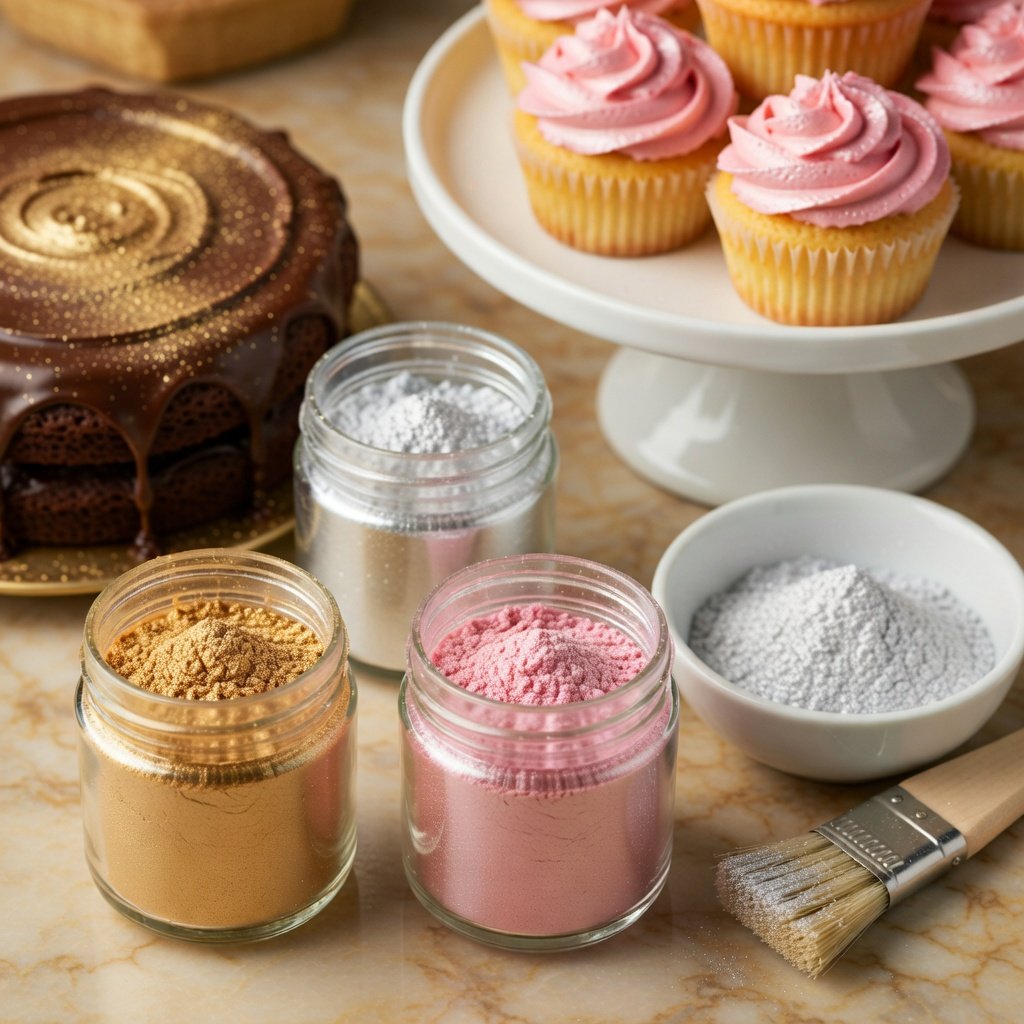
Edible vegan glitter luster dust jars in gold, silver, and pink beside a chocolate ganache cake and shimmer cupcakes
Key Takeaways

  • All Luster Dust colors are 100% vegan — made with mica-based pigments, no animal-derived ingredients, ever.
  • Vegan and food safe aren’t the same thing. A lot of glitter on the market is neither. Ours is both.
  • Works on every surface vegan bakers use — buttercream, ganache, fondant, naked cakes, and more.
  • One 10g jar covers dozens of cakes. You don’t need much.

Here’s a question we get a lot: is edible glitter vegan? Short answer — ours is. Every single color. No beeswax, no carmine, no shellac. Just mica pigments and FDA-compliant food-safe colorants, the same ingredients that have been in food for decades.

The longer answer is that “edible vegan glitter” is a messier category than it should be. Some products marketed as edible contain shellac (a resin secreted by lac bugs — not vegan). Others use carmine, which is derived from crushed beetles. And a surprising number of sparkly products on Amazon aren’t edible at all — they’re craft glitters with “non-toxic” on the label, which is not the same thing as food safe. We broke that down in detail in our guide to edible glitter safety.

So if you’re baking vegan and you want shimmer, here’s what actually matters and how to use it well.

What Makes Luster Dust Vegan

Our luster dust is made from German mica pigments — a naturally occurring mineral — combined with FDA-compliant colorants. That’s it. No binders from animal sources, no insect-derived dyes, no hidden non-vegan additives. Tasteless, odorless, completely plant-based.

If you want the full ingredient picture, this post breaks down exactly what’s in edible glitter and why mica is the gold standard for food-safe shimmer. Worth a read if you care about what goes into your food — which, if you’re baking vegan, you probably do.

How to Use It on Vegan Bakes


Edible glitter food safe gold luster dust being brushed over a chocolate ganache layer cake on white marble
This edible glitter food safe gold luster dust adds a show-stopping shimmer to any chocolate ganache cake.

A Note on Quantities

Less is more, and that’s not just a saying here. A 10g jar is 1/3 oz — sounds small, but a single dusting session on a six-inch cake might use 1/16 teaspoon. Do the math and that jar goes a long way. For reference: 10g covers roughly 80 cocktails or a couple dozen cupcakes, depending on application.

Start light. You can always add more. Overdoing it looks chalky, not shimmery — and no one wants a chalky cake.

FAQ


Posted on Leave a comment

How Much Luster Dust Do I Need? A Sizing Guide

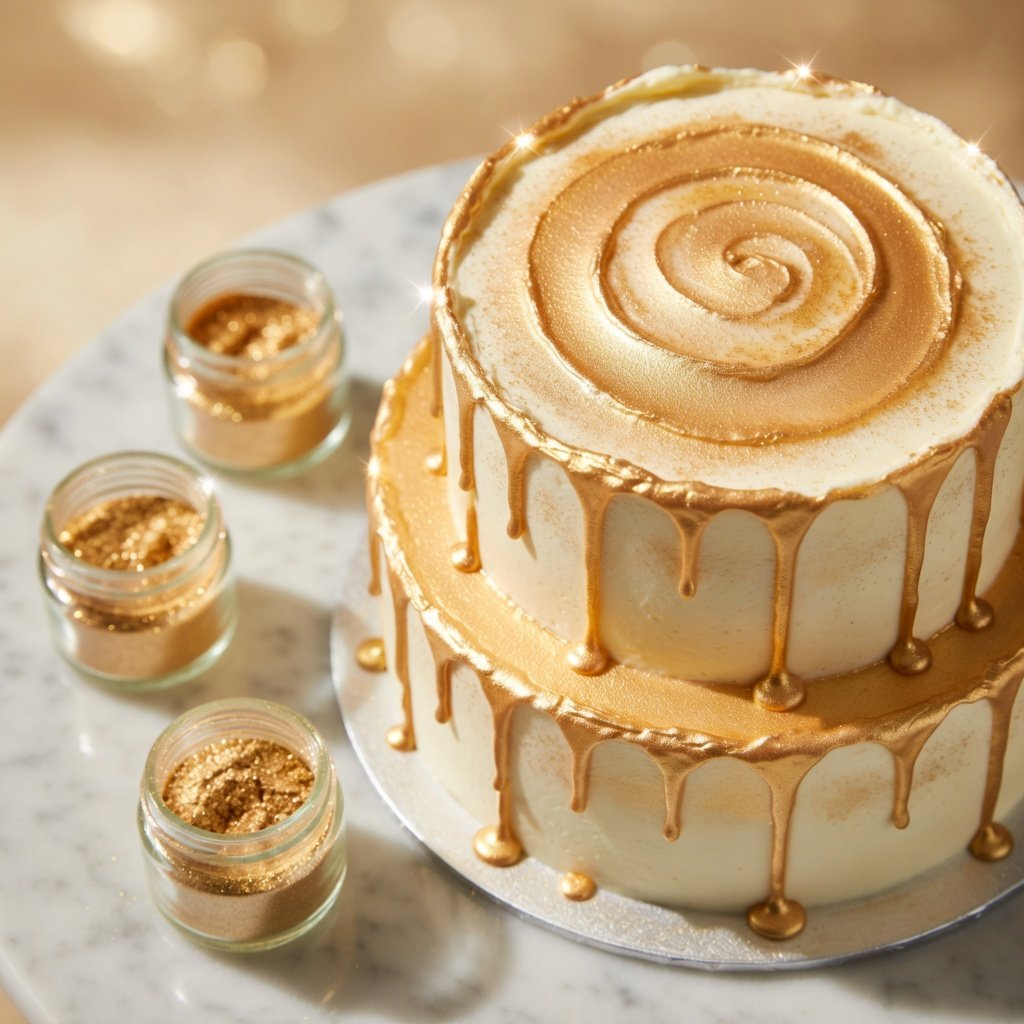
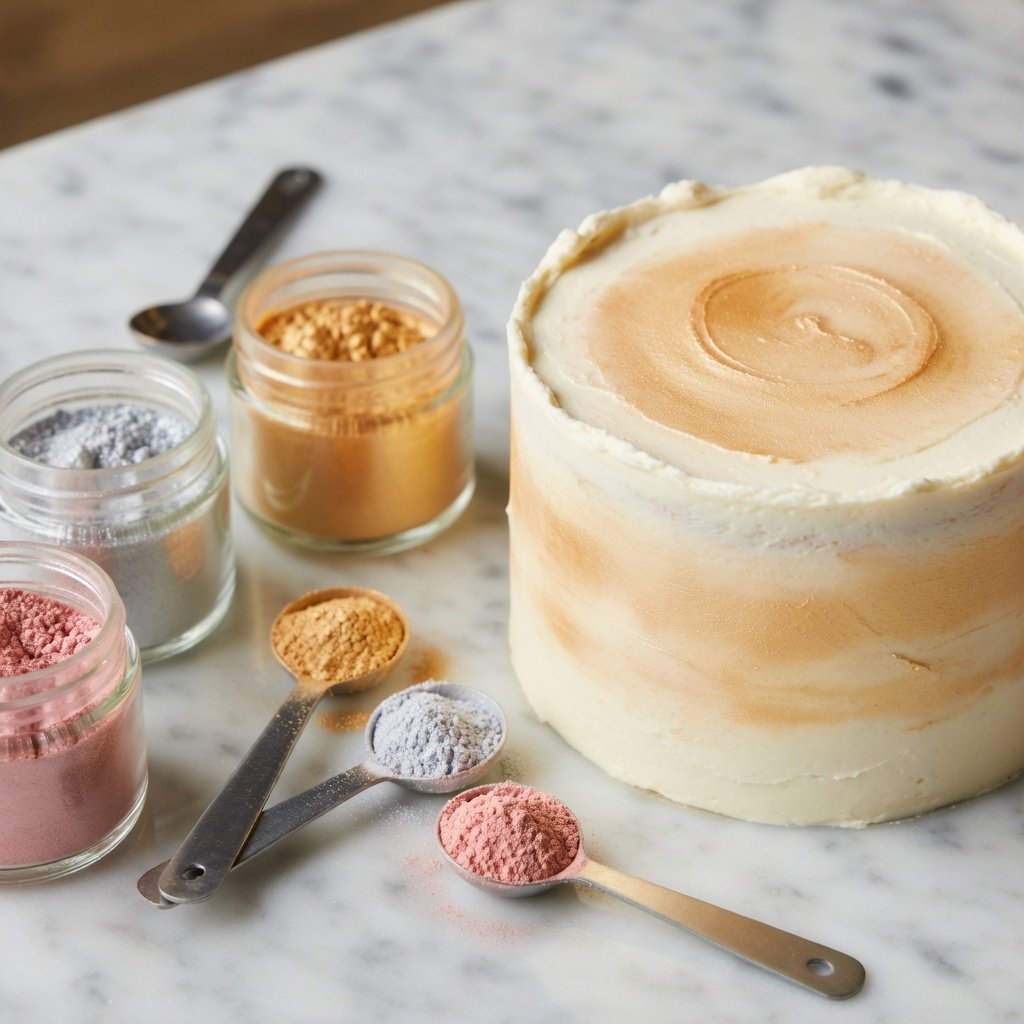
Edible gold luster dust for cakes shown in three open jars beside a tiered cake with gold shimmer and measuring spoons on marble
Key Takeaways

  • A 10g jar covers roughly 20–25 cupcakes, one full sheet cake, or 2–3 tiered cakes depending on application method
  • Dry dusting uses less product than painting — if you’re doing large coverage, budget accordingly
  • Gold is the hardest-working color in the lineup; one 10g jar goes further than most people expect
  • If you’re doing more than one event or batch per month, the 50g jar is almost always the better buy

The most common question we get isn’t about color. It’s about quantity. People order a 10g jar, aren’t sure if that’s enough, panic and order three, then end up with a lifetime supply of Gold Luster Dust they’re slowly working through two years later.

So here’s the actual breakdown. How far each jar size goes, by project type, so you can order the right amount the first time.

First: How Are You Applying It?

This matters more than the size of your cake. Two different application methods use very different amounts of product. Dry dusting (dipping a brush and sweeping it across a surface) is light and controlled. Painting with alcohol requires more dust to build up coverage. Mixing into a glaze or drip uses even more.

If you haven’t sorted out your technique yet, this guide to using edible glitter on cakes and cupcakes covers all three methods in detail. Read that first, then come back here for quantities.


Quick Reference by Jar Size

The 10g jar ($9.98) is the right buy if you’re doing a one-time project, testing a new color, or decorating for a single event. It’s genuinely a lot of product for casual use — most home bakers never burn through one fully.

The 50g jar ($24.98) makes sense once you know you like the color and you’re using it regularly. It’s the jar professional bakers reach for. Also the one to grab if you’re doing anything tiered or high-stakes.

The 250g and 1kg sizes are production quantities — bakeries, event companies, anyone decorating at scale. If you’re reading this post, you’re probably not there yet. But they exist when you are.

The Beginner’s Rule of Thumb

Less than you think. Seriously. The instinct is to pour on more, but luster dust has real pigment density — a little builds up fast. Start with the smallest amount that seems reasonable, see how it looks, then add more if you need it.

First time using it? Our beginner’s guide walks through your first project step by step. Good place to start before committing to a big jar of anything.

For most people doing occasional cake decorating: one 10g jar of your main color, ordered when you need it. Once you find yourself reordering the same color twice, that’s the signal to upgrade to 50g.


Posted on Leave a comment

Edible Glitter Spray vs. Dust: Which Application Method Is Best?

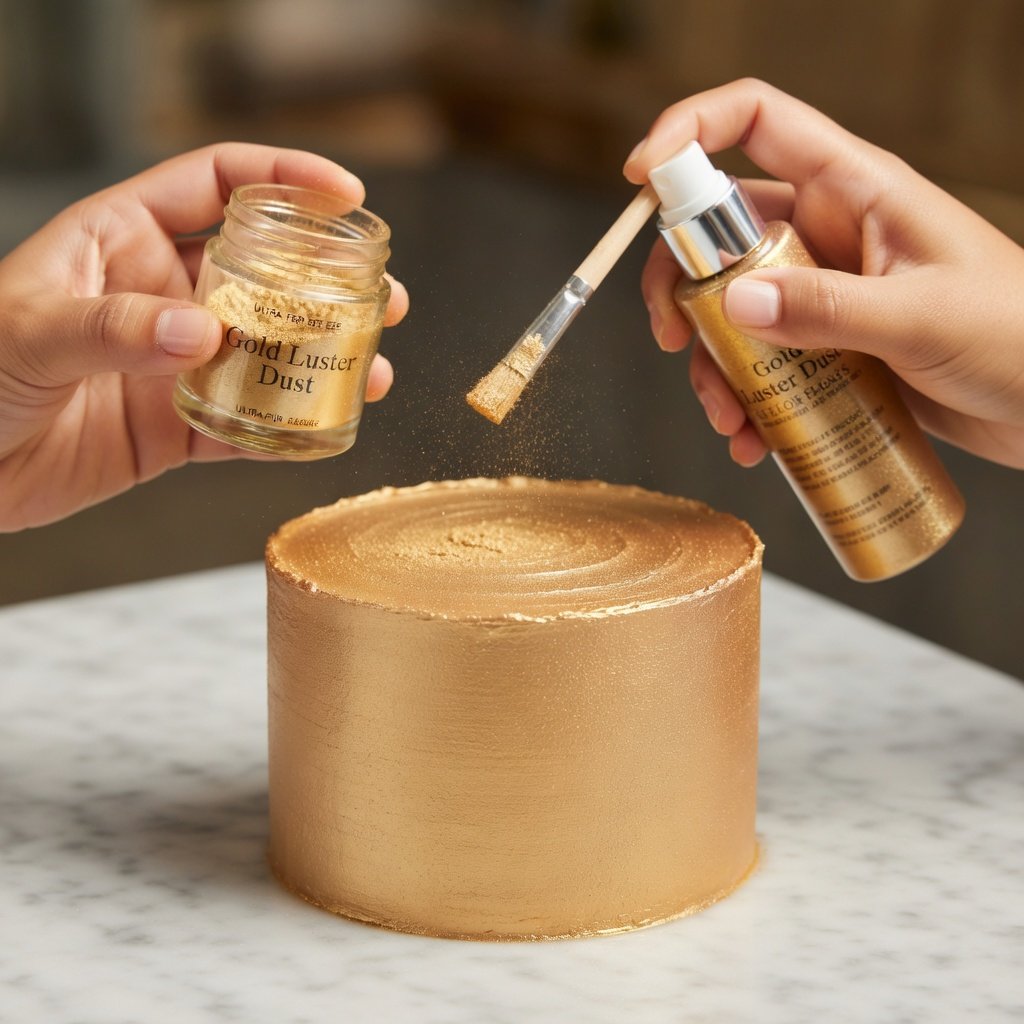
Edible glitter spray pump bottle and luster dust jar with brush held over a decorated cake tier on marble
Key Takeaways

– Edible glitter spray is faster and more forgiving — good for large surfaces and beginners
– Luster dust gives you more control, richer shimmer, and way more color options
– Spray cans often use different (sometimes lower-quality) pigments than dust
– For most home bakers and bartenders, dust wins — but spray has its place

Edible Glitter Spray vs. Dust: Which Application Method Is Best?

This question comes up constantly. And honestly, it’s a good one — because the answer isn’t obvious until you’ve used both. One’s faster. One’s better. They’re not the same thing.

Here’s the real breakdown.

What Actually Is Edible Glitter Spray?

Edible glitter spray — sometimes called edible spray glitter — is exactly what it sounds like: shimmer pigment suspended in a liquid or aerosol base, packaged in a pump or pressurized can. You point it at your cake, press the nozzle, and it mists on a layer of color and shine.

The appeal is obvious. No brush, no pinching powder, no mess. Point and spray.

The problem is what’s inside those cans. A lot of edible glitter spray products use diluted pigments in a carrier liquid — and that dilution means weaker shimmer. You often have to apply multiple coats to get the effect you’re actually after. The shimmer looks fine in photos taken from three feet away. Up close? Sometimes flat.

There’s also a labeling issue worth knowing about. Some sprays sold as “edible” or “food-safe” are technically just non-toxic — which means they won’t hurt you, but they’re not approved as food. Always check that the product says FDA compliant, not just non-toxic. Big difference.

What Luster Dust Does Differently

Luster dust is dry pigment — ultra-fine mica particles that you apply with a brush, your fingers, a sponge, or mixed into liquid. The shimmer comes from the mica itself, and quality mica (like the German pigments we use) produces a depth of color that spray can’t replicate.

You can use it dry — brush it straight onto fondant or chocolate and the shimmer is immediate, intense. Or mix it with a few drops of vodka or extract for a paint-like consistency that goes on smooth and dries to a metallic finish. Drop a pinch into a cocktail and watch it catch the light as it moves through the glass.

The tradeoff is that dust requires a little more intention. You need a brush (or your fingers). You need to think about how much you’re using. It’s not hard — it just takes an extra thirty seconds of thought.

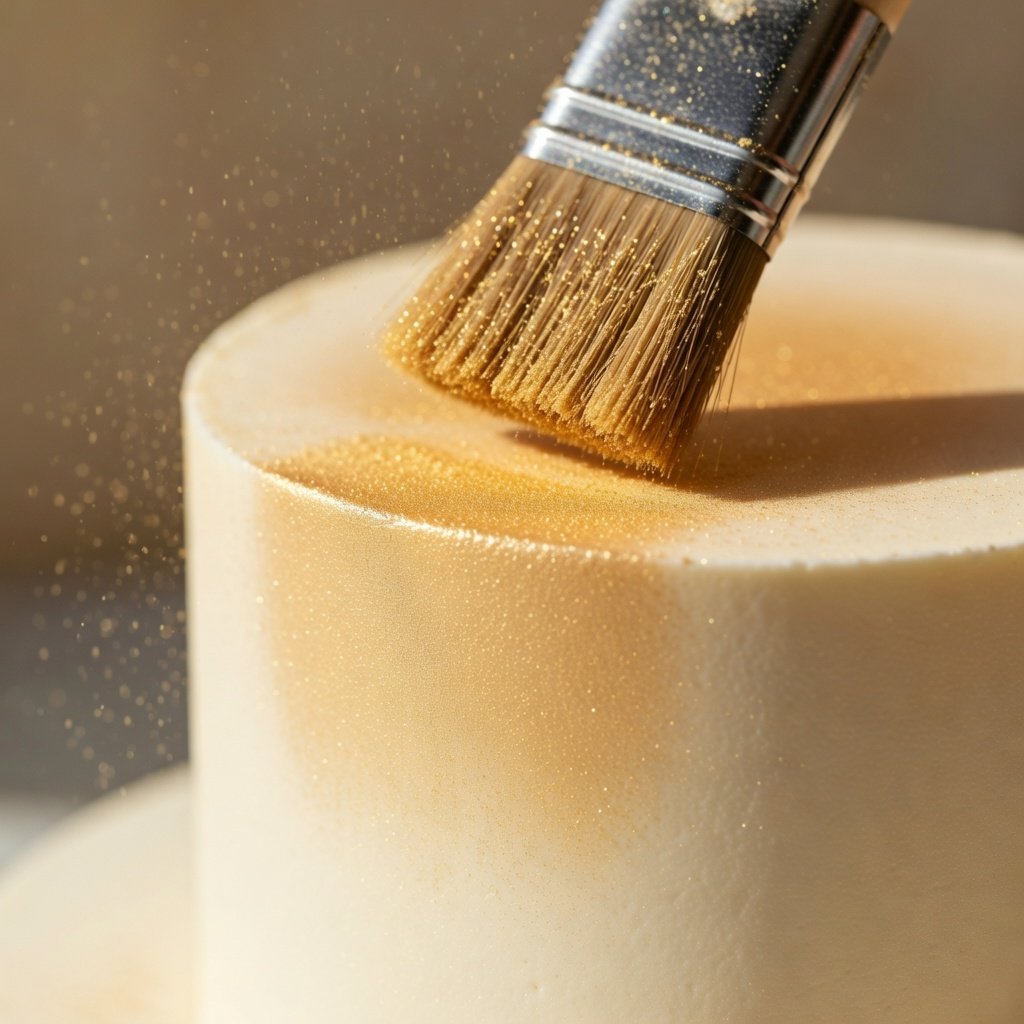
Edible glitter spray for cakes alternative: pastry brush dusting gold luster dust onto smooth fondant tier with shimmer particles in air
Using a pastry brush to apply edible spray glitter or luster dust delivers precise, buildable shimmer on fondant cakes.

Side-by-Side Comparison


FeatureLuster DustOther
Shimmer IntensitySpray: Medium — often requires multiple coatsDust: High — deep, rich shimmer from first application
Ease of UseSpray: Very easy — no tools requiredDust: Easy once you've done it once — needs a brush or fingers
Color OptionsSpray: Limited — 6-12 colors from most brandsDust: Wide range — 13 colors from Luster Dust alone
CoverageSpray: Good for large flat surfacesDust: Better for details, edges, and mixing
Use in DrinksSpray: Not recommended — liquid carrier can affect flavor or foamDust: Yes — standard application for shimmer cocktails
VersatilitySpray: Mainly cakes and cookiesDust: Cakes, cookies, cocktails, chocolate, fruit, frosting
FDA ComplianceSpray: Varies by brand — check labels carefullyDust: All Luster Dust colors are FDA compliant
Cost per UseSpray: Higher — cans run out fast on large projectsDust: Lower — a 10g jar covers 80+ cocktails or dozens of cakes

Edible Glitter Spray

Pros
  • ✓ No tools needed
  • ✓ Fast on large surfaces
  • ✓ Beginner-friendly
  • ✓ Consistent coverage on flat areas
Cons
  • ✗ Weaker shimmer than dust
  • ✗ Limited colors
  • ✗ Can't use in drinks
  • ✗ Label compliance varies — buyer beware
  • ✗ Runs out faster than you'd expect

Luster Dust

Pros
  • ✓ Richer, deeper shimmer
  • ✓ Works on virtually everything — cakes, drinks, chocolate
  • ✓ Full color range
  • ✓ FDA compliant
  • ✓ Better cost per use
  • ✓ More control over intensity
Cons
  • ✗ Needs a brush or fingers for most applications
  • ✗ Takes a little practice to nail the right amount

Which One Actually Wins for Cakes?

Spray has one real edge: large, flat surfaces. Covering a full sheet cake or a big fondant board with spray is faster than brushing, and you get even coverage without brush marks. For that specific job, spray makes sense.

Everywhere else? Dust. The shimmer is richer. The color options are better. And once you’ve done it a few times, it’s not meaningfully slower than spray — especially if you’re using the dry brush method, which takes about 20 seconds per tier.

For edible glitter spray for cakes, the use case is pretty narrow: large surface, you want consistent matte shimmer, you don’t have a brush handy. Outside of that, grab the jar.

For Cocktails, There’s No Contest

Don’t spray into drinks. The carrier liquid in most edible glitter sprays isn’t designed for beverages — it can affect the taste, kill foam on a cocktail, or just sit on top of the liquid instead of dispersing through it. Dust is built for this. A 1/8 teaspoon pinch of Gold Luster Dust in a champagne glass disperses perfectly as bubbles rise. Silver does the same in darker spirits.

That’s the difference between a tool designed for something and a tool repurposed for it.

Our Honest Take

We make luster dust, so we’re obviously not neutral here. But the reason we make dust instead of spray isn’t just preference — it’s that spray can’t do what we want to do. The shimmer ceiling is too low. The color range is too narrow. And for cocktails, spray just doesn’t work.

If you’re decorating a giant wedding cake tier and need coverage in under a minute, keep a spray can in your kit. It has its uses. But for everything else — cakes, cookies, drinks, chocolate, literally anything else — Silver Luster Dust and Gold Luster Dust are going to give you better results every time.

The shimmer is deeper. The control is better. And one 10g jar goes a lot further than a spray can that sputters out halfway through your second cake.


Posted on Leave a comment

How to Use Luster Dust on Cookies

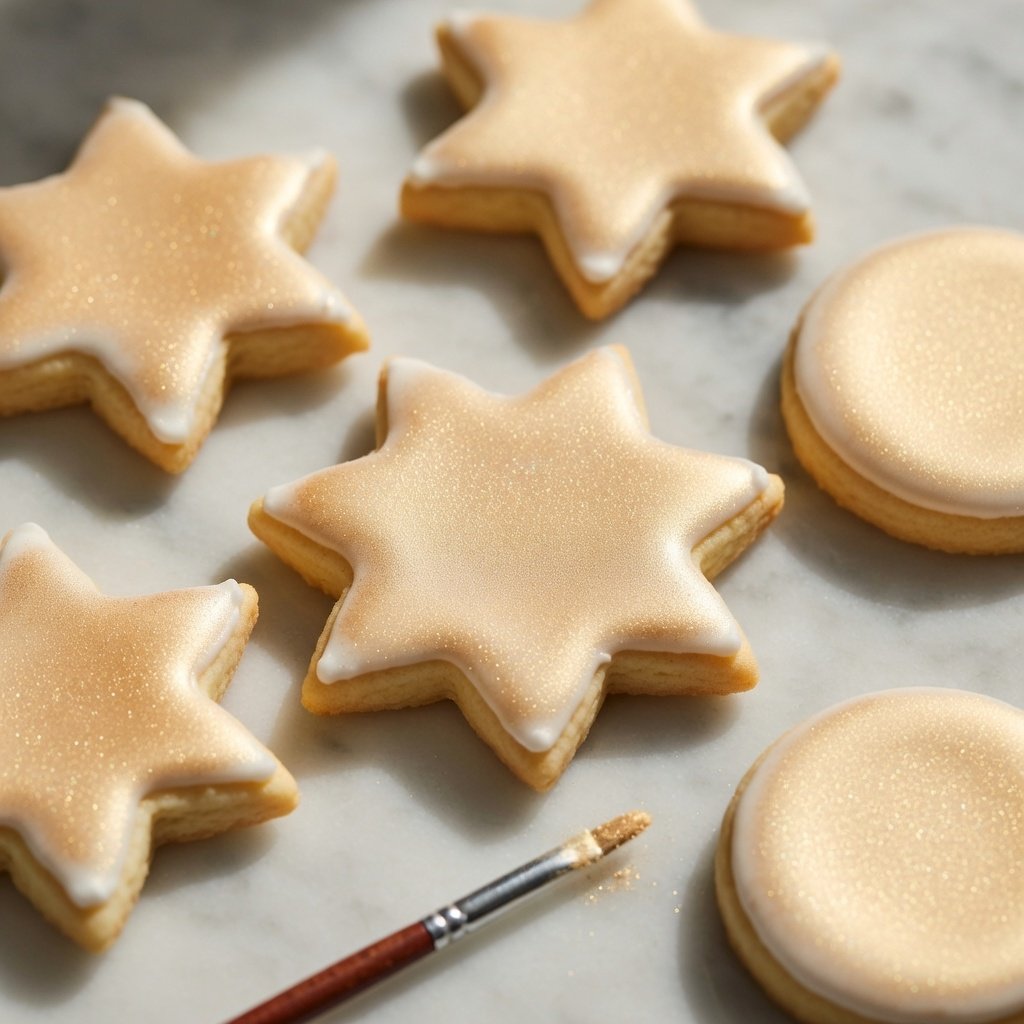
Luster dust for cookies applied to royal icing on decorated sugar cookies, shimmering gold and silver finish on marble surface with small brush
Key Takeaways

  • Dry dusting works on royal icing and fondant — wet mixing (luster dust + alcohol or extract) works on everything else
  • Less is more. Start with a small dry brush and build up — you can always add, you can’t take away
  • Gold and silver are the workhorses, but white luster dust on dark cookies is genuinely underrated
  • Your icing surface matters more than most people realize — glossy royal icing catches the shimmer best

The Two Methods — And When to Use Each

Luster dust on cookies isn’t complicated, but there’s a right way to approach it depending on what surface you’re working with. The method changes depending on your icing, your cookie, and what kind of finish you’re going for. Get this part right and everything else is easy.


Which Colors to Use

Gold Luster Dust is the obvious starting point. It works on literally every cookie style — holiday, wedding, birthday, everyday. Gold on white royal icing looks expensive. Gold over tan gingerbread looks warm and rich. It’s the color that makes people stop and actually look.

Silver Luster Dust is what you want when you’re going for something more graphic or modern. Silver on dark chocolate icing is striking — really striking. It also reads cooler and more elegant than gold, which matters depending on the event.

Here’s an underrated one: White Luster Dust on white icing. It sounds redundant but it’s not. White luster dust adds a pearlescent shimmer that you only notice when the light hits it — like a moonstone effect. Great for wedding cookies, winter themes, anything where you want subtle over flashy.

For more color inspiration and how luster dust works across different baked goods, this guide covers cakes, cupcakes, and cookies all in one place.

The Surface Question

Your icing type changes your results more than almost anything else. Here’s the quick breakdown:

  • Glossy set royal icing: Best surface for dry dusting. Hard, smooth, the pigment sits right on top.
  • Matte royal icing: Still works, but the shimmer is slightly less dramatic. More passes needed.
  • Fondant: Great for both methods. Smooth fondant with the wet method gives you a flawless metallic finish.
  • Buttercream: Dry dusting is tricky because the surface is soft. The wet method works better — paint it on and let it set.
  • Bare cookie surface: Wet method only. The dry pigment won’t adhere to an uncoated cookie — it’ll just brush off.

A Few Things Worth Knowing

Luster dust is tasteless. Completely. You won’t notice it on the cookie at all, which is the whole point — the effect is visual, not culinary. Everything we make is FDA compliant and made from food-grade German mica pigments. If you’ve seen other brands with vague “non-toxic” labels, that piece on edible glitter safety explains exactly what that distinction means. Short version: non-toxic isn’t the same as edible.

Storage is easy — keep the jar sealed and away from moisture and humidity. The dust clumps if it gets wet, but even then, a quick stir with a dry toothpick usually fixes it. A 10g jar goes further than you’d expect. We’ve done hundreds of cookies from a single jar.