Posted on Leave a comment

Pink Edible Glitter: Ideas, Recipes & How to Use It

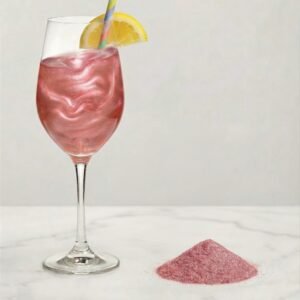
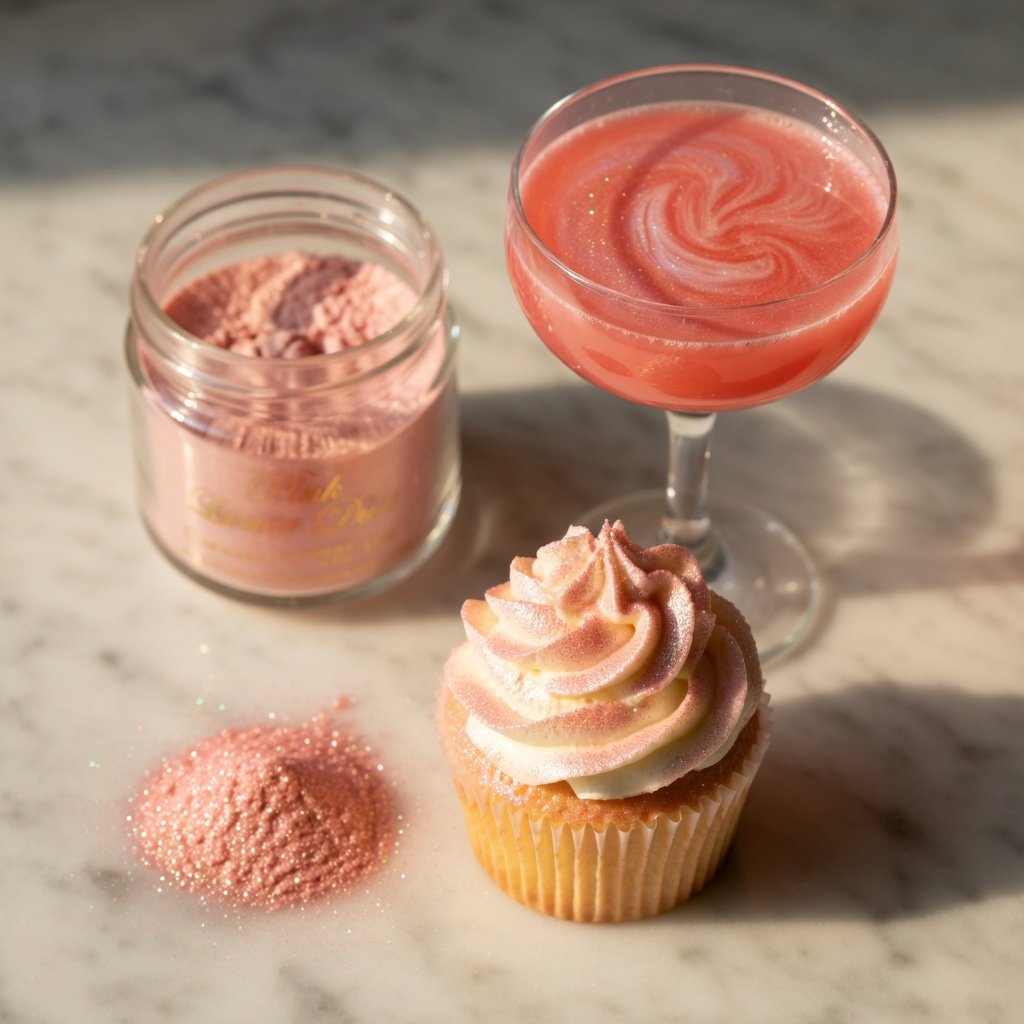
Pink edible glitter luster dust jar beside a shimmer-dusted cupcake and sparkling pink drink on white marble
Key Takeaways

  • Pink luster dust works on almost anything — drinks, cakes, cookies, chocolate, fruit
  • For drinks, use 1/8 tsp per glass and let the shimmer move naturally — don’t stir aggressively
  • Rose gold is the pink-adjacent color that makes everything look expensive; they pair well together
  • Both colors are FDA compliant, vegan, gluten-free, and completely tasteless

Pink edible glitter is having a moment. Bachelorette cakes, unicorn drinks, birthday cupcakes, Valentine’s everything — if there’s a celebration that calls for pink, luster dust makes it noticeably better. Here’s what works, what doesn’t, and how to actually use it.

The Two Pinks You Need to Know

We make two colors that live in the pink family, and they’re not interchangeable.

Pink Luster Dust is a true, cool-toned pink — bright without being neon, and it catches light with that high shimmer you’d expect from a quality mica pigment. Think: bubbly pink drinks, cotton candy frostings, spring cupcakes.

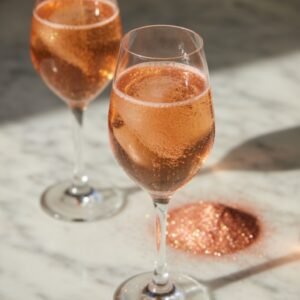
Rose Gold Luster Dust leans warm — it’s pink with a metallic, golden undertone that makes everything look like it costs more than it did. Better on chocolate, incredible on prosecco, perfect for anything that needs a sophisticated edge rather than a playful one.

They also layer beautifully together, which we’ll get into below.

Pink Edible Glitter in Drinks

Drinks are the easiest win. Drop 1/8 teaspoon of pink luster dust into a coupe or champagne flute before pouring. The liquid does all the work — the particles catch light as they move through the glass, and you get this swirling shimmer effect that photographs ridiculously well. No stirring required. Less is genuinely more here; too much and you get a chalky-looking drink instead of a shimmer.

Pink works best in lighter-colored drinks: rosé, lemonade, light pink cocktails, sparkling water. Rose gold is better in amber-toned drinks where the warm metallic plays off the color. Both work in champagne. Our Unicorn Shimmer Lemonade uses pink to spectacular effect — it’s the kind of thing kids and adults both immediately want to drink.

For the full breakdown on getting the technique right, this guide on edible glitter in drinks covers everything — swirl timing, which drinks work best, and why carbonation actually helps.
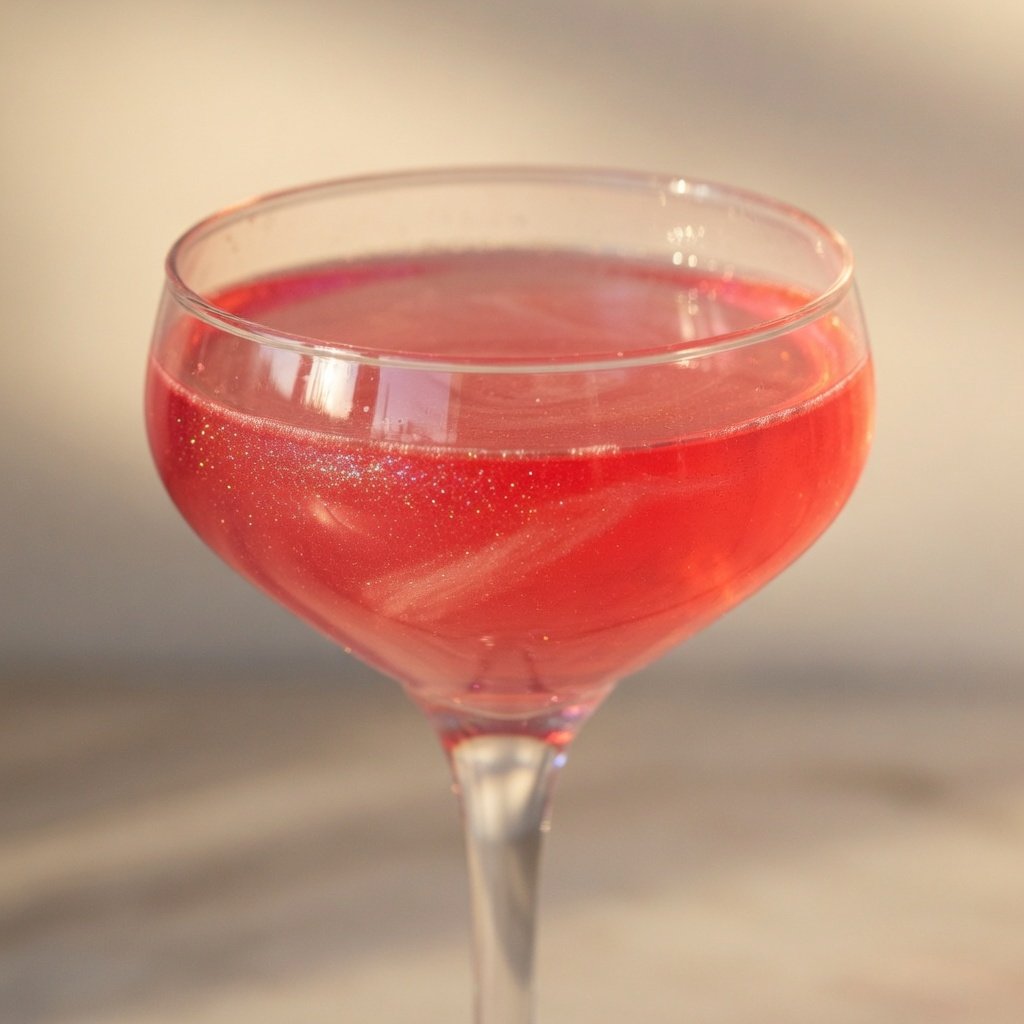
Edible pink glitter in drink swirling through a sparkling coupe cocktail, caught in warm natural light
A pinch of edible pink glitter in your drink transforms any cocktail into a sparkling, eye-catching moment.

Pink Glitter on Cakes and Cupcakes


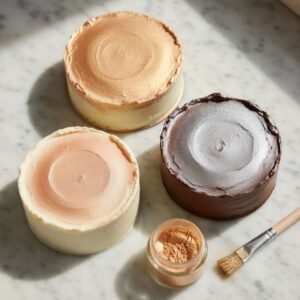
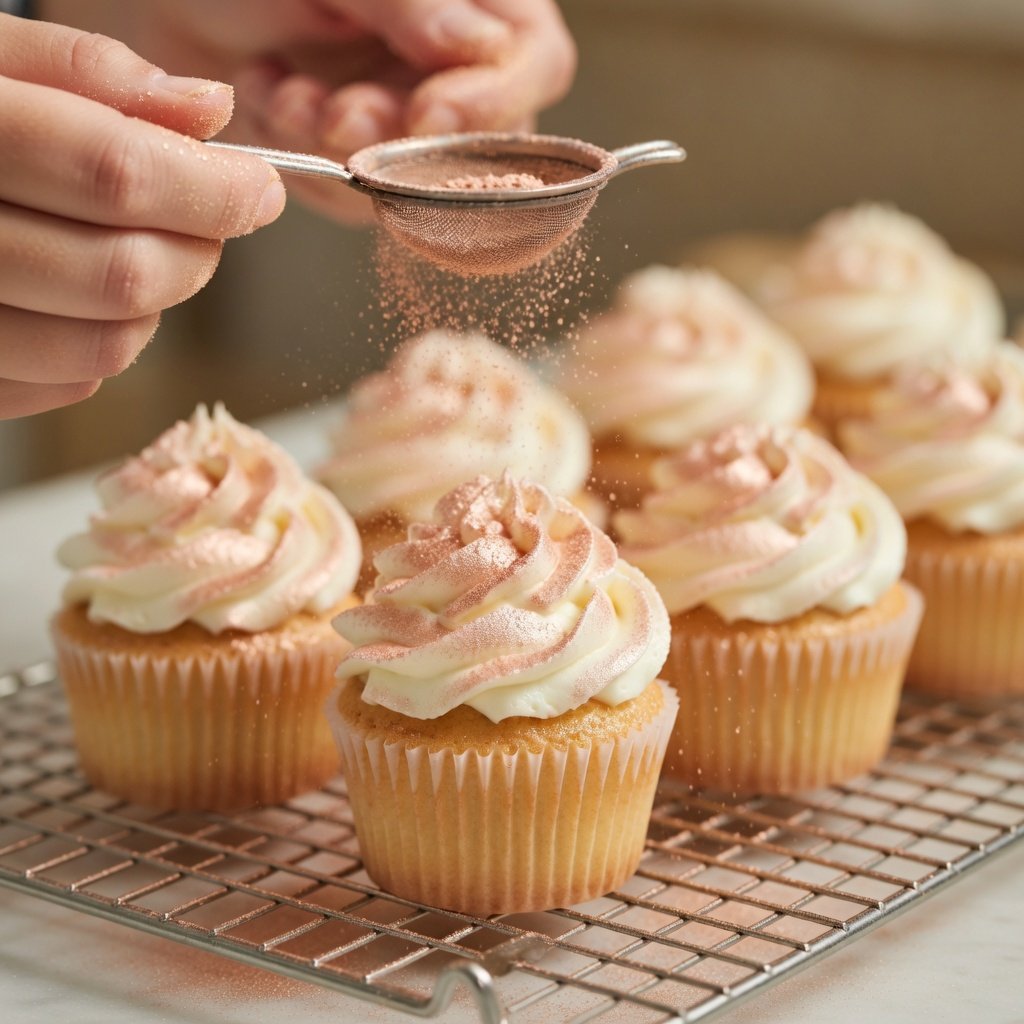
Smooth buttercream is the best surface for pink luster dust. The slight sheen of the frosting amplifies the shimmer — dust it on with a dry brush in light, sweeping strokes and the whole cake almost glows. Heavy-handed application dulls it; a light dusting is better every time.

For an ombre effect, dust pink near the base and rose gold toward the top. The transition between them is subtle but striking, especially on a white or ivory frosting base.


For a deeper dive on application techniques for baked goods, the cake and cupcake guide has the step-by-step.

A Few More Things to Do with Pink Glitter

  • Roll strawberries in it right before serving — they look like something from a fancy patisserie
  • Add a pinch to homemade cotton candy sugar before spinning
  • Mix into whipped cream for birthday sundaes or hot cocoa toppers
  • Dust onto pink macarons for an extra layer of shimmer on the shell
  • Put it in a salt or sugar rim mix for pink cocktail glasses

It’s hard to find a place where pink glitter looks out of place. That’s the thing about this color — it reads as both fun and sophisticated depending on the context. Baby shower? Obviously. Fancy dinner party cocktails? Also yes.

Layering Pink and Rose Gold

This is the move we keep coming back to. Pink alone is bright and playful. Rose gold alone is warm and metallic. Together — especially on a cake or a platter of desserts — they create a palette that looks genuinely designed rather than accidental. Start with a base of pink shimmer, then hit just the edges or raised details with rose gold. The depth is different. Better.

The Rose Gold Prosecco Spritz shows what rose gold does in a glass, if you want a reference point before combining the two.


Posted on Leave a comment

Bulk Edible Glitter: Wholesale Pricing for Bakeries & Bars

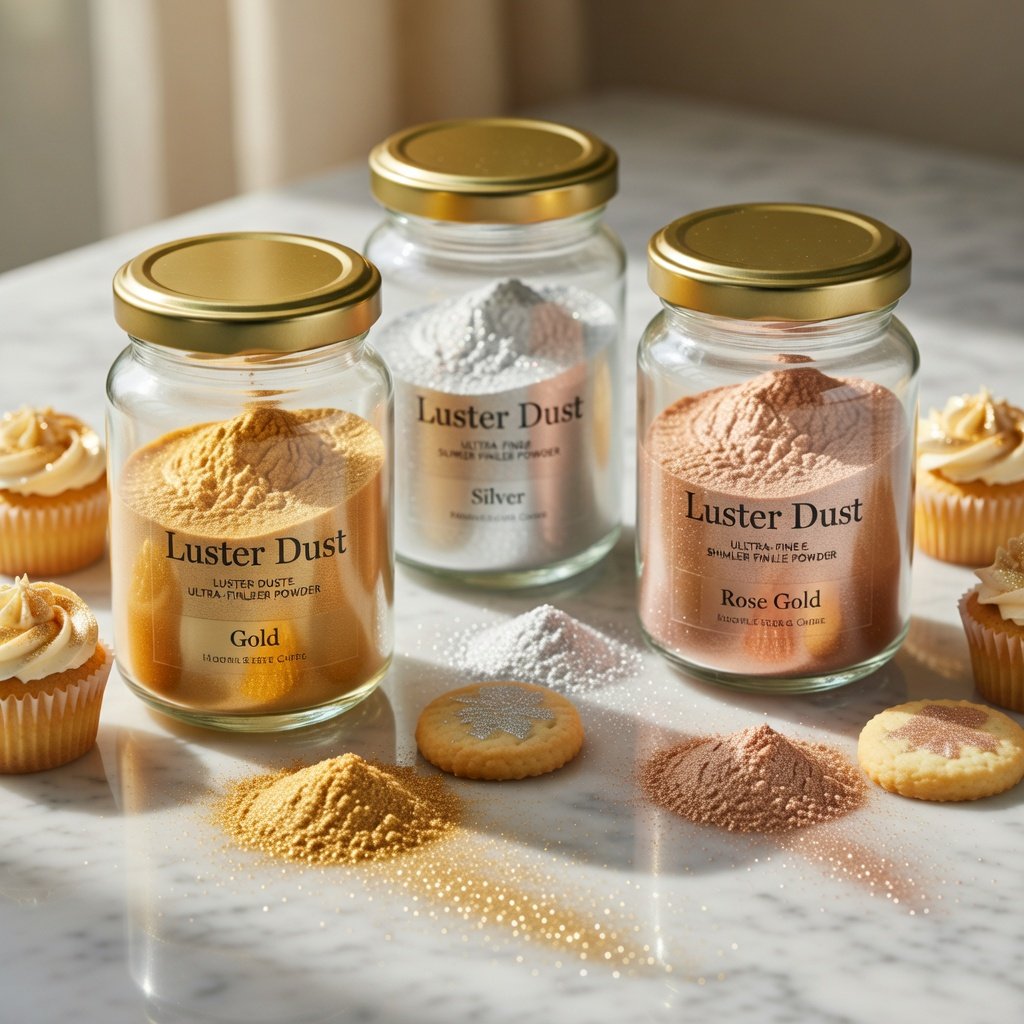
Edible glitter bulk jars of gold, silver, and rose gold Luster Dust arranged on marble with shimmer dust and baked goods
Key Takeaways

– Our 10g jars run $9.98 each — but if you’re going through dust regularly, the 1kg bulk size drops your per-gram cost dramatically
– All sizes use the same German mica pigments. Bulk isn’t a lesser product. It’s just more of it.
– Gold, Silver, and Rose Gold are our top three bulk sellers — the ones professional kitchens and bars keep coming back to
– Free shipping kicks in at $50, which means most bulk orders ship free

The Math Works Out Fast

A 10g jar of Gold gets you roughly 80 cocktails. That’s fine for a home bar. But if you’re running a brunch spot doing 200 covers on a Saturday, you’re burning through that in a weekend. Buying small jars at retail prices eats into your margins in a way that’s easy to ignore — until you actually run the numbers.

Our bulk sizing goes from 10g all the way up to 1kg. The per-gram cost at 1kg is a fraction of the 10g price. For high-volume operations, that gap is real money over a quarter.

Who’s Actually Buying in Bulk

Mostly three types of customers: bakeries doing custom cakes and event orders, cocktail bars with signature shimmer drinks on the menu, and event companies handling weddings or corporate parties where consistency matters.

The bakeries tend to run through Gold Luster Dust and Rose Gold Luster Dust fastest — those two show up on probably 70% of the custom cake orders we hear about. Bars go heavy on Silver Luster Dust and Gold. Event companies buy whatever their client palette calls for, but Rose Gold and Gold together cover most weddings.

Gold, Silver, Rose Gold — Why These Three

Gold outsells everything else by a wide margin. Warm, rich, works in champagne and on chocolate and on fondant equally well. It’s the one color every professional kitchen should have in a large format.

Silver is the smart second buy. On dark desserts — think dark chocolate ganache, charcoal-tinted frosting, navy fondant — silver hits differently. It looks expensive in a way that makes customers photograph their orders. Bars use it for high-end cocktails specifically because of that visual payoff.

Rose Gold might be the most versatile of the three. It reads warm without being as traditional as gold, which makes it work for modern aesthetics — brunch menus, spring events, trendy bakery counters. Our [Rose Gold Prosecco Spritz](https://lusterdust.com/recipe/rose-gold-prosecco-spritz/) recipe uses it, and that drink gets more Instagram reposts than anything else on that page.

Baker dusting rose gold luster dust in bulk over frosted wedding cupcakes on a cooling rack
When you buy luster dust in bulk for bakeries, every cupcake gets a flawless, consistent rose gold finish.

How Volume Pricing Works


What You’re Getting, Regardless of Size

Same product. Every size — 10g retail jar or 1kg bulk bag — uses the same German mica pigments. There’s no “bulk grade” version of this. FDA compliant, vegan, gluten-free, tasteless. The only thing that changes with bulk sizing is the price per gram and the container format.

That matters because some suppliers do tier their quality by volume. We don’t. You’re not saving money by getting an inferior shimmer — you’re saving money because you’re buying more of the same thing at once.

Ordering for the First Time

If you’re a professional operation buying edible glitter bulk for the first time, start with a 10g or 50g size of your main colors before committing to 250g or 1kg. Not because we think you’ll be disappointed — but because working with luster dust in a production context takes a little calibration. How much you use per unit, how your staff handles it, what your waste looks like. Get a feel for it first.

Once you know your usage rate, the math on bulk pricing basically makes the decision for you.


Posted on Leave a comment

Edible Glitter Near Me: How to Find the Good Stuff Locally

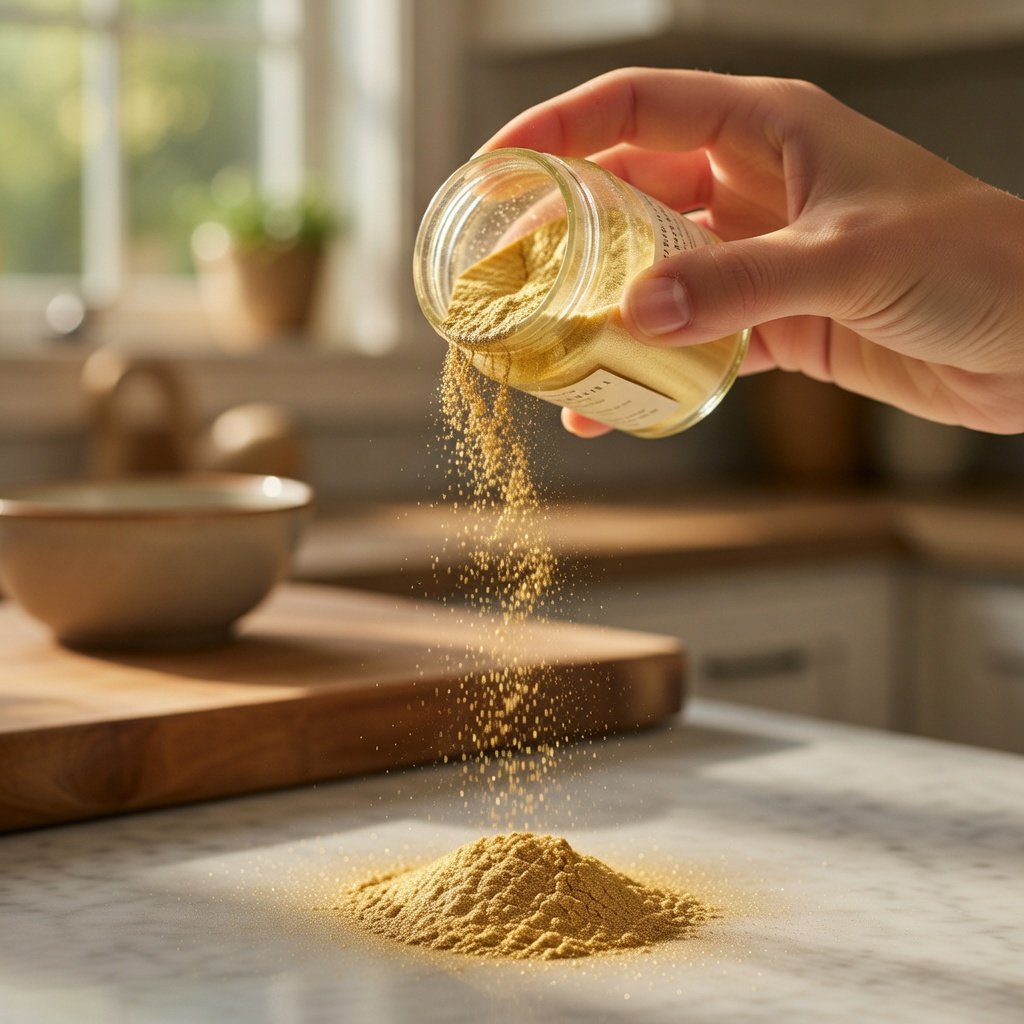
Edible glitter near me search ends here — hand holding a jar of gold luster dust over a home kitchen counter
Key Takeaways

• Most local options (craft stores, grocery stores) carry glitter labeled “non-toxic” — not actually edible. Read the label carefully.
• Specialty baking supply shops are your best local bet, but stock is hit or miss.
• If you need it today, here’s where to look. If you can wait two days, order from us and get the real thing.
• All Luster Dust products are FDA compliant, made with German mica pigments — not the craft glitter stuff dressed up in a baking aisle.

The Quick Answer

You can probably find something labeled edible glitter within a few miles of where you’re sitting. Whether it’s actually good — or actually edible — is a different question.

Here’s what’s actually out there locally, and how to tell the difference between the real stuff and the garbage.


The Label Check That Actually Matters

This is the most important thing in this entire post. Memorize it.

“Non-toxic” ≠ edible. Non-toxic means it won’t kill you if you accidentally get some in your mouth. It does not mean it was made for food. Craft glitter, nail glitter, floral glitter — all of it can be labeled non-toxic. None of it belongs in food or drinks.

“Edible” and “FDA compliant” are what you’re looking for. Those terms mean the ingredients — every single one — cleared federal food safety standards. Our luster dust is made with mica-based pearlescent pigments that have been used in food for decades. Vegan, gluten-free, completely tasteless.

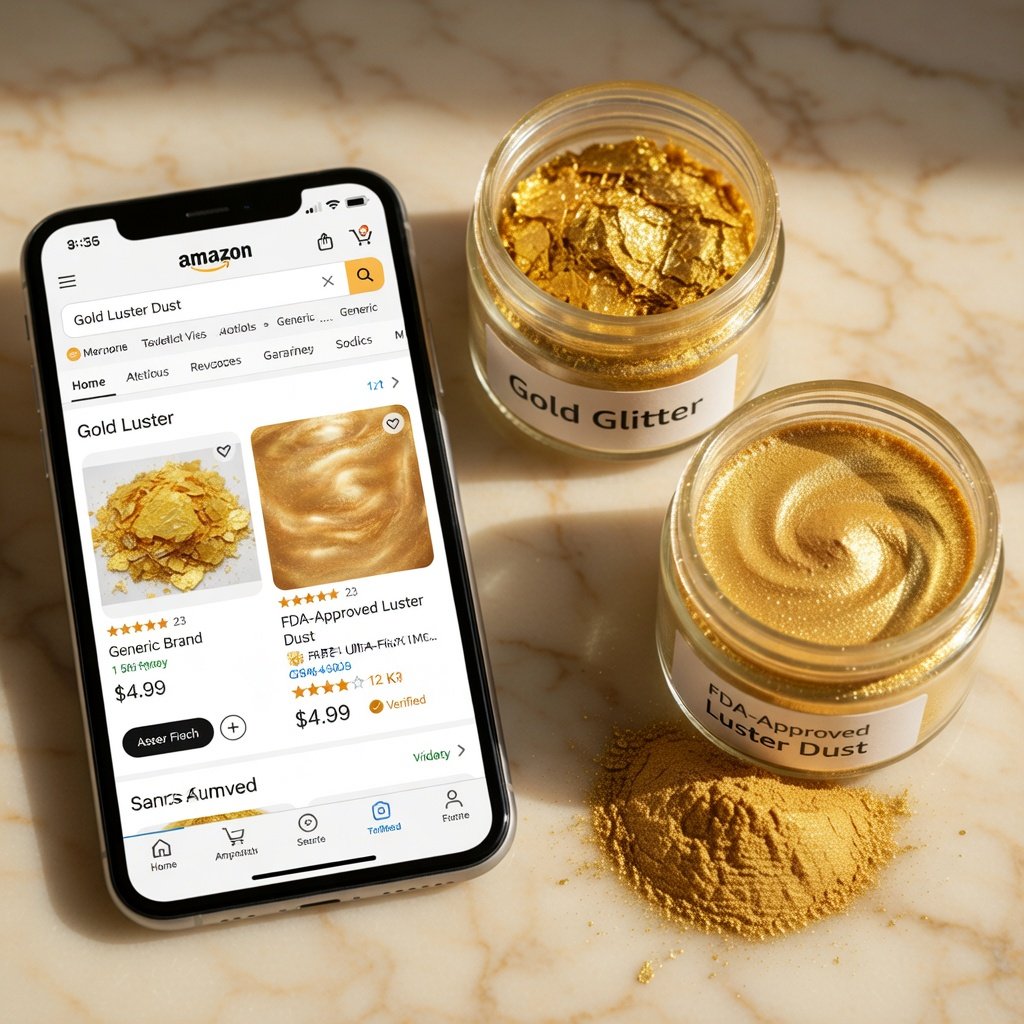
A lot of what gets sold on Amazon under search terms like “edible glitter” is craft glitter with a food-adjacent photo on the listing. No FDA compliance, no actual certifications. Just a glittery jar that looks similar. The price is lower because the ingredients are different. Don’t eat it.

So What Are Your Real Options?

Honestly? Two scenarios.

**You need it today.** Hit a local baking supply shop if you have one. Call ahead and ask if they carry mica-based luster dust or edible luster dust — not just “edible glitter,” because that phrase gets applied to a lot of things. If there’s no baking shop near you, Michaels or a craft store with Wilton products will do for cakes and baked goods. Just manage expectations on shimmer quality.

**You can wait two days.** Order from us. Free shipping on orders over $50, and you’ll actually get what you’re looking for.

Gold Luster Dust

Gold is the one that started this whole obsession for most people. Drop 1/8 teaspoon in a champagne flute before pouring and watch what happens. The German mica pigments catch light in a way that cheap glitter simply doesn’t — the shimmer is deep and warm, not sparkly-plastic. This outsells every other color by a wide margin, and it’s not close.

Silver Luster Dust

Silver gets overlooked. It shouldn’t. On dark chocolate, on espresso martinis, on anything deep-toned — silver looks absurdly expensive. We’ve seen bakeries charge $10+ per truffle just because of what silver luster dust does to the surface.

Rose Gold Luster Dust

Rose gold is having a long, well-deserved moment. It works on everything — prosecco, buttercream, macarons, strawberries. If you’re doing an event and you want cohesive color, this is the versatile pick.

A Note on Quantity

Local store jars are usually 3–4 grams. Our standard jars are 10g — more than double — and we also sell bulk sizes if you’re doing events or running a bakery. One 10g jar of gold gets you 80+ cocktails. It goes a long way when you’re measuring in pinches.

The Real Takeaway

If you’re searching “edible glitter near me,” you’ll find something. But the stuff that actually produces that deep, glowing shimmer you’re after isn’t sitting on a shelf at the grocery store. Local is convenient. Quality is better online, shipped to your door in two days. Your call — but now you know what to look for either way.


Posted on Leave a comment

Edible Glitter on Amazon: How to Spot FDA Compliant Products

Edible glitter Amazon search results on laptop beside Luster Dust jars showing FDA-compliant amazon luster dust options
Key Takeaways

  • A lot of “edible glitter” on Amazon isn’t actually edible — “non-toxic” and “FDA compliant” are not the same thing
  • Real edible glitter lists mica-based pearlescent pigments and specific food-grade colorants as ingredients — not just “non-toxic craft glitter”
  • Check the listing for explicit FDA compliance language, not just stars and pretty photos
  • When in doubt, buy from a dedicated edible glitter brand, not a general craft or party supply seller

Amazon has everything. Including a lot of glitter that has no business being in food. Search “edible glitter amazon” right now and you’ll get hundreds of results — loose glitters, spray bottles, shakers, jars — most of them with five-star ratings and zero clarity about what’s actually in them. Some are genuinely edible. A lot are craft glitter with the word “edible” slapped on the listing because nobody’s stopping them.

Here’s the problem: swallowing non-edible glitter probably won’t send you to the hospital. But that’s a very low bar. “Won’t cause immediate harm” is not the same as “safe to eat.” If you’re putting something in food — especially food for other people — it needs to meet an actual standard.

The Difference Between “Non-Toxic” and “Edible”

This is the big one. “Non-toxic” means a product passed safety tests for accidental ingestion — the kind where a toddler eats a crayon and poison control says “you’re fine.” It does not mean the product was formulated to be eaten, tested for consumption, or reviewed by the FDA.

“Edible” — real edible — means the ingredients are FDA compliant food-grade materials. Mica-based pearlescent pigments. Specific approved colorants like titanium dioxide or iron oxides, in concentrations allowed for food use. That’s it. The bar is specific and the ingredients list should reflect it.

We get into all of this in more depth over at our post on whether edible glitter is actually safe — worth a read if you want the full breakdown. But for Amazon shopping purposes, here’s the short version.

How to Read an Amazon Listing

Most people look at the photos and the star rating. That tells you almost nothing about whether a glitter is food-safe. Here’s what actually matters:


What Good Edible Glitter Actually Looks Like

Real luster dust — the kind you can actually eat — is fine, powdery, and intensely pigmented. A 10g jar should last you 80+ cocktails or dozens of cake projects. The shimmer quality comes from the mica pigment itself, and good German mica produces a depth that cheap craft glitter can’t replicate. You can see it the second you open the jar.

Our Gold Luster Dust is the one we recommend starting with — it’s the most versatile color and the one we use most in our own kitchen. Drop a pinch into a champagne glass and you’ll see exactly what the difference looks like. (If you want to try it, we have a dead-simple recipe for a gold shimmer champagne cocktail that takes about two minutes to make.)

Silver is another one that gets mislabeled constantly on Amazon. A lot of “silver edible glitter” is basically just white sparkle dust that looks silver in the product photo. Real silver mica has a cool, metallic depth — incredible on dark chocolate, striking on a margarita glass. Our Silver Luster Dust is one of our best sellers for a reason.

So Should You Buy Edible Glitter on Amazon at All?

Honestly? It depends on what you find. There are legitimate food-grade products on Amazon — ours included. The platform itself isn’t the problem. The problem is the volume of misleading listings and the fact that Amazon doesn’t verify food safety claims the way a grocery store’s buying process would.

If you find a product that explicitly states FDA compliant ingredients, lists mica-based pigments in the ingredients, and comes from a seller whose entire business is food products — that’s probably fine. If any one of those boxes isn’t checked, skip it.

Or skip the research entirely and buy direct. You know exactly what you’re getting, the price is the same or better, and free shipping kicks in at $50. That’s two 10g jars plus some extra.


Posted on Leave a comment

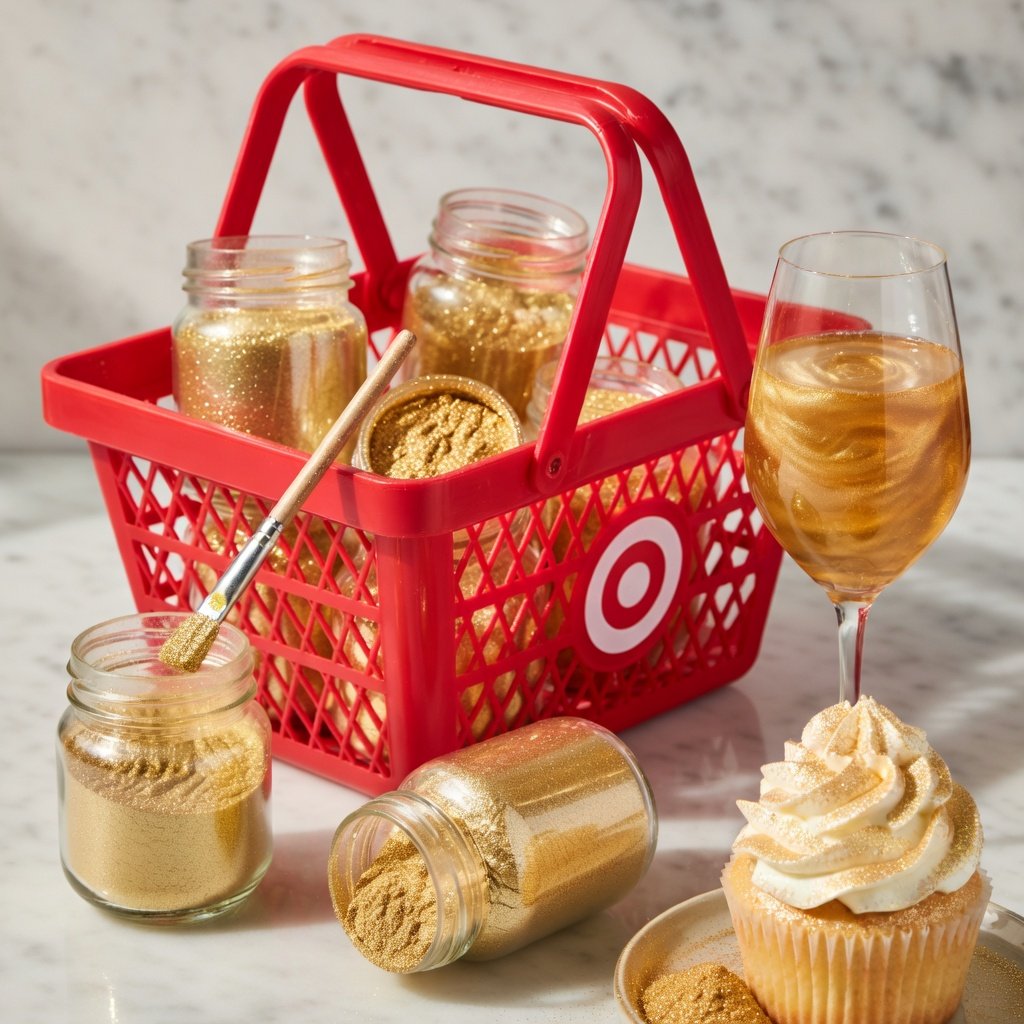
Edible Glitter at Target: Your Shopping Guide

Edible glitter jars in a red Target shopping basket with a decorated cake and champagne glass nearby
Key Takeaways

– Target doesn’t carry edible glitter in most stores — you’ll usually find craft glitter that isn’t FDA compliant
– “Non-toxic” and “edible” are not the same thing. If the label doesn’t say FDA compliant, don’t put it in food
– Online gives you a much better selection — more colors, bigger jars, and actual food-grade ingredients
– Free shipping over $50 makes ordering direct the easy call if you’re stocking up

What Target Actually Carries (And What to Watch Out For)

Target’s baking aisle has gotten better over the years. Sprinkles, food coloring, decorating supplies — they’ve filled it out. But edible glitter specifically? Hit or miss, and mostly miss.

What you’ll typically find is craft glitter marketed adjacent to baking supplies. It might say “non-toxic” on the label. It might even be shelved next to the cake decorating stuff. That doesn’t make it edible. Non-toxic means it won’t send you to the hospital. Edible means it’s made from food-approved ingredients and manufactured to food safety standards. Those are completely different things — and we’ve written about exactly [why that distinction matters](https://lusterdust.com/is-edible-glitter-actually-safe-everything-you-need-to-know/).

The brands that do show up at Target — Wilton, a few others — occasionally stock an edible version. Small jars, limited colors, and the shimmer is fine but not exceptional. If you need something today for a birthday cake that’s already on the counter, it’ll do the job.

If you have any lead time at all, order online. The difference in quality is real.

What Makes Edible Glitter Worth Buying

Not all luster dust is the same, and the ingredient source matters more than most people realize. Our luster dust is made from German mica pigments — the same material that’s been used in food coloring for decades, just refined to produce that deep, clean shimmer you see in high-end bakeries and craft cocktail bars.

Cheap options use lower-grade mica (or something else entirely). The shimmer looks flat. The color looks dull. You put it on a white cake and it reads as dusty instead of luminous.

The other thing most people don’t account for: jar size. A lot of what you find in stores is 3-4 grams. Our standard jar is 10g — more than double — and the price difference doesn’t match that ratio. You end up paying more per gram for the small stuff, and running out at the worst possible moment.

The Colors Worth Having

Three colors do most of the heavy lifting for most people.

Gold Luster Dust is the obvious one. Works on everything — champagne cocktails, chocolate cake, macarons, buttercream. The warm tone makes food look expensive without trying. It’s our best seller by a significant margin, and it earns it.

Silver Luster Dust is the underrated pick. Silver on dark chocolate looks genuinely upscale in a way that’s hard to explain until you see it. It also works great for holiday decorating when you want something cooler and more modern than gold.

Pink Luster Dust is the one for birthdays, baby showers, and anything that needs a soft shimmer instead of full metallic flash. It’s subtle enough to work on pastel cakes without overwhelming them, and it’s gorgeous in lemonade — our [Unicorn Shimmer Lemonade](https://lusterdust.com/recipe/unicorn-shimmer-lemonade/) uses pink and it photographs beautifully.

If You Need It Today vs. If You Can Wait


Quick Tips Before You Buy

Read the label. This is the whole thing. “Non-toxic” ≠ edible. “Safe for decorating” ≠ edible. Look for FDA compliant, food grade, or food approved. If you can’t find that language on the packaging, don’t put it in something people are going to eat.

Start with one color and learn it. Most people do more with one well-chosen color than a whole collection of mediocre ones. Gold is the safest starting point. It makes almost everything look better.

Use less than you think. A common first-timer mistake is overdoing it. 1/8 teaspoon in a cocktail glass. A light brush on a cake tier. More isn’t more — it turns cloudy or chalky. The shimmer comes from movement and light, not volume.

Frequently Asked Questions


Posted on Leave a comment

Edible Glitter at Walmart: Is It Worth It?

Edible glitter walmart shelf display with generic brands beside a sharp-focused Luster Dust jar in foreground
Key Takeaways

• Walmart does carry edible glitter, but the selection is limited and the labels aren’t always what they seem
• “Non-toxic” and “edible” are not the same thing — and some products at big-box stores only claim the former
• Walmart’s options work in a pinch, but you’re paying more per gram for less shimmer
• If you need it today, here’s what to look for. If you can wait two days, you’ll get better results ordering online

What Walmart Actually Has

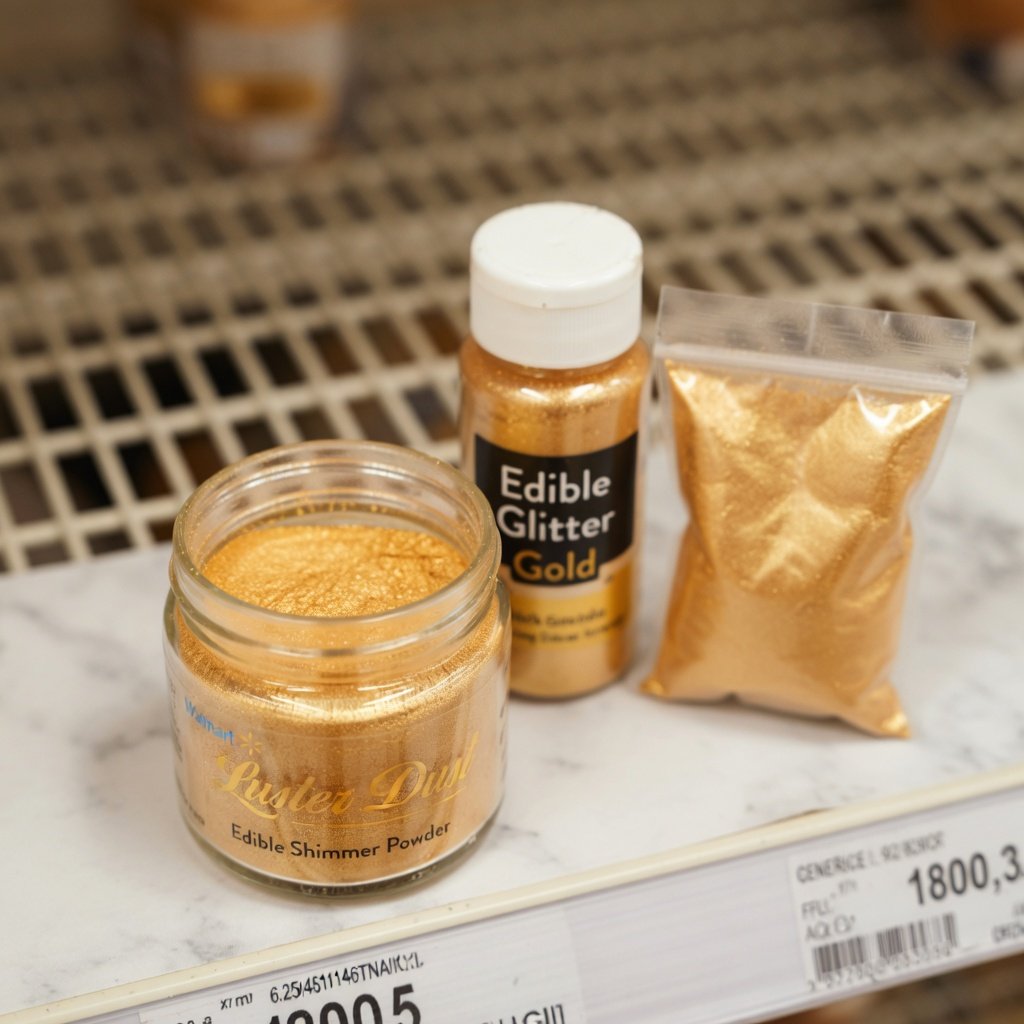
Walmart carries edible glitter — sort of. What you’ll usually find is a mix of Wilton and a few generic craft-aisle products, mostly in the baking section near sprinkles and food coloring. The jars are small, usually 3-5 grams, and the color selection is hit or miss depending on your store.

Most of it is technically usable. Some of it is not. The problem is that Walmart doesn’t sort “edible” from “decorative,” which means you can end up grabbing something labeled “non-toxic craft glitter” right next to something that’s actually FDA compliant food-grade mica. They look nearly identical on the shelf.

Before you put anything in food, flip it over and check the label. It should say FDA compliant or list food-grade mica as the ingredient. If it says “non-toxic” and nothing else — that’s a craft product. Non-toxic means it won’t send you to the hospital. It doesn’t mean it’s food. There’s a whole breakdown of the difference in our post on whether edible glitter is actually safe, but the short version: don’t eat the craft stuff.

The Price Doesn’t Add Up

Here’s the math that most people don’t do in the aisle. A 4g jar of Wilton edible glitter at Walmart runs around $4-5. That’s over $1 per gram. Our 10g jars are $9.98 — so just under $1 per gram, and you’re getting more than twice the product.

But price per gram isn’t even the real issue. The pigment quality is different. Walmart’s options use lower-grade mica that produces a flatter, less saturated shimmer. Our luster dust uses German mica pigments — same material, but processed to a finer particle size that catches light at more angles. You see the difference immediately on a dark chocolate truffle or in a champagne flute.

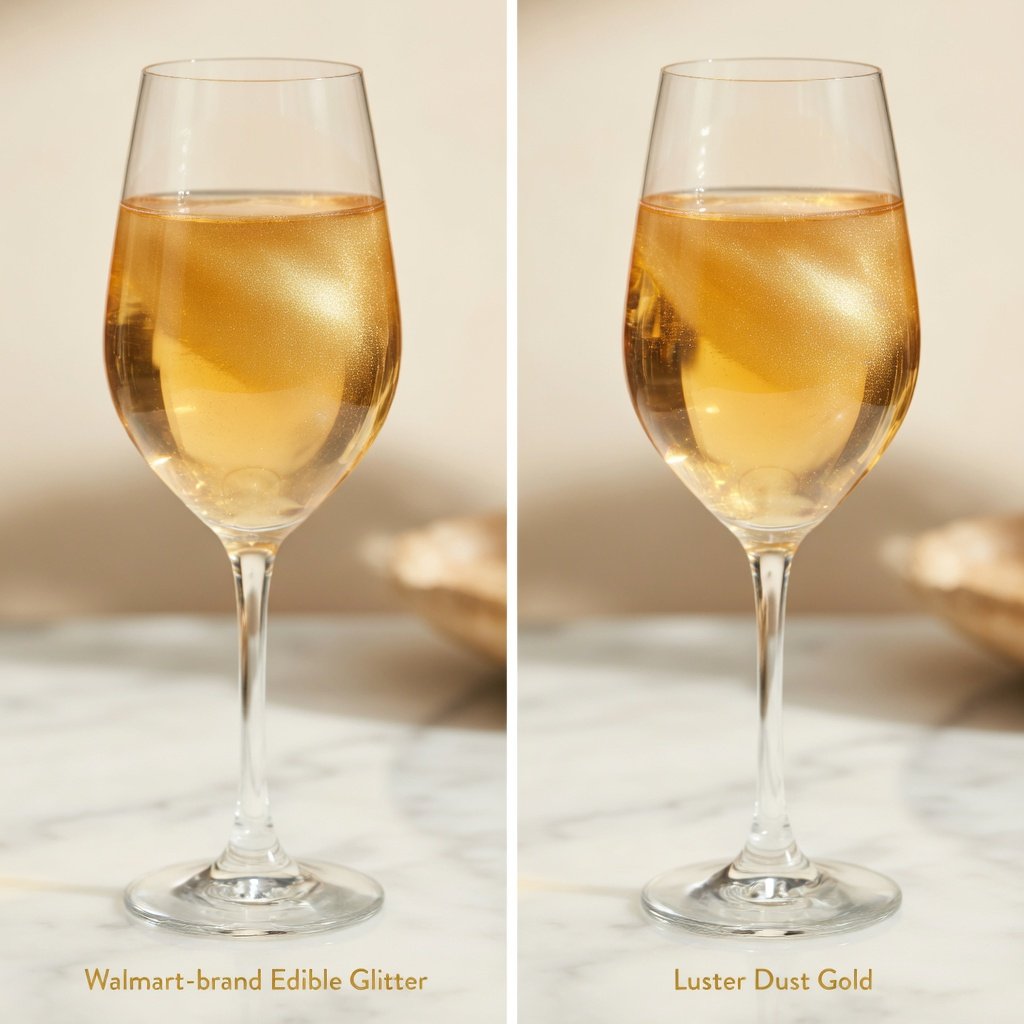
Edible glitter walmart comparison showing dull flat shimmer vs Luster Dust Gold's rich warm multidirectional glow in champagne glasses
This edible glitter walmart comparison says it all — one glass sparkles, the other barely tries.

When Walmart Is the Right Call

There’s a real use case for it. You’re making cupcakes tonight, you forgot glitter, you don’t have time to wait for shipping. Fine. Go to Walmart. Grab the Wilton stuff, confirm it says “edible” on the label, and you’re set. It’ll work.

Same thing if you’re doing a kids’ project and just need something sparkly on frosting — the subtle shimmer difference between budget and premium mica is not going to matter on a five-year-old’s birthday cake. Nobody’s judging that at the party.

But if you’re making a gold shimmer champagne cocktail for New Year’s Eve or putting together a cake for an event people are going to photograph, the quality gap becomes obvious. Gold that looks muddy in a glass is worse than no gold at all.

What You’re Actually Giving Up


If You’re Already at Walmart and Need It Now

Head to the baking aisle, not the craft section. Craft glitter is not food. Look for Wilton brand specifically — they label their products clearly and their edible line is FDA compliant. Check that the label says “edible” or lists mica as the ingredient. Skip anything that only says “decorative” or “non-toxic.”

Get the gold or silver — those are the most reliable across brands. For anything more specific — Pink Luster Dust for a Valentine’s cake, a specific blue for a gender reveal — don’t count on Walmart having it.

And once you’ve tried the Walmart version, order from us for the next project. The difference is real enough that most people don’t go back.


Posted on Leave a comment

Edible Glitter at Hobby Lobby: What to Know Before You Buy

Edible glitter hobby lobby shelf flat lay with a gold luster dust jar catching warm shimmer in the foreground
Key Takeaways

• Hobby Lobby sells edible glitter, but most of it is labeled “non-toxic” — not “FDA compliant.” That distinction matters.
• “Non-toxic” means it won’t hospitalize you. It does not mean it’s approved for consumption.
• If you’re putting glitter in food or drinks, you need FDA compliant. Full stop.
• Our luster dust is made with German mica pigments, certified FDA compliant, and ships free over $50.

Edible Glitter at Hobby Lobby: What to Know Before You Buy

A lot of people end up at Hobby Lobby looking for edible glitter. It makes sense — you’re already there for craft supplies, you need shimmer for a cake, and there it is. Grab and go, right?

Maybe. But there’s a label issue you should know about before anything goes into food.

What Hobby Lobby Actually Sells

Hobby Lobby carries a mix of glitter products — some marketed specifically toward baking and cake decorating. The brands vary by location, but you’ll typically see Wilton and a few generic craft brands on the shelf.

Here’s the thing: a lot of what’s stocked in craft stores says “non-toxic” on the label. That’s not the same as edible. Non-toxic means the product doesn’t contain materials that would cause acute harm if ingested accidentally. It says nothing about whether those materials are food-grade, FDA compliant, or meant to be consumed.

Edible means it’s made from ingredients approved for human consumption. Mica-based pigments, food-grade colors, nothing that your body isn’t equipped to process. We go deeper on this in our post on whether edible glitter is actually safe — worth a read if you want the full breakdown.

The short version: if the label says “non-toxic” but not “edible” or “FDA compliant,” don’t use it in food. Don’t use it in drinks. Don’t dust it on a cake that people are going to eat.

So Is Any of It Safe to Use?

Some Wilton products — specifically ones labeled as “edible” — are fine. Wilton has an actual food brand, and certain items in their decorating line are made with food-grade ingredients. Check the label carefully. Look for “edible” and “FDA compliant,” not just “non-toxic” or “for decorative purposes only.”

That last phrase is a red flag. “For decorative purposes only” means exactly that — it’s meant to sit on top of a display cake, not one that gets sliced and eaten.

The problem is that at Hobby Lobby (and most craft stores), edible and non-edible products sit right next to each other. Same aisle, similar packaging, sometimes nearly identical labeling. It’s easy to grab the wrong one.

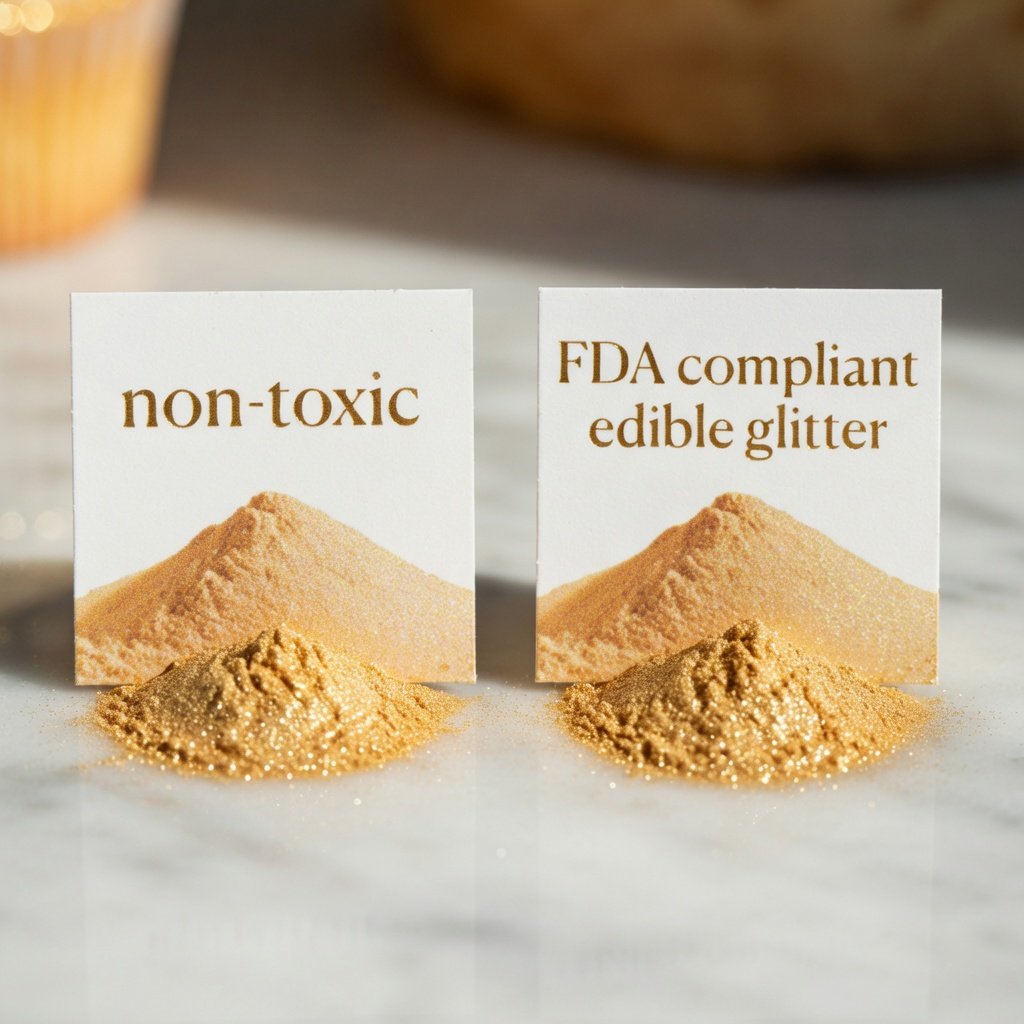
Hobby lobby edible glitter label comparison showing non-toxic vs FDA compliant edible glitter side by side
This hobby lobby edible glitter label comparison reveals why 'non-toxic' and 'edible' are not the same thing.

The Real Problem with Craft Store Glitter

Even the edible options at Hobby Lobby tend to have limitations that matter if you care about results.

Color range is small. You’ll usually find gold, silver, and a handful of basics. If you want rose gold, deep purple, or a true bright red — good luck.

Jar sizes are tiny. We’re talking 3-4 grams in most cases. That’s fine for one project. Buy more than one color and you’ve already spent $15-20 for a fraction of the product you’d get elsewhere.

And shimmer quality varies a lot. The cheap stuff uses lower-grade pigments that look flat in photos and muddy in drinks. There’s a noticeable difference when you compare it to luster dust made with German mica — the particle size is finer, the color is truer, and the way it catches light is in a completely different league.

What to Use Instead

If you need something today and Hobby Lobby is your only option, look for Wilton’s specifically labeled edible products, read the label twice, and you’ll be okay for basic projects.

But if you’re planning ahead — or if you want results that actually look good — ordering online gets you more product, more colors, and genuinely better shimmer for roughly the same money.

Our Gold Luster Dust is the one we’d put in front of anything Hobby Lobby stocks. The color is deeper and warmer, the shimmer holds in drinks without going cloudy, and a 10g jar goes a long way — we’re talking 80+ cocktails. If you’ve ever tried our [gold shimmer champagne cocktail](https://lusterdust.com/recipe/gold-shimmer-champagne-cocktail/), that effect does not come from craft store glitter.

For anyone leaning toward silver, same story. Silver Luster Dust on dark chocolate looks absurdly expensive — way better than anything you’re picking up off a hobby store shelf.

Quick Label Guide Before You Buy Anywhere

Buy it: “Edible,” “FDA compliant,” “food-grade” — all present on the label.
Skip it: “Non-toxic,” “for decorative purposes only,” or no food-related claim at all.
Double-check: “Non-toxic AND edible” — read further. Both words should be there, not just one.

This applies to Hobby Lobby, Amazon, TikTok shops, everywhere. The label is the only thing that matters.


Posted on Leave a comment

Edible Glitter at Michaels: What They Carry vs. What You Need

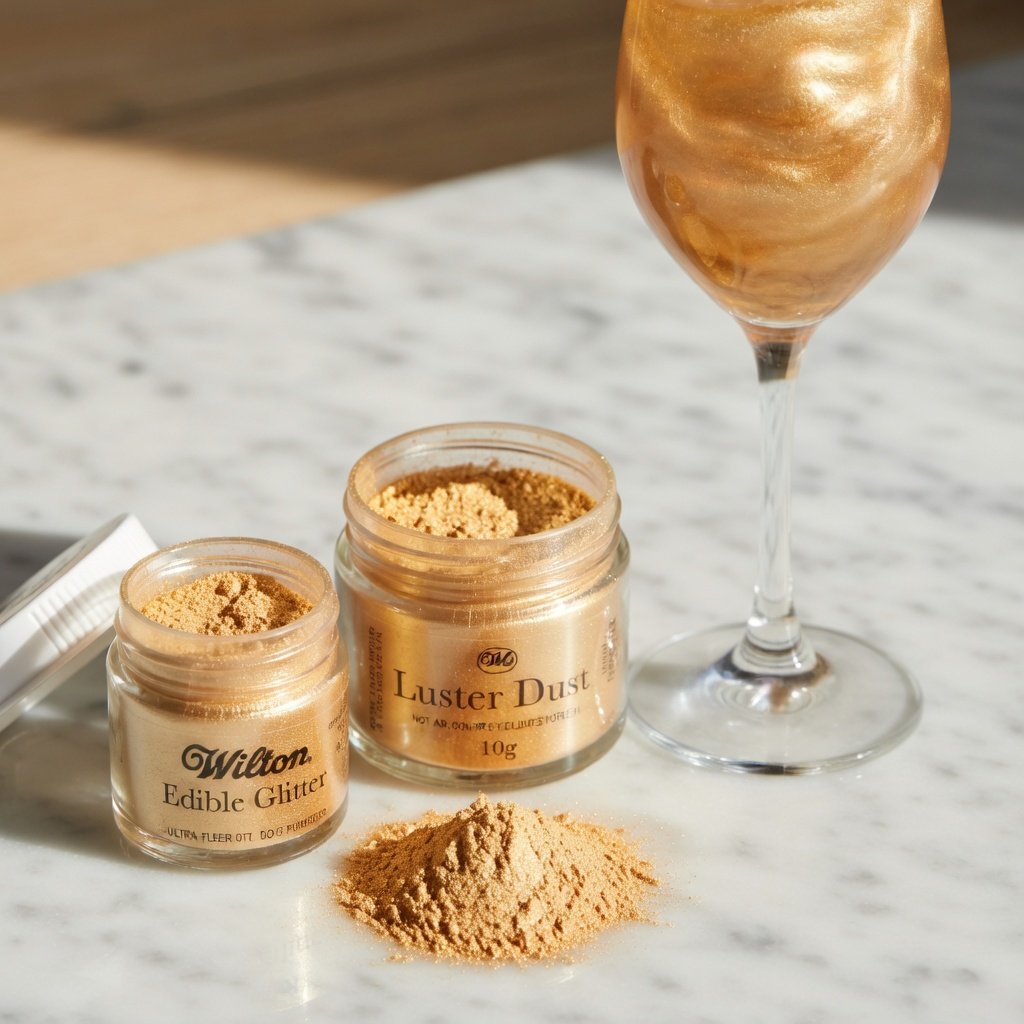
Edible glitter from Michaels in a small Wilton jar beside a 10g Luster Dust jar on marble with a gold-dusted champagne glass
Key Takeaways

• Michaels carries edible glitter — mostly Wilton, small jars, limited colors
• “Non-toxic” and “edible” are not the same thing — check labels carefully before using anything in food
• Michaels works for last-minute emergencies; for better shimmer and more color options, order online
• Our 10g jars are more than double the size of what you’ll typically find at Michaels, at a comparable price

Yes, Michaels Has Edible Glitter. Here’s the Honest Breakdown.

Michaels carries edible glitter. Not a huge selection, but it’s there — usually in the cake decorating aisle, sometimes near the candy-making supplies. The most common brand you’ll find is Wilton, occasionally some off-brand options depending on the store. If you need shimmer today and there’s a Michaels ten minutes away, you can make it work.

But there are real limitations worth knowing before you make the trip.

What Michaels Actually Stocks

Wilton’s edible glitter line is the main thing. They carry a few color options — gold, silver, some pastels — in jars that typically run 3-5 grams. The formulas vary by product, so read labels carefully. Some Wilton products are genuinely FDA compliant food-grade glitters. Others are labeled “for decorative purposes only” or “non-toxic” — which sounds fine until you realize that’s not the same as actually edible.

Non-toxic means it probably won’t hurt you if you accidentally ingest a little. Edible means it’s been formulated as actual food, using food-grade ingredients. Big distinction. We wrote about this in detail in our post on whether edible glitter is actually safe — worth a read if you’re buying from any source and aren’t sure what you’re looking at.

The short version: always look for “FDA compliant” on the label. “Non-toxic” alone isn’t enough.

The Jar Size Problem

This is the thing that gets people. A 3g jar of edible glitter looks like enough. It is not. You’ll get maybe 20-25 cocktails out of it if you’re using a pinch per drink. For baking, even less — dusting a dozen cupcakes eats through a small jar fast.

Our jars start at 10g. That’s 80+ cocktails from a single jar, more if you’re using it on food. The price at Michaels for a 3-4g jar is often $5-7. Our 10g jars are $9.98. The math isn’t complicated.

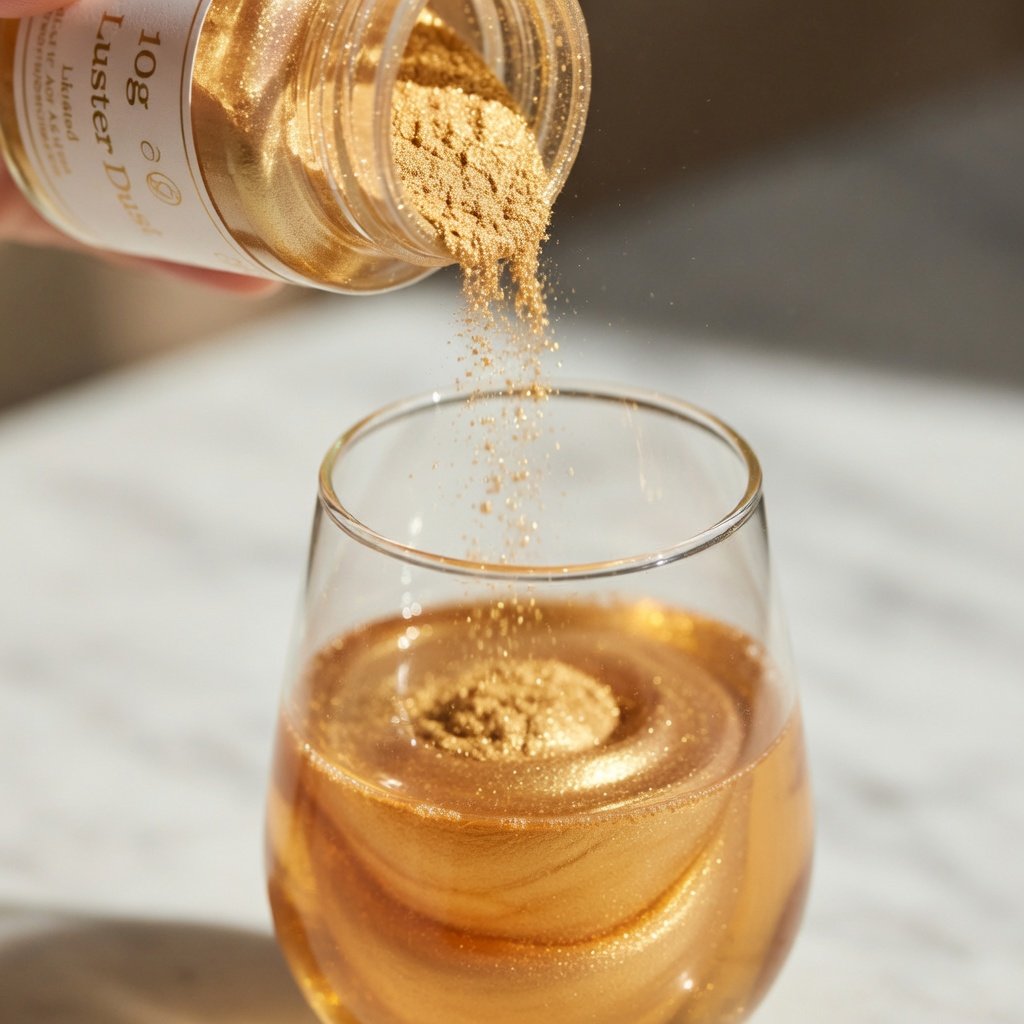
Edible glitter Michaels alternative: gold Luster Dust particles cascading from a 10g jar into a champagne flute, catching light mid-fall
This is what a real edible glitter Michaels alternative looks like in action — pure shimmer, zero compromise.

Shimmer Quality: What the Difference Actually Looks Like

This part is harder to explain without just showing you. Our luster dust uses German mica pigments. That matters because the particle structure is different — finer, more consistent, and it catches light in a way that reads as genuinely luminous rather than just sparkly.

Craft store glitters often use lower-grade pigments, and you can see it. The shimmer is flatter. In a drink, it doesn’t move through the liquid the same way. On a cake, it sits on the surface instead of appearing to glow.

Gold is where the gap is most obvious. Drop our gold into a champagne glass and the warm, deep shimmer does something that catches people mid-conversation. Wilton’s gold reads as yellow by comparison. Same word, very different result.

Gold Luster Dust
Silver Luster Dust
Rose Gold Luster Dust

Color Selection

Michaels typically has gold, silver, maybe red or pink depending on the season, and a few pastels. That’s it. If you’re looking for rose gold, light blue, purple, or anything specific — you’re probably out of luck in store.

We carry 13 colors. All FDA compliant, all the same German mica base. Rose gold especially is one that stores almost never stock, and it’s one of our most-used colors. Cocktails, cakes, Valentine’s Day everything. It’s the color that makes buttercream look expensive without trying too hard.

So When Should You Go to Michaels?

Honestly? If it’s Saturday afternoon and you need shimmer for a cake that goes out Sunday morning, go. Get the Wilton stuff, check the label says edible and FDA compliant (not just non-toxic), and make it work. No shame in that.

But if you’re planning ahead — for an event, a batch of holiday cocktails, anything where the result actually matters — order online. You’ll get more product, better quality, and colors you can’t find at any craft store. Free shipping on orders over $50, so stocking up makes sense.

The Bottom Line

Michaels is a backup plan. A solid one when you’re in a pinch, but a backup. The selection is limited, the jars are small, and the shimmer quality doesn’t compare to food-specific luster dust made with proper mica pigments. For anything you actually care about, order from us and have it on hand before you need it.


Posted on Leave a comment

Where to Buy Edible Glitter: Online & In-Store Guide

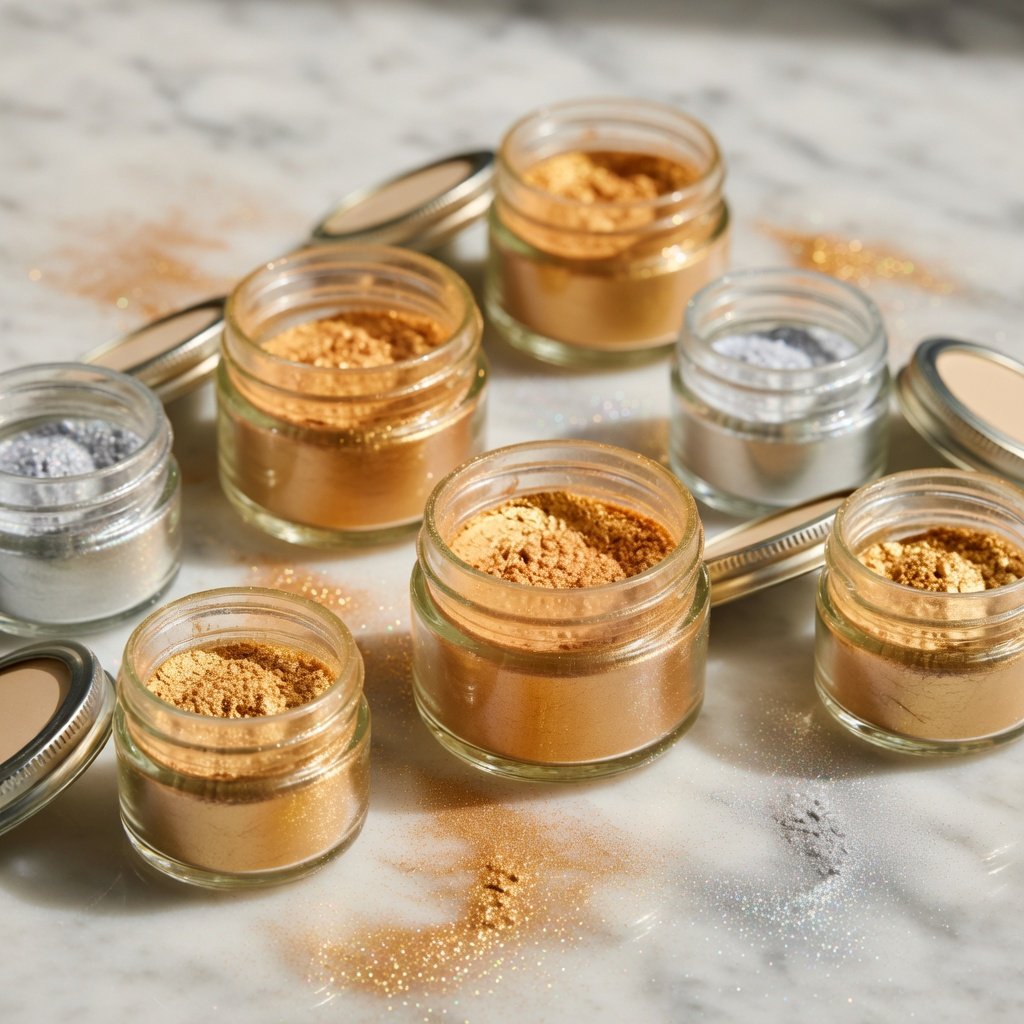
Where to buy edible glitter — multiple Luster Dust jars arranged on marble with gold and silver glitter dusting
Key Takeaways

– Most craft stores carry some edible glitter, but the color range is limited and jar sizes are small
– “Non-toxic” and “edible” are not the same thing — if the label doesn’t say FDA compliant, don’t put it in food
– Online is almost always the better option: better selection, better quality, better value per gram
– Luster Dust ships free on orders over $50, and a 10g jar covers 80+ cocktails or dozens of cakes

Where to Actually Buy Edible Glitter (And What to Watch Out For)

Short answer: you can get edible glitter at craft stores, cake supply shops, and online. But where you buy it matters more than most people expect — because a lot of what’s labeled “glitter” on store shelves isn’t actually food-safe. Before you grab the first sparkly jar you see, here’s what you need to know.

The Safety Thing First

“Non-toxic” does not mean edible. It means it probably won’t send you to the hospital. Edible means it’s made from food-grade ingredients, complies with FDA standards, and was designed to actually be consumed. Huge difference.

A lot of craft glitter and even some products marketed as “cake glitter” only claim to be non-toxic. That’s not good enough for something going on food. Look for FDA compliant on the label, full stop. If you’re buying online, read the product description carefully — if it only says non-toxic and not edible or FDA compliant, skip it.

Our luster dust is FDA compliant, made from German mica pigments, vegan, gluten-free, tasteless, and odorless. That’s the baseline every edible glitter product should meet. Just making sure you know what to compare against.

Your Options, Actually Compared


Where to buy edible glitter: hand tipping a jar of gold luster dust into a sparkling champagne flute
Wondering where to get edible glitter? A small jar of Luster Dust goes a long way in any sparkling drink.

The Real Reason to Buy Online

It’s not just selection. It’s the ability to verify what you’re buying before it’s in your kitchen. On a physical store shelf, you’re relying on whatever the packaging says — and packaging can be vague or misleading. Online, you can read ingredient lists, check for certifications, look at real customer reviews, and contact the brand if you have questions.

We get emails constantly from people who used craft store glitter for years and then tried ours and noticed an immediate difference in shimmer depth. The German mica pigments genuinely produce a richer, more reflective finish than lower-grade alternatives. That’s not a knock on every store brand — it’s just a real, visible difference once you’ve seen both side by side.

Also: if you bake or make cocktails with any regularity, buying a 10g or 50g jar online is significantly cheaper than buying multiple small jars at retail markup. Do the math once and you’ll never buy the 3g jar again.

Quick Buying Guide by Use Case

  • Need it today for one thing: Michaels or a local craft store will work in a pinch. Stick to gold or silver — most likely to have them.
  • Stocking a home kitchen: Buy online. Start with gold and silver, add colors based on what you actually make.
  • Cocktails and drinks: Order directly from a brand you can verify. Shimmer quality shows more in liquid than on frosting.
  • Professional baking or events: Online, larger jars, from a brand that’s transparent about ingredients and sourcing. Don’t mess around with unknown products when you’re serving other people.
  • Just want to try it first: A single 10g jar at $9.98 is a low-stakes starting point. Gold is the safe first buy — it works on almost everything.


Posted on Leave a comment

Bakell vs. Luster Dust: Comparing Edible Glitter Brands

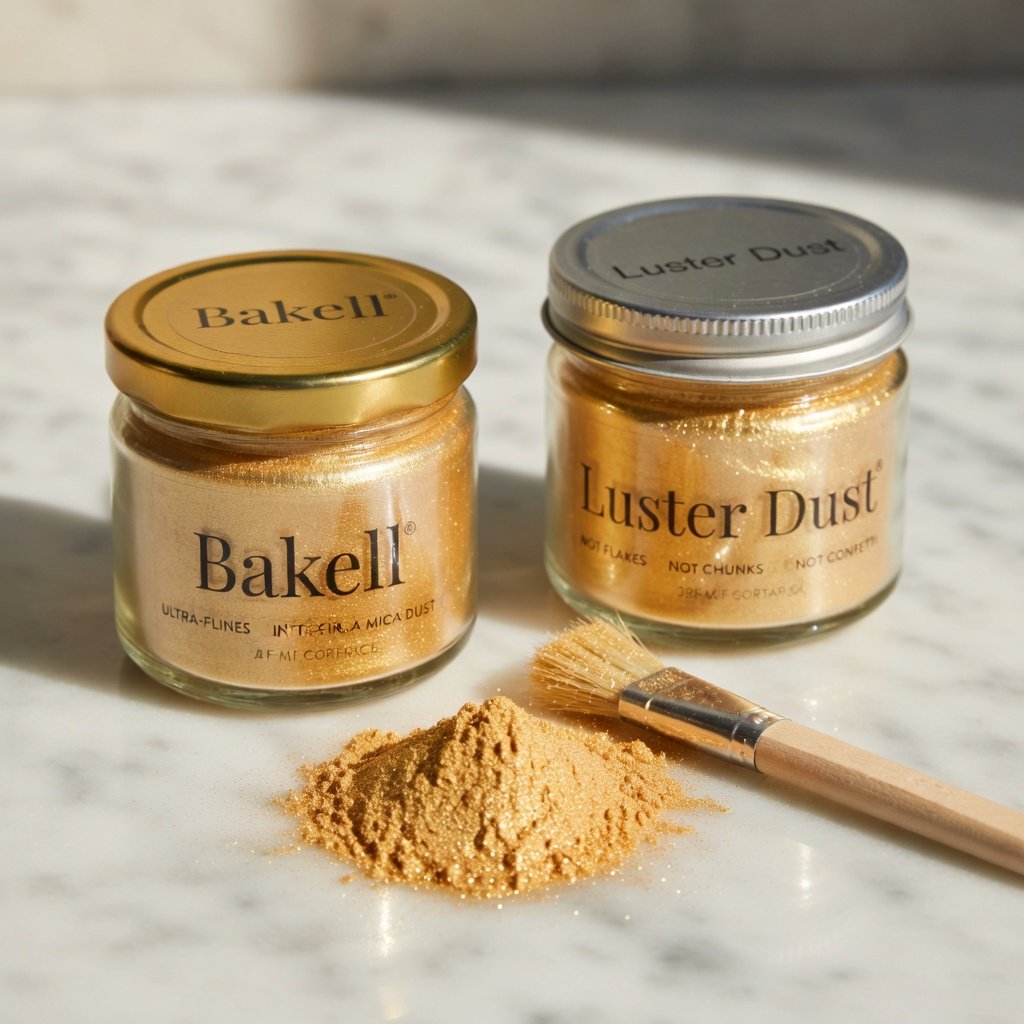
Bakell edible glitter and Luster Dust jars side by side on marble with gold shimmer dust and a pastry brush
Key Takeaways

– Bakell makes solid edible glitter — decent color range, widely available, but smaller jars and less shimmer intensity than you’d expect at that price
– Bakell’s “Super Gold” is their most popular product; our Gold outperforms it on shimmer depth, especially in drinks
– Luster Dust uses German mica pigments; Bakell uses mica too, but the grade difference shows up on camera and in person
– If you’re ordering anyway, our 10g jars start at $9.98 and go up to 1kg — better value the more you use it

Bakell has been around long enough to build a real following. People know the brand, trust it, and use it for everything from wedding cakes to holiday cocktails. That’s legitimate. They’re not a bad company.

But “not bad” is doing a lot of work there. We’ve tested Bakell luster dust side-by-side with ours more times than we can count — on buttercream, in champagne, on chocolate, under event lighting. And there are real differences worth knowing about before you spend money on either.

What Bakell Gets Right

Their color range is extensive. We’re talking hundreds of shades, including some pretty niche specialty options you won’t find everywhere. For professional cake decorators who need an exact dusty mauve or a very specific coral, Bakell’s library is genuinely useful.

Availability is another point in their favor. Bakell is on Amazon, in various cake supply shops, and their own site. If you need something fast and don’t want to wait on shipping, they’re accessible.

Bakell Edible Glitter

Pros
  • ✓ Large color selection
  • ✓ Widely available online
  • ✓ Established brand with tutorials and community
  • ✓ FDA compliant
Cons
  • ✗ 5g jars are small for the price
  • ✗ Shimmer intensity is softer than advertised
  • ✗ Super Gold looks more yellow than gold in certain lighting
  • ✗ Fewer size options for bulk buyers

Bakell Super Gold Luster Dust — Specifically

Bakell Super Gold is their flagship. It’s the one people search for by name, and it’s the one we get asked about most. Here’s an honest take.

It works. You put it on fondant, you get shimmer. Put it in a cocktail, you get sparkle. Nobody’s going to complain. But “Super Gold” sets an expectation of intensity, and the actual product is more of a soft gold — warm, but not deep. Under bright overhead lighting or on camera, it reads as slightly washed out compared to what the product photos suggest.

Our Gold Luster Dust uses German mica pigments that produce a noticeably richer, more saturated shimmer. The warmth is there, but so is the depth. Side by side on the same piece of chocolate, the difference is visible — ours catches light at more angles and holds its color instead of fading into pale yellow.

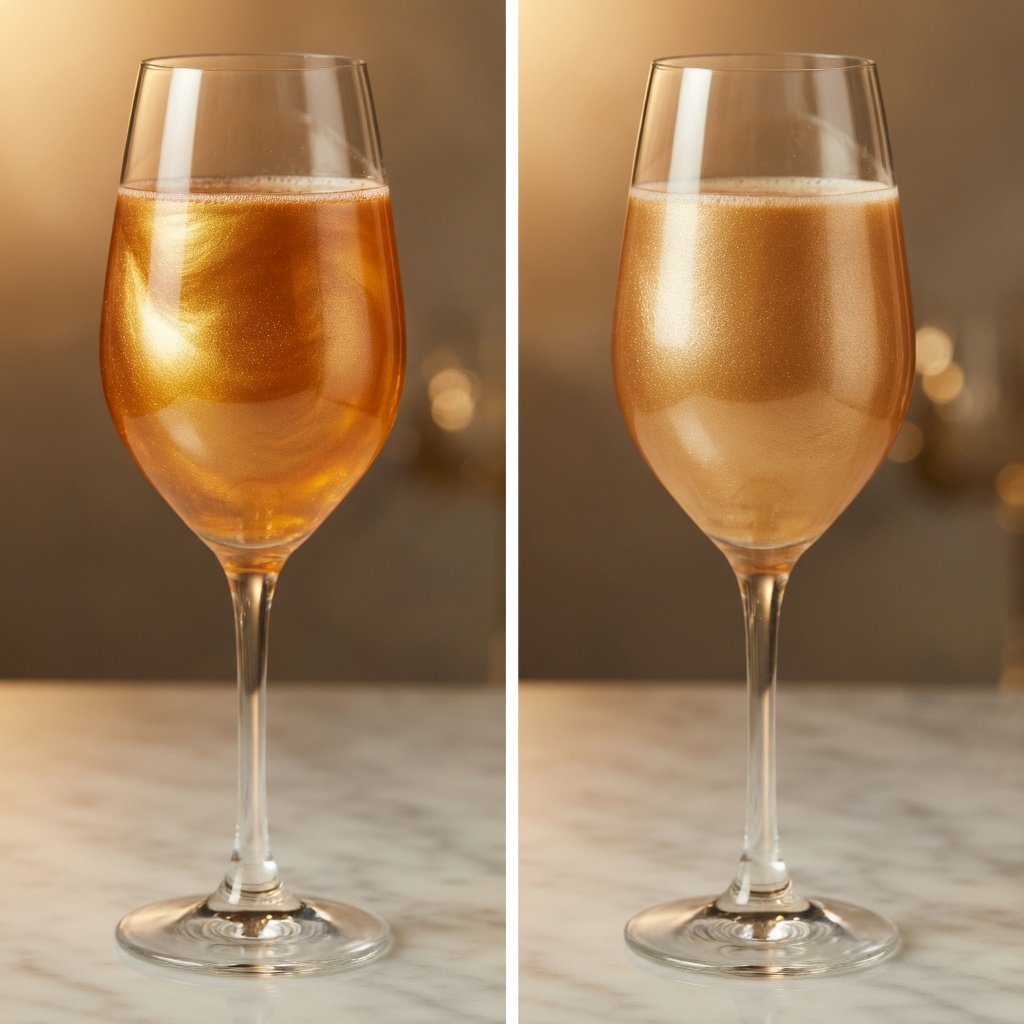
For drinks specifically, that depth matters a lot. The particles need to catch light as they move through liquid, which requires a certain reflectivity that softer pigments just don’t deliver at the same level. Our gold in a champagne flute is the difference between “oh that’s pretty” and “wait, how did you do that.” The Gold Shimmer Champagne Cocktail we’ve made with it gets comments every single time.

Bakell super gold luster dust comparison in two champagne flutes showing shimmer depth versus Luster Dust Gold under warm event lighting
Side by side, the bakell super gold luster dust comparison reveals just how much shimmer depth and richness can vary between brands.

The Actual Side-by-Side


FeatureLuster DustOther
Jar SizeBakell: 4g–5g standardLuster Dust: 10g standard
Pigment SourceBakell: Mica (grade unspecified)Luster Dust: German mica pigments
FDA CompliantYesYes
Vegan & Gluten-FreeYesYes
Shimmer IntensitySoft to mediumMedium to high
Gold in DrinksVisible but softRich, catches light as it moves
Color Accuracy vs. PhotosInconsistent — some colors photograph better than they performConsistent — what you see is what you get
Bulk OptionsLimitedUp to 1kg per color
Price per gram~$1.80–$2.50/g~$1.00/g (10g jar)
Free ShippingVariesOrders over $50

The Jar Size Thing Is a Real Issue

Bakell’s standard jars run 4–5 grams. Ours are 10 grams. That might sound like a small difference but it adds up fast. A single cocktail takes about 1/8 teaspoon — roughly 0.3–0.4 grams. A 5g jar gets you around 12–15 drinks. A 10g jar gets you 25+. And if you’re doing cakes or events, a 5g jar disappears in a single session.

The price-per-gram gap is significant too. Bakell’s jars land at roughly $1.80–2.50 per gram depending on where you buy. Ours come in around $1.00 per gram at the 10g size, and better than that at larger quantities. For anyone using luster dust regularly, that math matters.

Luster Dust Edible Glitter

Pros
  • ✓ 10g standard jar — more than double the product
  • ✓ German mica pigments for deeper shimmer
  • ✓ Consistent color accuracy
  • ✓ Up to 1kg bulk options for professionals
  • ✓ Free shipping over $50
Cons
  • ✗ Smaller color range than Bakell
  • ✗ Not available in physical retail stores
  • ✗ Fewer niche/specialty shades

Who Should Buy Bakell

Honestly? If you’re a professional cake decorator who needs a very specific shade that’s not in our catalog — something unusual, a custom match — Bakell’s breadth is worth it. Their library is genuinely bigger. And if you need something today and can grab it from a local supplier, that’s a real advantage we can’t compete with on shipping time.

They’re also fine for occasional use. If you’re decorating once a year for a birthday party and want a basic gold shimmer on a cake, either brand will do the job.

Who Should Buy Luster Dust

Anyone who cares about intensity. Cocktails and drinks especially — the German mica pigments just perform differently in liquid, and once you’ve seen what our Gold Luster Dust does in a champagne flute, it’s hard to go back. Same with our Silver Luster Dust on dark chocolate — it looks absurdly expensive and you need almost nothing to get there.

For anyone baking or mixing regularly — home or professional — the value math is just better. More product, richer results, and the bulk tiers mean the per-gram price keeps dropping the more you use.

The Verdict

Bakell isn’t a bad choice. But for shimmer depth, value per gram, and performance in drinks, we’re better. That’s not trash-talk — it’s just what the side-by-side testing shows, consistently.

If you’re replacing Bakell Super Gold specifically, our gold is the direct upgrade. Deeper color, more reflective, and you’ll get twice the product in the jar. Try the champagne cocktail with it. The difference is obvious after one pour.