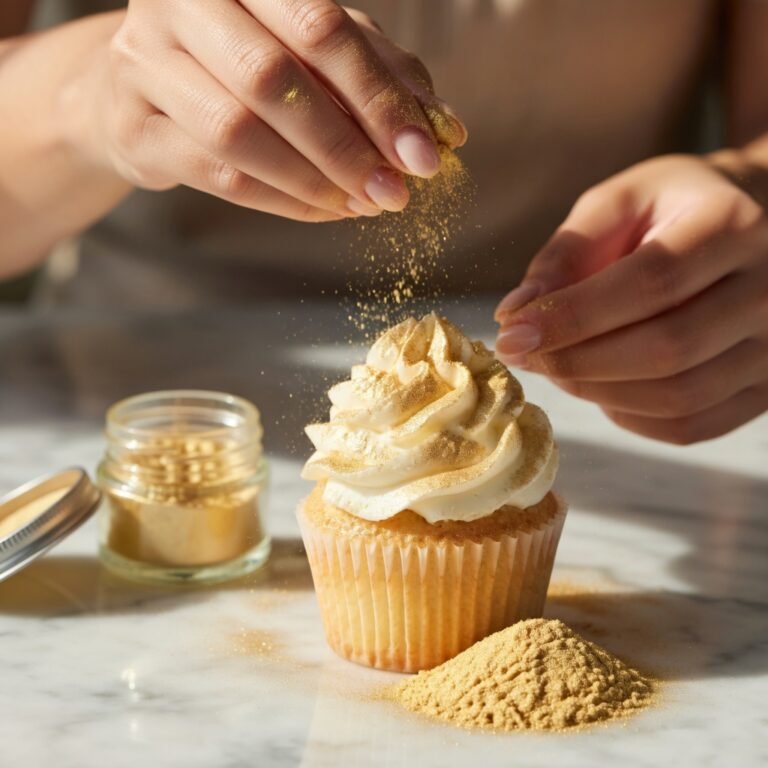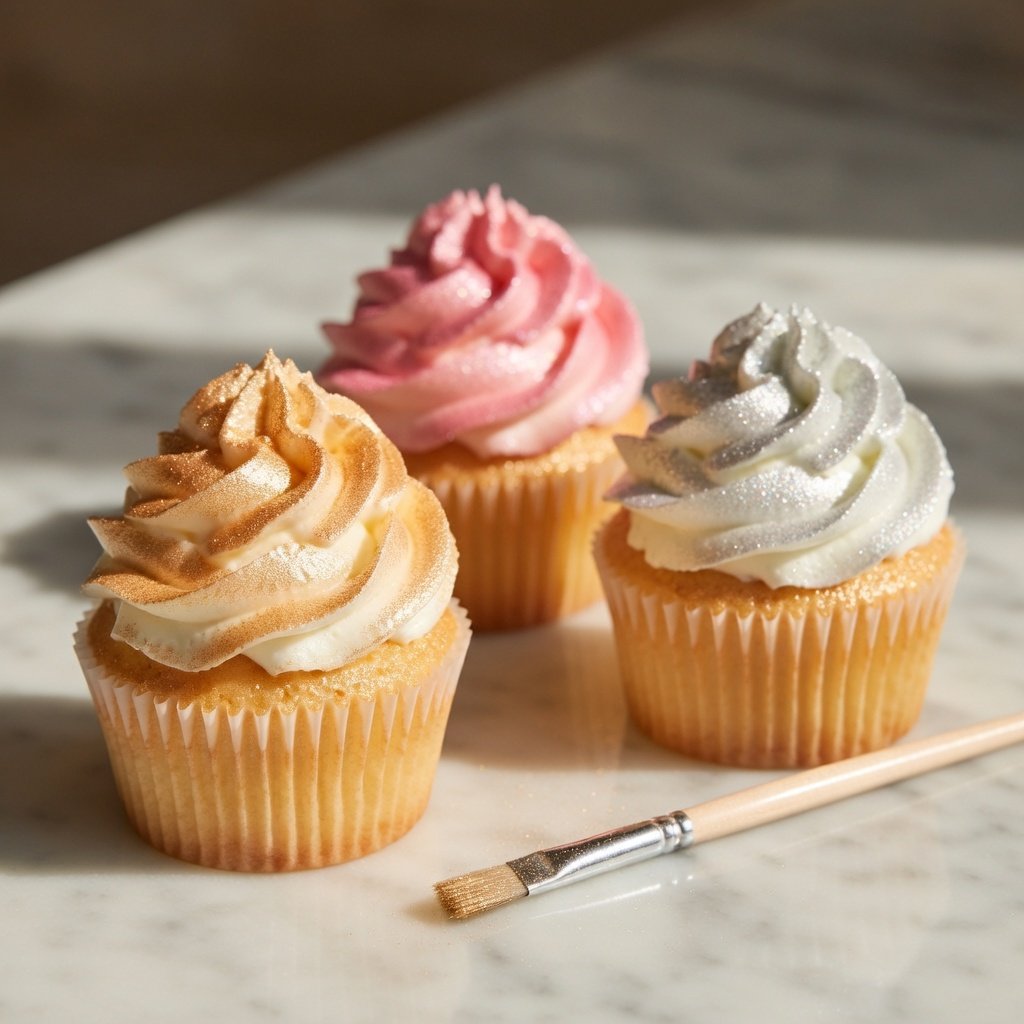
- Dry dusting works on fondant and firm surfaces — for buttercream, mix with extract first
- A small brush makes the difference between “homemade” and “actually impressive”
- You don’t need much. Like, way less than you think
- Gold on vanilla frosting, silver on chocolate, pink on anything — you can’t go wrong
Cupcakes are probably the easiest place to start with luster dust. The surface area is small, the stakes are low, and even a mediocre application looks good. Ten minutes of practice and you’ll have it figured out.
There are two ways to do this — dry dusting and painting — and which one you use depends on your frosting. Let’s break both down.
Dry Dusting: The Fast Method
This works best on fondant, royal icing, or anything with a firm, dry surface. The dust sits on top instead of absorbing in, which gives you a cleaner, more metallic look.
Dip a dry food-safe brush into the jar — just the tip, barely any dust — and sweep it across the surface in light, even strokes. Build up the coverage gradually. One heavy-handed swipe tends to clump, and clumped glitter just looks like you made a mistake.
For full coverage on fondant cupcakes, Gold Luster Dust is the most forgiving color to learn on. The warm tone hides any uneven patches better than silver does.
Soft, fluffy brush for broad strokes. Smaller detail brush if you’re trying to hit just the edges or the peaks of a swirl. Both are worth having.
Wet Painting: More Control, Better on Buttercream
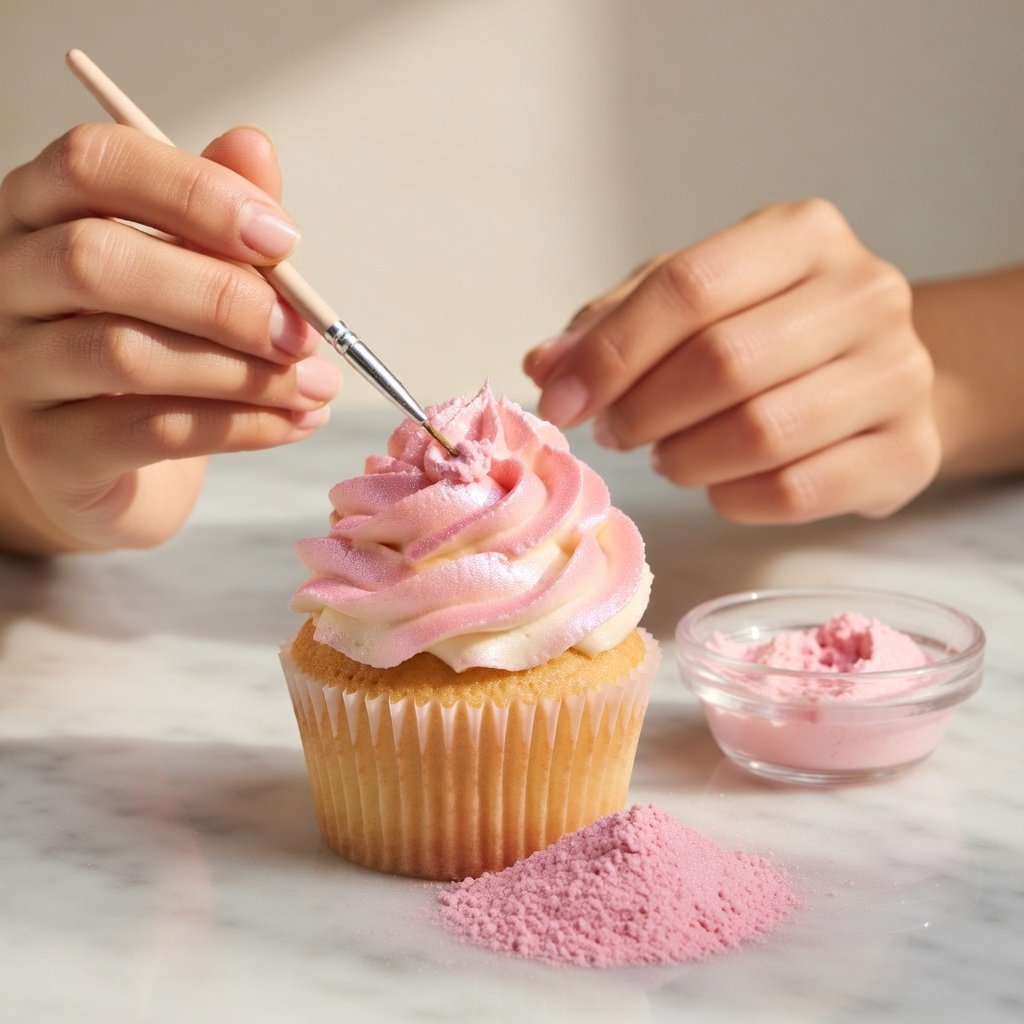
Buttercream is soft and slightly greasy, which means dry dusting doesn’t stick well. The fix is simple: mix your luster dust with a tiny amount of clear extract — vanilla, lemon, or pure alcohol like vodka all work. You’re after a thick, paintable paste, not a liquid.
Start with about 1/8 teaspoon of dust and add extract one drop at a time. Mix until it’s the consistency of watercolor paint — thin enough to brush on smoothly, thick enough to hold color. Then paint it right onto the frosting.
Pink Luster Dust mixed with clear vanilla extract and brushed over a smooth pink buttercream swirl is one of those combinations that looks like it required way more skill than it did. The shimmer is subtle but it catches light beautifully.
The extract evaporates fast, so mix small batches and keep a drop or two nearby to thin it back out if it starts to get tacky.
Targeted Effects: Just the Highlights
Full coverage isn’t always the goal. Sometimes you want shimmer on just the top peaks of a rosette, or along the edges of a fondant border — not the whole surface.
For this, dry dusting with a fine detail brush is your best tool. Load the brush lightly, tap off any excess on the edge of the jar, and touch only the raised surfaces. The effect looks dimensional — like the light is actually hitting the cupcake from above.
Silver Luster Dust on the peaks of a chocolate buttercream swirl is our go-to for this technique. The contrast is sharp. It looks expensive without being complicated.
You can also try a very light dry dusting from about 6 inches above the cupcake — just tap the brush gently so particles float down. It gives a soft, diffused shimmer across the whole top rather than a polished, deliberate coverage. Different vibe entirely.
A Few Things Worth Knowing
Less is always more, especially your first time. You can add dust — you can’t take it away. Start with barely anything and build up.
The brush size matters more than most people expect. A big fluffy brush for broad coverage, something thin for detail work. A $5 set of food-safe brushes from a cake supply shop does the job fine. Just don’t use the same brushes you use for savory cooking — flavor transfer is a real thing.
Fondant gives you the most control and the sharpest final look. Buttercream with the wet method comes in close second. Royal icing lands somewhere in the middle — takes dry dust well, but the hard surface can get patchy if your application isn’t even.
For a deeper look at technique across different baked goods, this guide on using edible glitter on cakes, cupcakes, and cookies covers the same principles with more detail on larger surfaces.
Yes, with the right method. Fondant and royal icing take dry dusting well. Buttercream and cream cheese frosting work better with the wet painting method — mix the dust with a few drops of clear extract before applying. The dust needs something to adhere to, and soft frostings don’t provide enough grip on their own.
A dozen cupcakes with light coverage uses maybe 1/4 teaspoon total — sometimes less. A 10g jar holds a lot more than people realize. For full-coverage fondant cupcakes, you might use a bit more, but you’d still get multiple batches out of a single jar easily.
It holds. Luster dust doesn’t dissolve, melt, or fade at room temperature. The shimmer you see when you finish decorating is the shimmer your guests will see hours later. Heat and direct humidity can soften buttercream and affect how the surface looks, but the dust itself stays put.
Luster dust gives you a smooth, metallic or pearlescent sheen — it blends into the surface rather than sitting on top of it as visible particles. Edible glitter is chunkier with more visible sparkle. Both are edible, both work on cupcakes, but they give you a different final look. Luster dust reads as “expensive.” Glitter reads as “party.” Both are valid.
You Might Also Like
Edible Luster Dust for Beginners: Your First Project Guide
Just starting out? This covers everything — brushes, quantities, common mistakes, and where to begin.
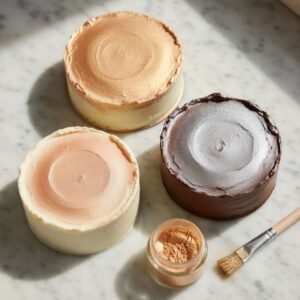
How to Use Edible Glitter on Cakes, Cupcakes & Cookies
The full technique breakdown for every baked surface. Good companion to this post.
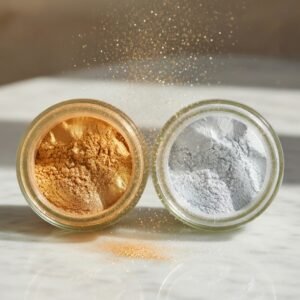
Is Edible Glitter Actually Safe? Everything You Need to Know
FDA compliance, mica pigments, what's actually in the jar — all the safety questions answered directly.