• Walmart does carry edible glitter, but the selection is limited and the labels aren’t always what they seem
• “Non-toxic” and “edible” are not the same thing — and some products at big-box stores only claim the former
• Walmart’s options work in a pinch, but you’re paying more per gram for less shimmer
• If you need it today, here’s what to look for. If you can wait two days, you’ll get better results ordering online
What Walmart Actually Has
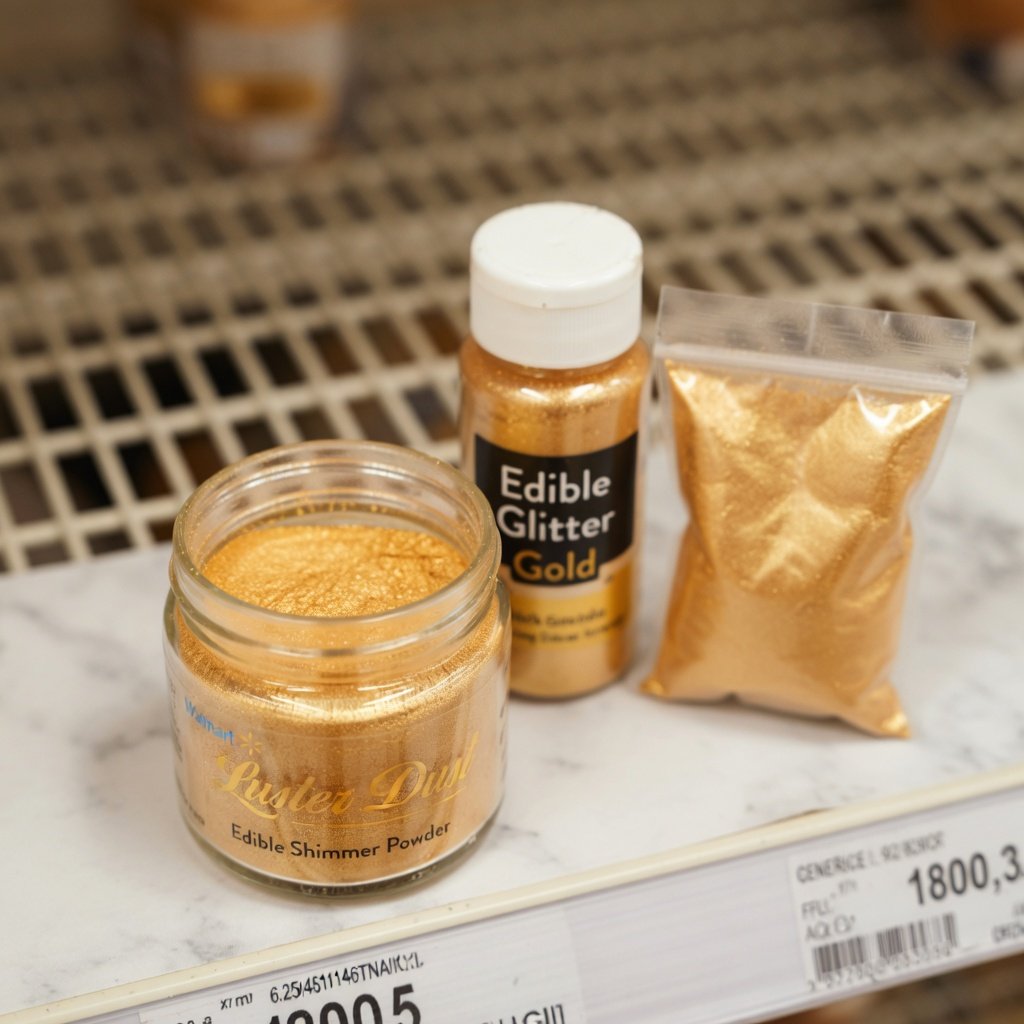
Walmart carries edible glitter — sort of. What you’ll usually find is a mix of Wilton and a few generic craft-aisle products, mostly in the baking section near sprinkles and food coloring. The jars are small, usually 3-5 grams, and the color selection is hit or miss depending on your store.
Most of it is technically usable. Some of it is not. The problem is that Walmart doesn’t sort “edible” from “decorative,” which means you can end up grabbing something labeled “non-toxic craft glitter” right next to something that’s actually FDA compliant food-grade mica. They look nearly identical on the shelf.
Before you put anything in food, flip it over and check the label. It should say FDA compliant or list food-grade mica as the ingredient. If it says “non-toxic” and nothing else — that’s a craft product. Non-toxic means it won’t send you to the hospital. It doesn’t mean it’s food. There’s a whole breakdown of the difference in our post on whether edible glitter is actually safe, but the short version: don’t eat the craft stuff.
The Price Doesn’t Add Up
Here’s the math that most people don’t do in the aisle. A 4g jar of Wilton edible glitter at Walmart runs around $4-5. That’s over $1 per gram. Our 10g jars are $9.98 — so just under $1 per gram, and you’re getting more than twice the product.
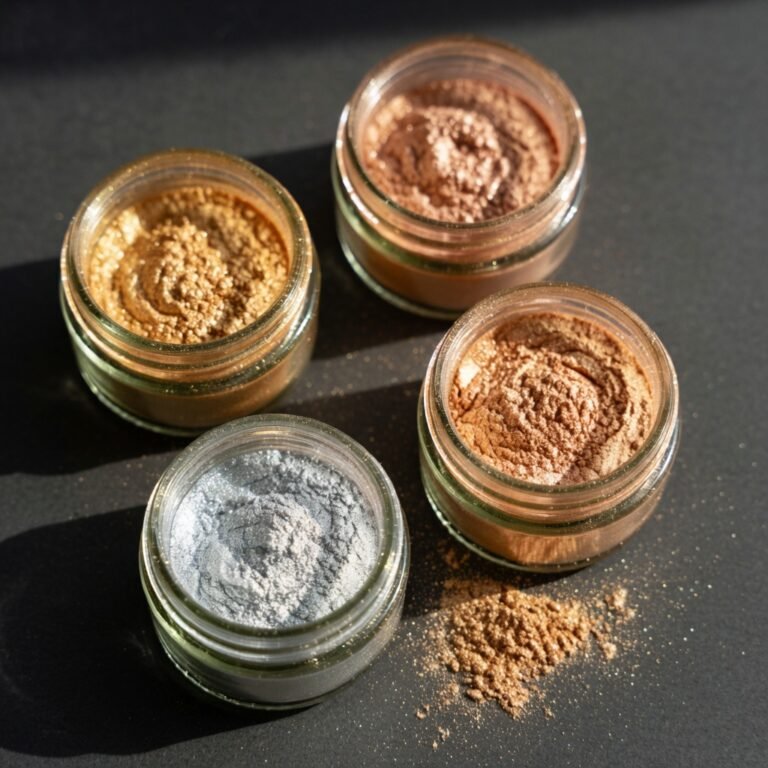
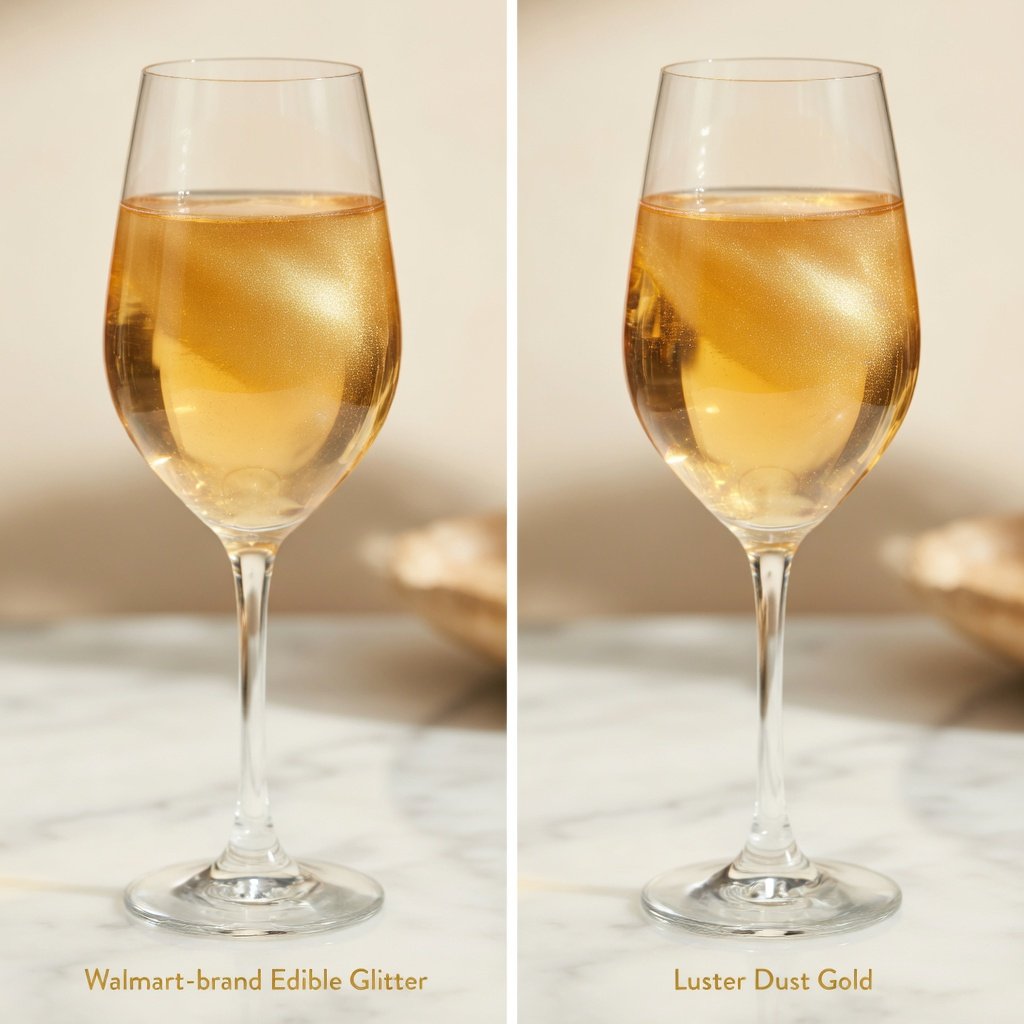
But price per gram isn’t even the real issue. The pigment quality is different. Walmart’s options use lower-grade mica that produces a flatter, less saturated shimmer. Our luster dust uses German mica pigments — same material, but processed to a finer particle size that catches light at more angles. You see the difference immediately on a dark chocolate truffle or in a champagne flute.
When Walmart Is the Right Call
There’s a real use case for it. You’re making cupcakes tonight, you forgot glitter, you don’t have time to wait for shipping. Fine. Go to Walmart. Grab the Wilton stuff, confirm it says “edible” on the label, and you’re set. It’ll work.
Same thing if you’re doing a kids’ project and just need something sparkly on frosting — the subtle shimmer difference between budget and premium mica is not going to matter on a five-year-old’s birthday cake. Nobody’s judging that at the party.
But if you’re making a gold shimmer champagne cocktail for New Year’s Eve or putting together a cake for an event people are going to photograph, the quality gap becomes obvious. Gold that looks muddy in a glass is worse than no gold at all.
What You’re Actually Giving Up
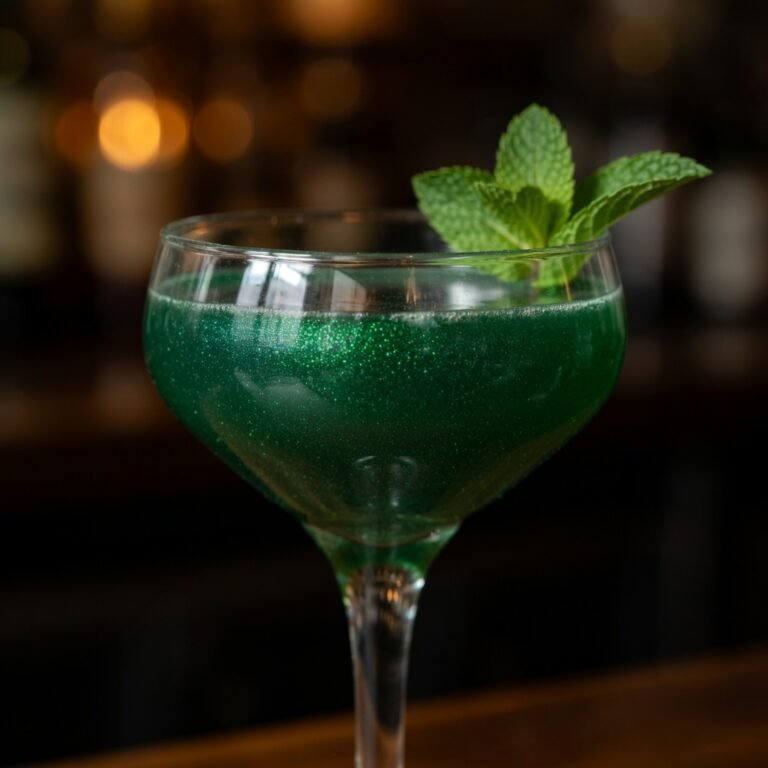
Walmart typically carries gold, silver, and maybe one or two others — red or pink around the holidays. That’s it. Our catalog runs 13 colors year-round, including rose gold, multiple blues, and a light green that gets used constantly for cocktails and St. Patrick’s Day bakes.
If you have a specific color in mind, the chances of Walmart having it are low. The chances of us having it are very high.
This is where German mica pigments actually earn their price. The particle size is more uniform, which means the shimmer distributes evenly instead of clumping. In drinks especially, that consistency matters — you want the glitter to swirl through the liquid, not sink to the bottom in a cluster.
Our Gold Luster Dust and Silver Luster Dust both stay suspended in liquid longer than anything we’ve tested from a brick-and-mortar store. That’s not a marketing claim — it’s just what happens with finer particle sizes.
A 4g jar from Walmart does maybe 15-20 cocktails if you’re being careful with your pinches. Our 10g jar gets you 80+. If you’re doing an event or baking regularly, the math makes the Walmart jar look expensive pretty fast.
We also carry up to 1kg bulk sizes for professional bakers and event planners. You’re not going to find that at Walmart.
If You’re Already at Walmart and Need It Now
Head to the baking aisle, not the craft section. Craft glitter is not food. Look for Wilton brand specifically — they label their products clearly and their edible line is FDA compliant. Check that the label says “edible” or lists mica as the ingredient. Skip anything that only says “decorative” or “non-toxic.”
Get the gold or silver — those are the most reliable across brands. For anything more specific — Pink Luster Dust for a Valentine’s cake, a specific blue for a gender reveal — don’t count on Walmart having it.
And once you’ve tried the Walmart version, order from us for the next project. The difference is real enough that most people don’t go back.
Some of it, yes. Wilton’s edible glitter line is FDA compliant and fine to use in food. But Walmart also stocks craft and decorative glitters in the same aisle that are not food-safe. Always check the label — it should say “edible” and list food-grade mica or sugar as the main ingredient. If it only says “non-toxic,” don’t put it in food.
Mostly Wilton, with occasional store-brand or generic options depending on location. The selection varies a lot by store — some carry 5-6 options, some carry two. You won’t find premium mica-based luster dust there.
No. Most Walmart products are either chunky glitter (larger particles, more like sprinkles) or flat shimmer dust. Luster dust is a fine mica-based powder that creates a pearlescent, metallic shimmer — it behaves differently, looks different, and works better in drinks and on fondant. Different products for different results.
Michaels and Hobby Lobby both carry some edible glitter — usually more selection than Walmart, but similar quality issues. Specialty baking supply stores are your best local bet for food-grade products. For the widest color range and best shimmer quality, ordering online is genuinely the move. Two-day shipping and you get exactly what you want.
You Might Also Like

Gold Shimmer Champagne Cocktail
The simplest thing you can do with gold luster dust. One pinch, one glass, thirty seconds.
Is Edible Glitter Actually Safe? Everything You Need to Know
The full breakdown on FDA compliance, non-toxic vs. edible, and what's actually in your luster dust.

Edible Luster Dust for Beginners: Your First Project Guide
New to this stuff? Start here. First projects, quantities, what not to do.