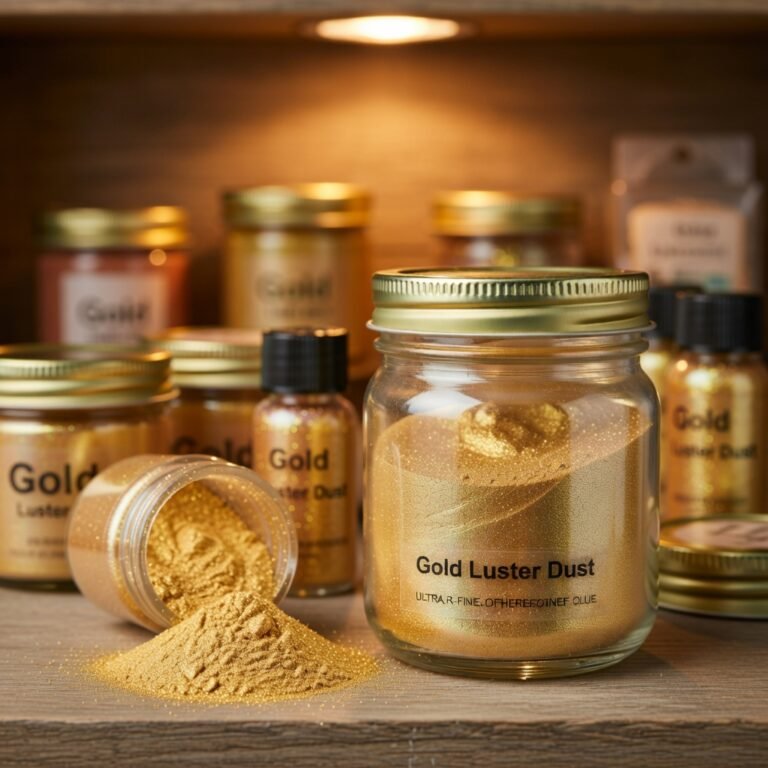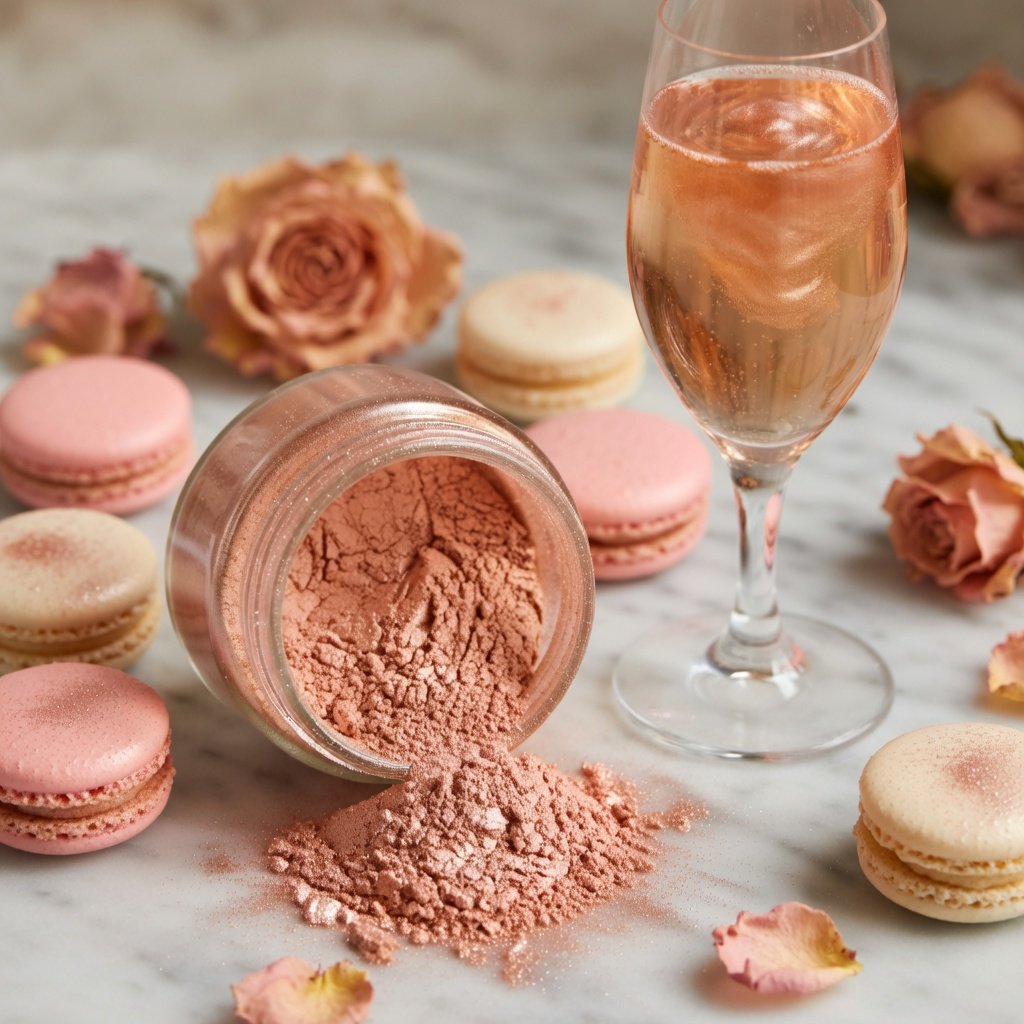
- Rose gold luster dust works on everything — wedding cakes, champagne cocktails, macarons, chocolate truffles, and more
- It’s made from FDA compliant, food-grade mica pigments — completely safe, tasteless, and vegan
- A little goes a long way: 1/8 teaspoon per cocktail, a light brush for cakes
- Pair it with our Pink for a softer look, or Gold for something warmer and more dramatic
Rose gold had its moment in the mid-2010s and never really left. It just got more refined. Now it’s showing up on wedding cakes, in signature cocktails, on chocolate bonbons — and the reason it keeps coming back is simple. That warm, blushy shimmer photographs beautifully, pairs with almost every color palette, and looks expensive without trying too hard.
Our Rose Gold Luster Dust Rose Gold Luster Dust is one of our most requested colors for weddings, and we’ve seen it used in ways that still catch us off guard. Here’s everything you need to make it work.
Why Rose Gold Works So Well for Weddings
It sits in this perfect middle ground between pink and gold. Warm enough to feel celebratory, soft enough to feel romantic. It doesn’t scream for attention the way a heavy metallic gold does — it just glows.
It also plays nicely with a lot of different palettes. Blush and ivory? Obviously. But it’s also great against deep burgundy, sage green, even navy. The warmth in the pigment keeps it from clashing. That’s not something every color can pull off.
And practically speaking — it photographs. Under warm event lighting, on a cake table, in a flute of prosecco, rose gold catches light in a way that shows up on camera without needing a filter. That matters now more than ever.
How to Use It
For a full shimmer effect on fondant or buttercream, mix a small amount of rose gold luster dust with a few drops of clear alcohol — vodka or lemon extract both work — and paint it on with a soft brush. The alcohol evaporates fast and leaves a smooth metallic finish.
Dry dusting works too, especially on textured surfaces. Load up a fluffy brush, tap off the excess, and dust lightly over the cake. Build the shimmer in layers rather than dumping it all on at once — you get more control, and you won’t end up with muddy patches.
Buttercream is our favorite surface for rose gold. The slight sheen of a well-smoothed buttercream picks up the shimmer beautifully. Cream cheese frosting works, but the softer texture mutes the effect a little.
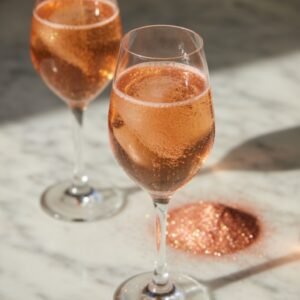
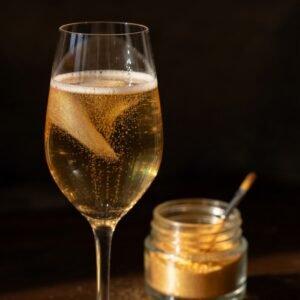
This is where rose gold really earns its place at a wedding. Drop 1/8 teaspoon into a flute of prosecco, give it a gentle swirl, and the whole drink lights up with a warm, rosy shimmer. It looks like something that took way more effort than it did.
For a batch cocktail setup — signature drink stations are huge at weddings right now — pre-measure your luster dust into small paper folds or twists of parchment. Guests can drop it in themselves. It’s interactive, it’s pretty, and it means you’re not measuring during service.
Try our Rose Gold Prosecco Spritz recipe if you want a tested starting point. It’s built around this color specifically, and it works for everything from bridal showers to the actual reception.
Rose gold on dark chocolate is a striking combination. The contrast is sharp — that warm blush against deep brown looks elegant in a way that plain gold doesn’t quite achieve. For bonbons or truffles, dust a dry brush over the surface after the chocolate has set.
Macarons are another strong use case. A light dusting over the shells gives them that photographed-at-a-high-end-patisserie look. Keep it subtle — rose gold macarons with too much dust look orange in photos. A whisper of shimmer is the goal.
Meringue kisses, shortbread, chocolate-dipped strawberries. All of them work. The rule is the same: less than you think, built up gradually.
Pairing Rose Gold With Other Colors
Used alone, rose gold is quietly glamorous. But it layers well too.
Mix it with Pink Luster Dust for a softer, more romantic finish — great for bridal shower desserts where you want shimmer without anything too bold. The pink cools it down slightly and the result is almost iridescent on white chocolate or vanilla frosting.
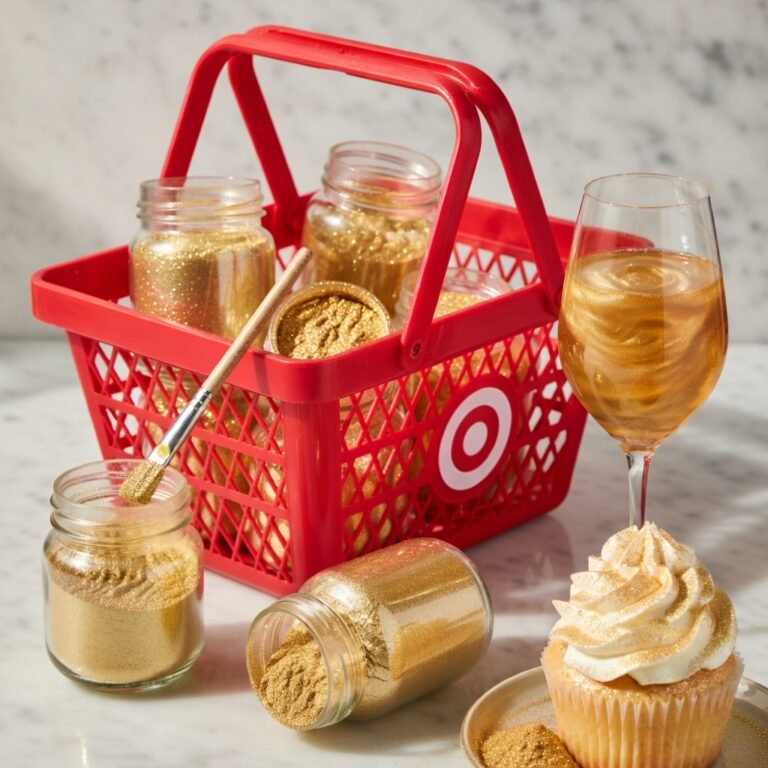
Go the other direction and combine it with Gold Luster Dust for something warmer and more luxurious. Two-tone wedding cakes with alternating rose gold and gold tiers are everywhere right now. It works. The transition between them is natural because the pigments are complementary — no weird color clash.
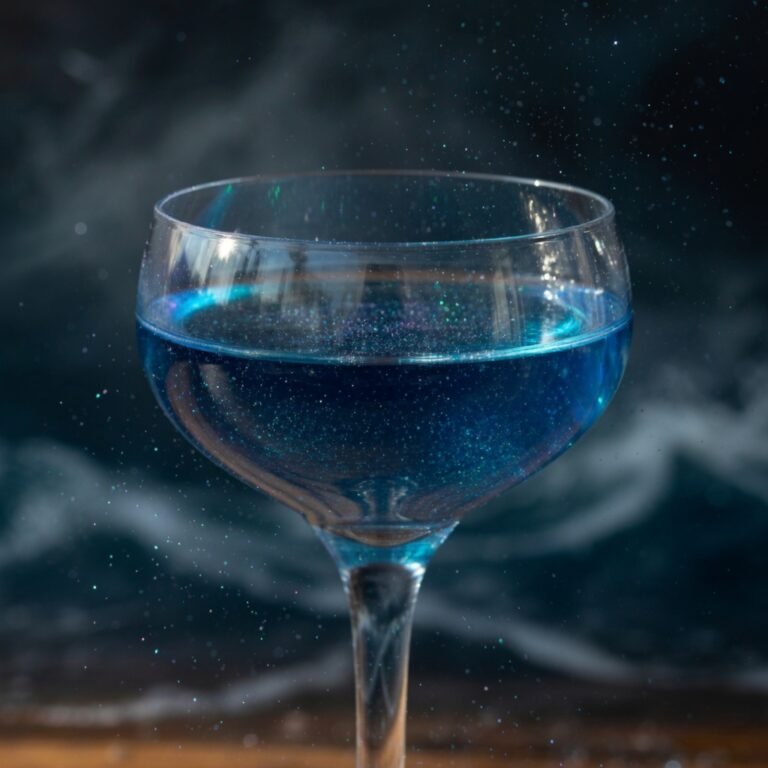
One thing to avoid: mixing rose gold with cool-toned silvers or blues on the same surface. The warmth fights the cool tones and neither one reads the way you want it to. Keep warm with warm.
How Much Do You Need?
For a wedding, the honest answer depends on scale — but here’s a rough guide.
A 10g jar covers roughly 80–100 cocktails (at 1/8 tsp per drink), one two-tier cake with full shimmer coverage, or somewhere around 4–5 dozen truffles. If you’re doing all three for a large wedding, get two jars minimum. Running out of a color day-of is a nightmare that’s easy to avoid.
Our 50g jar is the better call for weddings with 100+ guests, or if you’re a baker doing multiple wedding orders in the same season. The per-gram cost drops significantly and you’re not anxious about running low mid-project.
Is It Actually Safe?
Yes. Every color in our lineup — including rose gold — is made with FDA compliant, food-grade mica pigments. Completely tasteless, odorless, vegan, and gluten-free. The same type of mica-based pigments have been used in food decoration for decades. You can eat it directly. It’s not just technically safe — it’s real food.
“Non-toxic” and “edible” are not the same thing, and a lot of glitter sold online is only one of those. Ours is both. If you’re sourcing edible glitter from somewhere else for a client’s wedding, check that the label specifically says FDA compliant — not just non-toxic.
Yes — that’s one of the best uses for it. Add 1/8 teaspoon per glass, give it a gentle swirl, and let it do its thing. The carbonation actually helps keep the particles moving, which amplifies the shimmer. Don’t stir aggressively — just a slow swirl is all it needs.
Not at all. It’s completely tasteless and odorless. You’d never know it was there except for the shimmer. This holds true across every surface — cake, chocolate, drinks, everything.
Mix the rose gold luster dust with a small amount of clear alcohol (vodka or clear lemon extract) to make a thin paint, then apply with a soft flat brush in smooth, overlapping strokes. Work in thin layers — two light coats give you a more even, professional finish than one heavy application.
Yes, with one caveat: condensation. If you take a refrigerated cake out into a warm room, condensation can form on the surface and slightly soften the shimmer. Apply luster dust after the cake has come to room temperature to avoid this, or do a final touch-up coat right before the event.
On chocolate and fondant, you can decorate 1–2 days ahead with no issues. On buttercream, same-day is ideal — buttercream can absorb the dust a little over time, dulling the finish. For drinks, always add right before serving.