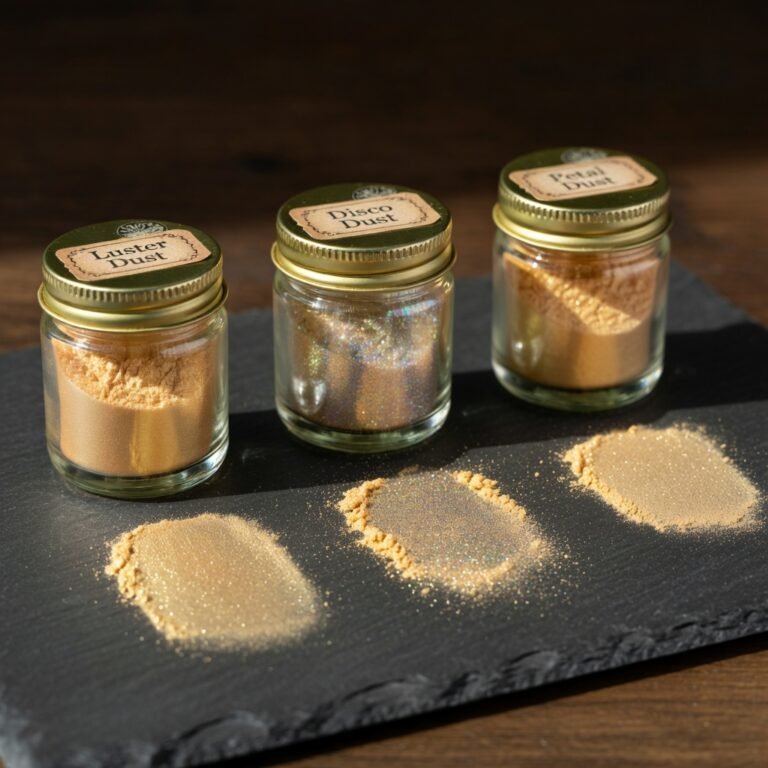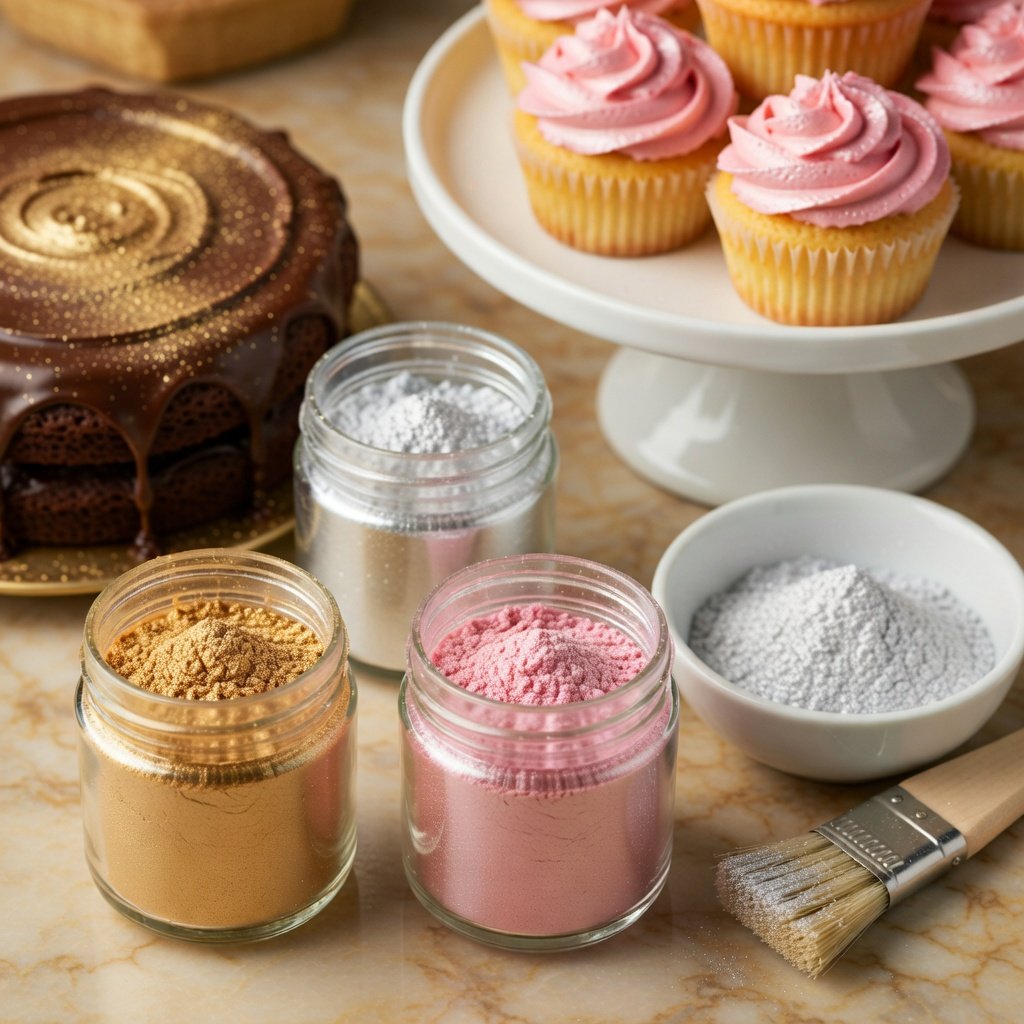
- All Luster Dust colors are 100% vegan — made with mica-based pigments, no animal-derived ingredients, ever.
- Vegan and food safe aren’t the same thing. A lot of glitter on the market is neither. Ours is both.
- Works on every surface vegan bakers use — buttercream, ganache, fondant, naked cakes, and more.
- One 10g jar covers dozens of cakes. You don’t need much.
Here’s a question we get a lot: is edible glitter vegan? Short answer — ours is. Every single color. No beeswax, no carmine, no shellac. Just mica pigments and FDA-compliant food-safe colorants, the same ingredients that have been in food for decades.
The longer answer is that “edible vegan glitter” is a messier category than it should be. Some products marketed as edible contain shellac (a resin secreted by lac bugs — not vegan). Others use carmine, which is derived from crushed beetles. And a surprising number of sparkly products on Amazon aren’t edible at all — they’re craft glitters with “non-toxic” on the label, which is not the same thing as food safe. We broke that down in detail in our guide to edible glitter safety.
So if you’re baking vegan and you want shimmer, here’s what actually matters and how to use it well.
What Makes Luster Dust Vegan
Our luster dust is made from German mica pigments — a naturally occurring mineral — combined with FDA-compliant colorants. That’s it. No binders from animal sources, no insect-derived dyes, no hidden non-vegan additives. Tasteless, odorless, completely plant-based.
If you want the full ingredient picture, this post breaks down exactly what’s in edible glitter and why mica is the gold standard for food-safe shimmer. Worth a read if you care about what goes into your food — which, if you’re baking vegan, you probably do.
How to Use It on Vegan Bakes
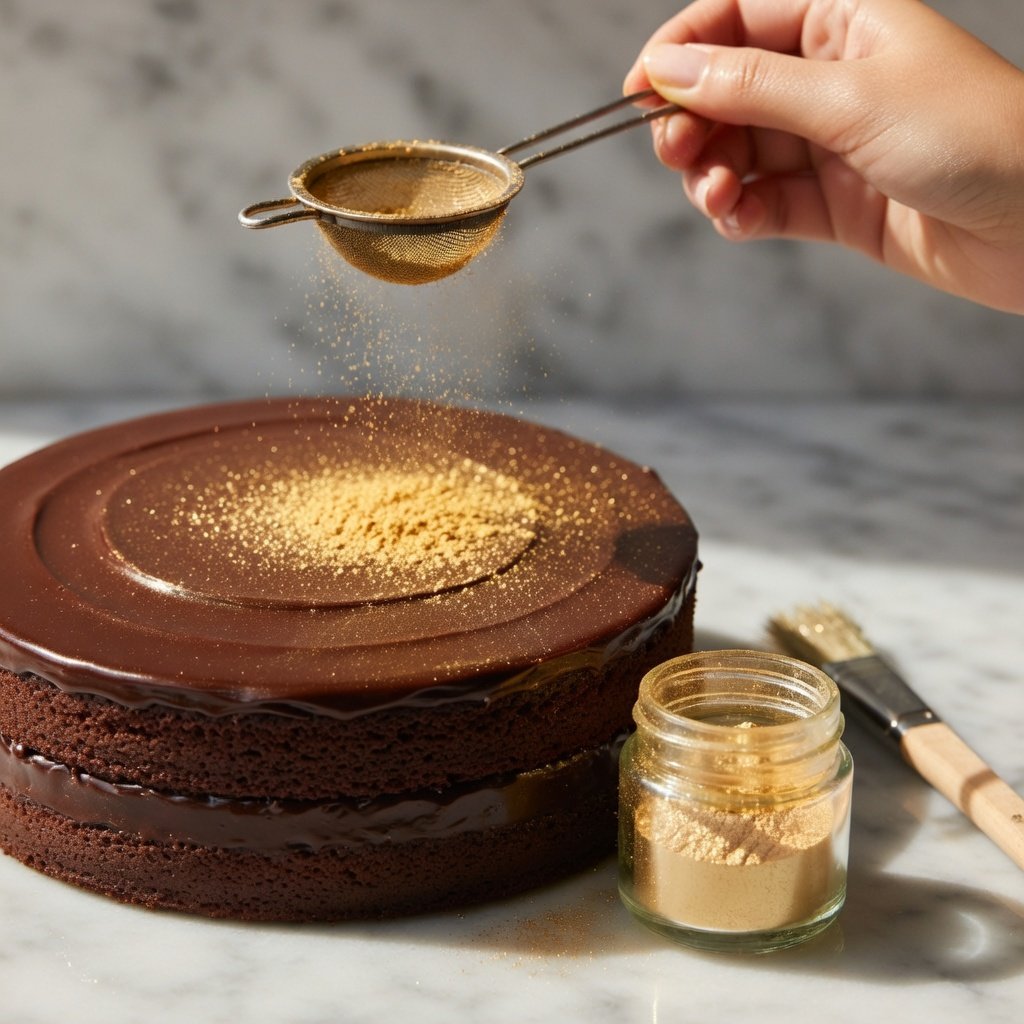
The surface you’re working on matters. Vegan buttercream — usually made with plant-based butter or shortening — takes luster dust beautifully. The slightly smooth, glossy finish on a well-crusted vegan buttercream is actually ideal. Dust on dry with a clean pastry brush for a soft shimmer. Mix with a few drops of vodka (it evaporates) for a more saturated, painted effect.
Chocolate ganache made with coconut cream is another great canvas. Gold Luster Dust on dark chocolate ganache looks genuinely expensive — like, “did you buy this at a high-end bakery” expensive. We’ve seen bakeries charge $10+ per slice just from the visual alone.
Naked cakes with exposed sponge are trickier. The texture absorbs the dust more than smooth frosting does. Still works — just use a slightly heavier hand.
Rolled fondant is where luster dust really performs. The flat, non-porous surface catches light perfectly. Brush Silver Luster Dust over white fondant for something clean and modern. Layer gold over a light ivory fondant if you want warmth. Use a wide, soft brush and work in smooth strokes — circular motions can leave marks.
Royal icing on vegan sugar cookies is a solid option too, once it’s fully set and dry. Dust over the top and the shimmer sits right on the surface. A little goes a long way here — 1/8 teaspoon can cover six to eight cookies easily.
Vegan baking includes a lot of no-bake territory — chocolate bark, energy balls, raw cakes, coconut-based truffles. All of them work. Roll truffles in luster dust right before serving. Dust over chocolate bark right after it sets but before it’s fully hardened, so the dust clings.
Pink Luster Dust on white chocolate bark (vegan, obviously) with freeze-dried raspberry is a combination that photographs incredibly well. We’ve made it at least a dozen times. Still not sick of it.
And if you’re doing vegan cocktails or mocktails at your event, a pinch in a drink glass works the same way regardless of what’s in the glass. No dairy involved anyway.
A Note on Quantities
Less is more, and that’s not just a saying here. A 10g jar is 1/3 oz — sounds small, but a single dusting session on a six-inch cake might use 1/16 teaspoon. Do the math and that jar goes a long way. For reference: 10g covers roughly 80 cocktails or a couple dozen cupcakes, depending on application.
Start light. You can always add more. Overdoing it looks chalky, not shimmery — and no one wants a chalky cake.
FAQ
No — and this is genuinely worth checking before you buy. Some edible glitters use shellac as a coating ingredient, which comes from lac insects. Others use carmine (red dye made from crushed cochineal beetles). Luster Dust uses none of these. Every color is mica-based and 100% vegan.
“Food safe” means a product won’t cause harm if it comes into contact with food. “Edible” means it’s an actual food ingredient — FDA compliant, approved for consumption. Non-toxic craft glitter might be food safe in the sense that touching your cake won’t poison anyone, but it is absolutely not edible. Our luster dust is edible. Real difference.
Nothing. Zero taste, zero smell. It won’t affect the flavor of your bake at all. Some people are surprised by this — they expect a metallic or chalky note. Doesn’t happen. The mica pigments are completely neutral.
Gold on dark chocolate is the classic for a reason — the warm shimmer against the deep brown is striking. Silver works too, and it reads as more modern and minimal. Pink on white chocolate or light-colored ganache is our current favorite for springtime bakes.
Any clean, food-safe pastry brush works. Soft, wide brushes give the most even coverage. Don’t use the same brush you used for egg wash — even if you’re not vegan baking, cross-contamination is worth avoiding. A dedicated dry brush for dusting keeps the powder from clumping.