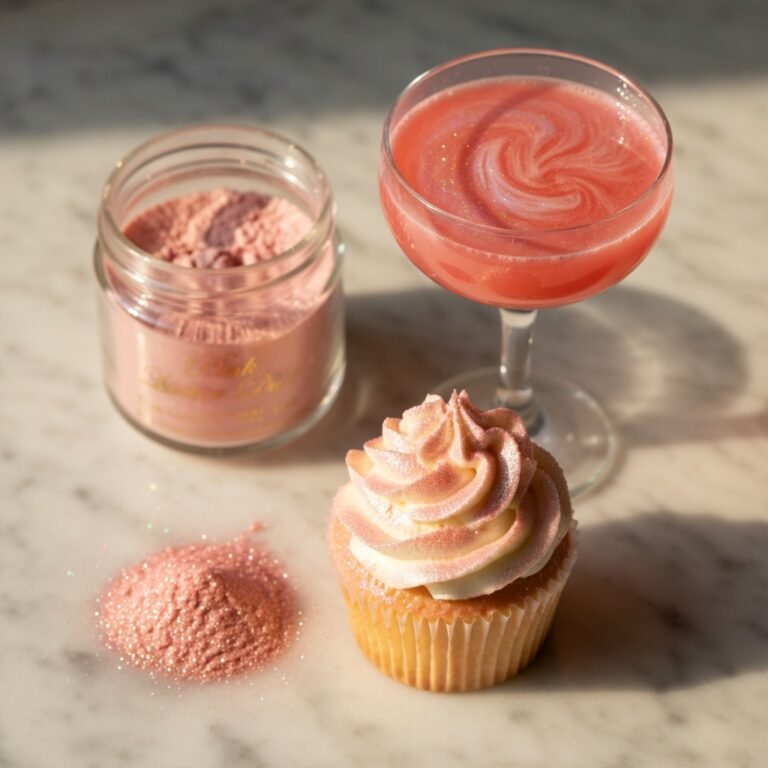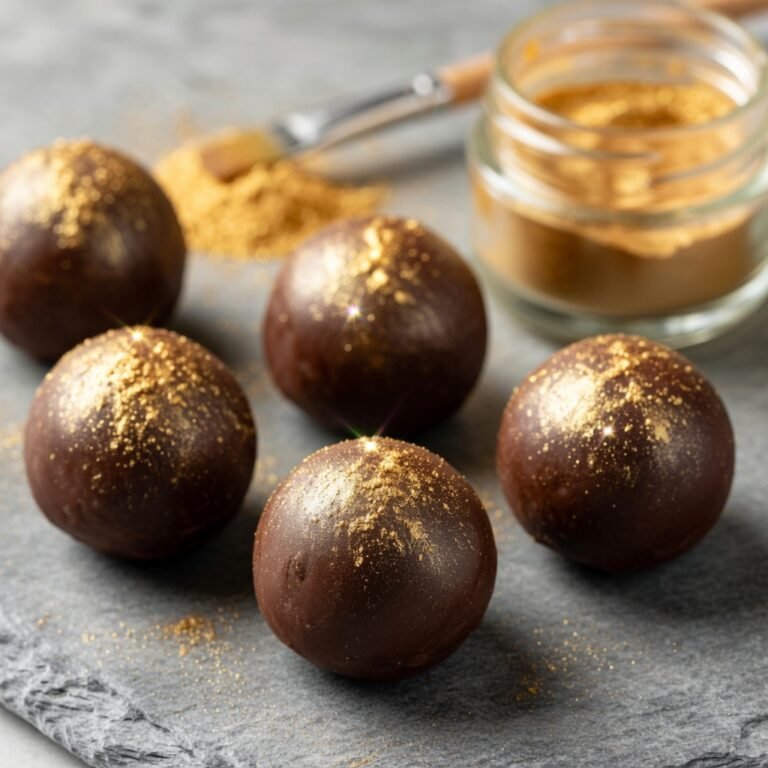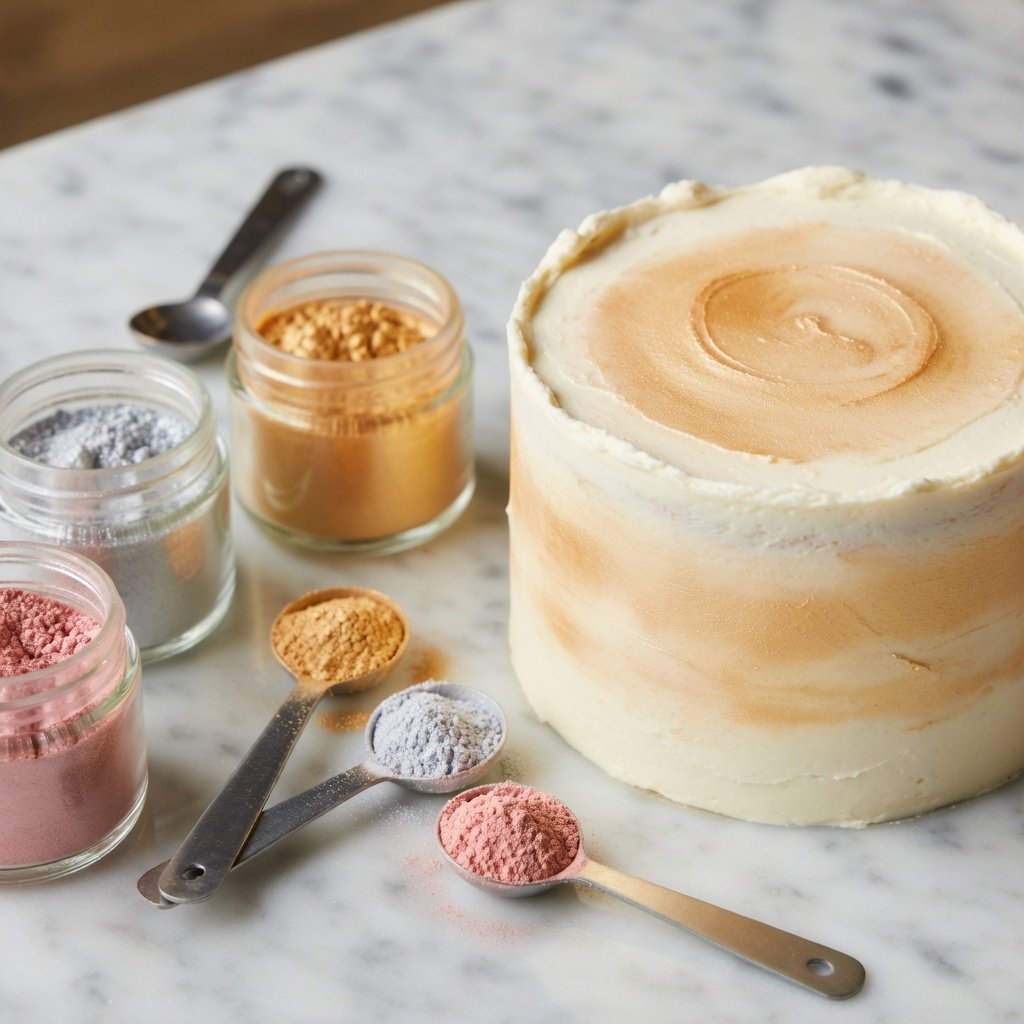
- A 10g jar covers roughly 20–25 cupcakes, one full sheet cake, or 2–3 tiered cakes depending on application method
- Dry dusting uses less product than painting — if you’re doing large coverage, budget accordingly
- Gold is the hardest-working color in the lineup; one 10g jar goes further than most people expect
- If you’re doing more than one event or batch per month, the 50g jar is almost always the better buy
The most common question we get isn’t about color. It’s about quantity. People order a 10g jar, aren’t sure if that’s enough, panic and order three, then end up with a lifetime supply of Gold Luster Dust they’re slowly working through two years later.
So here’s the actual breakdown. How far each jar size goes, by project type, so you can order the right amount the first time.
First: How Are You Applying It?
This matters more than the size of your cake. Two different application methods use very different amounts of product. Dry dusting (dipping a brush and sweeping it across a surface) is light and controlled. Painting with alcohol requires more dust to build up coverage. Mixing into a glaze or drip uses even more.
If you haven’t sorted out your technique yet, this guide to using edible glitter on cakes and cupcakes covers all three methods in detail. Read that first, then come back here for quantities.
A 10g jar handles a lot more cupcakes than you’d think. For dry dusting — just a light shimmer over buttercream — you’re looking at 20 to 30 cupcakes per 10g jar. Maybe more if you have a light hand.
Cookies are similar. A batch of 24 sugar cookies with a standard shimmer dust? You’ll barely make a dent in a 10g jar. Gold on royal icing looks incredible and uses almost nothing. Silver on dark chocolate cookies is the same story.
The math shifts if you’re going heavy — full coverage on fondant, thick paint application, that kind of thing. For heavily decorated cookies (like the ones you see completely coated in gold), budget closer to 1/4 teaspoon per dozen, which is roughly 0.6g. Still well within a single 10g jar for most home batches.
For cupcakes and cookies: a 10g jar is almost always enough. Order two if you’re doing more than 50 units.
A standard 8-inch round cake with a light shimmer dusted across the top and sides? That’s maybe 0.5–1g of product. A 10g jar gets you 10 to 20 cakes at that rate.
Sheet cakes covering a 9×13 pan — especially if you’re doing full coverage or a fade effect — use more. Plan for 1–1.5g per cake. So a 10g jar gets you through 7 to 10 full sheet cakes.
If you’re going for a fully painted, heavily saturated gold finish on the whole cake, that’s where the 50g jar starts making sense. One big wedding cake with serious gold coverage can eat 3–5g pretty fast.
This is where sizing actually gets tricky. A light shimmer on a 3-tier wedding cake might use 2g. Full metallic coverage on that same cake could use 8–10g. The range is huge depending on your design.
For tiered cakes, our honest recommendation: don’t gamble with a 10g jar. If the cake is important, order 50g. The price difference is small. Running out of Gold Luster Dust halfway through a wedding cake the night before a delivery is not a situation you want to be in.
The 50g jar runs $24.98. The peace of mind is worth the extra $15.
This is the “plan ahead” scenario. If you’re decorating for a party, a recurring bake sale, or just like having options, the math changes.
Running Pink Luster Dust alongside gold for a birthday spread? Get at least a 10g of each. If one color is going on everything and the other is just accents, you can get away with 10g for the accent and 50g for the main.
Silver Luster Dust is worth having in a 50g if you do a lot of winter or holiday baking. It goes on everything during that stretch — cakes, truffles, cookies, gingerbread. You’ll use it faster than you expect.
Orders over $50 ship free, by the way. So if you’re buying two 10g jars anyway ($19.96), you’re right at the edge — adding a third gets you free shipping and a lot more product to work with.
Quick Reference by Jar Size
The 10g jar ($9.98) is the right buy if you’re doing a one-time project, testing a new color, or decorating for a single event. It’s genuinely a lot of product for casual use — most home bakers never burn through one fully.
The 50g jar ($24.98) makes sense once you know you like the color and you’re using it regularly. It’s the jar professional bakers reach for. Also the one to grab if you’re doing anything tiered or high-stakes.
The 250g and 1kg sizes are production quantities — bakeries, event companies, anyone decorating at scale. If you’re reading this post, you’re probably not there yet. But they exist when you are.
The Beginner’s Rule of Thumb
Less than you think. Seriously. The instinct is to pour on more, but luster dust has real pigment density — a little builds up fast. Start with the smallest amount that seems reasonable, see how it looks, then add more if you need it.
First time using it? Our beginner’s guide walks through your first project step by step. Good place to start before committing to a big jar of anything.
For most people doing occasional cake decorating: one 10g jar of your main color, ordered when you need it. Once you find yourself reordering the same color twice, that’s the signal to upgrade to 50g.
Depends on the technique. Light dry dusting on buttercream or fondant: 15–25 cakes from a single 10g jar. Heavy coverage or painted metallic finish: closer to 5–10 cakes. Most home bakers doing standard decoration are solidly in the 15–20 range.
It doesn’t really expire in a food-safety sense — the mica pigments are shelf-stable. What happens over time is clumping if moisture gets into the jar. Keep the lid tight, don’t dip wet brushes directly in, and it’ll stay usable for years. We have jars that are two-plus years old and still perfect.
Yes — the 10g jar. It’s specifically designed for that use case. You’ll probably have some left over, which is fine — it keeps.
You can. Gold and rose gold mix beautifully. Gold and silver creates a champagne tone. Pink and silver is subtle and works well on white cake. Stick to mixing similar formulas (all ours, not ours + random Amazon glitter) for consistent results.
You Might Also Like
How to Use Edible Glitter on Cakes, Cupcakes & Cookies
All three application methods, step by step. Dry brush, alcohol painting, and glaze mixing.
Edible Luster Dust for Beginners: Your First Project Guide
New to this stuff? Start here before you crack open the jar.
What Is Luster Dust? The Complete Guide
What it's made of, how it works, and why it looks the way it does.