• Fancy Sprinkles makes edible glitter — but it’s a brand, not a category. Luster dust is a different product entirely.
• The shimmer quality, pigment depth, and how each performs on food and in drinks is genuinely different.
• For most uses — cocktails, cakes, chocolate — luster dust produces a richer, more professional result.
• If you want a direct answer: we’re biased, but we’ll show our work.
Two Different Things, Actually
Fancy Sprinkles is a brand. Luster dust is a product type. That distinction matters, because a lot of people search “fancy sprinkles edible glitter” when what they’re really asking is: what’s the best fancy edible glitter out there, and how do these compare?
Fair question. Let’s actually answer it.
Fancy Sprinkles makes a line of edible glitter products — loose glitters, glitter bombs, shakers — aimed mostly at home bakers and the Instagrammable-dessert crowd. They’ve built a following, the packaging is fun, and the products work. We’re not here to trash them.
But luster dust is a different animal. It’s a fine mica-based powder, not a granular glitter. It behaves differently on food, produces a different kind of shimmer, and performs in ways that chunky glitter just can’t. If you’ve ever wondered why some cakes look like they were kissed by light and others just look… sparkly, that’s usually the difference.
What Fancy Sprinkles Actually Sells
Fancy Sprinkles’ edible glitter line includes loose glitter in various colors, pre-mixed shakers, and some combination products with sprinkles. The glitter itself is made from sugar, starch, or mica — depending on the specific product — and it’s FDA compliant on the edible versions.
The color range is solid. Packaging is cute. Prices are reasonable for a specialty baking brand.
Where they run into limits:
The glitter particle size is larger than luster dust. That’s intentional — it creates a visible sparkle that photographs well. But it also means it sits on top of food rather than blending into it. On a smooth buttercream cake, you can see individual glitter pieces. On a cocktail, it tends to clump or settle rather than disperse.
For some applications, that look is exactly what you want. Sprinkle-topped cupcakes, chunky glamour, maximalist birthday cakes — great. For anything requiring a fine, silky shimmer? Less ideal.
Fancy Sprinkles Edible Glitter
Pros
- ✓ FDA compliant edible options
- ✓ Fun, colorful packaging
- ✓ Good for chunky/textured glitter looks
- ✓ Wide distribution (easy to find online)
- ✓ Works well for sprinkle-heavy decorating
Cons
- ✗ Larger particle size — sits on top rather than blending in
- ✗ Doesn't disperse well in liquids
- ✗ Limited performance on smooth surfaces like chocolate
- ✗ Smaller jars relative to price
- ✗ Color depth can look flat under certain lighting
What Luster Dust Does Differently
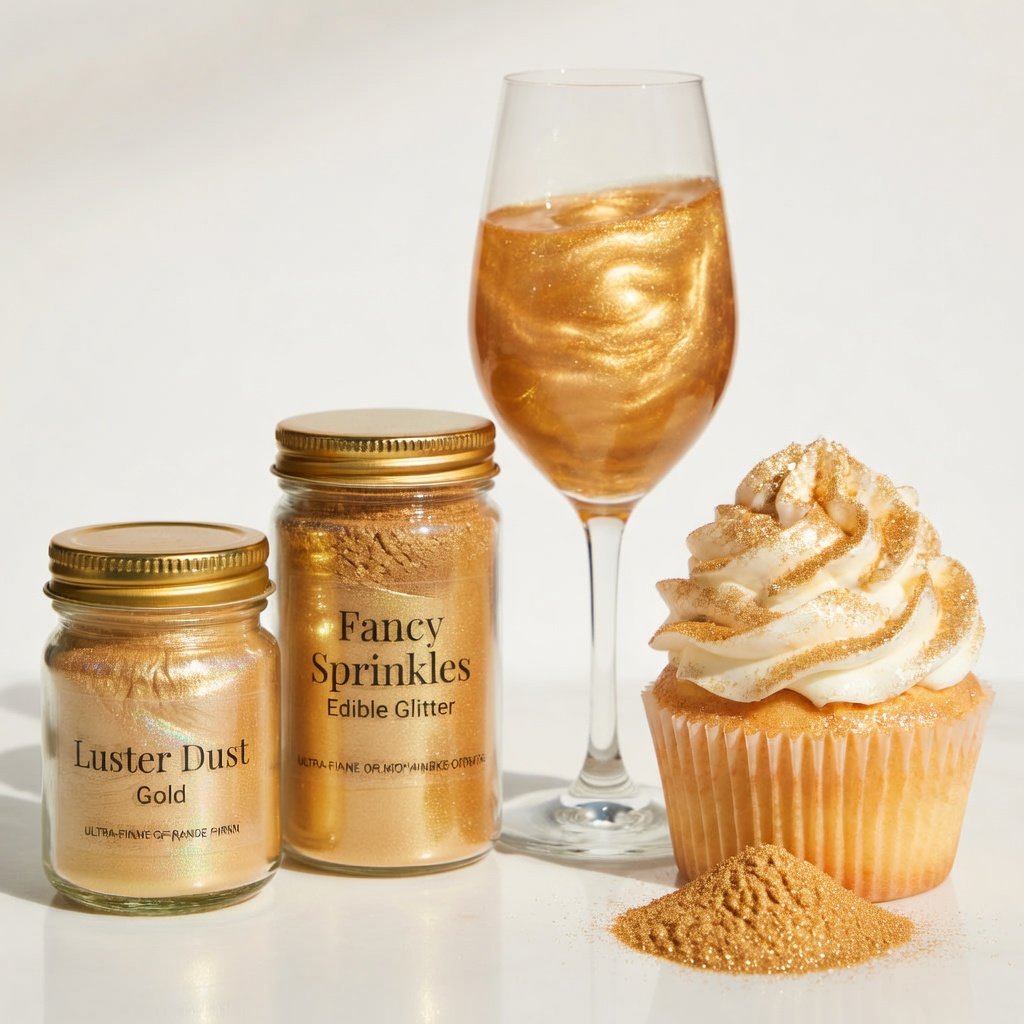
Luster dust — specifically ours, made with German mica pigments — is a microfine powder. The particle size is small enough that it genuinely integrates with surfaces rather than sitting on them. On glossy chocolate, it produces that metallic finish you see in high-end confectionery. On buttercream, it catches light the way a satin fabric does. In a champagne flute, it disperses into thousands of tiny shimmer particles that move through the liquid.
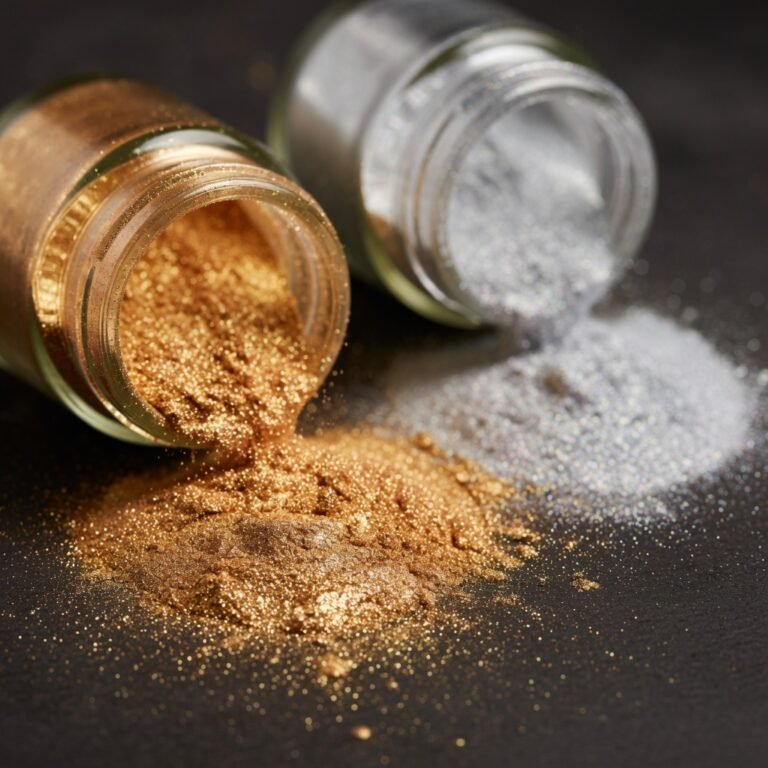
Gold Luster DustGold is the one that converts people. Drop 1/8 teaspoon into a champagne glass before pouring, and the entire drink catches a warm shimmer as it moves. Not chunky. Not obviously “glitter.” Just this rich, luminous quality that makes people stop and look.
Silver Luster DustSilver does something specific on dark chocolate that’s hard to describe without sounding like a snob about it — but it looks genuinely expensive. Not party-store sparkle. More like a confectioner who knows what they’re doing.
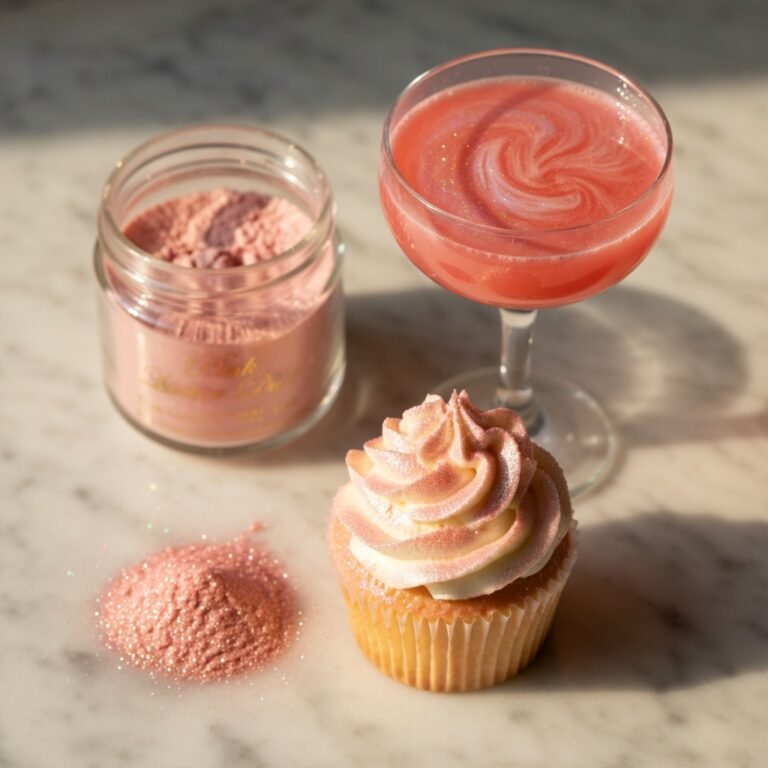
Pink Luster DustPink luster dust on white or vanilla buttercream is the thing. Warm, soft, iridescent. The pink doesn’t scream — it glows.
Luster Dust (Ours)
Pros
- ✓ Microfine German mica pigments — richer, deeper shimmer
- ✓ Disperses beautifully in liquids
- ✓ Blends into surfaces instead of sitting on top
- ✓ 10g jar covers 80+ cocktails or dozens of baked goods
- ✓ FDA compliant, vegan, gluten-free, tasteless
Cons
- ✗ Online only — no retail distribution
- ✗ Fine powder requires a dry brush for some applications
- ✗ Not the right tool if you want chunky/textured glitter
Side by Side
| Feature | Luster Dust | Other |
|---|---|---|
| Glitter Type | Granular/chunky — sits on surface | Microfine powder — integrates with surface |
| Shimmer Quality | Visible sparkle, catches light in chunks | Deep, satin-like shimmer across the whole surface |
| Works in Cocktails? | Tends to clump and settle | Disperses evenly, stays suspended in bubbles |
| Works on Chocolate? | Sits on top, can look gritty | Produces metallic finish, looks professional |
| Works on Buttercream? | Yes — good for chunky glam look | Yes — smooth, luminous coverage |
| FDA Compliant? | Yes (edible line) | Yes |
| Typical Jar Size | 3-5g | 10g (our standard) |
| Price Range | $8-12 for small jars | $9.98 for 10g |
| Where to Buy | Amazon, Target, their website | lusterdust.com |
Which One Should You Buy?
Depends on what you’re making — but here’s the honest take.
Fancy Sprinkles is a good option if you want glitter you can grab quickly, you like their aesthetic, or you’re doing a maximalist cake where individual sparkle pieces are part of the look. It’s a real product that works.
Luster dust is better for almost everything else. If you want shimmer in drinks, metallic coverage on chocolate, a professional finish on fondant, or that soft iridescent look on frosting — the fine powder format does it better. Full stop.
The price difference is minimal. Our 10g jar at $9.98 gives you more product than most of what Fancy Sprinkles sells in the same price range, and the shimmer quality isn’t close. We use German mica pigments specifically because they produce a depth of color that cheaper mica can’t match.
We’re biased, obviously. But we’ve been using this stuff for years, and that’s exactly why we’re biased.
One More Thing
Whichever product you use — check the label. “Non-toxic” and “edible” are not the same thing. Non-toxic means it probably won’t send you to the hospital. Edible means it’s actually food. Our luster dust is FDA compliant, made from food-grade mica pigments, and has been from day one. The Fancy Sprinkles edible line is also compliant — just make sure you’re buying from their edible range and not a craft glitter by accident.
A lot of glitter on Amazon does not meet that bar. If it says “for decorative purposes only” — it’s not for food. Doesn’t matter how pretty it is.
Not exactly — they behave differently. Luster dust is a powder, so for dry applications like dusting over frosting, you’ll want a small food-safe brush or a clean fingertip. For cocktails, just pinch it directly into the glass before pouring. You don’t sprinkle it the way you would granular glitter — a little goes a long way. 1/8 teaspoon in a drink, a light brush over a surface. That’s usually all you need.
Nothing. Zero flavor. That’s by design — it’s food-grade mica, not sugar or candy coating. You won’t taste it in a cocktail or on a cake. Some cheap glitters have a slight chalky taste; ours doesn’t.
Longer than you’d think. For cocktails, you’re using about 1/8 tsp per drink — a 10g jar gets you somewhere around 80 drinks. For cakes, it depends on how heavily you apply it, but most home bakers get 20-30 full cakes from a single jar. It’s a better value than it looks at first glance.