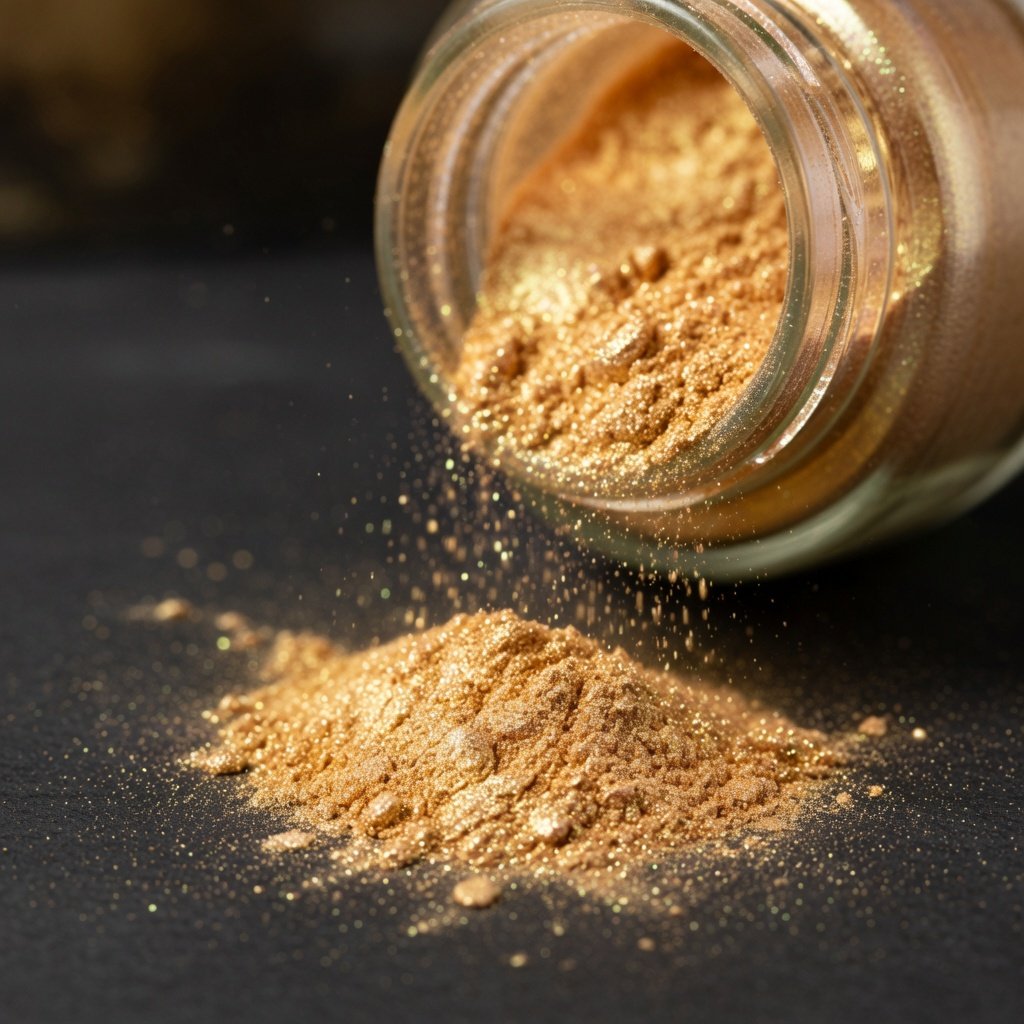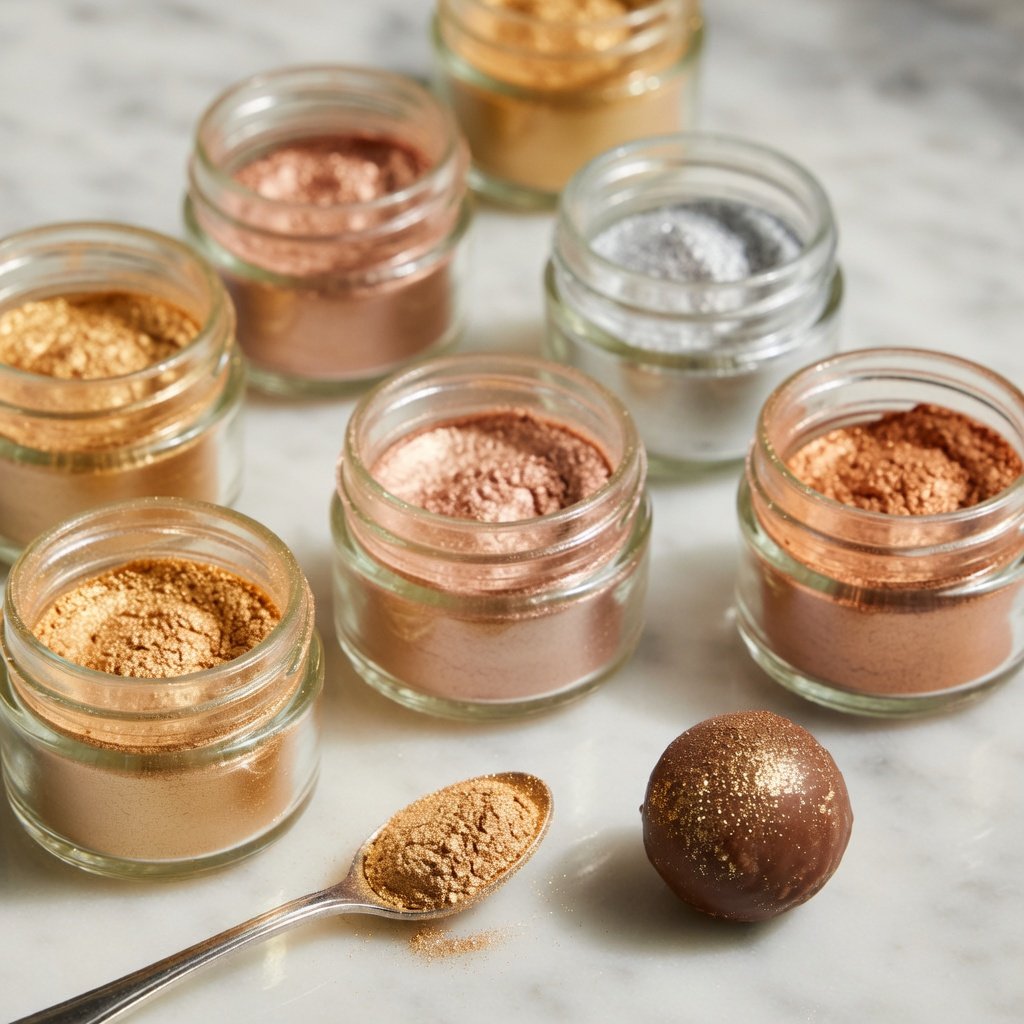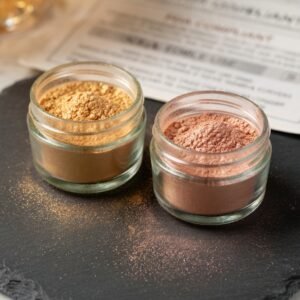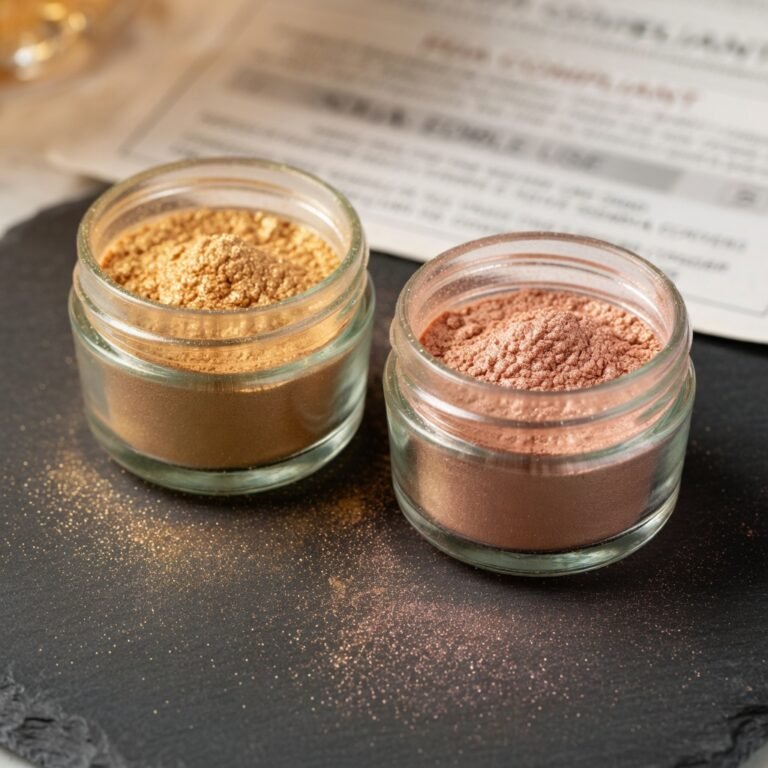
• Edible glitter is made from food-grade mica, a naturally occurring mineral that’s been approved for use in food by the FDA
• “Non-toxic” and “edible” are not the same thing — a lot of craft glitter is one but not the other
• Real edible luster dust is completely tasteless and odorless; it adds shimmer, nothing else
• Our luster dust uses German mica pigments — higher purity, richer color, better shimmer than the cheap stuff
So What’s Actually In It?
Edible glitter has exactly one job: make food look incredible. But the ingredient question trips people up more than it should, mostly because the market is flooded with products that use “edible” loosely. Here’s the straight answer, then the context that actually matters.
Real edible luster dust is made from mica — specifically, cosmetic or food-grade mica coated with iron oxides, titanium dioxide, or other FDA-approved colorants to produce different shades. That’s it. No synthetic dyes in quality products, no weird fillers, no flavor. The ingredient list on our jars is genuinely short.
Mica itself is a naturally occurring silicate mineral. It’s been mined and processed for centuries. The food industry uses an extremely pure, finely milled form that the FDA classifies as safe for consumption. German mica is the standard we hold ourselves to — the purity level and particle uniformity are noticeably better than cheaper sources, and you can see it in the shimmer.
How Is Edible Glitter Made?
The mica starts as thin, flat mineral sheets. Those sheets get milled down to specific particle sizes — the size determines whether the final product looks like fine shimmer, chunky glitter, or something in between. Luster dust sits on the finer end of that spectrum, which is why it disperses so smoothly in liquid and clings to frosting without looking chunky.
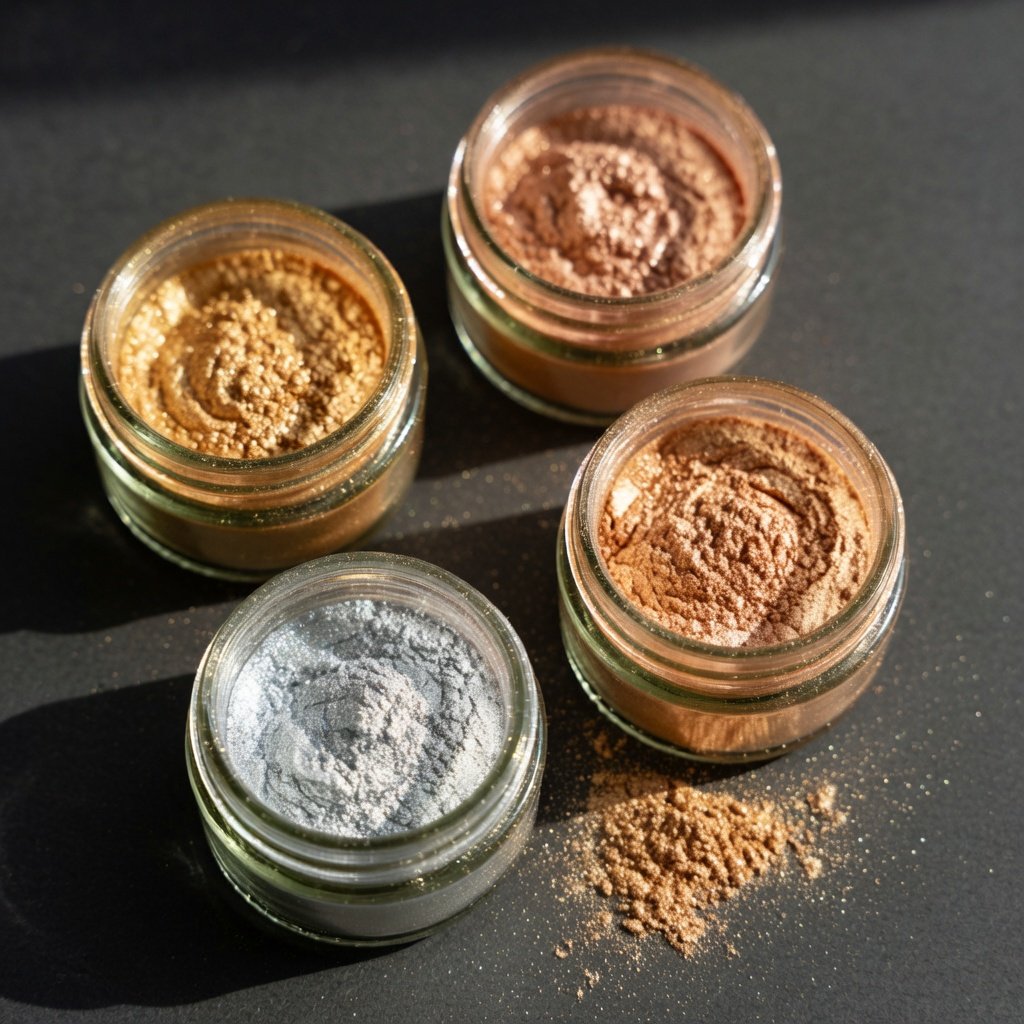
After milling, the mica particles get coated. The coating process is where the color comes from. Iron oxides give you warm tones — the golds, bronzes, coppers. Titanium dioxide creates that bright, pearlescent white base that makes lighter colors like pink and rose gold pop. The coating bonds to the surface of each particle, which is why quality luster dust has such rich, consistent color instead of looking flat or chalky.
The Ingredients, Broken Down
Mica is the structural foundation of every piece of luster dust. Chemically, it’s a group of silicate minerals — muscovite mica is the most common type used in food applications. The FDA approved mica for use in food colorings back in the 1980s, and it’s been in use in the food industry ever since.
Food-grade mica has to meet strict purity standards. The particle size matters too: too large and it won’t disperse properly, too small and the shimmer effect gets lost. The milling process for food-grade mica is more precise — and more expensive — than what goes into craft glitter. That precision is a big part of what you’re paying for with quality luster dust.
Our mica is sourced from Germany specifically because the processing standards there are tighter. The result is a cleaner shimmer and more consistent particle size across the whole jar. You’ll notice it immediately if you’ve used cheaper alternatives.
The colorants used in edible luster dust have to be FDA compliant — and not all colorants qualify. Here’s what’s actually in the mix:
Iron oxides — approved food colorants that produce warm tones. Red iron oxide, yellow iron oxide, and black iron oxide get combined in different ratios to hit specific shades. Our Gold Luster Dust gets its warm, deep tone primarily from yellow and red iron oxides over a mica base.
Titanium dioxide — the white pigment that creates pearlescence. It’s in almost every light-colored luster dust. Pink, Rose Gold, white — titanium dioxide is what gives those colors their luminous quality rather than just looking dusty.
Ultramarines — FDA-approved inorganic pigments for blue and purple shades.
Chromium oxide — approved for green tones.
None of these are artificial dyes. They’re inorganic mineral pigments — stable, tasteless, and cleared for food use.
This might be more useful than the ingredient list itself.
Quality edible luster dust has no added sugar, no starch binders, no artificial flavoring, no synthetic lake dyes, and no metallic particles. Actual metal — like aluminum — is not FDA approved for ingestion and shows up in some craft glitters that get mislabeled as edible. If a product’s label mentions aluminum, it’s not food-safe.
It’s also vegan and gluten-free by nature. No animal products involved in manufacturing mica pigments. Our luster dust is certified on both counts, which matters for a lot of the customers we work with — wedding bakers, restaurants with dietary restrictions on menus, that kind of thing.
The tasteless part is worth emphasizing. Some people expect a slight sweet or metallic flavor. There isn’t one. You’re adding pure shimmer with zero flavor contribution. Your cake still tastes like your cake.
The Non-Toxic vs. Edible Problem
This is the thing that actually matters for safety, so we’re going to be direct about it.
“Non-toxic” means a product won’t cause acute harm if accidentally ingested. It does not mean it’s approved for intentional consumption. A lot of craft glitters — the stuff sold at Michaels and on Amazon for scrapbooking — is labeled non-toxic because you’re not going to end up in the ER if a kid licks their finger. But those products contain materials like polyester film or aluminum that are absolutely not meant to be eaten deliberately.
“Edible” means the ingredients have been reviewed and approved by the FDA specifically for use in food. That’s a higher bar. Our Silver Luster Dust isn’t just non-toxic — every ingredient in it is FDA compliant and food-grade.
Read the label. If it says non-toxic but doesn’t say FDA compliant or food-grade, it’s not edible glitter. It’s craft glitter that happens to not be immediately poisonous.
Does the Quality of Mica Actually Make a Difference?
Yes. And it’s visible.
Lower-quality mica — common in budget products — has inconsistent particle sizes. That means some particles are too large (they clump or feel gritty) and some are too fine (they contribute to color but not shimmer). The result is a product that looks flat in photos and patchy in person.
German mica is processed to tighter tolerances. The particle size distribution is more uniform, which means every particle is doing the same job: reflecting light at the same angle, from the same distance, with the same intensity. That’s what produces the deep, even shimmer you see in quality luster dust versus the dull, dusty look of cheap alternatives.
It’s the difference between a cocktail that looks genuinely luminous and one that just looks like something got spilled in it.
Yes — real edible luster dust made with FDA compliant mica pigments is completely safe. Mica has been approved for food use for decades and is classified as an inert ingredient, meaning it passes through your body without being absorbed. The quantities used in food are minuscule. You’d have to consume an extraordinary amount for it to matter at all.
Luster dust is a fine powder that produces a shimmer or metallic sheen — it’s best for painting onto fondant, dusting over desserts, or mixing into drinks. Chunky edible glitter is coarser, with larger particles that create a more visible, disco-ball type sparkle. Both can be made from mica, but the particle size and application are different. Luster dust is more versatile.
No. Quality luster dust is completely tasteless and odorless. The mica and iron oxide pigments don’t interact with your taste receptors at all. Some cheap products add starch or sugar as a binder, which can contribute a faint sweetness — but that’s not the glitter working, that’s an unnecessary filler ingredient.
All of our luster dust is vegan and gluten-free. Mica-based pigments are mineral-derived — no animal products involved at any point in the process. If you’re baking for someone with dietary restrictions, you can use our luster dust without any concerns on that front.
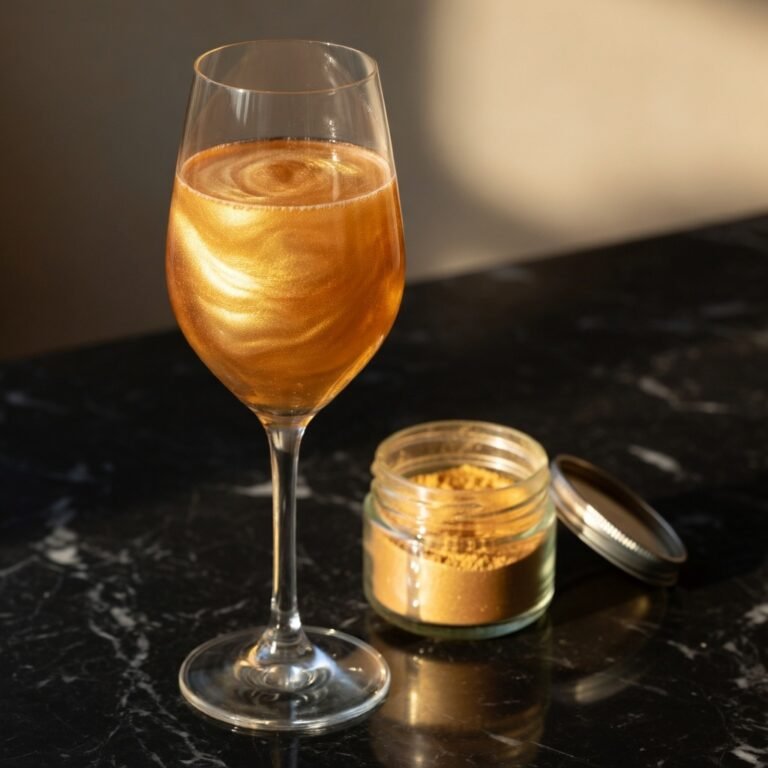
Yes — and it looks incredible. Luster dust disperses in liquid and catches light as it moves through the glass. Use about 1/8 teaspoon per drink. Too much and the drink goes cloudy; the right amount produces a genuine shimmer effect. Gold and silver work especially well in champagne and clear cocktails.