✦ FDA Compliant✦ Vegan & Gluten-Free✦ German Mica Pigments✦ Free Shipping Over $50✦ 13 Colors
April 14, 2026·6 min read
Is Edible Glitter Actually Safe? Everything You Need to Know
✦ Key Takeaways
• “Non-toxic” and “edible” are not the same thing — a lot of glitter products on the market shouldn’t be in food
• Real edible glitter is made from FDA compliant, food-grade mica pigments — same ingredients used in food for decades
• Our luster dust is vegan, gluten-free, and completely tasteless — it’s actual food, not a decoration that happens to not kill you
• If a product doesn’t say “FDA compliant” on the label, don’t eat it
Is Edible Glitter Actually Safe? Everything You Need to Know
Short answer: yes — if it’s actually edible glitter. That last part is where most people run into trouble.
The word “edible” gets thrown around loosely in the craft and baking world. You’ll see glitters labeled “non-toxic,” “food-safe,” “for decorative purposes only,” and “edible” all sitting next to each other on the shelf, and nothing about the packaging makes it obvious which ones actually belong in food. We’ve been making luster dust long enough to find this genuinely frustrating. So here’s the full breakdown.
The Difference Between “Non-Toxic” and “Edible”
This is the thing that matters most, and it’s simpler than the industry makes it look.
Non-toxic means it won’t kill you if you accidentally ingest it. That’s a low bar. Lots of things are non-toxic — craft glitter, certain paints, sidewalk chalk. Non-toxic is a safety rating, not a food classification.
Edible means it’s made from ingredients approved for human consumption. It’s been formulated as food. Big difference.
A lot of “decorative” glitters — the kind sold in craft stores for cakes and cookies — are technically non-toxic but are not edible. They’re often made from plastic, polyester film, or metallic powders that aren’t food-grade. Fine for a display cake nobody eats. Not fine for an actual dessert or cocktail.
If a product label says “non-toxic” but doesn’t say “FDA compliant” or “food-grade,” treat it as a craft supply. Don’t eat it.
What Makes Luster Dust Actually Safe
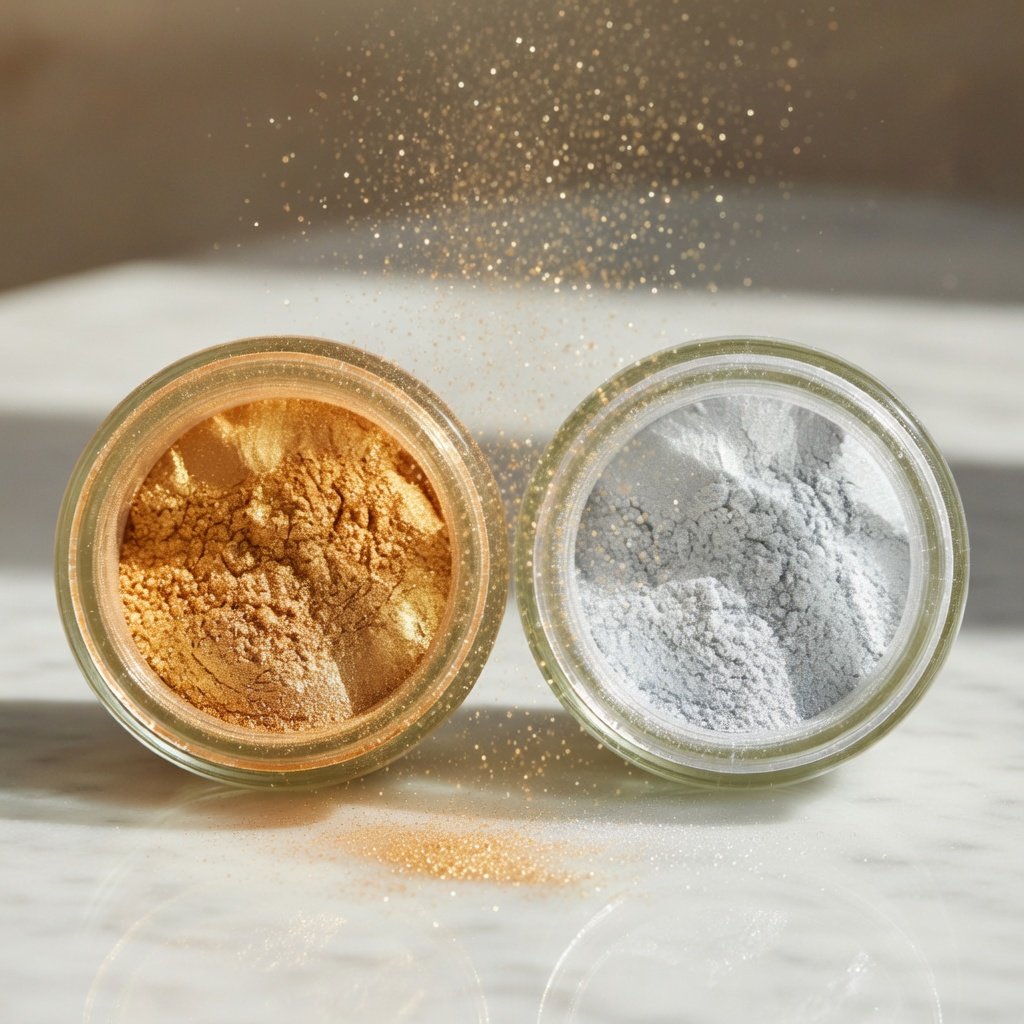
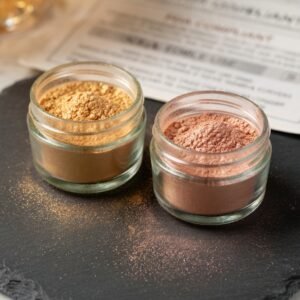
Ours is made from mica-based pearlescent pigments — specifically German mica, which produces that deep, consistent shimmer you can’t get from cheaper materials. Mica is a naturally occurring mineral that’s been used as a food colorant and cosmetic ingredient for decades. The FDA has approved mica titanium dioxide and iron oxide colorants for use in food. It’s not exotic or experimental — it’s the same base ingredient in a lot of food colorants you’ve already eaten.
Every color we make is:
FDA compliant
Vegan and gluten-free
Completely tasteless and odorless
Free from GMOs
You could eat an entire jar and the only consequence would be some very committed shimmer on the way out. We’re not recommending that, but the point stands — this is real food, not a decoration that’s merely survived contact with humans.
How to Tell If a Glitter Product Is Actually Edible
The label is everything. Here’s what you’re looking for:
FDA compliant — this is the phrase that matters in the US. If it’s not there, be skeptical.
Ingredients list — real edible glitter will list its colorants specifically. Mica, titanium dioxide, iron oxides. If you see “polyester” or “mylar” anywhere, put it back.
“For decorative purposes only” — this one’s the giveaway. It means don’t eat it. Manufacturers write this to avoid liability. Take them at their word.
The label should read like a food product because it is one. If it reads like a craft supply, it’s a craft supply.
Where you’re buying it matters. Craft stores like Michaels or Hobby Lobby carry some edible options, but they also carry a lot of decorative-only products right next to them, with similar packaging. Online marketplaces are worse — Amazon in particular has a flood of cheap glitters with vague labeling and no clear compliance information.
Buy from a source that’s transparent about their ingredients and specifically manufactures for food use. A company that makes edible glitter as their actual product — not a side SKU in a craft supply catalog — is going to be more careful about what goes into it.
We put our compliance information on every product page. No digging required.
A few things that should make you pause before using a glitter product in food:
The word “non-toxic” appears but “edible” or “FDA compliant” doesn’t
No ingredients list at all
Sold exclusively in craft sections, not baking sections
Price seems very low — quality food-grade pigments cost more to source
The product description mentions “crafts,” “DIY,” or “decoration” more than food
None of these are definitive on their own, but if you’re seeing two or three of them on the same product, pass.
What We’d Actually Recommend
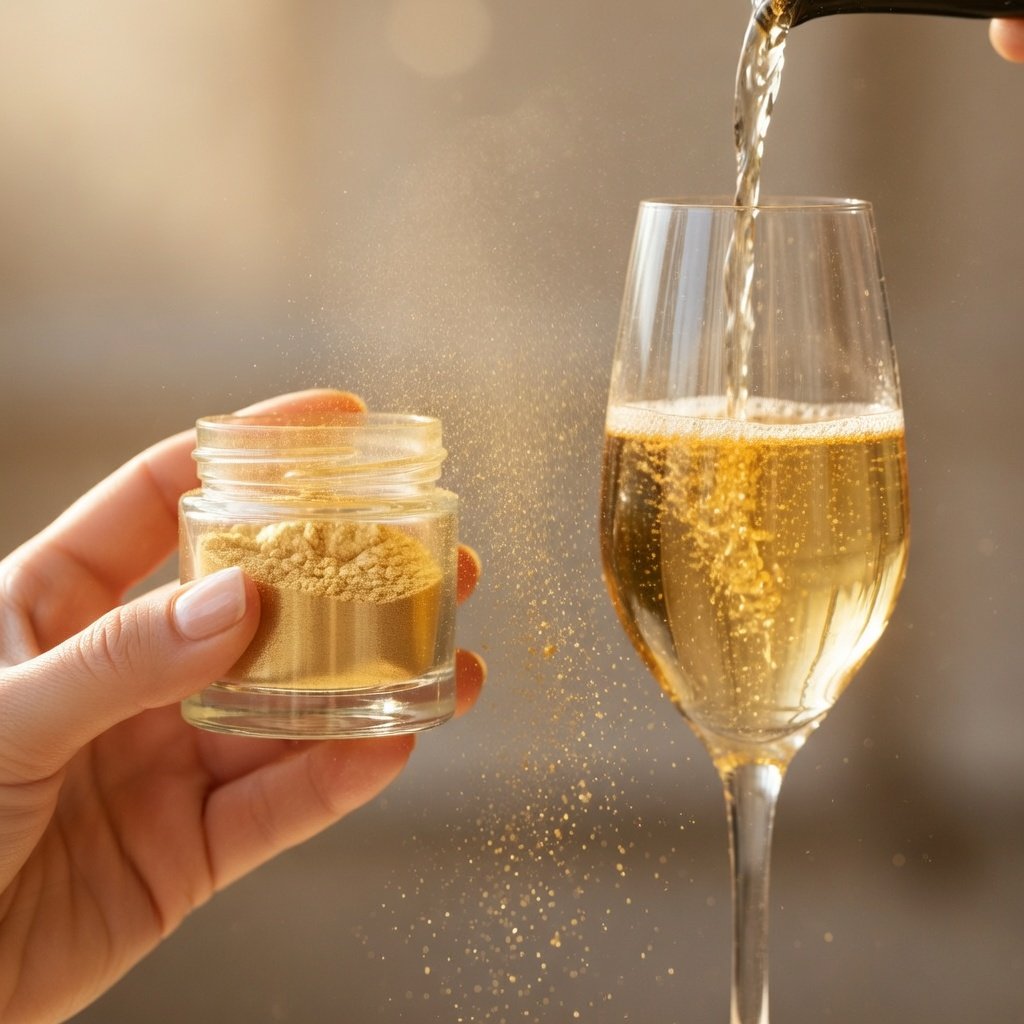
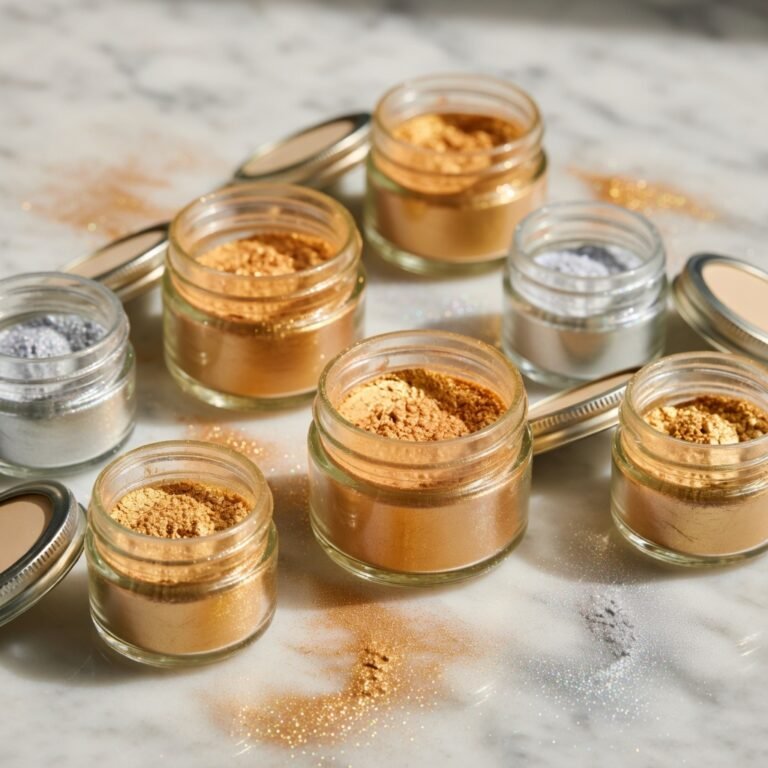
For drinks — cocktails, champagne, sparkling water — Gold Luster Dust is the one we reach for constantly. Drop a pinch in a flute and the shimmer catches every bubble on the way up. Looks unreal. About 1/8 teaspoon per glass is all you need — more than that and you’re just muddying the drink.
Silver Luster Dust is our go-to for dark desserts. Silver on a chocolate truffle looks absurdly expensive. It’s a five-second thing that completely changes how a dessert reads.
For anything pink — cakes, cupcakes, strawberries, rosé cocktails — Pink Luster Dust has this warm, slightly rosy shimmer that photographs beautifully and works on basically every texture we’ve tried it on.
All three are FDA compliant, made with the same German mica pigments, tasteless, and genuinely safe to eat. That’s the whole point.
The Bottom Line
Edible glitter is safe. Craft glitter is not food. The gap between those two things is real, and the packaging in most stores doesn’t make it obvious enough.
Check the label. Look for FDA compliant. Look for an actual ingredients list. Buy from someone who makes food products on purpose. Do those three things and you’ll never have a problem.
FDA compliant is the right term here — the FDA approves specific colorant ingredients, not individual products. What you’re looking for is glitter made from FDA-approved colorants like mica, titanium dioxide, and iron oxides. Our luster dust uses all FDA compliant ingredients. A product that just says “non-toxic” hasn’t cleared that bar.
Yes — the same way they can eat any other food coloring. Our luster dust is made from food-grade mica pigments, vegan, gluten-free, and tasteless. It’s genuinely just food. If your kid eats a cupcake dusted with it, they’re fine.
Probably nothing serious — most craft glitter is non-toxic, meaning it won’t cause acute harm. But it’s not designed to be digested, and some versions are made from plastic or metallic materials that have no business being in your stomach. If it was a small amount, you’re likely fine. If you’re concerned, the ASPCA Poison Control line also handles human ingestion questions, or call your local poison control center.
Nothing. Zero flavor. Our luster dust is completely tasteless and odorless — it adds shimmer, not flavor. You’ll never notice it in a cocktail or on a dessert except visually.
Close, but not identical. Luster dust — which is what we make — is a fine pearlescent powder that produces a deep, metallic shimmer. Edible glitter is sometimes used as a broader term covering everything from fine dusts to chunky flake-style glitters. Luster dust is the most versatile version — it works on drinks, desserts, chocolates, frosting, and more.
Is Edible Glitter Actually Safe? Everything You Need to Know
✦ Key Takeaways
Real edible glitter is FDA compliant and made from food-grade mica pigments — completely safe to eat
“Non-toxic” and “edible” are not the same thing. A lot of craft glitter gets mislabeled, and that distinction matters
Our luster dust is vegan, gluten-free, tasteless, and has been used in food for decades
The easiest way to check: if the label doesn’t say “FDA compliant,” don’t put it in food
Yes. Edible glitter is safe to eat. But that answer comes with a catch, and the catch matters more than people realize.
Not all glitter sold as “edible” actually is. Some of it is craft glitter. Some of it is cosmetic glitter. Some of it is genuinely food-safe, and some of it is sitting in the same aisle as the glue sticks at Michaels. If you’ve ever stood in a store or scrolled Amazon wondering whether a particular jar is okay to put on a cake, you’re not paranoid — you’re paying attention.
Here’s what you actually need to know.
What’s in Edible Glitter?
Real edible luster dust is made from mica — a naturally occurring mineral that’s been used as a food colorant for a long time. The FDA classifies mica-based pearlescent pigments as safe for use in food. That’s not marketing language. That’s the actual regulatory determination.
Our luster dust uses German mica pigments — higher purity, richer color, noticeably better shimmer than the generic stuff. The full ingredient list is short: mica, iron oxides or other approved colorants depending on the shade. That’s it. No weird fillers, no synthetic dyes that don’t belong in food, no mystery compounds.
It’s also completely tasteless. You won’t notice it in a cocktail, on a cupcake, or dusted over chocolate. The shimmer is the only thing it adds.
“Non-Toxic” vs. “Edible” — This Is the Important Part
These two words are not interchangeable, and the glitter industry has done a genuinely bad job of making that clear.
Non-toxic means it won’t cause acute harm if ingested accidentally. Your kid eats a crayon, it’s non-toxic — you don’t call poison control. That doesn’t mean it’s food.
Edible means it’s formulated, tested, and approved for consumption. It’s made with food-grade ingredients, manufactured in food-safe conditions, and held to a completely different standard.
A lot of glitter — especially the loose craft glitter you see in bulk at art supply stores — is labeled non-toxic. That label means almost nothing for food use. Some of it is made from plastic or metal flakes. Some is colored with pigments that aren’t approved for ingestion. It looks identical to luster dust in a jar, and that’s the problem.
We wrote a full breakdown of what FDA compliance actually means in practice over at our FDA compliant edible glitter guide — worth a read if you want the regulatory details.
Is Luster Dust Bad for You?
No. Not even a little. Mica-based pigments have been in food for decades — they’re used in candy coatings, cake decorations, and plenty of other products you’ve eaten without thinking about it. The amounts used in typical decorating are so small that the question of “how much is too much” isn’t really a practical concern.
Our luster dust is:
FDA compliant
Vegan and gluten-free
Free from GMOs
Tasteless and odorless
Made without any ingredients that aren’t approved for food use
The only scenario where edible glitter could be “bad for you” is if you’re eating something that isn’t actually edible — which is why the label check matters every single time.
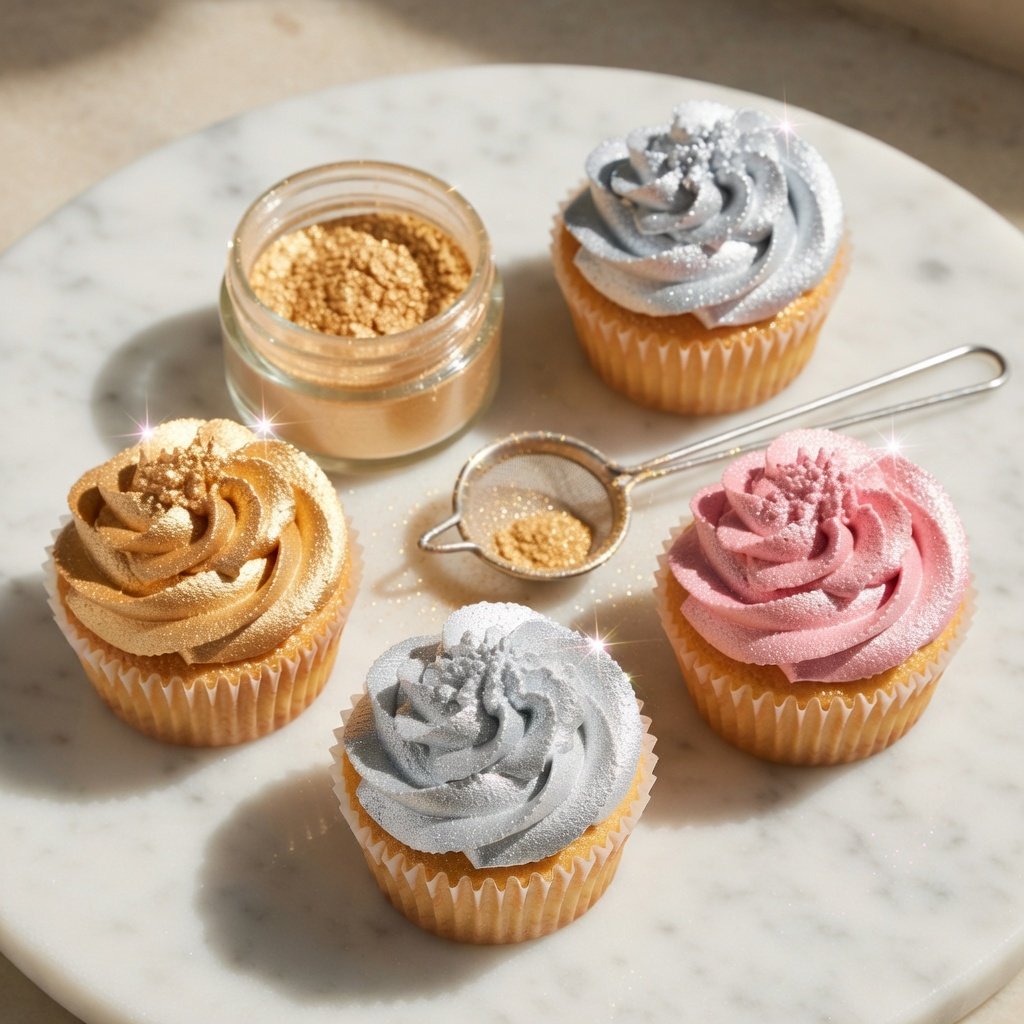
These shimmer-topped cupcakes prove edible glitter is safe to eat and stunning to serve.
How to Tell If Your Glitter Is Actually Safe
Quick gut check before you open a jar:
Does it say “FDA compliant” or “food grade” on the label? Good sign.
Does it list actual ingredients — mica, titanium dioxide, iron oxides? Those are what you want to see.
Does it only say “non-toxic” with no mention of food safety? Don’t use it on food.
Did it come from a craft store craft section rather than a baking section? Proceed with caution and read the label carefully.
Does the listing on Amazon say things like “for decorative use only”? That’s your answer.
Trust the label over the category. A product in the baking aisle can still be non-food-grade, and a product from an online specialty retailer can be fully FDA compliant. Read what’s actually written on the jar.
What About Edible Glitter in Drinks?
Same rules apply — but drinks are where we see the most confusion, probably because the visual payoff is so good and people want to recreate what they’ve seen at bars without thinking too hard about sourcing.
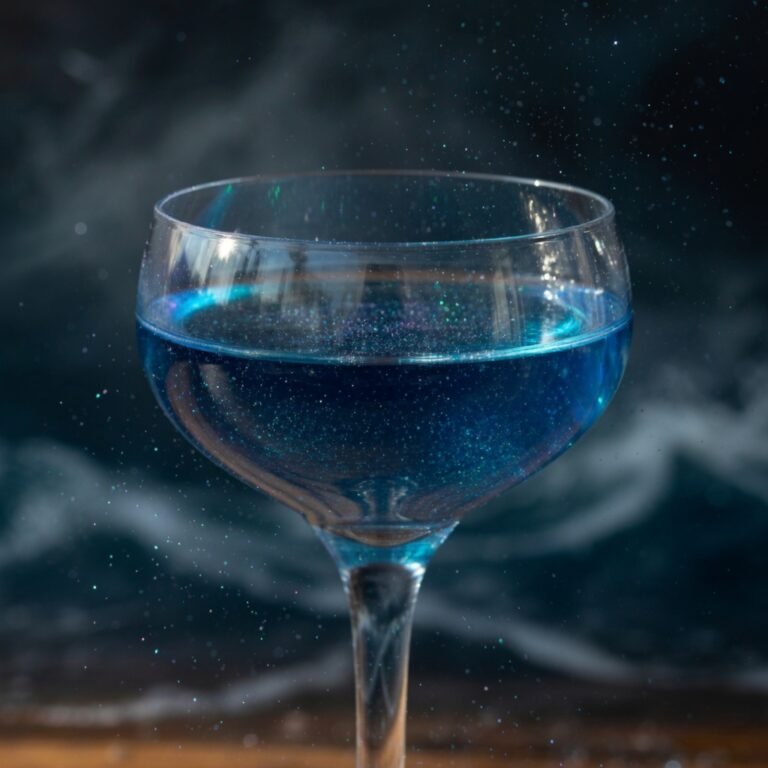
Luster dust works beautifully in cocktails. A pinch of Gold Luster Dust in a champagne flute catches light the whole way down the glass. Silver Luster Dust in a dark spirit cocktail looks like something out of a high-end bar. The particles stay suspended for a few minutes, settle slowly, and look incredible the entire time.
Our buyer’s guide for edible glitter in drinks covers the specifics on quantities, which colors work best for different cocktails, and what to avoid. But the safety question is simple: FDA compliant luster dust in drinks is safe. Craft glitter in drinks is not.
If you want to try it immediately, our Gold Shimmer Champagne Cocktail is the easiest starting point — one ingredient, thirty seconds, and the results are ridiculous.
Can Kids Eat Edible Glitter?
Yes. FDA compliant luster dust is safe for kids — we ship a lot of it to parents decorating birthday cakes. The ingredient profile is the same whether you’re 5 or 55. Just make sure you’re using actual food-grade product and not something grabbed from the craft section.
Pink Luster Dust on birthday cupcakes is one of our most popular uses. Kids lose their minds over it. Parents appreciate that it’s actually food.
The Short Version
Edible glitter is safe when it’s actually edible. The mica pigments used in quality luster dust are FDA compliant, have a long track record in food, and won’t cause you any harm. The risk isn’t with edible glitter — it’s with products that look like edible glitter but aren’t formulated for food use.
Check the label. Look for FDA compliance. Buy from brands that are transparent about their ingredients. Do that and you’re fine.
There’s no reason you’d want to, but the ingredients in FDA compliant luster dust are stable, inert, and cleared for food use. Using it regularly on baked goods or in drinks isn’t a health concern. The amounts involved in normal use are tiny.
It depends entirely on what’s in it. Craft glitter made from plastic isn’t going to be absorbed by your body — it’ll pass through. But that’s not a reason to use it on food. Some craft glitters use colorants that aren’t approved for consumption. The risk varies by product, and none of it is worth taking when actual edible options exist.
Almost, but not exactly. Luster dust is a specific type of edible glitter — finely milled mica pigment that produces a smooth, pearlescent shimmer rather than a chunky sparkle. It’s what we make. Other edible glitter products include sugar-based sparkles or disco dust, which have different textures and applications. Luster dust is the best option for drinks and anything where you want a fine, even shimmer.
Because it isn’t food. That label is the manufacturer’s way of saying “don’t eat this” without explicitly calling it non-edible. You’ll see it on craft glitters, some cosmetic-grade micas, and unfortunately some products marketed toward bakers who don’t read the fine print. If you see that phrase anywhere on the packaging, don’t use it in or on food. Period.
Ours is — across every color we make. The mica pigments used in our luster dust are mineral-based, not animal-derived. There’s no gluten anywhere in the formulation. If you have specific dietary concerns, the ingredient list is short enough that you can verify everything yourself.