• Not all edible glitter is actually edible — FDA compliant is the only label that matters
• Gold and rose gold suit warm frostings; silver and white work best on dark or cool-toned cakes
• A 10g jar goes further than you’d expect — 30+ cake applications from one jar, easy
• German mica pigments shimmer differently than cheap craft-store glitters. Once you see it, you can’t unsee it
The Best Edible Glitter for Cakes: A Buyer’s Guide
Most people buy edible glitter once, use it wrong, and assume it’s overrated. It’s not. Bad glitter and bad technique are two very different problems, and both are fixable. This guide covers the colors worth having, how to use them, and what to skip.
First: “Non-Toxic” Is Not the Same as “Edible”
This matters. A lot of glitter products — especially ones you’ll find at craft stores or in sketchy Amazon listings — say “non-toxic” on the label and nothing else. Non-toxic means it won’t send you to the hospital. It doesn’t mean it’s food. Real edible glitter is FDA compliant, made from food-grade ingredients, and safe to actually eat.
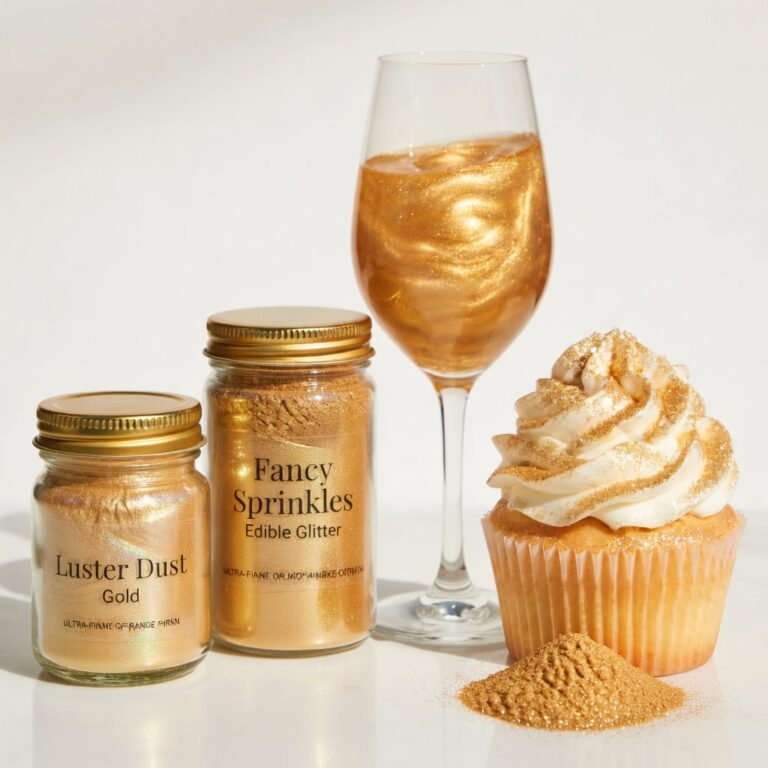
Our luster dust is FDA compliant across every color. Mica-based pigments, the same ones used in food production for decades. Vegan, gluten-free, completely tasteless. If a product you’re looking at doesn’t say FDA compliant, put it down.
The Four Colors That Actually Get Used
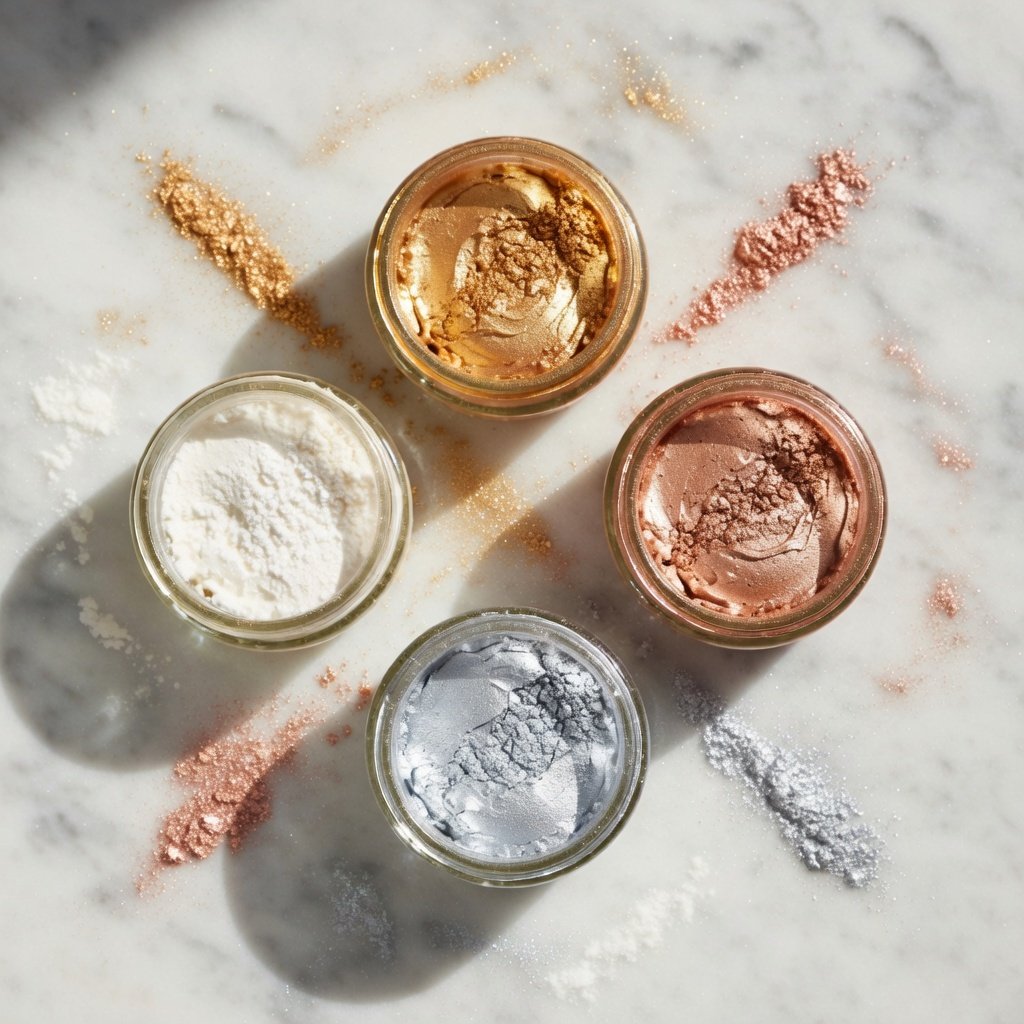
You don’t need a collection of 30 colors to start. You need the right four. After years of testing these on everything from naked cakes to five-tier fondant builds, here’s where each one earns its spot.
Gold
Gold outsells every other color by a wide margin. That’s not a coincidence. It works on buttercream, fondant, ganache — basically anything. The German mica pigments give it a deep, warm tone that cheap glitters can’t replicate. Where cheap gold looks flat or almost yellow, ours catches light with actual depth. You’ll notice it immediately.
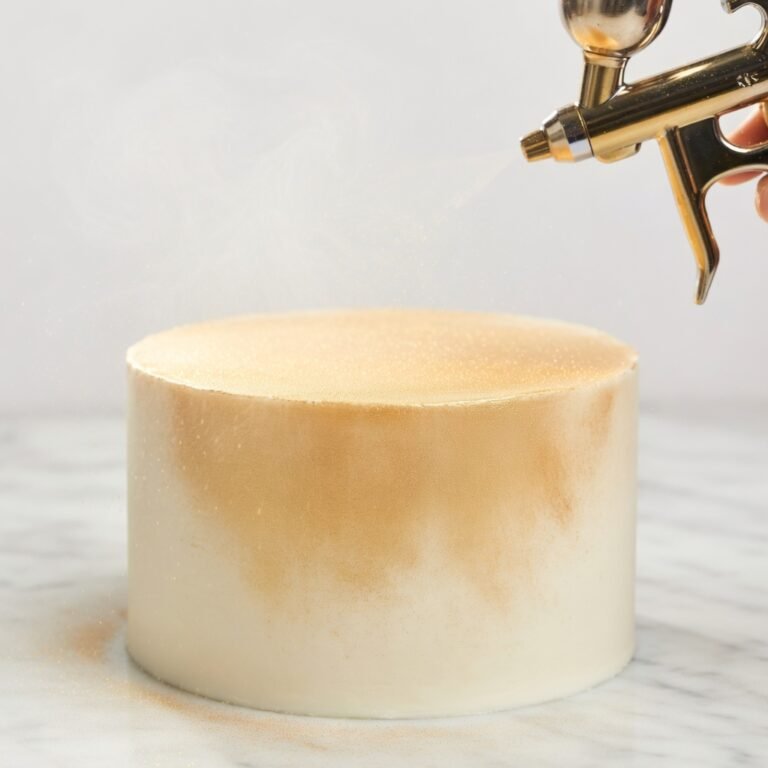
Best uses: brushing onto fondant details, dusting over buttercream for a metallic finish, mixing into water to paint gold accents directly onto cake tiers. Gold Luster Dust is the one jar we’d say everyone needs.
Rose Gold
Rose gold has had a moment for the last few years and honestly it hasn’t passed. It’s warmer than silver, more versatile than straight pink, and it does something genuinely beautiful on white buttercream — a soft, blushed shimmer that looks expensive without trying too hard.
It’s particularly good on wedding cakes and birthday cakes where you want a warm metallic without the formality of gold. We’d also reach for Rose Gold Luster Dust for drip cakes — brushed over the set drip, it catches light at every edge.
Silver
Silver gets underestimated. Everyone reaches for gold by default, and silver sits in the background doing nothing — which is a waste. On dark desserts — chocolate ganache, dark red velvet, navy fondant — silver looks extraordinary. Almost expensive in a way that’s hard to explain until you see it in person.
It’s also the move for anything modern or minimalist. Clean white cake, simple design, silver dusted over the top. Done. Silver Luster Dust is one of those colors that pays for itself the first time you use it right.
White
White luster dust isn’t about adding color — it’s about adding light. Dusted over a white fondant cake, it creates this soft, pearlescent glow that photographs beautifully. It’s subtle, which is exactly the point.
It’s also the secret ingredient for making other colors pop. A light base coat of white before applying gold or rose gold amplifies the shimmer significantly. White Luster Dust is the one color that professional cake decorators almost always have on hand — even if they never tell you about it.
How to Actually Apply It
Two methods. Both work. Which one you use depends on what you’re going for.
Dry dusting: Dip a soft food-safe brush into the jar, tap off the excess, and brush directly onto the surface. Works best on fondant and dry surfaces. The shimmer is diffuse, like a glow rather than a paint. Good for large areas.
Wet painting: Mix a small amount of luster dust with food-grade alcohol (clear vanilla extract or vodka both work) or a dedicated edible painting medium. The alcohol evaporates quickly, leaving the pigment behind as a metallic paint. Sharp, defined, and brilliant. Use this for details, lettering, or anywhere you want a true metallic effect.
One thing people consistently get wrong: using too much. With dry dusting, less is more. Start with almost nothing on the brush, build up gradually. You can always add more. Overdone shimmer looks chalky, not metallic.
How Our Colors Compare Side by Side
| Feature | Luster Dust | Other |
|---|---|---|
| Tone | Gold — warm, deep yellow-gold | Rose Gold — warm, pink-bronze hybrid |
| Best Surface | Buttercream, fondant, ganache | White buttercream, smooth fondant, drip edges |
| Best Occasion | Weddings, birthdays, celebrations | Weddings, bridal showers, modern celebrations |
| Pairs With | Silver (contrast), White (base coat) | Pink, Gold (blend), White (base coat) |
| Dry Dust Result | Rich metallic glow | Soft blushed shimmer |
| Wet Paint Result | Bold metallic gold | Warm metallic bronze-pink |
Gold Luster Dust
Pros
- ✓ Works on every frosting type
- ✓ Most versatile color we make
- ✓ Deepest, richest shimmer
- ✓ Photographs brilliantly
Cons
- ✗ Can look too formal for some casual designs
- ✗ Very easy to overdo on lighter cakes
Rose Gold Luster Dust
Pros
- ✓ Warm and modern at the same time
- ✓ Beautiful on white and ivory surfaces
- ✓ Works as both accent and full coverage
- ✓ Trending but not going anywhere
Cons
- ✗ Less versatile on dark-toned cakes
- ✗ Slight learning curve to get the tone right
Silver Luster Dust
Pros
- ✓ Stunning on dark and jewel-toned cakes
- ✓ Modern, editorial look
- ✓ Great for minimalist designs
- ✓ Underutilized — makes your work stand out
Cons
- ✗ Can look cold on warm-toned frostings
- ✗ Needs the right cake to really sing
White Luster Dust
Pros
- ✓ Adds glow without adding color
- ✓ Amplifies other colors underneath
- ✓ Subtle and photogenic
- ✓ Works on literally every cake
Cons
- ✗ Easy to miss in photographs if you're too subtle
- ✗ Doesn't work as a standalone statement color
What You’ll Get From a 10g Jar
More than you think. A 10g jar of luster dust will get you through 30+ full cakes with dry dusting, and significantly more if you’re using it for detail work only. The particles are fine enough that a little goes a long way. We’ve seen people buy the 1kg bulk size — that’s for bakeries running luster dust through dozens of cakes a week. For home bakers, 10g is the right place to start.
All jars ship free over $50. So grab two or three colors and you’re set.
The Honest Verdict
Start with gold. If you only buy one color, that’s the one — it’s the most forgiving, the most versatile, and the most impactful. Add rose gold next if you work with lighter cakes or warmer color palettes. Silver if you do anything modern or dark-toned. White once you’re ready to really dial in your technique.
The quality difference between German mica pigments and what you’ll find at most craft stores is real and visible. That shimmer — the way it moves when light hits it from different angles — that’s what you’re paying for. And at $9.98 for a 10g jar, it’s not exactly a commitment.
Yes. Our luster dust is FDA compliant across every color — made from food-grade mica pigments that have been used safely in food production for decades. Vegan, gluten-free, tasteless, and odorless. If a glitter product only says “non-toxic” on the label and not “FDA compliant” or “edible,” that’s a different story.
Luster dust is a fine mica-based powder that creates a metallic or pearlescent shimmer. Edible glitter usually refers to larger, more visible glitter particles made from sugar or starch. Different effects, different applications. Luster dust is better for painted or brushed finishes; chunky glitter is better for sparkle on top of frosting.
Yes — and it works beautifully. Dry dusting over smooth buttercream gives a diffuse glow. For a sharper metallic look, mix with a small amount of clear alcohol and paint it on. The alcohol evaporates and leaves the pigment behind.
A 10g jar handles 30+ full cakes with standard application. If you’re using it for detail work only, it’ll last much longer. The powder is fine enough that you use very little per project.
Not necessarily. Dry dusting works straight from the jar. If you want a painted finish, mix a small amount with food-grade alcohol (clear vanilla extract or vodka both work) to create an edible paint. Let it sit for 30 seconds after mixing so the pigment fully suspends.