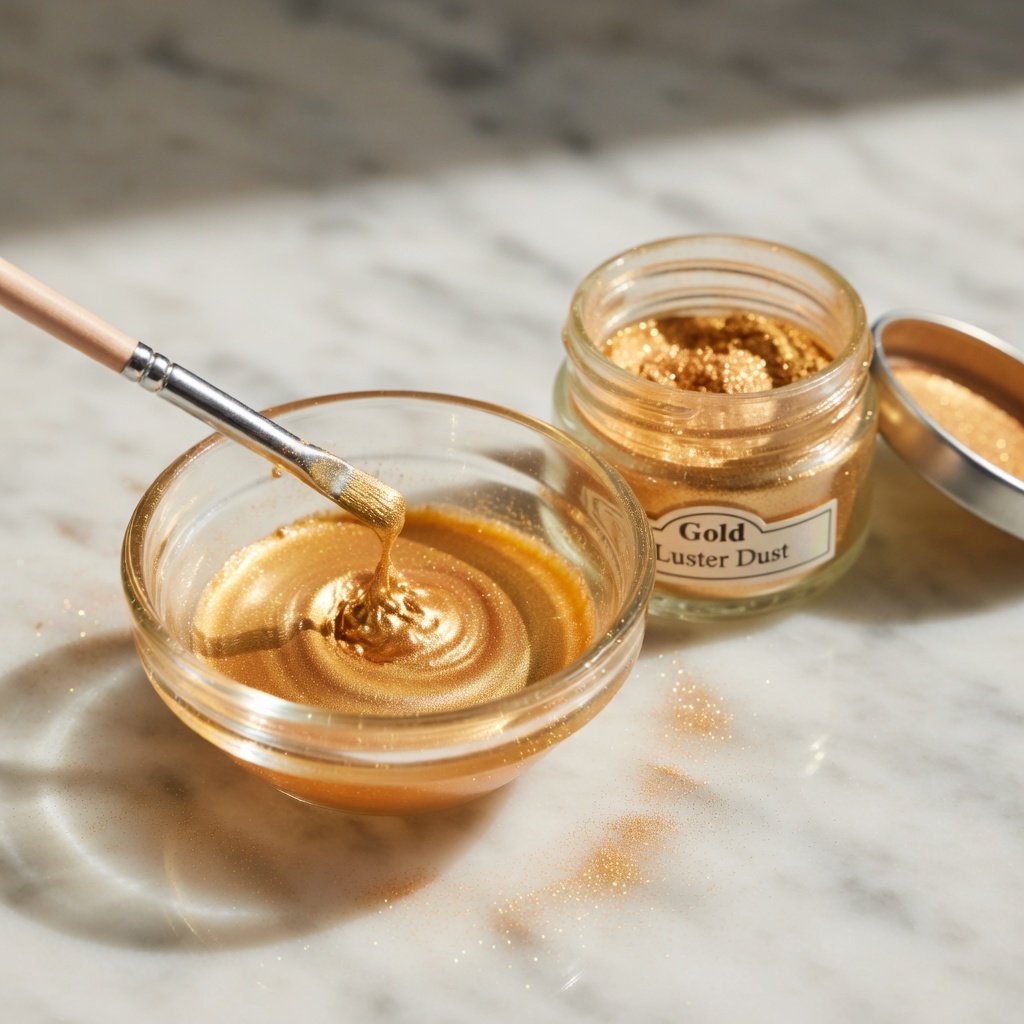
• Mix luster dust with just a few drops of alcohol or extract — not water — for a smooth, fast-drying paint
• 1/4 teaspoon of luster dust makes enough paint for most single-tier cakes
• Gold, silver, and pink are the three most versatile colors to start with
• This technique works on fondant, chocolate, and dried royal icing
Painting luster dust directly onto a cake is the fastest way to go from flat to stunning. Mix it with a little clear extract, load a brush, and you’re painting. That’s the whole thing.
Ingredients
- 1/4 tsp Gold Luster Dust
- 1 tsp Clear vanilla extract or high-proof vodka
- 1 Small glass or ceramic mixing dish
- 1 Fine food-safe paintbrush
Add 1/4 teaspoon of luster dust to a small dish. Pour in about 1/2 teaspoon of clear vanilla extract or vodka. Stir with the tip of your brush until it forms a smooth, slightly thick paste — close to watercolor consistency. If it’s too thick to brush cleanly, add drops of liquid one at a time until it flows. If it’s too watery, add a small pinch more dust.
Before you touch the cake, test the paint on a piece of spare fondant or a small corner nobody will see. You’re checking two things: consistency (does it brush on smoothly without dragging?) and opacity (is the shimmer showing up the way you want?). Thirty seconds here saves a lot of frustration later.
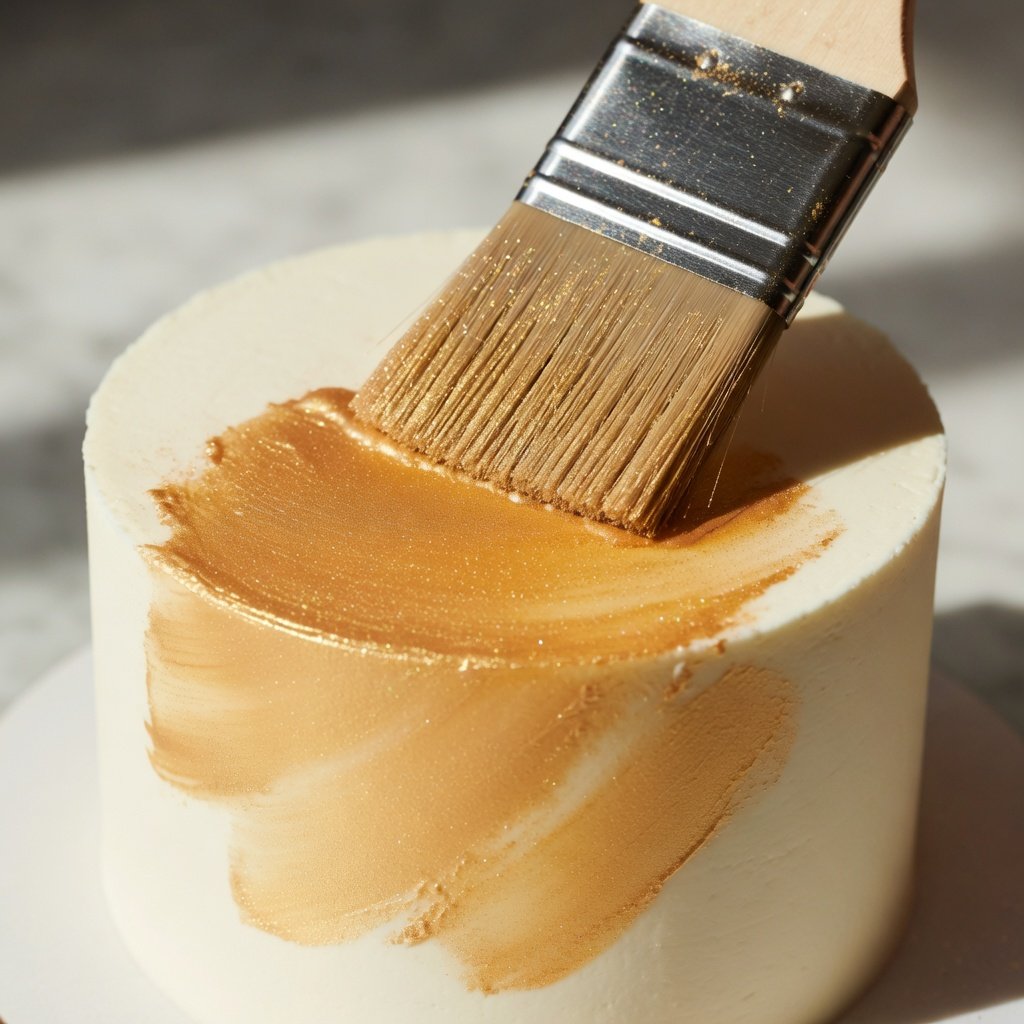
Work in thin, confident strokes. Don’t overwork any one spot — luster dust paint can pill if you go back over a wet area too many times. For full coverage, do one pass, let it dry for 30-45 seconds, then add a second coat if needed. For a brushed-metal look, use short overlapping strokes in the same direction.
The alcohol or extract evaporates quickly — usually within a minute or two at room temperature. Once dry, the shimmer locks in. Don’t touch it until it’s fully set or you’ll pull the pigment.
Which Color to Use
Gold Luster Dust is the obvious starting point. It covers beautifully in one or two coats and works on white, ivory, and even black fondant. The warm tone reads as luxurious — there’s a reason it’s the most-used color in professional cake decorating.
Silver Luster Dust behaves almost identically but gives you a cooler, more modern finish. It’s especially good on dark chocolate fondant — the contrast is sharp and clean. If gold feels too warm for your design, silver’s the call.
Pink Luster Dust is our pick for floral work. The shimmer on pink petals is genuinely ridiculous — it catches light from every angle. Mix it slightly thinner than gold or silver and use a narrow brush for detail work.
For a deeper look at how each color behaves on different surfaces — fondant versus buttercream versus royal icing — the [how to use edible glitter on cakes, cupcakes & cookies guide](https://lusterdust.com/how-to-use-edible-glitter-on-cakes-cupcakes-cookies/) covers it in detail.
Tips
Water doesn’t evaporate — it soaks into fondant and creates soft, sticky patches. Clear vanilla extract works fine, but 190-proof vodka or Everclear is actually better because it evaporates faster and leaves zero residue. Lemon or almond extract work too, just know the smell lingers faintly until the cake is cut.
The liquid evaporates fast — that’s the point. But it also means your paint can thicken up mid-project. Keep a small piece of cling wrap over your mixing dish between coats. Add a single drop of liquid and stir if it starts to stiffen.
If the liquid paint feels like too much too soon, try dry-brushing first. Dip a brush into straight luster dust powder and brush it directly onto fondant using light, feathery strokes. It’s more forgiving and still gives great shimmer. The [beginner’s guide to luster dust](https://lusterdust.com/edible-luster-dust-for-beginners-your-first-project-guide/) walks through both methods side by side.
You Might Also Like
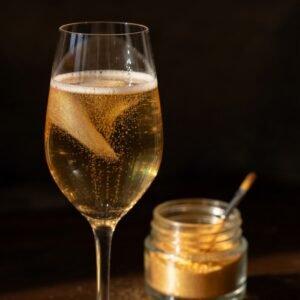
Gold Shimmer Champagne Cocktail
Gold luster dust in champagne. Thirty seconds, looks like a million dollars.

Glitter Rimmed Cocktail Glasses
Another way to get shimmer on your table without touching the cake.
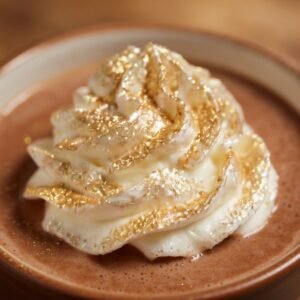
Shimmer Whipped Cream Topper
Quick shimmer fix for desserts when you don't have time to paint anything.