- Yes, you can use luster dust in an airbrush — but you need the right liquid to mix it with
- High-proof clear alcohol (vodka or Everclear) is the go-to; it evaporates fast and leaves clean shimmer
- The ratio matters: too thick and it clogs, too thin and the shimmer disappears
- Clean your airbrush immediately after — mica particles will settle and dry in the nozzle
Airbrushing with luster dust is one of those techniques that looks impossibly professional and is actually pretty straightforward once you nail the mix. The shimmer you get — smooth, even, almost metallic — is hard to replicate any other way. Here’s exactly how to do it.
What You’re Actually Doing Here
Luster dust doesn’t dissolve in liquid. It suspends. That’s an important distinction, because it means your mixture will settle if you stop moving — and it means the liquid you choose needs to stay mobile in the airbrush long enough to spray, then evaporate quickly so it doesn’t wet your surface.
That’s why alcohol works and water mostly doesn’t. Water sits on fondant or chocolate and causes problems. High-proof alcohol hits the surface and vanishes in seconds, leaving just the mica pigment behind. The shimmer stays. The mess doesn’t.
What to Mix With Your Luster Dust
Plain vodka at 80–100 proof is the most accessible option and works well for most applications. The higher the proof, the faster it evaporates — which is what you want. Avoid flavored vodkas. The sugars can gunk up your airbrush and the residue shows on light surfaces.
Everclear (190 proof) is what a lot of cake decorators reach for once they’ve been doing this a while. It evaporates almost instantly, which means zero moisture damage to delicate surfaces like rice paper or wafer sheets. If you’re doing fine detail work or spraying something moisture-sensitive, this is worth tracking down.
Some specialty baking supply shops sell food-grade alcohol specifically for airbrush work. It’s essentially the same thing as Everclear, but marketed toward bakers. Does the job. Usually more expensive than just buying Everclear, but a legitimate option if that’s what you can find.
The Mix Ratio
Start with 1/4 teaspoon of luster dust to 1 teaspoon of alcohol. That’s your baseline — a good medium consistency that flows through most airbrush nozzles without clogging. From there, adjust based on what you’re seeing.
Too thick: the spray sputters, the nozzle clogs, nothing good happens. Add alcohol in tiny drops until it flows clean. Too thin: the shimmer looks ghostly and you have to layer too many coats. Add a tiny bit more dust and mix thoroughly before spraying a test patch.
Mix it in a small ramekin or shot glass. Stir right before you load it into the cup — the dust starts settling almost immediately.
Colors Worth Airbrushing
Not every color translates equally well through an airbrush. The metallic shimmers — Gold Luster Dust, Silver Luster Dust, and Rose Gold Luster Dust — are the standout performers. The mica particles are fine enough to spray smoothly, and the metallic effect is genuinely stunning when airbrushed evenly over a dark fondant or chocolate surface.
Gold over white fondant is classic for a reason. Silver on dark chocolate ganache looks like something from a high-end patisserie. Rose gold on blush buttercream — ridiculous. Good ridiculous.
Technique: How to Actually Spray It
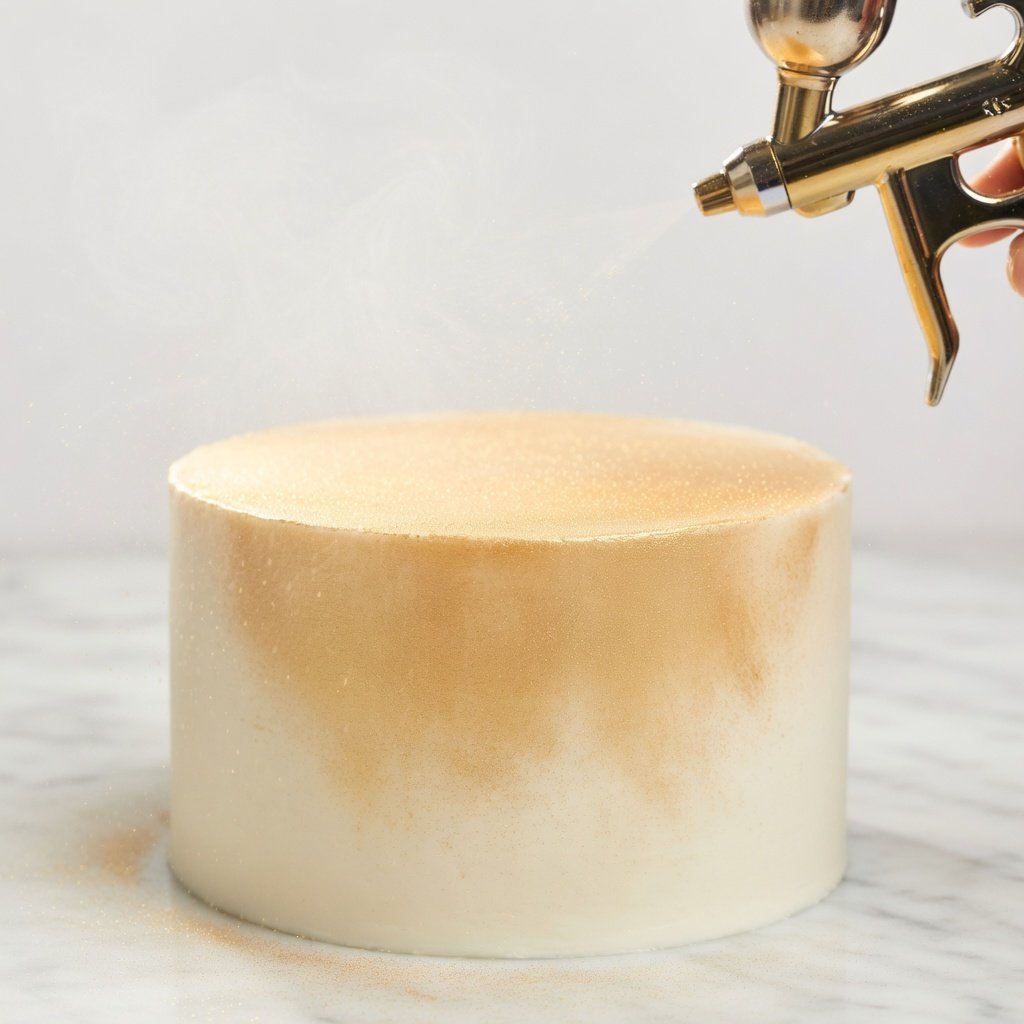
Shake or stir the mixture right before loading. Keep your airbrush moving constantly — don’t hover in one spot or you’ll get pooling. Hold the gun 6–8 inches from the surface and use light, overlapping passes. Build up the shimmer gradually rather than trying to nail it in one heavy coat.
Shake the cup every 30 seconds or so as you work. The dust settles fast. You’ll notice the shimmer fading in your spray if you’ve forgotten to agitate — that’s your cue.
Test on parchment before you touch your cake. Always. The first few seconds of spray often sputter, and you don’t want that on your fondant.
Cleanup — Don’t Skip This Part
Mica particles will dry inside your airbrush nozzle if you leave them. Run straight alcohol through the gun immediately after you’re done. Then run it again. Most airbrush clogs from luster dust come from people who cleaned the cup but didn’t flush the needle and nozzle. Disassemble fully if you’re doing a deep clean — worth it to keep the spray pattern sharp.
For more ways to use luster dust on baked goods, the edible glitter on cakes guide covers dry dusting, painting, and mixing into frostings — all the techniques that don’t require an airbrush.
Technically yes, but it’s not recommended. Water evaporates slowly and can damage moisture-sensitive surfaces like fondant, wafer paper, and certain chocolate coatings. It also doesn’t flow as cleanly through an airbrush. Alcohol is better in every way here — stick with it.
The higher the better. 80-proof vodka works fine for most projects. 190-proof Everclear is ideal if you can get it — it evaporates almost instantly and is gentler on delicate surfaces. Avoid anything with added sugar or flavoring.
Two likely causes: the mixture is too thick (add more alcohol, a few drops at a time), or the dust has settled and you’re spraying sludge (re-stir and keep agitating as you work). If it keeps clogging, flush with straight alcohol and start fresh.
A light-to-medium coverage on a standard 8″ round tier uses roughly 1/4 to 1/2 teaspoon of luster dust. A full metallic finish — like you want the whole surface looking gold — can use up to 1 teaspoon. Our 10g jars give you plenty of room to practice and still finish the project.
Yes, and honestly it’s one of the best applications. Dark chocolate in particular — the contrast against gold or silver is striking. Make sure the chocolate is fully set and at room temperature. Cold chocolate can cause condensation, which creates water spots under the shimmer.