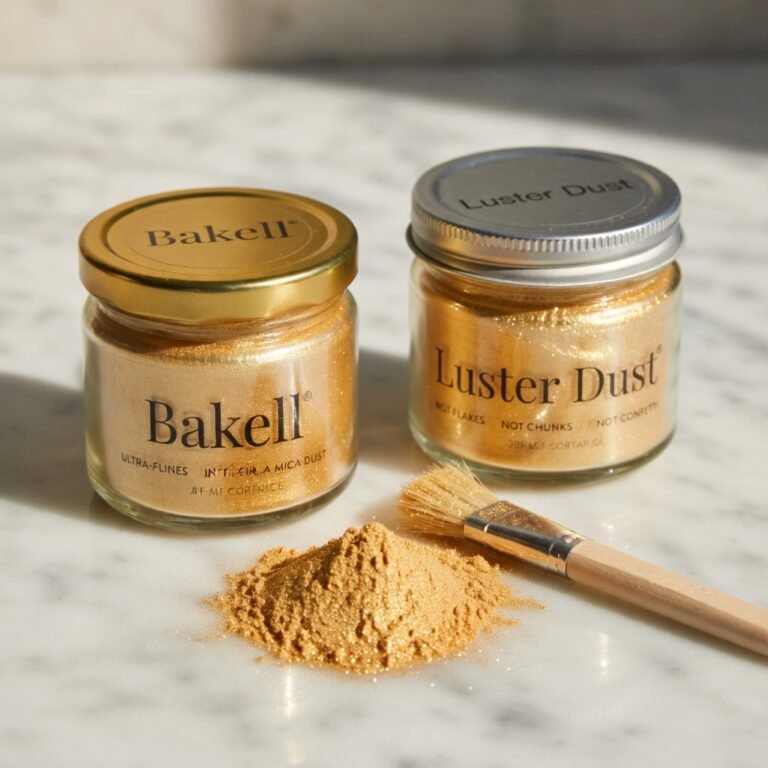
- Edible gold glitter outsells every other color we carry — by a lot. There’s a reason for that.
- German mica pigments give our gold a warm, deep shimmer that flat craft-store glitters can’t replicate.
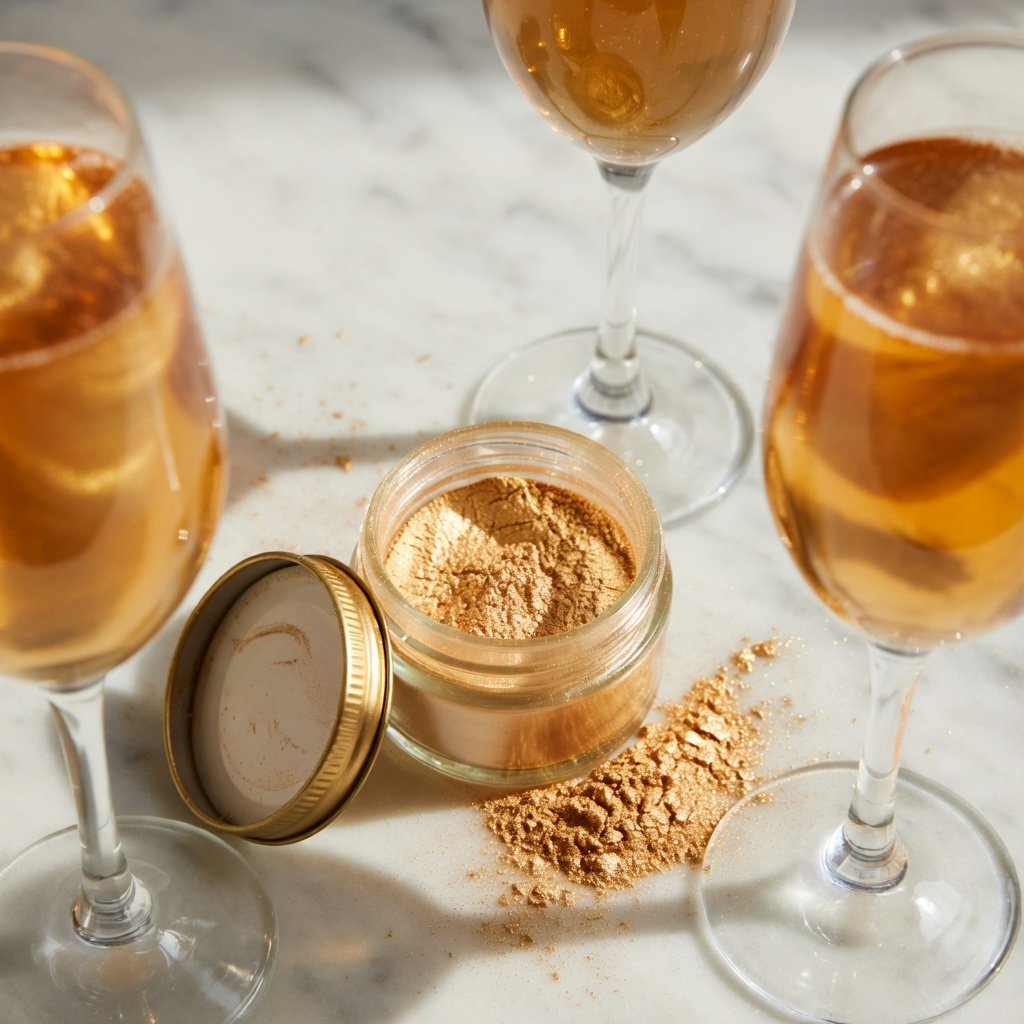
- 1/8 teaspoon per champagne glass. That’s the number. Don’t exceed it.
- Rose gold is the move if you want something softer — still luxurious, just warmer and more romantic.
Gold Is the One Color Everyone Reaches For First
Gold outsells every other color we carry by a factor of three. We’ve stopped being surprised by that. Walk into any wedding reception with shimmer in the champagne, and you already know what color it is. Gold just reads as celebration. It reads as occasion. It reads as someone put thought into this.
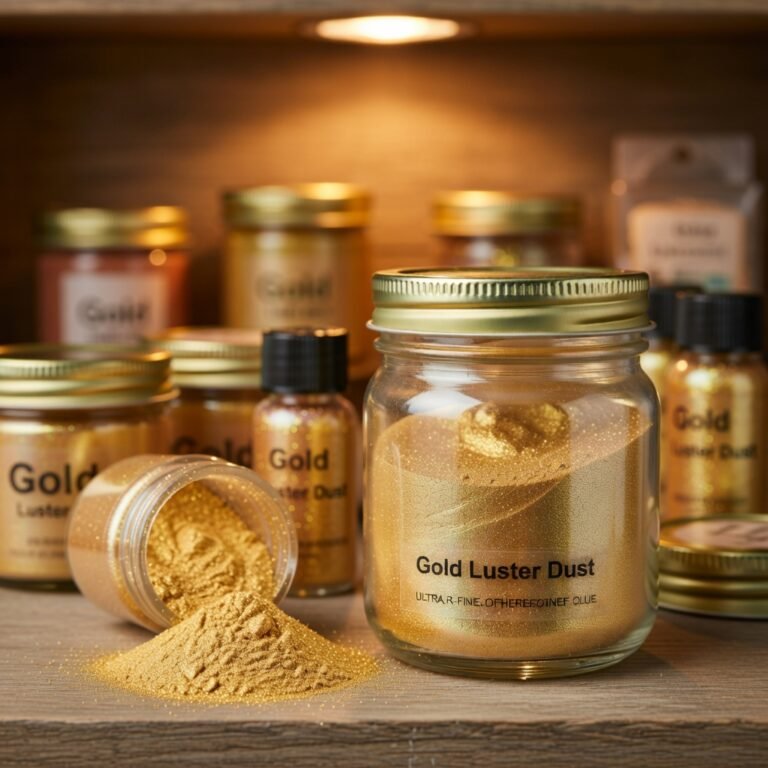
Our Gold Luster Dust uses German mica pigments — the same pearlescent base that’s been used in food applications for decades. That’s not marketing language. It’s why the shimmer looks deep and warm instead of flat and plasticky. There’s a real difference in the glass.
It’s also FDA compliant, vegan, gluten-free, and completely tasteless. You’re adding shimmer, not flavor. Nothing changes about the champagne. The glass just catches every light in the room.
Why Gold Works So Well at Weddings
Part of it is obvious — gold has meant luxury for about five thousand years, so it’s not like we invented that. But edible gold glitter specifically works at weddings for a practical reason too: it photographs. The shimmer shows up in photos the way most edible decorations don’t. Flat frosting, even beautiful frosting, goes a little dull in reception lighting. Gold doesn’t. It actively catches the light and gives it back.
We’ve had customers tell us their cocktail hour photos were transformed by a single jar of gold dust in the signature drink. That’s a $10 detail that shows up in every photo your guests take all night.
The other thing gold does well is scale. It works on a single truffle for a place setting. It works in 200 champagne glasses for a toast. It works brushed across a five-tier cake. Same color, same shimmer, same feeling of occasion — regardless of the scale you’re working at.
Edible Gold Glitter in Drinks
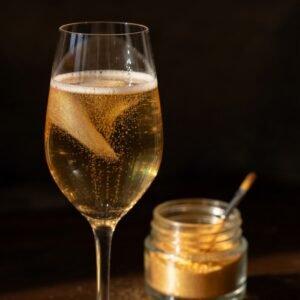
This is where most people start, and honestly, it’s the most impressive application for the least effort. Drop 1/8 teaspoon of gold luster dust into a champagne flute, pour the champagne over it, and watch the particles move. They catch the light as they drift. The whole glass becomes something worth looking at.
The trick is restraint. More glitter doesn’t mean more shimmer — it means a cloudy drink and a waste of product. A pinch. That’s it. Our complete guide to edible glitter in drinks covers this in detail, including exactly how to get the swirl effect without dumping in half the jar.
Gold works best in lighter-colored drinks where the shimmer can actually move and be seen. Champagne is the classic. Prosecco. Anything sparkling. Still cocktails work too — a gold shimmer old fashioned looks absurdly expensive for something that took 30 extra seconds. Try our Gold Shimmer Champagne Cocktail if you want a recipe that dials in the ratios exactly.
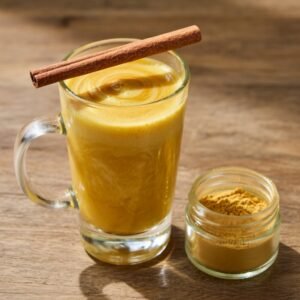
Hot drinks are underrated for this. The Golden Turmeric Shimmer Latte uses gold dust in a way that feels different from cocktails — warmer, cozier, but still unmistakably special. Great for a morning-after brunch setup or a winter wedding.
Edible Gold Glitter on Cakes and Desserts
Gold on a wedding cake does something that no other color does: it makes the cake look like it belongs in the room. Not like it was bought at a grocery store bakery. Like someone made a decision about how it should look.
Brushed over fondant, it gives you a metallic effect that’s close to gold leaf at a fraction of the cost. Dusted over buttercream, it catches light differently — softer, more luminous, less mirror-like. Both are great. The choice depends on whether you want structured elegance or soft glamour.
Chocolate is another place gold really earns it. Dust it over dark chocolate truffles and the contrast is striking. We’ve seen bakeries charge $10–$12 per truffle on that alone. The gold makes the dark chocolate look richer. More intentional. Our guide to edible glitter on baked goods goes into application techniques — dry dusting vs. painting vs. mixing into glazes — if you want to get specific about your method.
For favor packaging, gold-dusted chocolate bonbons or shortbread cookies in a clear box are one of those details guests actually notice. And keep. And photograph. Worth the extra 10 minutes.
When to Use Rose Gold Instead
If the wedding palette runs warmer — blush, mauve, dusty rose, terracotta — straight gold can feel a little cold against it. That’s where Rose Gold Luster Dust comes in.
Rose gold reads as luxurious in the same way gold does, but there’s something more romantic about it. Softer. It catches light with a warm pink undertone that works beautifully in prosecco, on white buttercream, and dusted over pale macarons. The Rose Gold Prosecco Spritz is a good reference point for how the color behaves in a glass.
Some planners and bakers use both on the same table — gold on the cake, rose gold in the drinks, or vice versa. The colors are close enough to feel cohesive but distinct enough to add dimension. It’s a subtle thing that reads really well in photos.
Hard rule: if the event has any pink in the florals or décor, rose gold will feel more intentional than plain gold. If the aesthetic is more classic or art deco, stick with gold.
How Much Do You Actually Need?
For drinks: 1/8 teaspoon per glass. A 10g jar gets you roughly 80–90 cocktails, which covers a standard wedding cocktail hour with room to spare. If you’re doing welcome drinks and a champagne toast, two jars is the safe call.
For a cake: it depends on coverage. A light dusting over a two-tier cake uses maybe 1–2 grams total. If you’re doing a fully painted gold effect on a large tiered cake, you might go through 5–7 grams. Our 10g jar handles most single-cake projects easily.
For both? Order the 50g. You’ll use it, and the per-gram price drops considerably. Nothing worse than running out the morning of an event.
The Actual Reason Gold Became the Default for Luxury
It’s not just tradition. Gold mica pigments reflect light in a way that other colors don’t — the warm yellow undertone picks up candlelight, chandelier glow, and even phone flashlights in a way that silver or bronze doesn’t quite match. At a reception with warm lighting, gold is doing real optical work. The shimmer doesn’t just sit on the surface. It moves.
That’s the German mica at work. The particle size and purity level matters more than most people realize. Cheap glitter uses larger, coarser particles that scatter light messily. Fine mica catches it cleanly — that’s why the shimmer in a glass looks like it’s actually glowing from within rather than just catching the overhead light.
It’s a small thing to explain to someone who hasn’t seen both side by side. But once you’ve seen both, you don’t go back.
Yes. Our gold luster dust is FDA compliant and made from mica-based pearlescent pigments that have been used in food for decades. Vegan, gluten-free, no GMOs, completely tasteless. Safe for guests with most dietary restrictions — but if you have a specific allergy concern, the full ingredient list is on every product page.
For champagne toasts only: one 10g jar is enough (it covers 80–90 flutes). If you’re doing signature cocktails during cocktail hour plus a champagne toast, two 10g jars is the safe number. Add cake decoration into the mix and we’d go with a 50g jar — better value and no mid-event panic.
Gold is a classic warm yellow-gold. Rose gold has a pink undertone — it’s warmer and slightly softer. Gold works with almost any palette. Rose gold is the better choice when the wedding has pink, blush, or mauve tones in the florals or décor. Some events use both.
Yes. Hot drinks, cold drinks, sparkling or still — gold luster dust works in all of them. The shimmer behaves slightly differently (hot drinks move the particles faster initially), but the effect is just as striking. The Golden Turmeric Shimmer Latte is a good example of how well it works in a warm drink.
You can, but the effect is subtle — you’d get a slightly warmer gold rather than a distinct rose-gold tone. More useful is using them separately on different elements: gold on the cake, rose gold in the drinks, or gold in champagne and rose gold on dessert platters. The colors are close enough to feel cohesive without being identical.