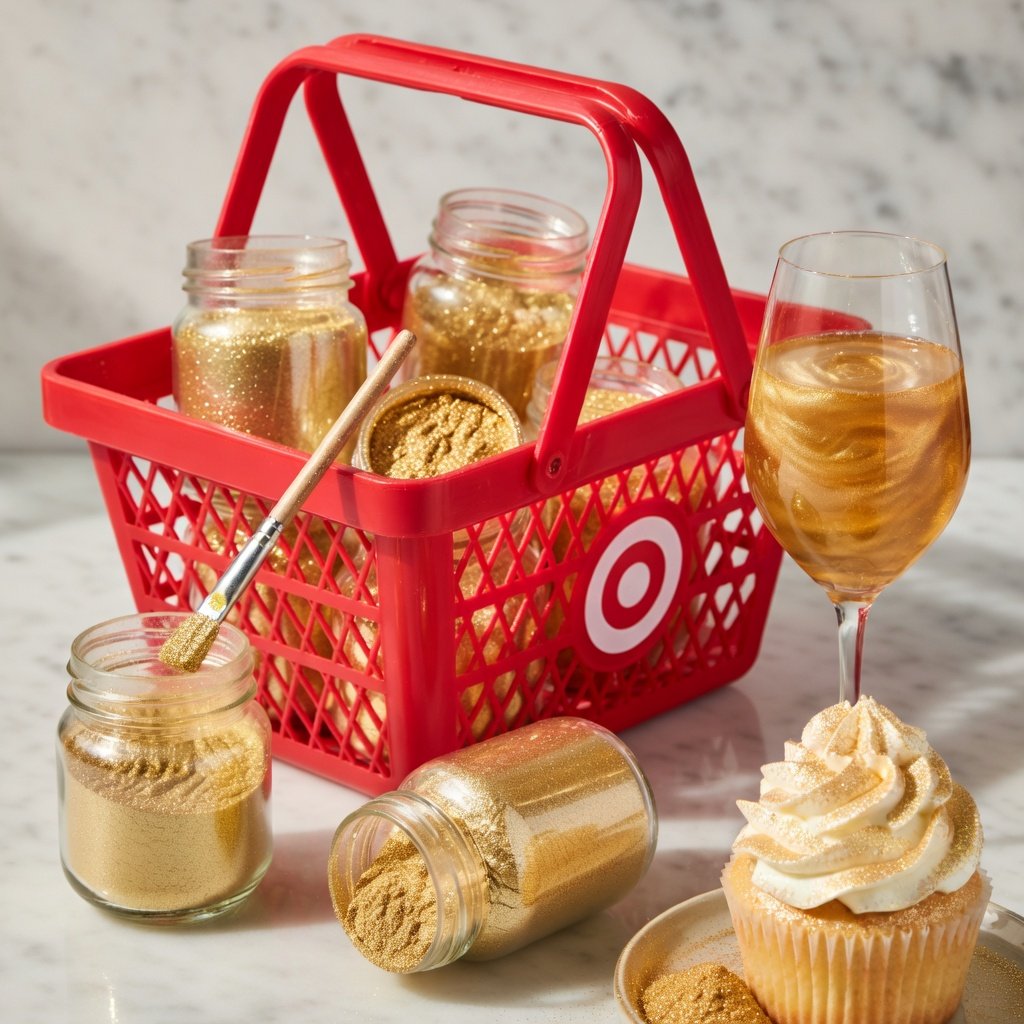
– Target doesn’t carry edible glitter in most stores — you’ll usually find craft glitter that isn’t FDA compliant
– “Non-toxic” and “edible” are not the same thing. If the label doesn’t say FDA compliant, don’t put it in food
– Online gives you a much better selection — more colors, bigger jars, and actual food-grade ingredients
– Free shipping over $50 makes ordering direct the easy call if you’re stocking up
What Target Actually Carries (And What to Watch Out For)
Target’s baking aisle has gotten better over the years. Sprinkles, food coloring, decorating supplies — they’ve filled it out. But edible glitter specifically? Hit or miss, and mostly miss.
What you’ll typically find is craft glitter marketed adjacent to baking supplies. It might say “non-toxic” on the label. It might even be shelved next to the cake decorating stuff. That doesn’t make it edible. Non-toxic means it won’t send you to the hospital. Edible means it’s made from food-approved ingredients and manufactured to food safety standards. Those are completely different things — and we’ve written about exactly [why that distinction matters](https://lusterdust.com/is-edible-glitter-actually-safe-everything-you-need-to-know/).
The brands that do show up at Target — Wilton, a few others — occasionally stock an edible version. Small jars, limited colors, and the shimmer is fine but not exceptional. If you need something today for a birthday cake that’s already on the counter, it’ll do the job.
If you have any lead time at all, order online. The difference in quality is real.
What Makes Edible Glitter Worth Buying
Not all luster dust is the same, and the ingredient source matters more than most people realize. Our luster dust is made from German mica pigments — the same material that’s been used in food coloring for decades, just refined to produce that deep, clean shimmer you see in high-end bakeries and craft cocktail bars.
Cheap options use lower-grade mica (or something else entirely). The shimmer looks flat. The color looks dull. You put it on a white cake and it reads as dusty instead of luminous.
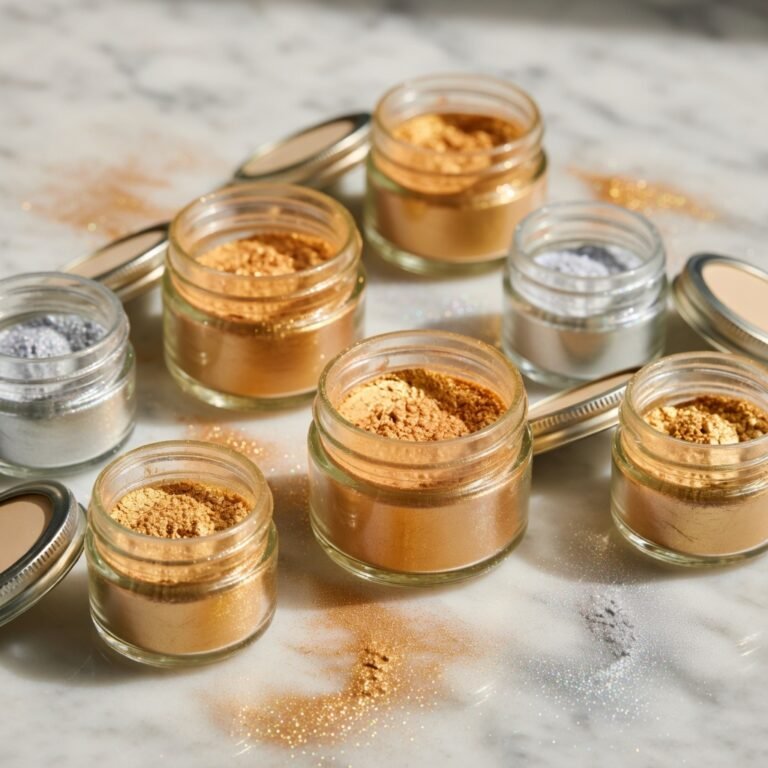
The other thing most people don’t account for: jar size. A lot of what you find in stores is 3-4 grams. Our standard jar is 10g — more than double — and the price difference doesn’t match that ratio. You end up paying more per gram for the small stuff, and running out at the worst possible moment.
The Colors Worth Having
Three colors do most of the heavy lifting for most people.
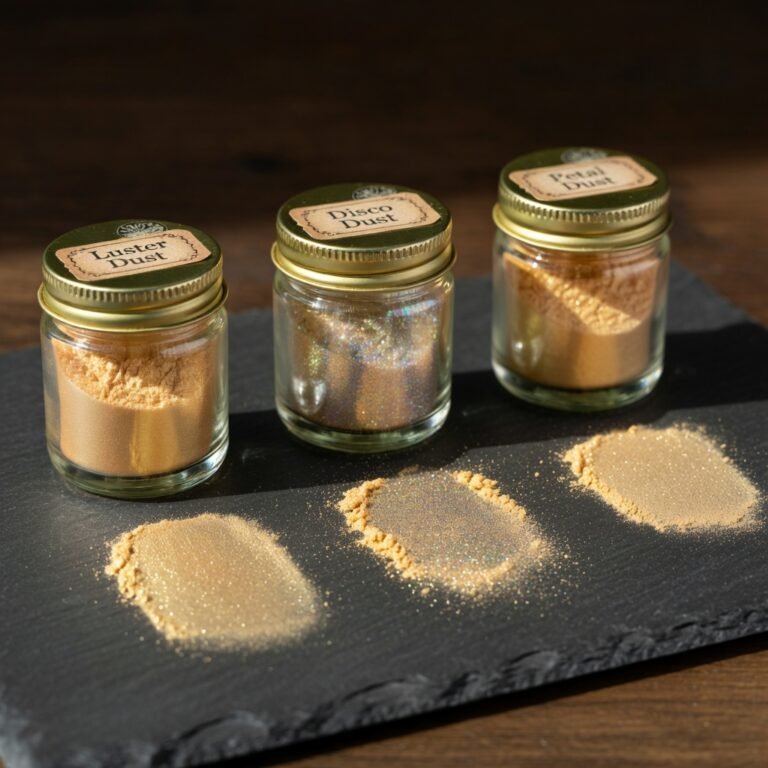
Gold Luster Dust is the obvious one. Works on everything — champagne cocktails, chocolate cake, macarons, buttercream. The warm tone makes food look expensive without trying. It’s our best seller by a significant margin, and it earns it.
Silver Luster Dust is the underrated pick. Silver on dark chocolate looks genuinely upscale in a way that’s hard to explain until you see it. It also works great for holiday decorating when you want something cooler and more modern than gold.
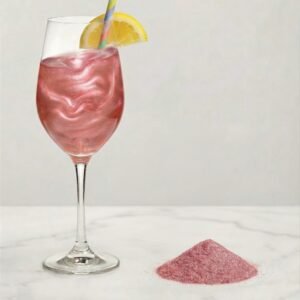
Pink Luster Dust is the one for birthdays, baby showers, and anything that needs a soft shimmer instead of full metallic flash. It’s subtle enough to work on pastel cakes without overwhelming them, and it’s gorgeous in lemonade — our [Unicorn Shimmer Lemonade](https://lusterdust.com/recipe/unicorn-shimmer-lemonade/) uses pink and it photographs beautifully.
If You Need It Today vs. If You Can Wait
Your options: Target, Michaels, Walmart, a local cake decorating shop if you have one nearby. Check the label carefully. You want it to say “FDA compliant” or “food grade” — not just “non-toxic” or “safe for decorating.” Wilton’s edible versions are legitimate, just limited in color and quantity. Avoid anything that looks like it belongs in a craft project rather than a kitchen.
Order direct. The color selection is better (13 colors vs. 3-4), the jars are bigger, the shimmer is noticeably richer, and you’ll save money per gram. Orders over $50 ship free, which is easy to hit if you grab two or three colors. Most people find a few they love and reorder the same ones.
If you’re doing events, running a bakery, or just go through a lot of this stuff — we sell up to 1kg jars. The price per gram drops significantly. A single 1kg jar of gold will last most home bakers years. For a small business, it’s the obvious move.
Quick Tips Before You Buy
Read the label. This is the whole thing. “Non-toxic” ≠ edible. “Safe for decorating” ≠ edible. Look for FDA compliant, food grade, or food approved. If you can’t find that language on the packaging, don’t put it in something people are going to eat.
Start with one color and learn it. Most people do more with one well-chosen color than a whole collection of mediocre ones. Gold is the safest starting point. It makes almost everything look better.
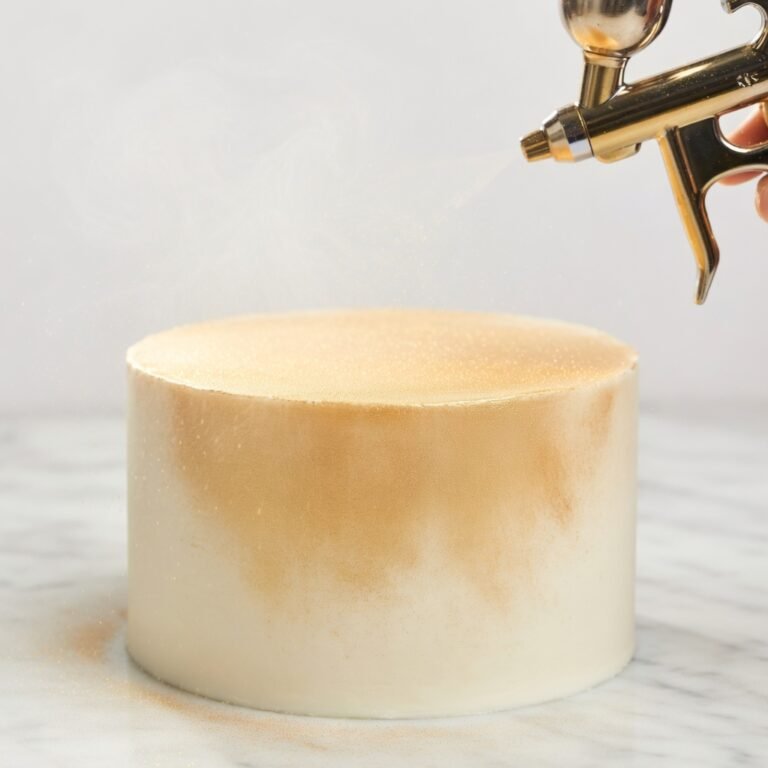
Use less than you think. A common first-timer mistake is overdoing it. 1/8 teaspoon in a cocktail glass. A light brush on a cake tier. More isn’t more — it turns cloudy or chalky. The shimmer comes from movement and light, not volume.
Frequently Asked Questions
Sometimes, depending on the store and season. The baking aisle at Target may carry Wilton’s edible versions, usually in gold or silver. But availability varies a lot by location, the selection is limited, and the jars are small. Worth checking if you need something immediately, but don’t count on finding exactly what you want.
Look for “FDA compliant,” “food grade,” or “food approved” on the label. “Non-toxic” doesn’t cut it — that just means it won’t seriously harm you if ingested accidentally. Actual edible glitter is made from food-approved ingredients like mica, sugar, or starch, and manufactured to food safety standards. If you’re unsure about a specific product, skip it.
Yes — the real stuff. FDA compliant luster dust made from food-grade mica pigments is safe, tasteless, and has been used in food for decades. The concern is with products that are marketed ambiguously. Check the label. We break this down in a lot more detail in our [safety deep-dive](https://lusterdust.com/is-edible-glitter-actually-safe-everything-you-need-to-know/).
Luster dust is a fine pearlescent powder — it creates a smooth shimmer, like a metallic sheen on fondant or a glow in a cocktail. “Edible glitter” can refer to the same thing, or it can mean larger flake-style glitter made from sugar or starch. Luster dust is more versatile. The flake-style stuff is more visible at a distance but doesn’t dissolve as cleanly in drinks.