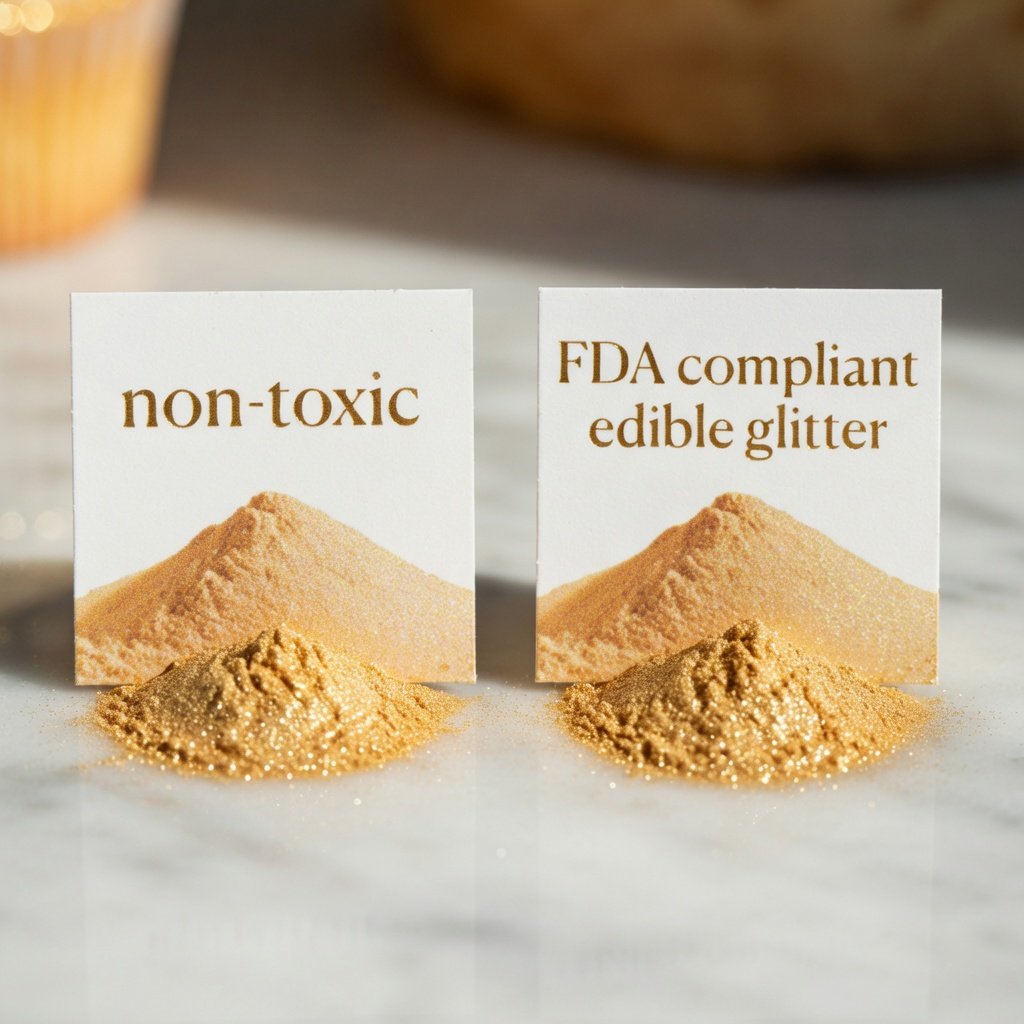
• Hobby Lobby sells edible glitter, but most of it is labeled “non-toxic” — not “FDA compliant.” That distinction matters.
• “Non-toxic” means it won’t hospitalize you. It does not mean it’s approved for consumption.
• If you’re putting glitter in food or drinks, you need FDA compliant. Full stop.
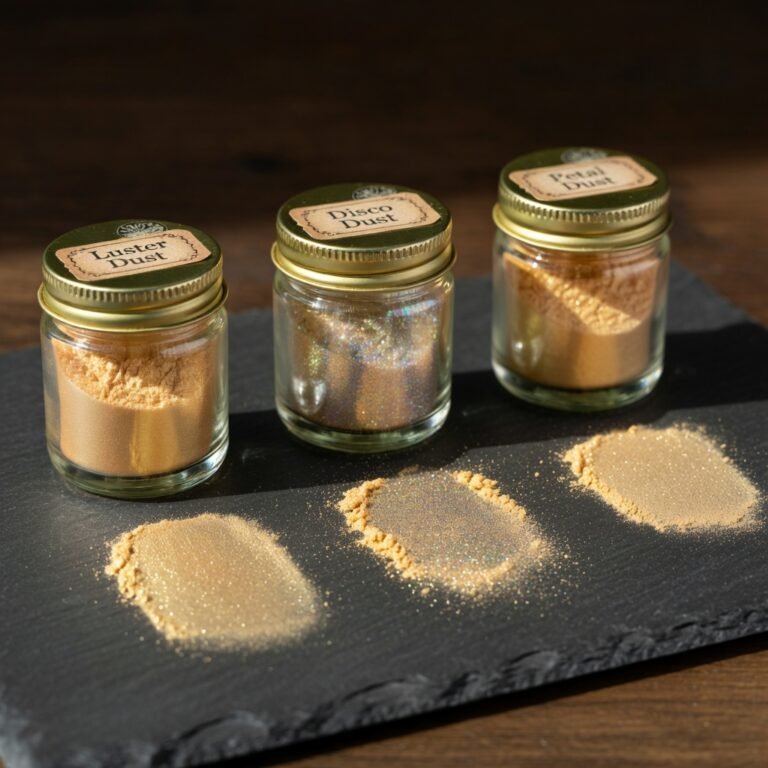
• Our luster dust is made with German mica pigments, certified FDA compliant, and ships free over $50.
Edible Glitter at Hobby Lobby: What to Know Before You Buy
A lot of people end up at Hobby Lobby looking for edible glitter. It makes sense — you’re already there for craft supplies, you need shimmer for a cake, and there it is. Grab and go, right?
Maybe. But there’s a label issue you should know about before anything goes into food.
What Hobby Lobby Actually Sells
Hobby Lobby carries a mix of glitter products — some marketed specifically toward baking and cake decorating. The brands vary by location, but you’ll typically see Wilton and a few generic craft brands on the shelf.
Here’s the thing: a lot of what’s stocked in craft stores says “non-toxic” on the label. That’s not the same as edible. Non-toxic means the product doesn’t contain materials that would cause acute harm if ingested accidentally. It says nothing about whether those materials are food-grade, FDA compliant, or meant to be consumed.
Edible means it’s made from ingredients approved for human consumption. Mica-based pigments, food-grade colors, nothing that your body isn’t equipped to process. We go deeper on this in our post on whether edible glitter is actually safe — worth a read if you want the full breakdown.
The short version: if the label says “non-toxic” but not “edible” or “FDA compliant,” don’t use it in food. Don’t use it in drinks. Don’t dust it on a cake that people are going to eat.
So Is Any of It Safe to Use?
Some Wilton products — specifically ones labeled as “edible” — are fine. Wilton has an actual food brand, and certain items in their decorating line are made with food-grade ingredients. Check the label carefully. Look for “edible” and “FDA compliant,” not just “non-toxic” or “for decorative purposes only.”
That last phrase is a red flag. “For decorative purposes only” means exactly that — it’s meant to sit on top of a display cake, not one that gets sliced and eaten.
The problem is that at Hobby Lobby (and most craft stores), edible and non-edible products sit right next to each other. Same aisle, similar packaging, sometimes nearly identical labeling. It’s easy to grab the wrong one.
The Real Problem with Craft Store Glitter
Even the edible options at Hobby Lobby tend to have limitations that matter if you care about results.
Color range is small. You’ll usually find gold, silver, and a handful of basics. If you want rose gold, deep purple, or a true bright red — good luck.
Jar sizes are tiny. We’re talking 3-4 grams in most cases. That’s fine for one project. Buy more than one color and you’ve already spent $15-20 for a fraction of the product you’d get elsewhere.
And shimmer quality varies a lot. The cheap stuff uses lower-grade pigments that look flat in photos and muddy in drinks. There’s a noticeable difference when you compare it to luster dust made with German mica — the particle size is finer, the color is truer, and the way it catches light is in a completely different league.
What to Use Instead
If you need something today and Hobby Lobby is your only option, look for Wilton’s specifically labeled edible products, read the label twice, and you’ll be okay for basic projects.
But if you’re planning ahead — or if you want results that actually look good — ordering online gets you more product, more colors, and genuinely better shimmer for roughly the same money.
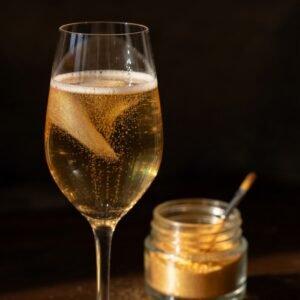
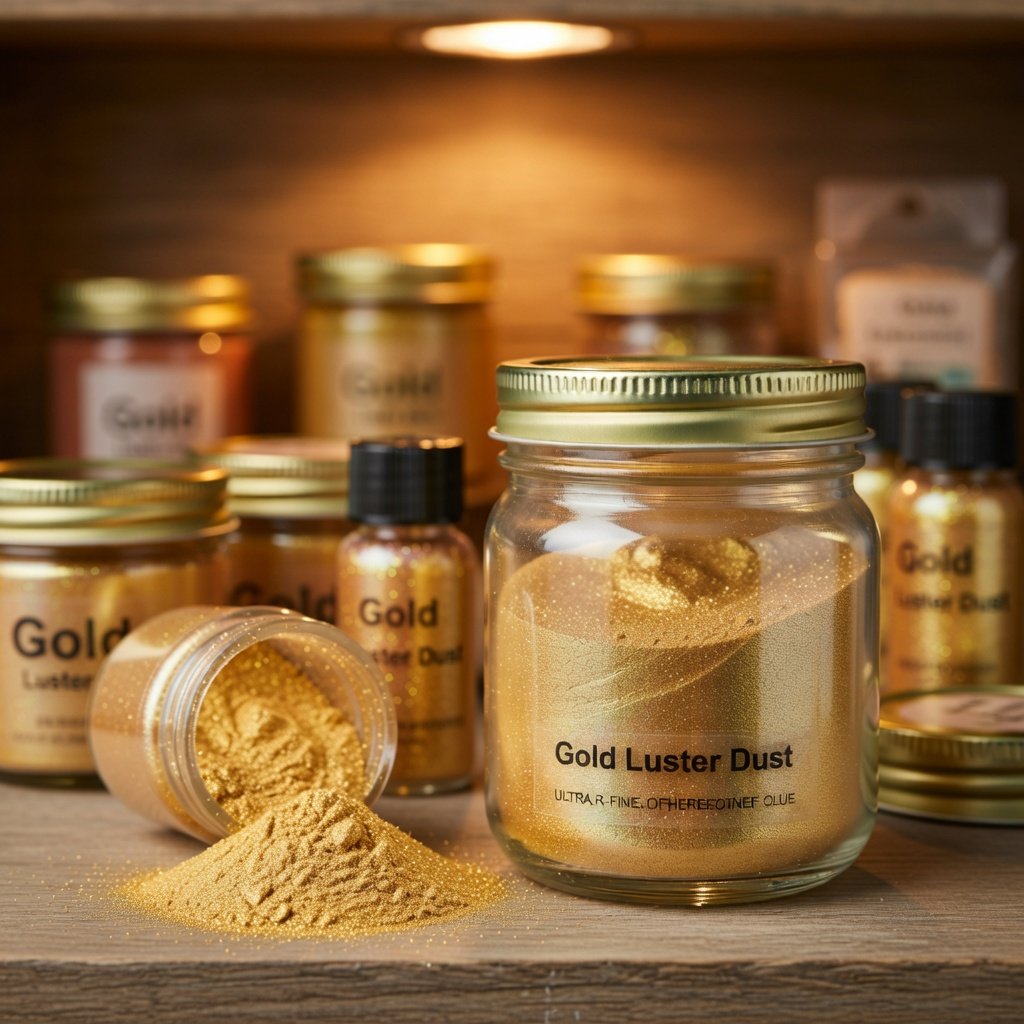
Our Gold Luster Dust is the one we’d put in front of anything Hobby Lobby stocks. The color is deeper and warmer, the shimmer holds in drinks without going cloudy, and a 10g jar goes a long way — we’re talking 80+ cocktails. If you’ve ever tried our [gold shimmer champagne cocktail](https://lusterdust.com/recipe/gold-shimmer-champagne-cocktail/), that effect does not come from craft store glitter.
For anyone leaning toward silver, same story. Silver Luster Dust on dark chocolate looks absurdly expensive — way better than anything you’re picking up off a hobby store shelf.
Quick Label Guide Before You Buy Anywhere
Buy it: “Edible,” “FDA compliant,” “food-grade” — all present on the label.
Skip it: “Non-toxic,” “for decorative purposes only,” or no food-related claim at all.
Double-check: “Non-toxic AND edible” — read further. Both words should be there, not just one.
This applies to Hobby Lobby, Amazon, TikTok shops, everywhere. The label is the only thing that matters.
Some products, yes — but not all of them. Wilton carries certain items that are FDA compliant and genuinely edible. The issue is that non-edible and edible products are shelved together, so you have to read labels carefully. Look specifically for “FDA compliant” or “edible” on the packaging. “Non-toxic” alone isn’t enough.
Non-toxic means the product doesn’t contain materials that would cause serious harm if accidentally touched or ingested in tiny amounts. Edible means it’s made from food-grade ingredients that are safe and approved for consumption. If you’re decorating food people will actually eat, you need edible — not just non-toxic.
No. Craft glitter — even if labeled non-toxic — is not made for consumption. It often contains plastic particles, synthetic dyes, or other materials not approved for food use. Use it on a display cake that won’t be eaten, and that’s it.
Usually not. Most luster dust sold at Hobby Lobby is aimed at craft projects — resin, card making, that kind of thing. Some products cross over into baking, but quality varies significantly. Professional bakers use food-grade luster dust made with German mica pigments, which produces a much finer, richer shimmer than most craft store alternatives.
Pigment grade and particle size. Lower-quality products use coarser pigments that look chunky or flat. German mica pigments — what we use — are milled finer and produce a smoother, more reflective shimmer. You notice the difference most in drinks, where the particles need to move and catch light, and on smooth surfaces like fondant or chocolate.