- We don’t make black luster dust — but silver is the closest thing to it, and on dark surfaces it reads almost identical
- Black edible glitter works best on dark chocolate, black fondant, and deep-colored cocktails where the shimmer catches instead of disappears
- For drinks, silver in a black cocktail (think activated charcoal lemonade or dark rum fizz) gives you that moody, metallic look people can’t stop photographing
- The trick with dark applications isn’t more glitter — it’s contrast. The darker the base, the less you need
Black edible glitter is one of those things people search for constantly — and then can’t find. Real, pure-black edible glitter doesn’t really exist as a mainstream product. Most of what you see labeled “black” online is either craft glitter (not food-safe) or so dark a charcoal-gray that it looks black only in certain lighting. Not ideal for something you’re eating.
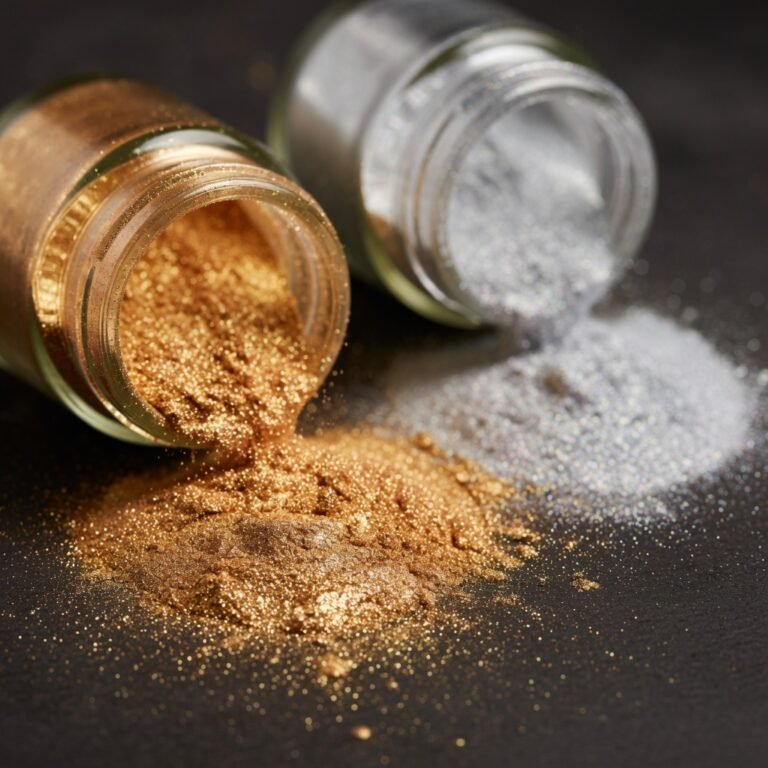
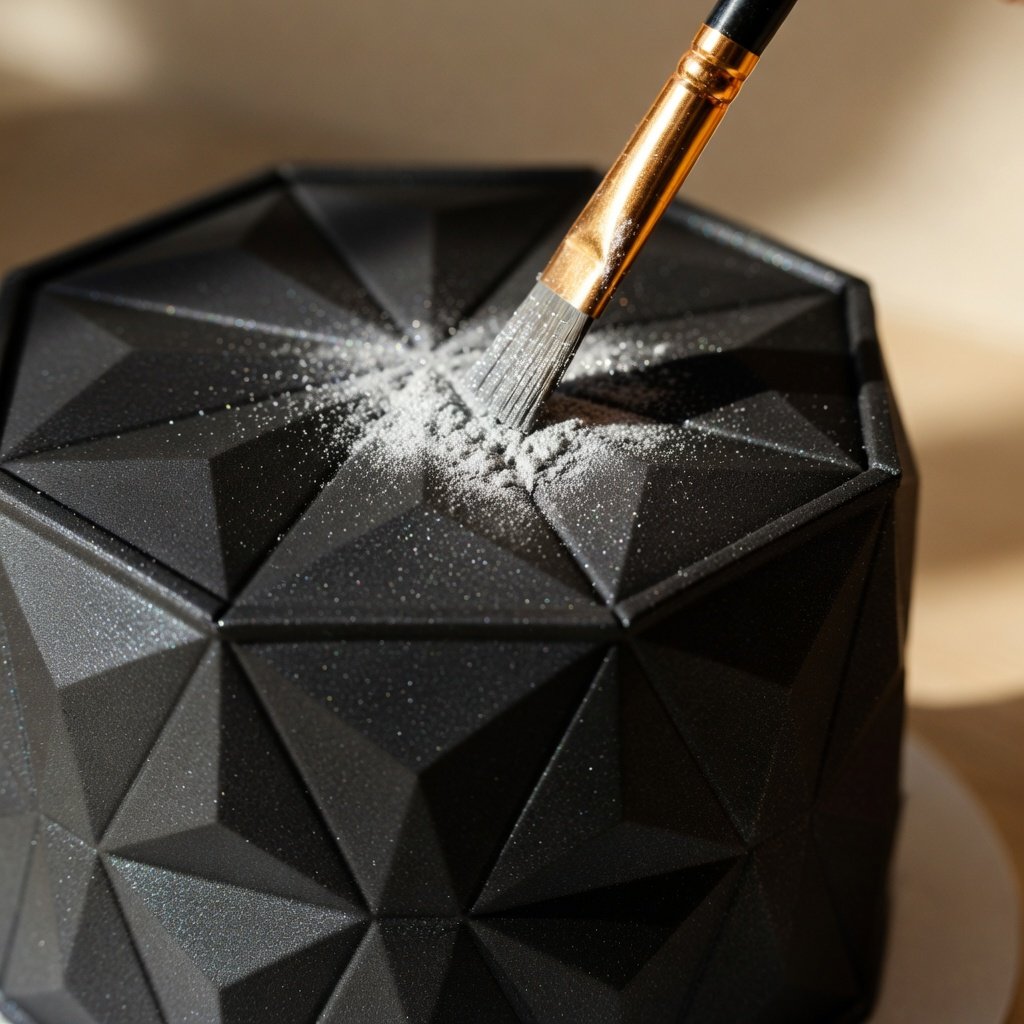
Here’s what actually works: silver luster dust on dark surfaces. The contrast does everything. On black fondant, dark chocolate ganache, a charcoal cocktail — silver reads dramatically, almost metallic-dark. It’s the same principle as how black fabric shimmers under stage lighting. The darkness is already there. The silver just catches it.
Why Silver Is the Move for Dark and Gothic Aesthetics
Silver gets treated like the backup option, the thing you reach for when you can’t find gold. That’s backwards. For anything dark and dramatic, Silver Luster Dust is the first choice, not the consolation prize.
Put silver on white fondant and it looks clean, cool, minimal. Put it on black fondant and the whole thing shifts — suddenly it looks expensive, almost dangerous. The mica pigments scatter light differently against dark backgrounds, and the effect is genuinely striking. We’ve seen cake photos where people assumed the decorator used some specialty “black shimmer” product. It was just silver on a dark base.
Same story with dark chocolate. Silver dusted over a dark chocolate truffle doesn’t just add shimmer — it makes the whole surface look like burnished metal. That’s why bakeries charge a premium for exactly this look.
The Best Applications for Black Edible Glitter Effects
Black fondant is silver’s best friend. The contrast is immediate and dramatic — no technique required, just dust and done. Use a soft brush and tap off the excess before applying. You want a light, even coat, not a thick deposit in one spot.
For a more intense effect, mix a tiny amount of silver luster dust with a drop of vodka or clear extract and paint it on like a wash. The alcohol evaporates and leaves the mica behind in a more saturated, almost lacquered finish. Works especially well on tiered cakes where you want certain details — borders, lettering, geometric shapes — to really catch light.
Black buttercream is trickier. The texture is less smooth than fondant, so the shimmer is more diffused. Not bad, just different. It reads more like a dark shimmer than a hard metallic edge. Totally usable for the right aesthetic — think moody and atmospheric rather than sharp and gothic.
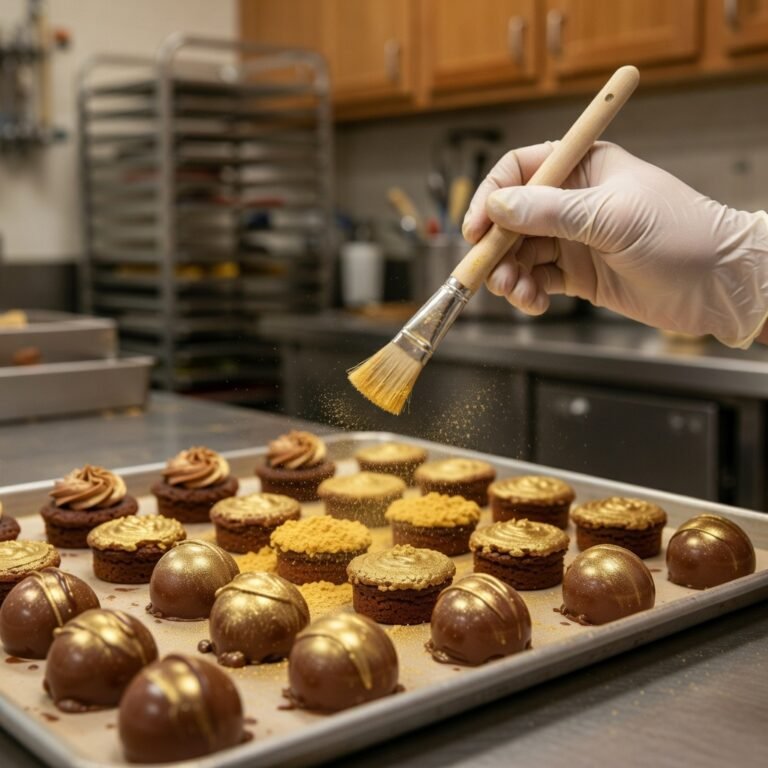
Dark chocolate is where silver does its most impressive work. The physics are simple: dark base, reflective surface, dramatic contrast. A 72% dark chocolate bar dusted with silver looks like it costs three times what it does.
Truffles, bonbons, molded chocolates — all of them respond well. For molded chocolate specifically, apply the silver to the mold before pouring the chocolate. It bonds to the surface as it sets and you get a mirror-like finish when you pop it out. The effect is unreal.
For bark or dipped items, dust immediately after coating before the chocolate sets fully. The mica adheres better to a slightly tacky surface than to one that’s completely hardened.
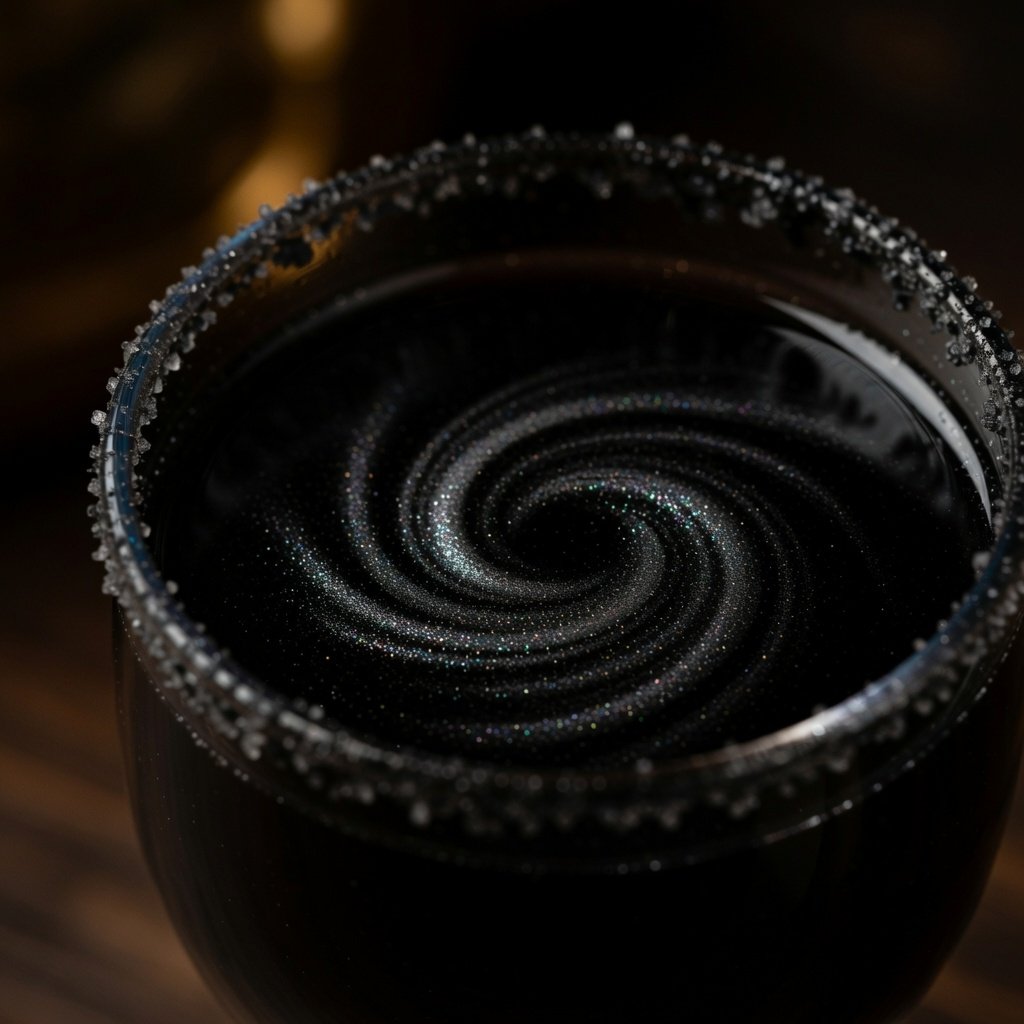
Black cocktails are their own genre right now — activated charcoal lemonades, squid ink martinis, black sesame lattes, dark rum and cola builds where you want a little drama. Silver luster dust in any of these creates a “black glitter drink” effect that photographs like a special effect.
The key is using a dark liquid as your base. Silver in a clear or light-colored drink just looks silver. Silver in a near-black drink creates this smoky, metallic swirl that moves with the glass. Add about 1/8 teaspoon per glass, stir gently, and let it settle into motion. The particles catch light as they move — that’s the whole show.
For more on technique, the full breakdown on how to use edible glitter in drinks covers ratios, timing, and what not to do. The “more is better” instinct will ruin your drink. Resist it.
Black royal icing gives you the dark base you need for silver to pop. Flood your cookies with black icing, let it set completely, then dust silver over the surface. The finish looks almost industrial — in a good way.
Halloween is the obvious use case, but this combo works for anything with an edge to it. New Year’s, gothic weddings, dark-themed birthday parties. The silver-on-black palette reads as sophisticated rather than just spooky, depending on how it’s executed.
One thing to know: black icing can bleed into other colors if you’re not careful. If your design has both black and non-black sections, let the black set fully before adding anything else. The silver goes on last, after everything else is dry.
How Much to Use
Less than you think. Always less than you think. Dark surfaces amplify shimmer — they don’t require more of it to look good. A light dusting on black fondant reads more dramatically than a heavy coat on white. The contrast does the work, not the quantity.
For drinks, 1/8 teaspoon per glass is the ceiling. For cakes and pastries, use a dry brush to apply and tap off the excess before it touches the surface. For chocolate, a single dusting through a small sieve is usually enough. You can always add more. You can’t take it away.
FAQs About Black Edible Glitter
Pure black edible glitter isn’t something we carry, and genuinely food-safe versions are rare in general. Most products labeled “black edible glitter” online are either craft glitter — which is not food-safe, full stop — or a very dark charcoal that approximates black. Silver on a dark surface gives you a more reliable and frankly better-looking result for most applications. If you need true black color (not shimmer), black food coloring is the way to go, used separately from your glitter.
Yes. Our silver luster dust is FDA compliant, made from mica-based pearlescent pigments, and completely tasteless and odorless. Vegan, gluten-free, no GMOs. Same ingredients that have been used in food for decades. For the full safety breakdown, this post covers everything.
You can, but it won’t give you what you’re picturing. Mixing mica powder with food coloring doesn’t create black shimmer — it creates colored mica in a dark liquid, which muddies both effects. Better approach: use black food coloring for your base (fondant, icing, liquid), let it set or settle, then apply silver luster dust on top separately. Two distinct steps, much better result.
Anything dark. Activated charcoal drinks are the obvious choice — they’re already near-black and the silver shimmer through them is genuinely striking. Dark rum cocktails, black tea drinks, coffee-based cocktails. Even a deep red cranberry drink will give you that moody, metallic swirl if the base is dark enough. Light or clear cocktails won’t give you the contrast you’re after.
Keep your jar sealed when you’re not using it. Humidity is the enemy — luster dust absorbs moisture and clumps. If it does clump, tap the jar against your hand a few times before opening, or use a toothpick to break up any deposits before dusting. A fine mesh sieve also helps distribute it evenly without clumps.