- A lot of “edible glitter” on Amazon isn’t actually edible — “non-toxic” and “FDA compliant” are not the same thing
- Real edible glitter lists mica-based pearlescent pigments and specific food-grade colorants as ingredients — not just “non-toxic craft glitter”
- Check the listing for explicit FDA compliance language, not just stars and pretty photos
- When in doubt, buy from a dedicated edible glitter brand, not a general craft or party supply seller
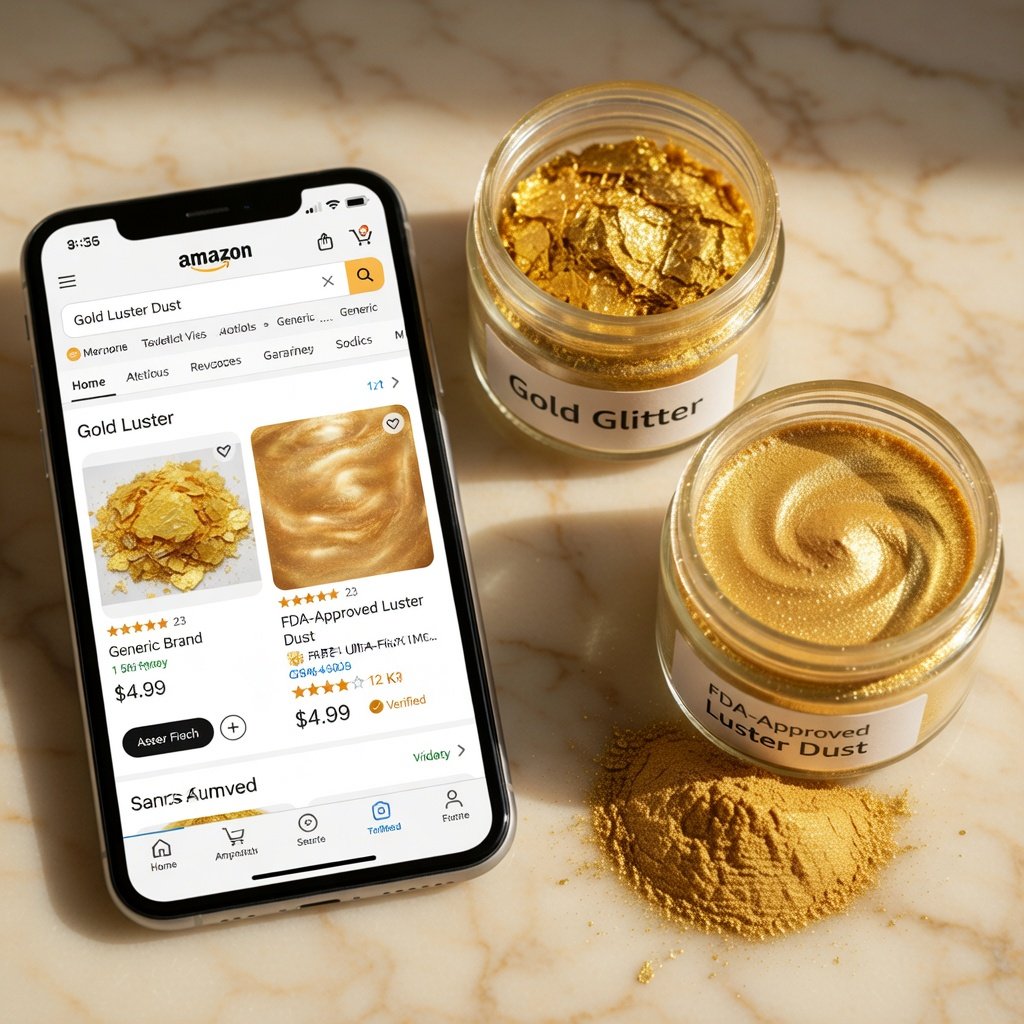
Amazon has everything. Including a lot of glitter that has no business being in food. Search “edible glitter amazon” right now and you’ll get hundreds of results — loose glitters, spray bottles, shakers, jars — most of them with five-star ratings and zero clarity about what’s actually in them. Some are genuinely edible. A lot are craft glitter with the word “edible” slapped on the listing because nobody’s stopping them.
Here’s the problem: swallowing non-edible glitter probably won’t send you to the hospital. But that’s a very low bar. “Won’t cause immediate harm” is not the same as “safe to eat.” If you’re putting something in food — especially food for other people — it needs to meet an actual standard.
The Difference Between “Non-Toxic” and “Edible”
This is the big one. “Non-toxic” means a product passed safety tests for accidental ingestion — the kind where a toddler eats a crayon and poison control says “you’re fine.” It does not mean the product was formulated to be eaten, tested for consumption, or reviewed by the FDA.
“Edible” — real edible — means the ingredients are FDA compliant food-grade materials. Mica-based pearlescent pigments. Specific approved colorants like titanium dioxide or iron oxides, in concentrations allowed for food use. That’s it. The bar is specific and the ingredients list should reflect it.
We get into all of this in more depth over at our post on whether edible glitter is actually safe — worth a read if you want the full breakdown. But for Amazon shopping purposes, here’s the short version.
How to Read an Amazon Listing
Most people look at the photos and the star rating. That tells you almost nothing about whether a glitter is food-safe. Here’s what actually matters:
Scroll past the photos. Find the ingredients or the product description. You’re looking for specific language: “mica-based pearlescent pigments,” “FDA compliant,” “food-grade.” If the listing just says “made with skin-safe ingredients” or “non-toxic” — that’s craft glitter. Put it back.
Legitimate edible glitter has a short, boring ingredients list. Something like: mica, titanium dioxide, iron oxides. That’s the stuff that’s been reviewed and approved for food use. If there’s a long list of things you can’t identify, or if there’s no ingredients list at all, that’s a red flag.
Amazon lumps edible glitter in with craft supplies constantly. If a product is listed under “Arts, Crafts & Sewing” instead of “Grocery & Gourmet Food” or “Baking,” that tells you something. Not a dealbreaker on its own, but it’s a signal worth noting.
Also look at what else the seller sells. If they’re a craft supply company that also happens to carry “edible” glitter as one SKU among hundreds of art products, that’s different from a company whose entire line is food-grade. Specialization matters here.
Look for explicit compliance language. “FDA compliant ingredients” is specific. “Safe for consumption” is vague and meaningless — anyone can write that. “Food-grade mica” is good. “Adds sparkle to your baked goods!” is not a safety claim, it’s marketing.
A good product will also usually mention what it’s free from: vegan, gluten-free, no GMOs. Not because those things prove FDA compliance, but because brands that care about food safety tend to be transparent across the board. If a listing can’t be bothered to tell you what’s in the product, that’s your answer.
What Good Edible Glitter Actually Looks Like
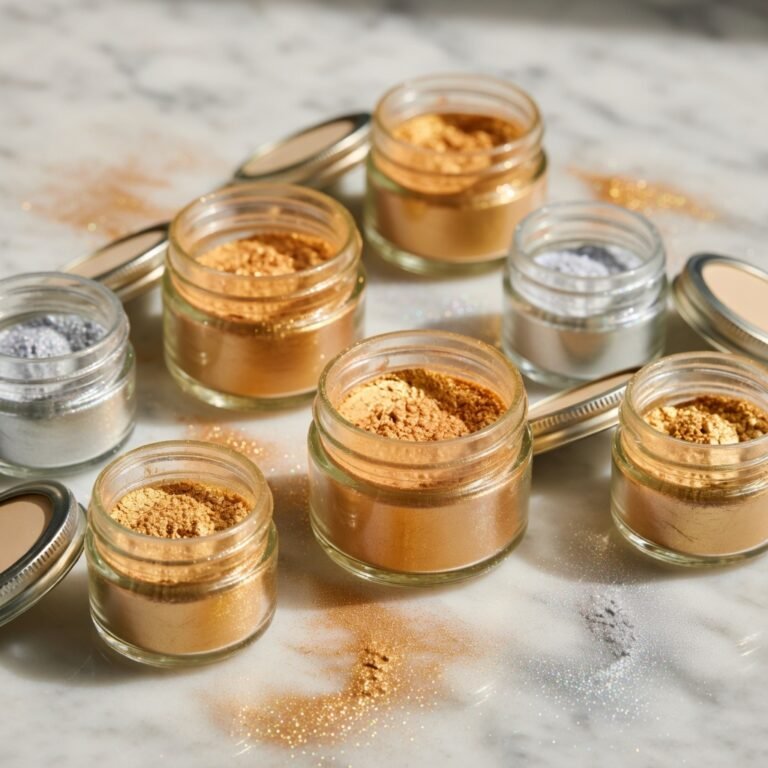
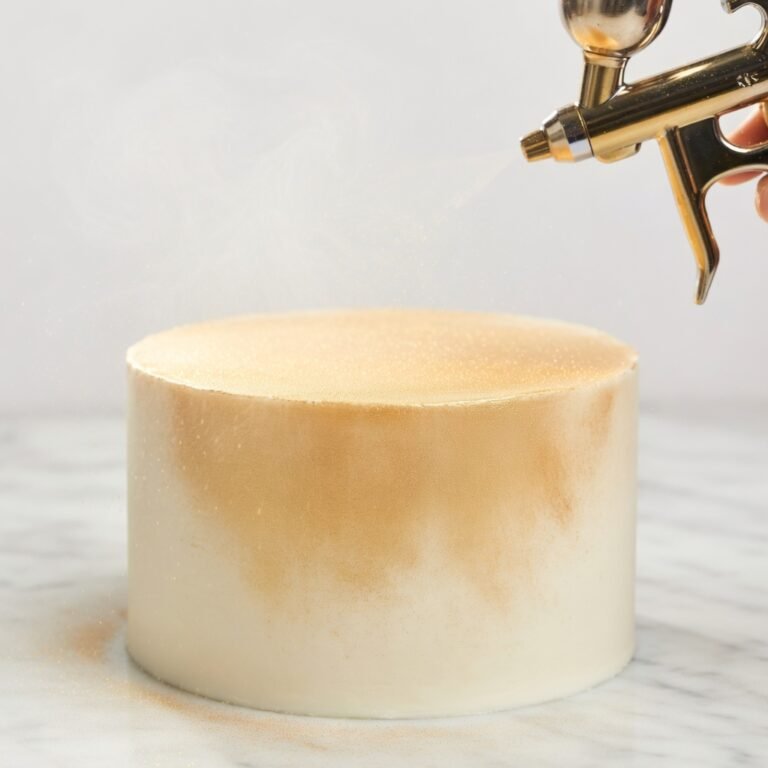
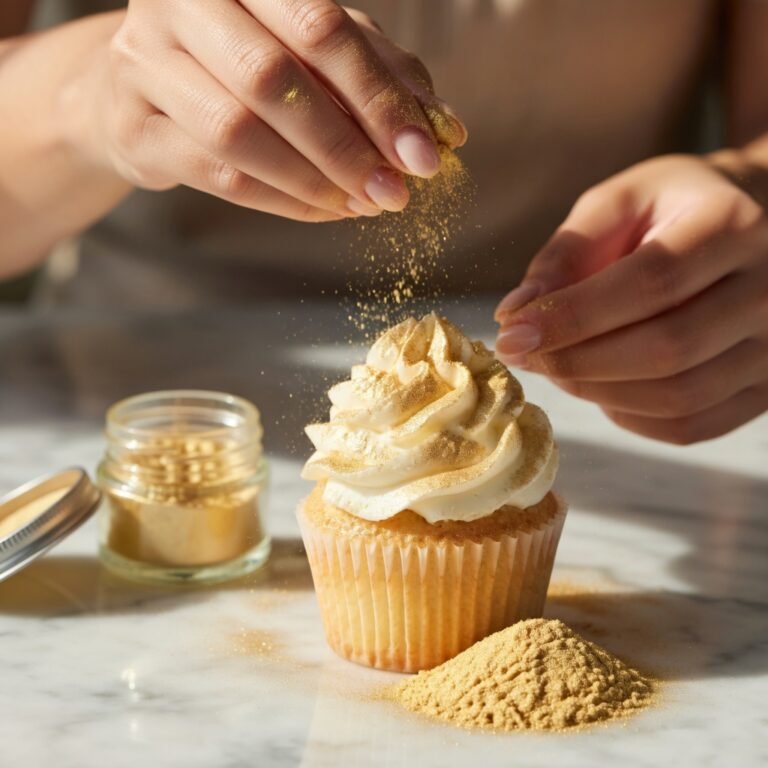
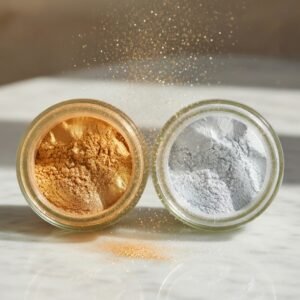
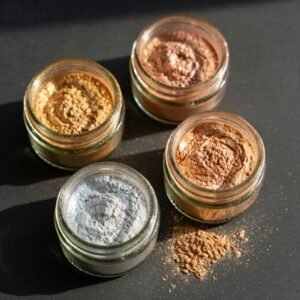
Real luster dust — the kind you can actually eat — is fine, powdery, and intensely pigmented. A 10g jar should last you 80+ cocktails or dozens of cake projects. The shimmer quality comes from the mica pigment itself, and good German mica produces a depth that cheap craft glitter can’t replicate. You can see it the second you open the jar.
Our Gold Luster Dust is the one we recommend starting with — it’s the most versatile color and the one we use most in our own kitchen. Drop a pinch into a champagne glass and you’ll see exactly what the difference looks like. (If you want to try it, we have a dead-simple recipe for a gold shimmer champagne cocktail that takes about two minutes to make.)
Silver is another one that gets mislabeled constantly on Amazon. A lot of “silver edible glitter” is basically just white sparkle dust that looks silver in the product photo. Real silver mica has a cool, metallic depth — incredible on dark chocolate, striking on a margarita glass. Our Silver Luster Dust is one of our best sellers for a reason.
So Should You Buy Edible Glitter on Amazon at All?
Honestly? It depends on what you find. There are legitimate food-grade products on Amazon — ours included. The platform itself isn’t the problem. The problem is the volume of misleading listings and the fact that Amazon doesn’t verify food safety claims the way a grocery store’s buying process would.
If you find a product that explicitly states FDA compliant ingredients, lists mica-based pigments in the ingredients, and comes from a seller whose entire business is food products — that’s probably fine. If any one of those boxes isn’t checked, skip it.
Or skip the research entirely and buy direct. You know exactly what you’re getting, the price is the same or better, and free shipping kicks in at $50. That’s two 10g jars plus some extra.
Luster dust is a fine mica-based powder that gives a shimmer or metallic sheen — it’s what we make. “Edible glitter” is more of a catch-all term that includes both fine powders and larger chunky glitters (like the holographic flake type). Both can be food-safe, but luster dust is generally what you want for drinks and smooth surfaces. The chunky glitters work better on frosting where they sit on top rather than dissolve.
Check the label for “FDA compliant” or look up the ingredients. Mica, titanium dioxide, and iron oxides are the good signs. If it just says “non-toxic” or has no ingredient information, don’t use it in food. If it came in packaging that looks more craft supply than food product, same answer.
No. Store it somewhere dry and away from direct sunlight and it’ll last indefinitely. The pigments are shelf-stable — moisture is really the only enemy. Keep the lid tight.
Because most people using craft glitter on food don’t get sick. “Non-toxic” means it won’t harm you in small amounts — so five stars, no complaints. The ratings don’t measure food safety compliance, they measure customer satisfaction. Those are very different things.
You Might Also Like

Gold Shimmer Champagne Cocktail
The easiest way to see what good luster dust actually looks like in a glass. Two ingredients, thirty seconds.
Is Edible Glitter Actually Safe? Everything You Need to Know
The full breakdown on FDA compliance, ingredients, and what 'non-toxic' actually means.
What Is Edible Glitter Made Of? A Complete Ingredient Breakdown
Exactly what goes into food-grade luster dust — and what shouldn't be in it.