• 1/8 tsp of gold luster dust is all you need — don’t overdo it
• Dry strawberries completely before dusting or the powder won’t adhere
• Works with Gold Luster Dust or Rose Gold Luster Dust depending on the look you’re after
• Ready in under 10 minutes, no special equipment needed
Gold Dusted Strawberries
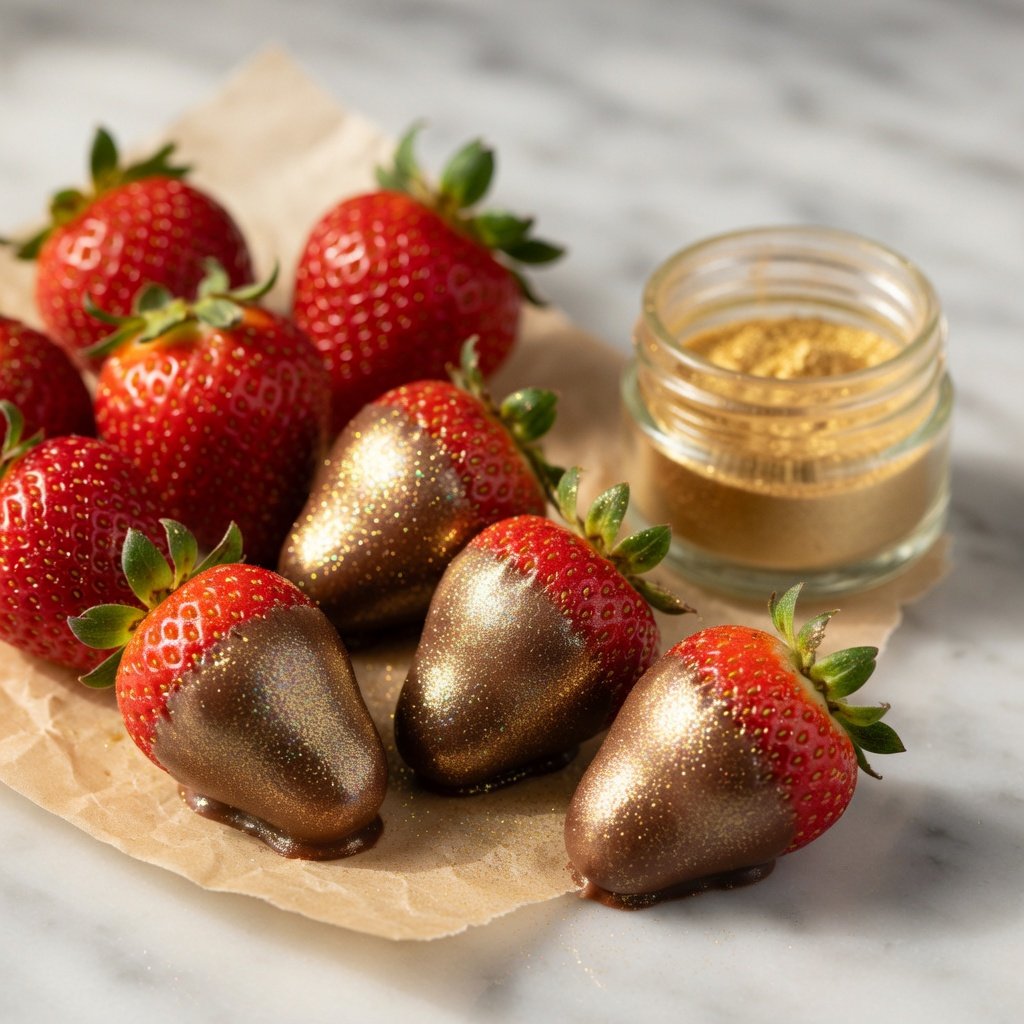
Twelve strawberries, a small jar of gold edible glitter, and about eight minutes. That’s it. The gold catches light on the surface in a way that makes these look like they came from a fancy patisserie — even if you made them on your kitchen counter at 11pm.
Ingredients
- 12 whole Fresh strawberries, rinsed and dried
- 1/8 tsp Gold Luster Dust
- 1 tsp Vodka or clear extract (optional — for wet application)
Pat each strawberry dry with paper towels after rinsing. This is the step most people skip, and it matters. Any surface moisture will make the luster dust clump instead of shimmer. Let them sit out for 5 minutes if you washed them just now.
Dry dusting is faster — pour 1/8 tsp of gold luster dust into a small bowl, hold a strawberry by the stem, and roll the bottom two-thirds through the powder. Tap off the excess gently. For sharper coverage and more depth, mix the luster dust with a drop of vodka or clear vanilla extract to form a thin paste, then brush it on with a food-safe brush. Both work. The wet method gives you more control.
Set the finished strawberries on parchment paper and leave them alone for a couple minutes. The powder needs a moment to settle. If you’re stacking them on a plate immediately, some gold will transfer — not the end of the world, but worth waiting if you care about the presentation.
These look best fanned out on a dark slate board or white ceramic plate — anything that contrasts with the gold. Don’t refrigerate after dusting if you can avoid it; condensation dulls the shimmer. Serve within an hour of dusting for peak sparkle.
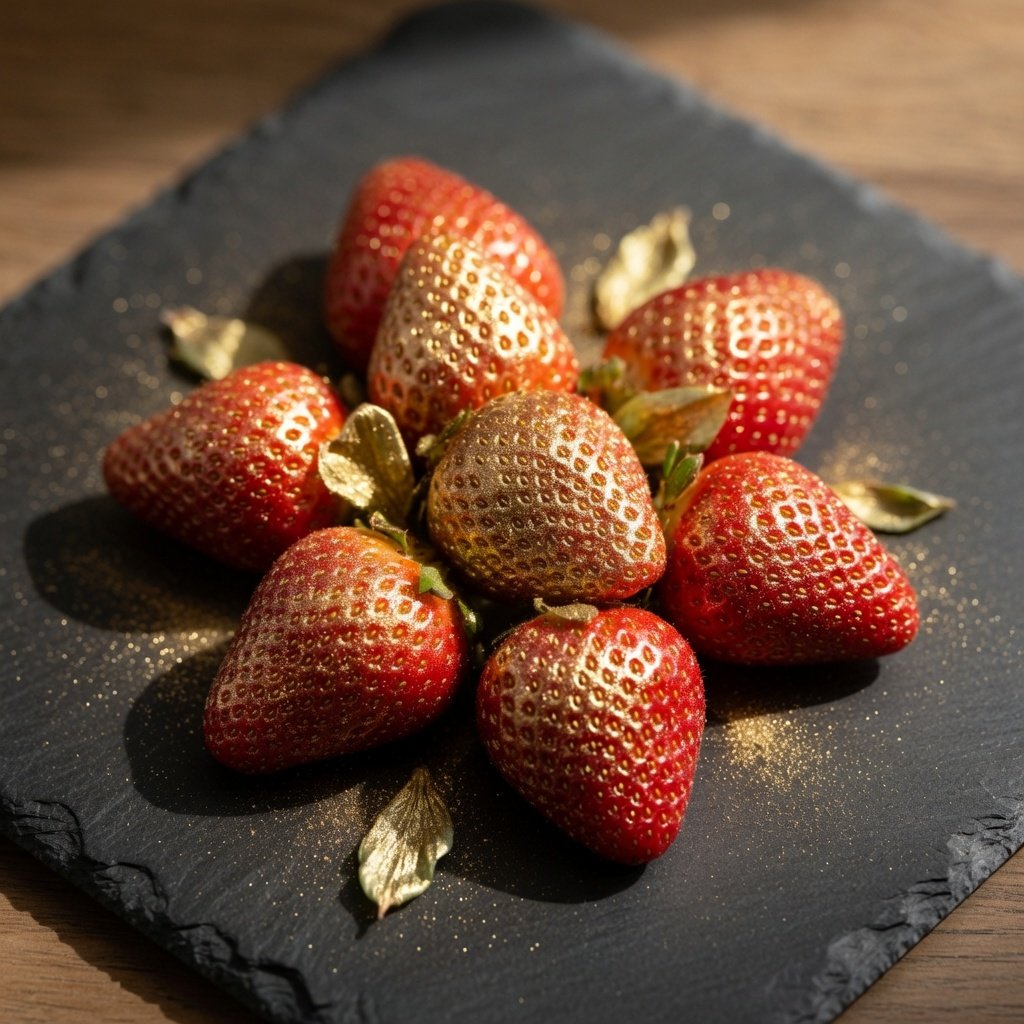
The gold here catches differently depending on your lighting. In natural daylight you get a warm metallic finish. Under overhead kitchen lighting, it almost glows. Either way — they don’t look homemade.
If you want a slightly softer, warmer tone, Rose Gold Luster Dust is a gorgeous alternative. It leans pink-gold rather than true yellow-gold, and it pairs really well with strawberries specifically — something about the color contrast works. We’ve put both side by side at parties and the rose gold version consistently gets more comments.
Both colors are FDA compliant, tasteless, and vegan — same mica-based pigments we use across the whole line. If you’re new to edible glitter and want the full rundown on what’s actually in it and whether it’s safe to eat, [the ingredient breakdown is here](https://lusterdust.com/is-edible-glitter-actually-safe-everything-you-need-to-know/).
Work in small sections. Dip or dust one strawberry at a time rather than trying to do a batch at once. For the dry method, a light rolling motion picks up more powder than pressing straight down. If you’re getting bare patches near the tip, go back and touch them up before the first coat fully sets.
A few hours ahead, yes. Day-before, no — not ideal. Refrigeration causes condensation and condensation is the enemy of shimmer. If you need to prep in advance, dust them as close to serving time as you can manage. Two to three hours out is the outer limit if they’re going straight onto a platter in a cool room.
1/8 tsp covers about 12 medium strawberries for the dry method. You’ll use slightly less with the wet brush technique since there’s less waste. The temptation is to pile on more — resist it. A light, even coat shimmers. A heavy coat just looks powdery.
You Might Also Like
Gold Shimmer Champagne Cocktail
Pair these strawberries with the cocktail that started it all for us. Drop a pinch in a flute, add the bubbly, watch it work.

Rose Gold Prosecco Spritz
If you went the rose gold route on your strawberries, this spritz is the obvious next move. They look incredible together on a table.
Shimmer Whipped Cream Topper
Gold dusted strawberries plus shimmer whipped cream. You already know.