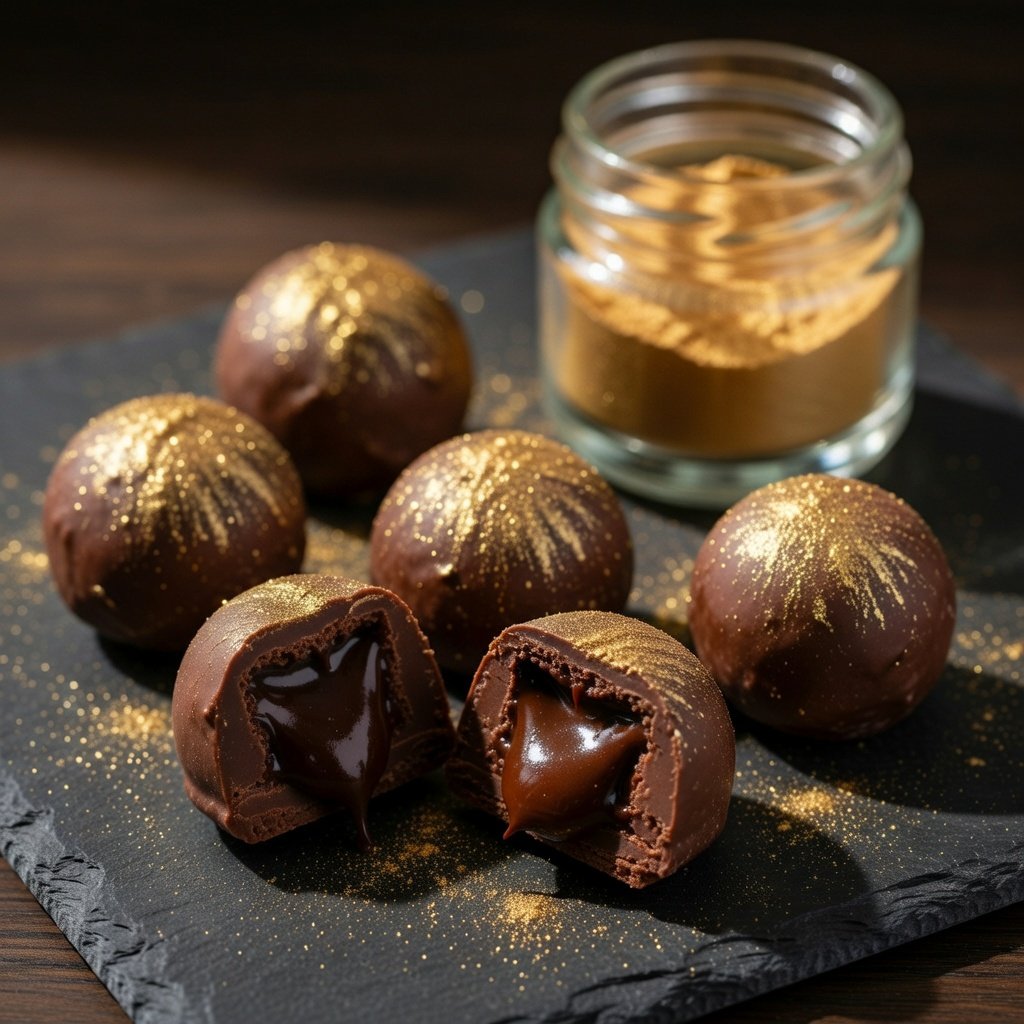
– Dark chocolate ganache truffles finished with edible gold luster dust — no special equipment needed
– The dry-dusting method gives you the cleanest, most even shimmer on chocolate
– White luster dust as a base layer makes the gold pop harder on dark surfaces
– One batch makes 20 truffles; they keep in the fridge for up to two weeks
Dark chocolate does something to gold that no other surface can. The contrast is almost unreasonable — rich, near-black ganache with that warm metallic shimmer catching the light. Five minutes of dusting turns a good truffle into something that looks like it came out of a high-end chocolatier’s case.
Ingredients
- 8 oz Dark chocolate (70% cacao), finely chopped
- 1/2 cup Heavy cream
- 2 tbsp Unsalted butter, room temperature
- 1 tsp Pure vanilla extract
- 1/4 tsp Flaky sea salt
- 1/2 tsp White Luster Dust
- 1 tsp Gold Luster Dust
Heat heavy cream in a small saucepan over medium heat until it just starts to simmer — don’t let it boil. Pour it over your chopped chocolate in a heatproof bowl and let it sit, undisturbed, for 2 minutes. Then stir from the center out until the mixture is completely smooth. Add the butter and vanilla and stir again until the butter’s fully melted in. It should look glossy and pourable.
Cover the bowl with plastic wrap pressed directly onto the surface of the ganache and refrigerate for at least 2 hours, or overnight. You want it firm enough to scoop cleanly — if it’s still sticky, give it another 30 minutes.
Use a small cookie scoop or a tablespoon to portion out the ganache. Roll each portion quickly between your palms into a rough ball — they don’t need to be perfect. Cold hands help here. If the ganache starts getting soft, pop it back in the fridge for 10 minutes.
Set the rolled truffles on a parchment-lined sheet and refrigerate for another 30 minutes. This firms them back up and gives you a better surface to dust.
Put the truffles in a shallow bowl. Sprinkle White Luster Dust over them and toss gently with a spoon until each truffle has a light, even coat. The white acts as a primer — it gives the gold something to build on and makes the final shimmer noticeably brighter.
Sprinkle Gold Luster Dust over the truffles and toss again until fully coated. You’re looking for complete coverage — no bare chocolate showing through. They should look like actual gold coins. Finish each truffle with a tiny pinch of flaky sea salt on top.
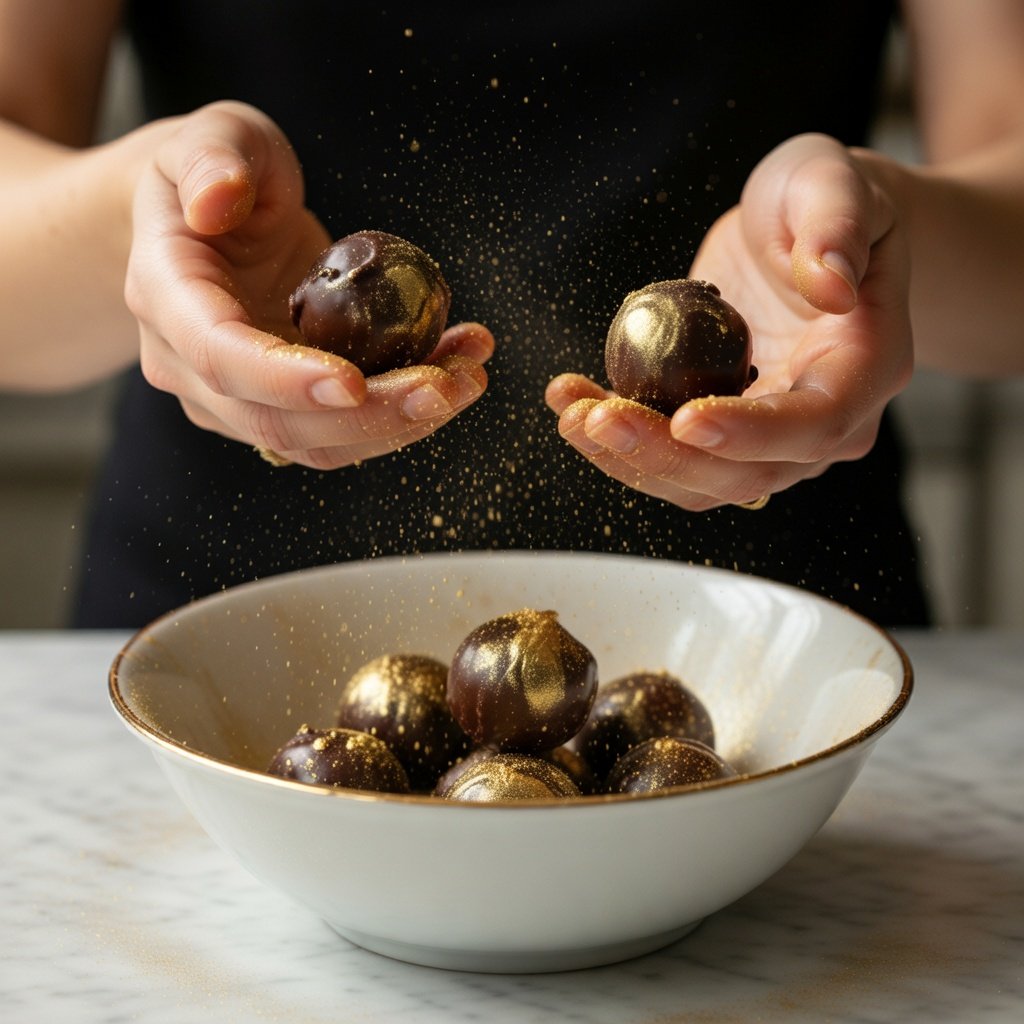
Transfer the finished truffles to a plate or box. Serve at room temperature — straight from the fridge they’re too firm. They’ll keep refrigerated in an airtight container for up to two weeks, though they won’t last that long.
The dry-dusting method here is the key move. No brushes, no mixing the dust into anything — just direct contact with the cold chocolate surface. The ganache has just enough natural moisture to grab the mica pigments and hold them. If you want a deeper shimmer on any individual truffle, cup it in your palm and breathe warm air over it for a second, then toss it in the gold again. The slight moisture from your breath helps the particles adhere.
New to working with luster dust? The [edible luster dust beginner’s guide](https://lusterdust.com/edible-luster-dust-for-beginners-your-first-project-guide/) covers the dry-dust technique across different surfaces — worth a read before you start.
Dark chocolate absorbs light. That’s what makes it look so rich, but it’s also what can dull a metallic finish. The white luster dust creates a reflective underlayer that bounces light back through the gold on top. Skip it and the truffles look good. Use it and they look like jewelry. The extra 30 seconds is worth it.
Technically yes, but the dusting goes worse. Warm ganache is slightly tacky — it grabs too much dust in patches and leaves you with uneven coverage. Cold truffles have a more stable surface and the gold sits evenly. The 30 minutes is passive time anyway.
Do two rounds of dusting. After the first round of gold, let the truffles sit at room temperature for 5 minutes, then toss them in gold again. The slight warm-up between coats helps each layer bind before the next goes on. Three rounds is excessive — two is the sweet spot for full, deep coverage.
You Might Also Like

Gold Shimmer Champagne Cocktail
The simplest thing you can do with gold luster dust. A pinch in a flute, and the whole glass glows.
Shimmer Whipped Cream Topper
Gold-dusted whipped cream that works on hot chocolate, pies, and pretty much everything else.
Golden Turmeric Shimmer Latte
Warm, spiced, and genuinely golden. Great pairing with these truffles if you're doing a full dessert spread.