• “FDA approved” and “FDA compliant” aren’t the same thing — and neither is “non-toxic”
• Real edible glitter is made from food-grade mica pigments that have been used in food for decades
• A lot of craft-store and Amazon glitter is NOT safe to eat, regardless of what the packaging implies
• If the label doesn’t explicitly say “FDA compliant” or “food grade,” don’t put it in food
FDA Compliant Edible Glitter: What It Actually Means
The label “edible glitter” is everywhere. On Amazon, at craft stores, in baking supply aisles. And a big chunk of it isn’t actually edible. That’s not a technicality — it matters. Here’s how to tell the difference, and why it’s worth caring about.
The FDA Doesn’t “Approve” Individual Products
First, a quick reality check on the phrase “FDA approved edible glitter.” The FDA doesn’t go product by product, reviewing each jar of luster dust and stamping it approved. That’s not how their system works for food ingredients. What they do is maintain a list of substances that are Generally Recognized As Safe (GRAS) — ingredients with enough scientific evidence and history of safe use that they’re cleared for food contact and consumption.
So the right phrase is “FDA compliant” — meaning the product is made using only ingredients that appear on the FDA’s approved list. Our luster dust is made with mica-based pearlescent pigments that are on that list. Completely food-safe. That’s what you’re actually buying when someone says “FDA approved edible glitter.”
“Non-Toxic” Is Not the Same as Edible
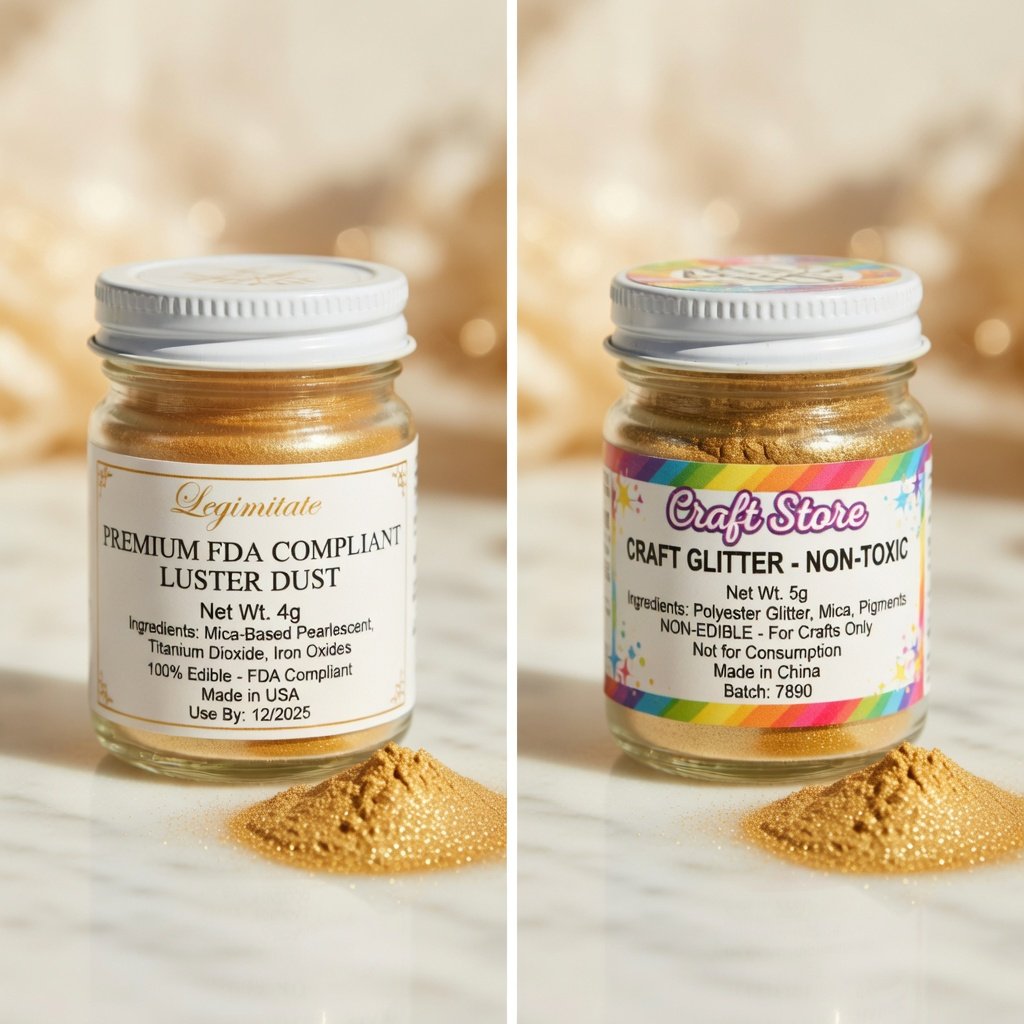
This is where a lot of people get tripped up, and honestly, the packaging on some of these products makes it worse. You’ll see “non-toxic” in big letters on craft glitters that are absolutely not meant to go in your mouth.
Non-toxic means it won’t immediately harm you if you accidentally ingest a small amount. It does not mean the FDA has cleared it as a food ingredient. A lot of those glitters are made from plastic, aluminum, or dyes that have zero business being in your food. They’re non-toxic the same way a pencil eraser is non-toxic. You’re not supposed to eat either one.
Edible means it’s made from actual food-grade ingredients, compliant with FDA standards, safe to consume intentionally. Big difference. If you’re putting shimmer in a cocktail or dusting it on a cake someone’s going to eat, you need the edible version. Period.
What Food-Safe Edible Glitter Is Actually Made From
Our luster dust uses German mica pigments — mica is a naturally occurring mineral that’s been used as a food colorant for decades. It’s what gives pearlescent candies, certain chocolates, and cake decorations that metallic shimmer. The FDA has it on the approved list specifically for use in food. It’s also what makes high-quality luster dust look so much better than the craft store stuff. The particle size, the purity, the way light moves through it — that’s all the mica.
Checking whether edible glitter is actually food-safe takes about fifteen seconds if you know what you’re looking for.
- The label should say “FDA compliant” or “food grade” — not just “non-toxic”
- Ingredients should list mica, iron oxides, or other recognized food colorants — not “cosmetic grade” anything
- The product should be marketed specifically for food use, not crafts or cosmetics
- Vegan and gluten-free status is a good secondary signal — it means the manufacturer is paying attention to what goes in the jar
Plenty of products that look identical to luster dust are not food-safe. Here’s what trips people up.
- Craft store glitters labeled “non-toxic” but nothing else — these are made for paper and glue guns, not cakes
- Amazon listings with vague descriptions and “for decorative use only” buried in the fine print
- “Cosmetic grade” mica — this is a real thing, and it’s different from food-grade mica. Not the same
- Products that don’t list their ingredients at all
Our Colors, For the Record
Every single color we make is FDA compliant. Vegan, gluten-free, no artificial flavors, completely tasteless and odorless. The shimmer is all you get. A few favorites:
Gold Luster Dust is our most-used color — champagne, chocolate, fondant, you name it. The warm tone catches light differently than silver and it works on basically everything.
Blue Luster Dust is the one that surprises people. Most blue food colorings skew garish. This one has real depth — it looks expensive on dark chocolates and striking in clear cocktails.
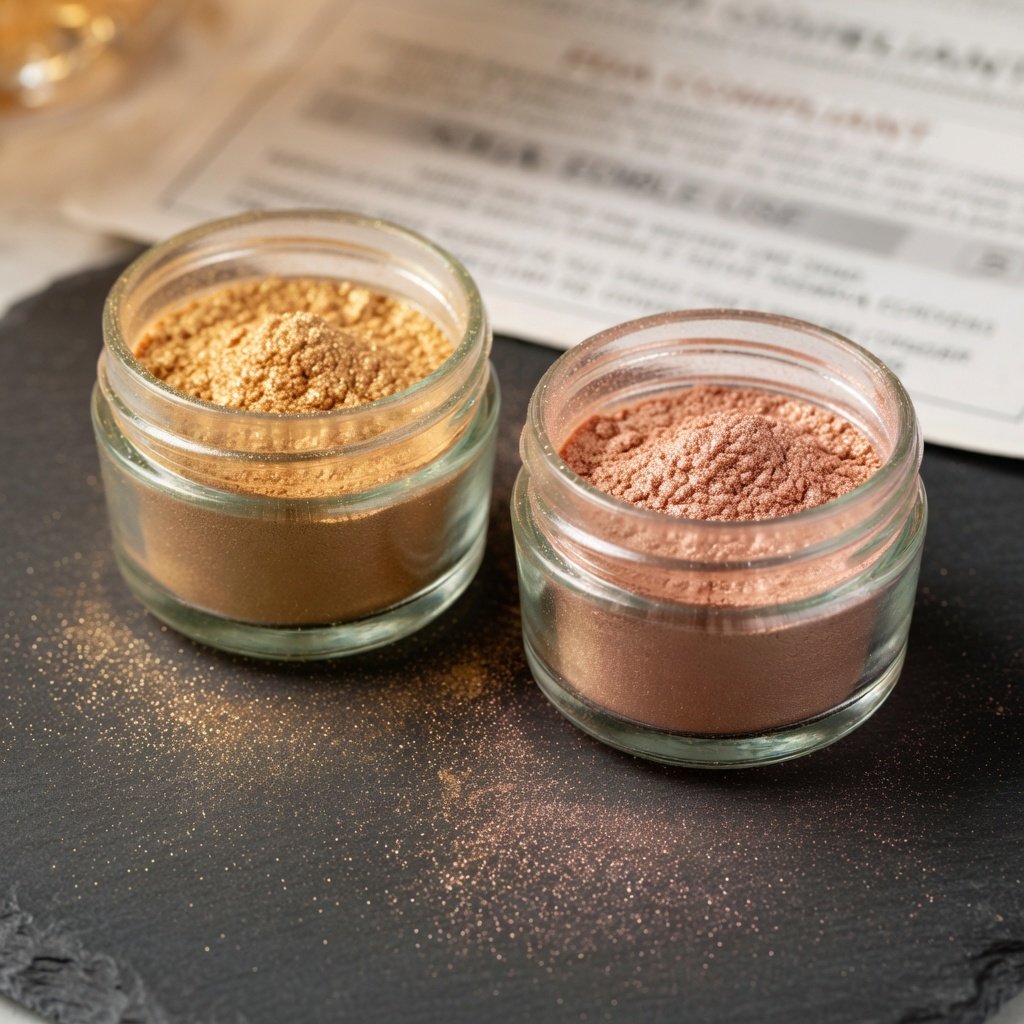
Rose Gold Luster Dust has become our go-to recommendation for anyone who wants something a little different. That pink-warm-gold balance is genuinely hard to pull off with cheaper pigments. The German mica is doing real work there.
A Quick Note on Quantities
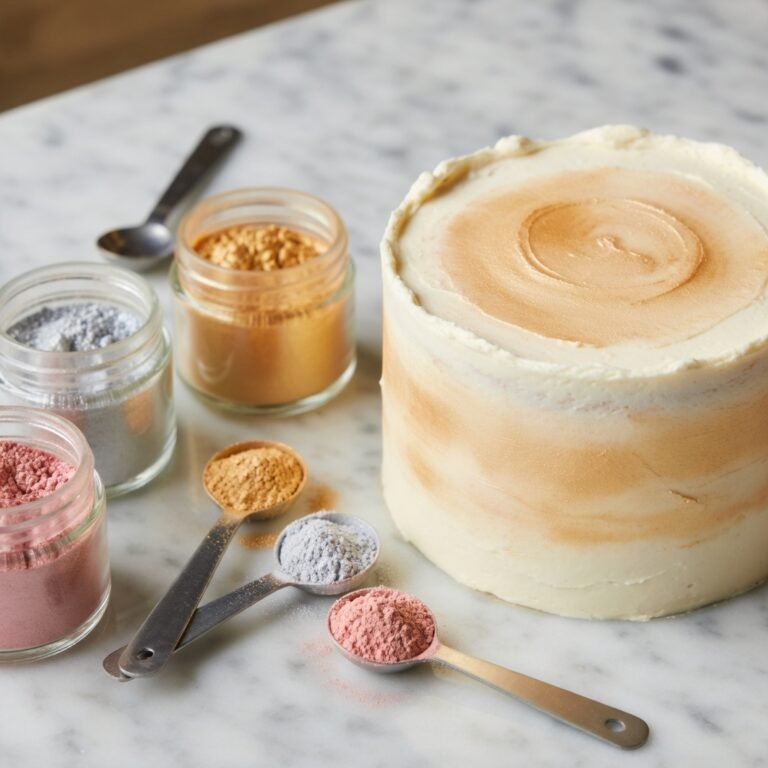
Food-safe doesn’t mean use as much as you want — not because of safety, but because more isn’t better. For cocktails, you want 1/8 teaspoon per glass, maximum. For dusting cakes or truffles, a dry brush with a small amount goes a long way. The shimmer is in the thin layer. Piling it on just muddles things.
The Short Version
“FDA approved edible glitter” is really shorthand for glitter made from FDA-cleared, food-grade ingredients. Not all shimmer products qualify. Not all labels tell you what you need to know. Look for “FDA compliant” or “food grade,” check the ingredient list for recognizable food colorants, and if the packaging only says “non-toxic” — that’s your sign to leave it in the craft aisle where it belongs.
Sort of, but not exactly. Luster dust is a specific type of edible shimmer — finely milled mica-based pigments that produce a metallic or pearlescent finish. “Edible glitter” is a broader term that can refer to anything from luster dust to larger-flake glitter to glitter gels. All of our products are luster dust, which means an extremely fine, smooth shimmer rather than chunky sparkle.
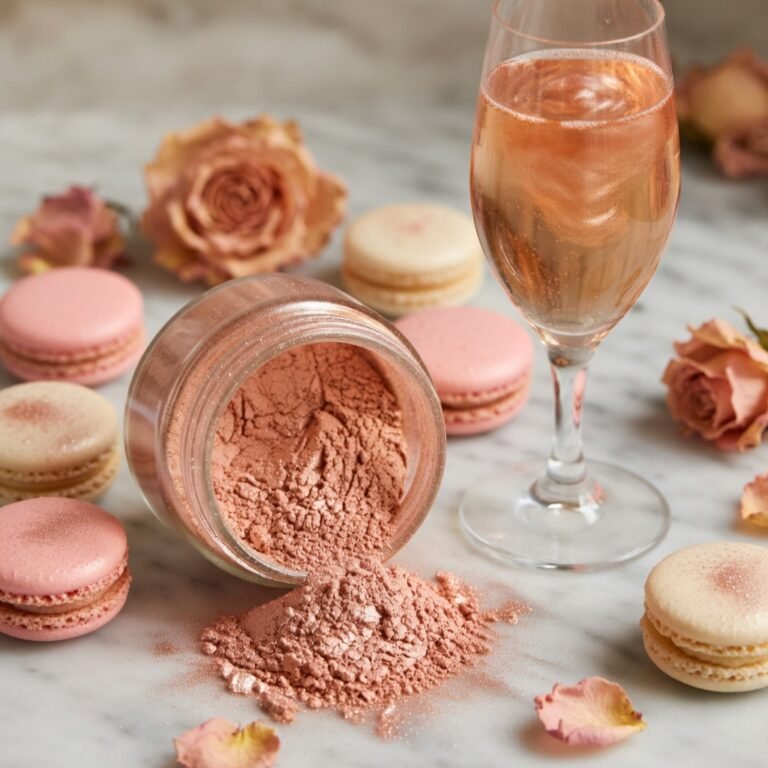
Yes — that’s one of the best uses for it. Drop about 1/8 teaspoon into a glass before pouring, or add it to a cocktail shaker. The particles stay suspended in carbonated drinks especially well. The shimmer catches light as it moves through the liquid. Gold in champagne is the classic move, but blue in clear spirits looks incredible too.
Every color. The mica pigments are mineral-based, not animal-derived, and there’s nothing in our formula that contains gluten. Completely safe for vegan and gluten-free applications.
Cosmetic-grade mica is used in makeup — eyeshadow, highlighter, nail polish. It may contain colorants or processing agents that aren’t cleared for consumption. Food-grade mica meets the stricter FDA standards for ingredients that will actually be eaten. Same base mineral, very different standards. Always make sure you’re buying food-grade.
Longer than you’d think. Our 10g jars are plenty for home use — we’re talking 80+ cocktails from a single jar if you’re using 1/8 teaspoon per glass. For baking, a little goes even further. The 10g size is the right starting point for most people unless you’re running a bakery or bar program.