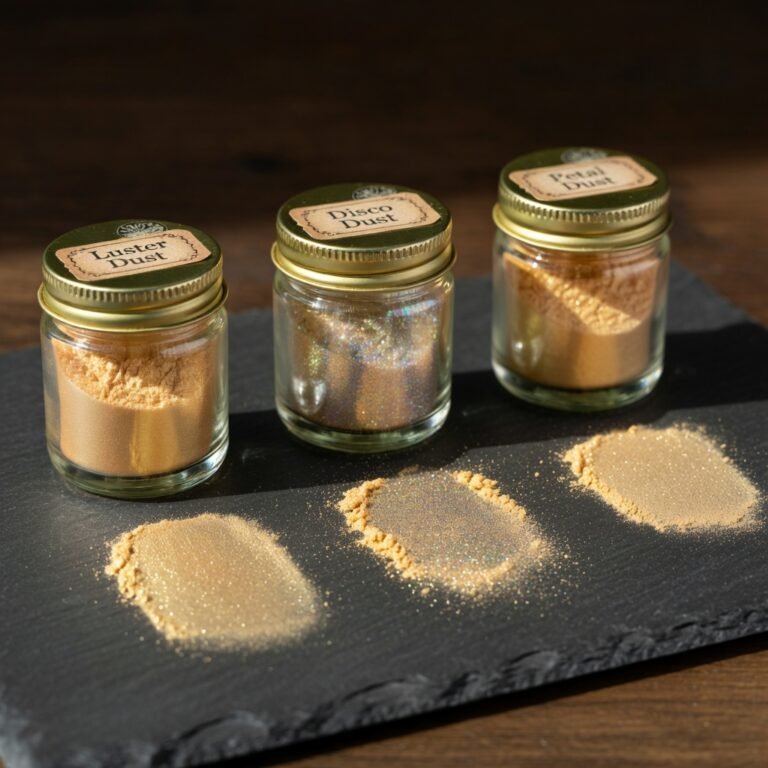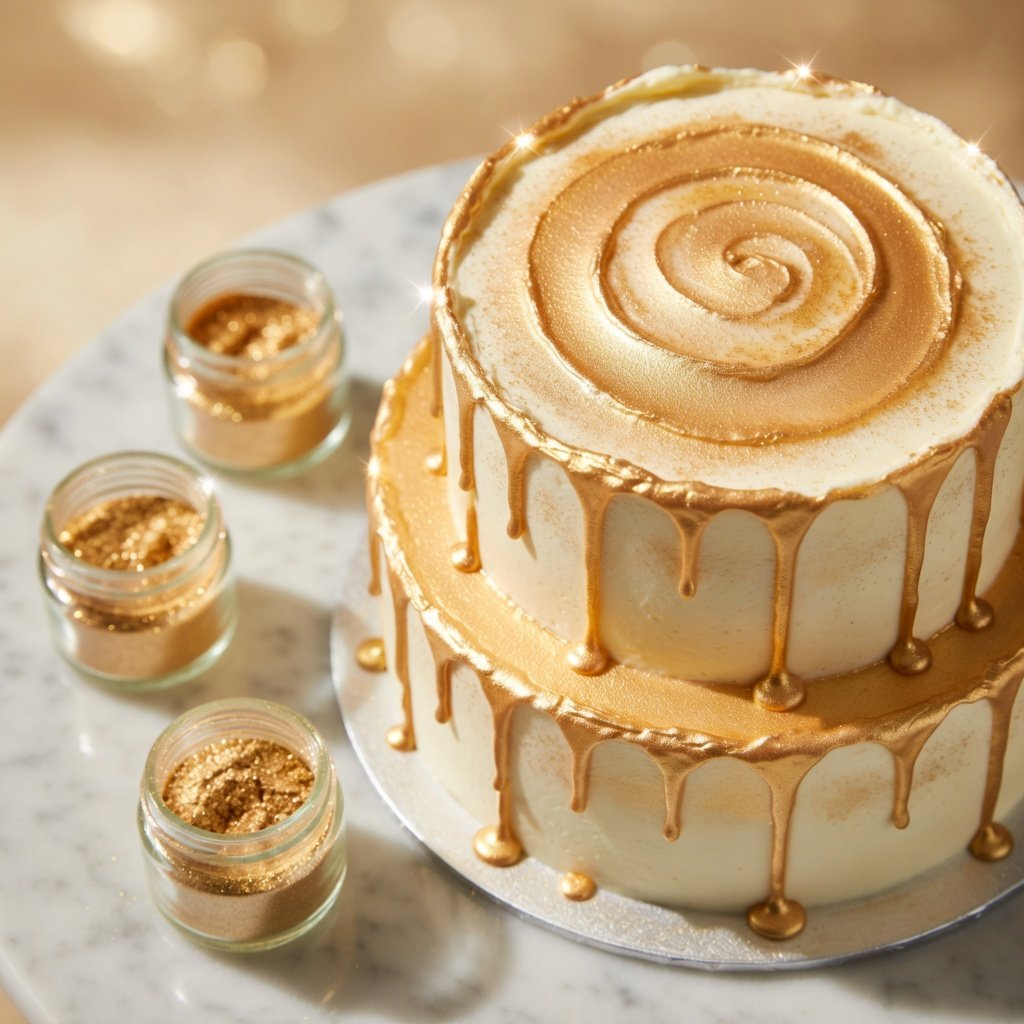
- Edible glitter works on virtually every cake style — from buttercream to fondant to naked cakes — you just need the right application technique for each
- Color choice matters: gold and rose gold read “celebration,” silver reads “expensive,” and blues and purples own the whimsical/fantasy territory
- A little goes a long way — most cake projects need less than 1/4 teaspoon, and you can always add more
- All luster dust is not the same — FDA compliant, mica-based powder gives you a true shimmer that cheaper craft glitters can’t replicate
Gold outsells every other color by a wide margin, and most of it ends up on cakes. That tells you something. A cake with edible glitter just hits different — there’s this moment when the light catches the shimmer and the whole table notices. And it’s genuinely not hard to do.
Here are 15 ideas organized by occasion. Some are simple enough for a Tuesday night. A few require more patience. All of them are worth it.
Birthday Cakes
1. Classic Gold Buttercream Birthday Cake
The one everyone asks about first. Smooth vanilla buttercream, a generous dusting of Gold Luster Dust across the top and upper sides. Don’t overthink it. The gold catches every candle flame in the room and the photos are ridiculous. Apply the dust dry using a fluffy brush, and tap the brush rather than sweeping — you get better coverage without streaks.
2. Rose Gold Ombré Layer Cake
Frost the outside with a pink-to-cream ombré, then dust Rose Gold Luster Dust from the top down, letting it fade naturally. The rose gold sits somewhere between pink and metallic and it photographs beautifully. Best on a smooth, chilled buttercream surface — the dust sticks better when the frosting isn’t tacky.
3. Confetti Cake with Rainbow Shimmer
Funfetti on the inside, shimmer on the outside. Mix a tiny pinch of pink, blue, and gold dust together in a small dish. Dust loosely over white buttercream using a wide dry brush. The multicolor shimmer picks up the confetti vibe from the inside without looking chaotic. Pink Luster Dust and Blue Luster Dust together are underrated for this.
4. Drip Cake with Gold Accents
Dark chocolate drips down a white or cream frosted cake, then gold dust brushed onto the dried drips. The contrast is the whole point — dark drip, bright shimmer. Use a small detail brush and work while the ganache is fully set. Rushing this means smearing. Patience pays off.
Wedding & Anniversary Cakes
5. All-Over Silver Fondant Cake
White fondant as the base, Silver Luster Dust mixed with a few drops of vodka or lemon extract to make a paint. Brush it on in smooth strokes. The result looks like brushed metal — genuinely elegant, not costume-y. Vodka is the standard medium because it evaporates cleanly. Don’t use water; it’ll dissolve the fondant surface.
6. Gold-Leafed Wedding Tier
This is the “how did they do that” cake. Smooth white fondant on each tier, then gold luster paint applied in irregular patches — not full coverage. The contrast between the white fondant and the gold creates this organic, almost marbled look. Takes some confidence on the brush, but the randomness is actually forgiving. There’s no wrong way for it to look.
7. Rose Gold Naked Cake
Naked cakes show the layers, and rose gold shimmer gives them a warmth that reads beautifully in venue lighting. Dust rose gold lightly over the exposed frosting between layers and across the top. It’s subtle — more glow than glitter — which is exactly right for a wedding table.
8. Silver Geometric Fondant Cake
Cut fondant into geometric shapes — diamonds, triangles, hexagons — and brush each piece with silver luster paint before applying to the cake. The shimmer outlines every edge when light hits it. Structured and modern. This one takes time, but the result looks like you hired a pastry artist.
Baby Showers & Gender Reveals
9. Pink Shimmer Ruffle Cake
Ruffled buttercream piped around the outside of each tier, then a soft dusting of Pink Luster Dust over the finished cake. The ruffles create natural shadows, and the shimmer catches in the raised edges. Incredibly soft-looking. This is the cake people cut slowly because they don’t want to wreck it.
10. Blue Galaxy Cake
Dark navy buttercream base — nearly black — with Blue Luster Dust dusted across the surface. Add a few flicks of silver for stars. The blue glitter against dark frosting reads as deep and dimensional in a way that lighter cakes don’t. Striking for a baby shower, perfect for a space-themed birthday, good for basically any dark-themed celebration.
11. Purple Unicorn Cake
Purple Luster Dust and some piped rosettes are doing a lot of work here. Pipe swirls of purple, pink, and white buttercream around the top, dust the whole thing with purple luster dust, add a fondant horn if you’re going full unicorn. Kids lose their minds. Adults also lose their minds a little. The shimmer catches completely differently on textured piped frosting versus smooth — more sparkle, more movement.
Holiday & Seasonal Cakes
12. Christmas Red Velvet with Gold Shimmer
Red velvet layers, cream cheese frosting, gold luster dust dusted across the top. The red peeking through the layers against the gold-dusted white frosting does all the work. December’s cake. Full stop. You can add sugared rosemary and cranberries on top if you want to take it further — the red and gold play well together.
13. New Year’s Eve Gold Mirror Glaze Cake
This one’s an event. Mirror glaze base — shiny and reflective on its own — then gold luster dust added while the glaze is still tacky. The dust bonds to the glossy surface and the combined shimmer is almost blinding in the right light. Gold is the obvious call here, but rose gold on a mirror glaze is equally spectacular. New Year’s Eve is the one night where “too much shimmer” isn’t really a thing.
14. Silver Winter Wonderland Cake
White fondant or pale blue frosting, silver dust applied heavily, white sugar pearl accents. It looks genuinely cold. Like, in a good way — you can almost feel the frost in the presentation. Best at Christmas and New Year’s but honestly works for any winter event. Silver gets slept on, and it shouldn’t.
Everyday & “Just Because” Cakes
15. Boxed Cake Mix, Zero Apologies
One box of cake mix, whatever frosting you have, gold luster dust on top. That’s the whole thing. A quarter teaspoon of gold dust turns grocery store frosting into something that looks intentional and considered. We’ve done this for a Tuesday. The shimmer doesn’t know the difference between a professional cake and a box mix. Neither do your guests.
Getting the Application Right
Most of these ideas use the same two or three techniques. Dry dusting for buttercream, luster paint for fondant, and a damp-brush method for detail work. If you haven’t done any of these before, our full guide on how to use edible glitter on cakes, cupcakes, and cookies covers all three in detail. Worth reading before your first project.
Quick version: dry brush for broad coverage, paint (dust + vodka) for fondant and precise metallic finishes. Keep the dust away from moisture until you’re ready to apply it — humidity clumps it.
Less than you think. A single-tier 8-inch cake typically needs 1/8 to 1/4 teaspoon for a light dusting, up to 1/2 teaspoon if you’re going heavy. A 10g jar has enough for 10-20 single-tier cakes depending on coverage. Start with less — it’s much easier to add than to remove.
Nothing. Zero. It’s completely tasteless and odorless — mica-based pigments don’t have a flavor, which is why they’re used in food. You won’t taste it in the frosting, you won’t notice it on your tongue. It’s purely visual.
Yes, and it works really well. Rose gold is actually the result of mixing gold and pink — you can approximate it by blending the two dry powders before applying. Gold and silver together give you a champagne-toned shimmer. Just mix small amounts in a dish first, test on a piece of parchment, then commit to the cake.
Smooth buttercream is the most forgiving — the shimmer adheres evenly and the slight gloss on the surface helps it catch light well. Fondant works great for painted techniques. Cream cheese frosting is softer and a little trickier because the surface stays tacky, but it still looks good. Whipped cream is the hardest because of the moisture content — use it sparingly and apply right before serving.
Yes — our luster dust is FDA compliant, vegan, gluten-free, and made from food-grade mica pigments. The same category of ingredients has been used in food decoration for decades. The thing to avoid is craft glitter or any product that says “non-toxic” without saying “FDA compliant” or “edible.” Those aren’t the same thing. Our stuff is actually edible. Full stop.