• 1/8 teaspoon per glass is the sweet spot — too much and the drink goes cloudy instead of sparkly
• Drop the dust in dry, then pour or stir. Adding it to an already-full glass makes it clump.
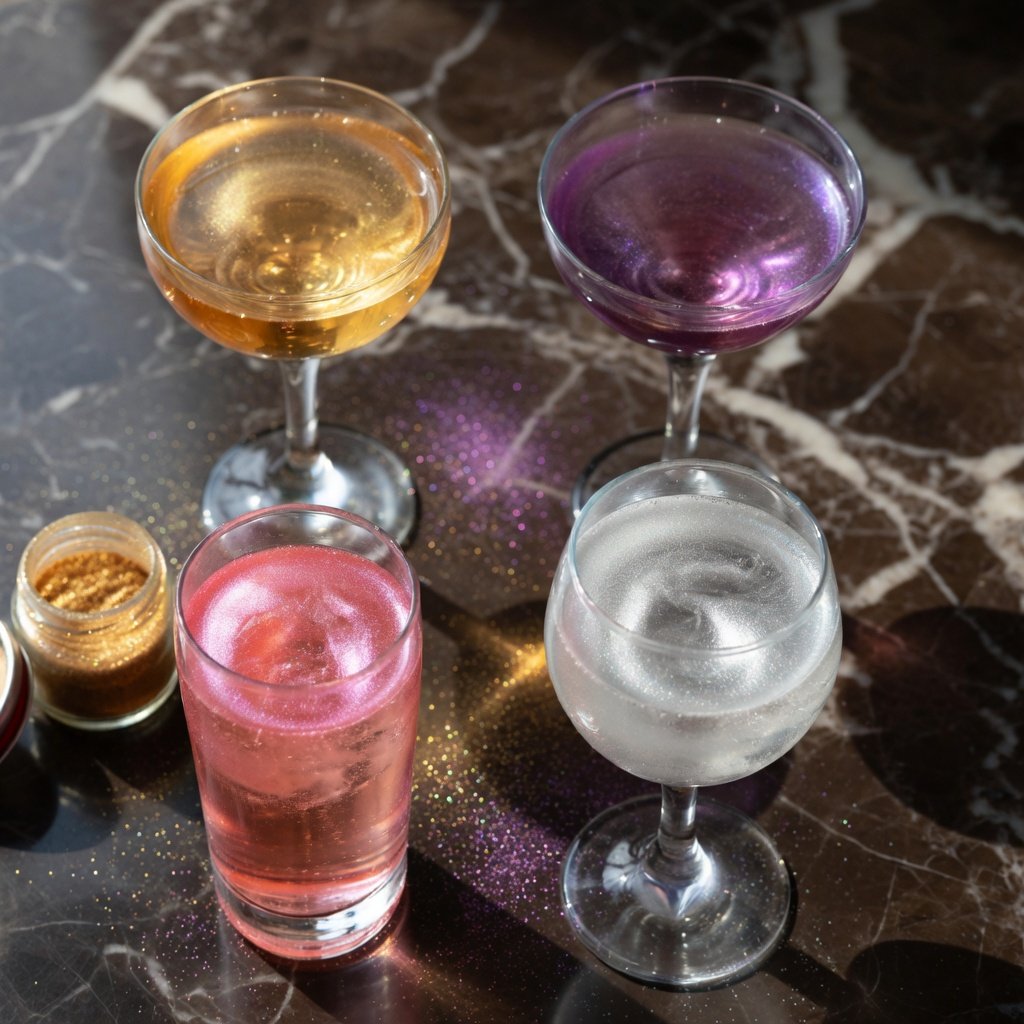
• Gold and champagne are the classic combo, but silver on dark spirits does something completely different
• Every recipe here uses FDA compliant, food-grade luster dust — the tasteless kind that doesn’t change your drink at all
The Only Rule You Actually Need
Before the recipes: don’t overdo it. This is the mistake almost everyone makes the first time. A pinch — like, the amount you’d pick up between two fingers without thinking about it — is exactly right. More than that and you get a cloudy, over-sparkled mess instead of that suspended shimmer you’re going for.
Drop it in. Swirl gently. Watch the particles catch light as they move through the liquid. That’s the whole move.
Now, ten recipes worth making.
—
1. Gold Champagne
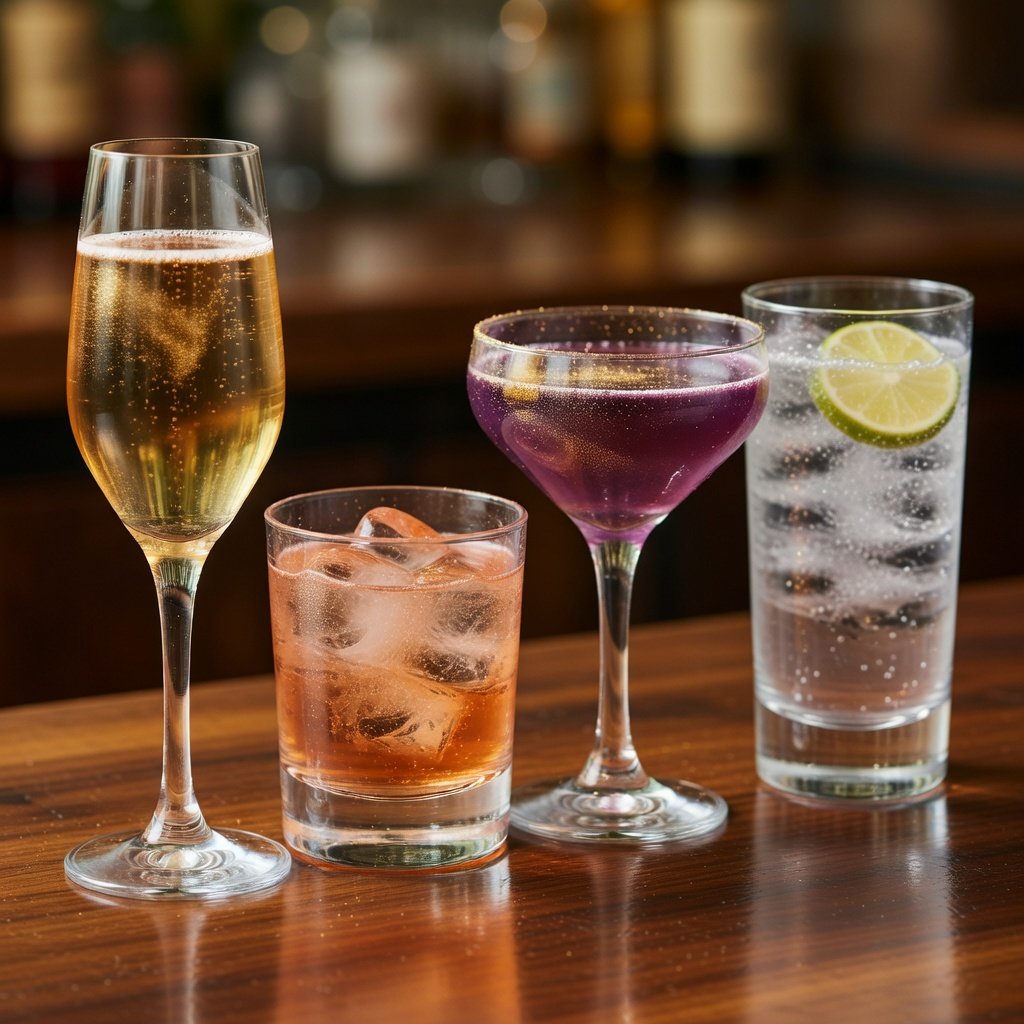
The one that started it all, and still the best. Drop 1/8 teaspoon of Gold Luster Dust into a dry champagne flute before you pour. The bubbles do the rest — they carry the particles upward and keep them moving the entire time the glass is in someone’s hand. At a party, this gets noticed immediately. Every single time.
Make it: Gold luster dust + dry champagne or prosecco. That’s it. No measuring, no mixing, no prep. The five-second party trick.
—
2. Silver Gin and Tonic
Silver gets overlooked because everyone defaults to gold, but this is the drink that converts people. The clarity of a gin and tonic lets the silver particles catch light in every direction. It looks like someone bottled moonlight. Slightly dramatic, completely accurate.
Use 1/8 teaspoon of Silver Luster Dust added to the glass before the ice. Build the drink on top. Garnish with a lime wheel and cucumber if you’re feeling it.
Works with: Any gin, but a London Dry lets the silver read cleaner than something botanically heavy.
—
3. Rose Gold Aperol Spritz
Aperol spritzes are already orange and beautiful. Add rose gold luster dust and they become something people photograph before they drink. The warm copper tone of Rose Gold Luster Dust sits perfectly in the orange of the Aperol — they’re basically the same color family, which means the shimmer blends in visually but the sparkle is unmissable.
Make it: 3oz prosecco, 2oz Aperol, 1oz soda water, 1/8 tsp rose gold luster dust. Build over ice, add an orange slice.
—
4. Pink Strawberry Daiquiri
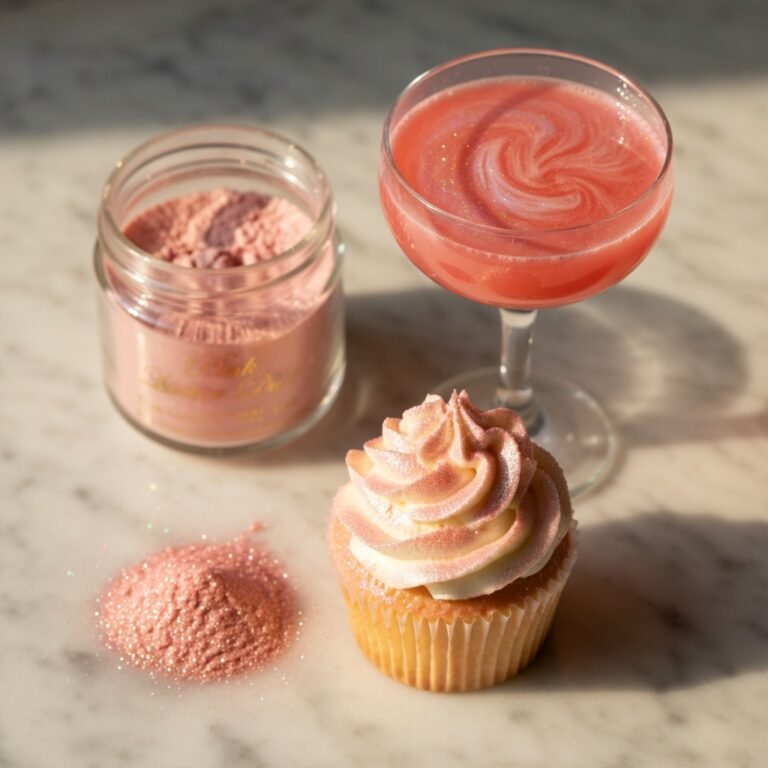
Frozen or shaken, doesn’t matter — Pink Luster Dust in a strawberry daiquiri looks absurdly good. The pink-on-pink shimmer is subtle in a way that gold isn’t. Less “look at this cocktail” and more “wait, why is this drink glowing?”
For frozen: blend everything first, pour, then dust the top and swirl once. For shaken: add the dust to the shaker with ice and shake normally — the ice distributes it perfectly.
Make it: 2oz white rum, 1oz lime juice, 3/4oz simple syrup, 4 fresh strawberries, 1/8 tsp pink luster dust.
—
5. Purple Lavender Martini
This one takes about five minutes more to prep than the others because you’re making a lavender simple syrup, but it’s worth the effort. Purple Luster Dust in a pale purple drink is genuinely striking — especially in a coupe glass where the wide, shallow bowl lets the shimmer spread.
Make it: 2oz vodka, 1oz lavender syrup (steep dried lavender in hot simple syrup for 20 minutes), 1/2oz lemon juice, 1/8 tsp purple luster dust. Shake with ice, strain into a chilled coupe.
—
—
6. Gold Old Fashioned
Dark spirits and gold luster dust work differently than gold in champagne. The shimmer sits heavier in whiskey — it doesn’t float and dance the same way — but what you get instead is this deep, almost amber-metallic glow when the glass catches light. It looks expensive. Whiskey drinkers who claim they’d never put glitter in a cocktail have changed their minds over this one.
Make it: 2oz bourbon, 1/4oz simple syrup, 2 dashes Angostura bitters, large ice cube, 1/8 tsp Gold Luster Dust. Stir 30 seconds, express an orange peel over the top.
—
7. Silver Espresso Martini
The espresso martini revival is real, and it’s a great canvas for silver. The dark coffee color makes the silver particles visible in a different way than they’d show in clear spirits — each one catches light individually, so the effect is more sparkle than shimmer. It catches overhead bar lighting especially well.
Make it: 2oz vodka, 1oz fresh espresso (cooled), 1/2oz coffee liqueur, 1/4oz simple syrup, 1/8 tsp Silver Luster Dust. Shake hard with ice, double strain, serve up with three espresso beans.
—
8. Rose Gold Rosé Sangria
Batch cocktails are where luster dust really earns its keep. Make the sangria ahead of time, add the rose gold right before serving, and stir gently. A whole pitcher of shimmering rosé sangria on a summer table is a moment. Scale to 1/2 teaspoon per pitcher — more volume means you can go a little more generous.
Make it (serves 6–8): 1 bottle dry rosé, 4oz peach schnapps, 2oz elderflower liqueur, sliced peaches and strawberries, 1/2 tsp Rose Gold Luster Dust. Chill for at least an hour before serving.
—
9. Pink Paloma
Grapefruit and pink luster dust belong together. The Paloma is already one of the better-looking cocktails — pale pink, highball glass, salty rim — and a pinch of pink luster dust tips it over into something special without changing the flavor at all. Zero taste impact. That’s the thing people are always surprised by. The dust is completely flavorless.
Make it: 2oz tequila blanco, 3oz fresh grapefruit juice, 1/2oz lime juice, 1/2oz agave syrup, soda water, salt rim, 1/8 tsp Pink Luster Dust. Build over ice, top with soda.
—
10. Purple Butterfly Pea Flower Gin Fizz
The showstopper. Butterfly pea flower tea turns bright purple when brewed, then shifts to pink when you add acid — so when you pour lemon juice into the glass, the drink changes color right in front of your guests. Add purple luster dust and the color shift happens inside a shimmering cloud. It’s genuinely theatrical and takes about 10 minutes to put together.
Make it: Brew butterfly pea flower tea, let cool. Mix 2oz gin, 3/4oz simple syrup, 1/8 tsp Purple Luster Dust in a glass with ice. Top with 3oz of the tea, then slowly add 3/4oz lemon juice and let guests watch the color change.
—
A Few Notes on Technique
Add the dust to a dry glass before you build the drink — this prevents clumping. With shaken cocktails, putting the dust in the shaker with everything else works fine, but you’ll lose a tiny amount to the shaker walls. With layered drinks or anything you’re pouring carefully, add the dust right before the final pour so it doesn’t settle before serving.
Cold glasses hold the shimmer better than room temperature ones. Keep your cocktail glasses in the freezer for 10 minutes before a party and the dust disperses more evenly.
And 1/8 teaspoon. Say it with us. That’s the number.
—
No. Our luster dust is completely tasteless and odorless — it’s made from food-grade mica pigments, same as what’s been used in food products for decades. You won’t taste it, smell it, or notice it in any way except visually. That’s the whole point.
1/8 teaspoon per glass is our baseline. For pitchers or batch cocktails, scale up to about 1/2 teaspoon per 6–8 servings. Less is genuinely more here — too much and the drink goes cloudy rather than sparkly.
Ours is, yes. Every Luster Dust color is FDA compliant, vegan, and gluten-free. Some products sold as “edible glitter” are actually just labeled “non-toxic,” which isn’t the same thing. Non-toxic means it won’t seriously harm you. Edible means it’s actual food. Make sure whatever you’re using meets FDA compliance standards, not just non-toxic labeling.
Gold is the classic for a reason — it works in almost everything and reads as celebratory without being loud. Silver is our pick for clear spirits and dark cocktails like espresso martinis. Rose gold is unbeatable in orange and peach-toned drinks. Pink is great in anything already pink or red. Purple is the most dramatic option — best in pale drinks where it really shows up.
Absolutely. Sparkling water, lemonade, mocktails — the dust behaves the same way regardless of alcohol content. It works anywhere there’s liquid movement to keep the particles circulating. Mocktail versions of all ten recipes above work just as well with the dust.
—